
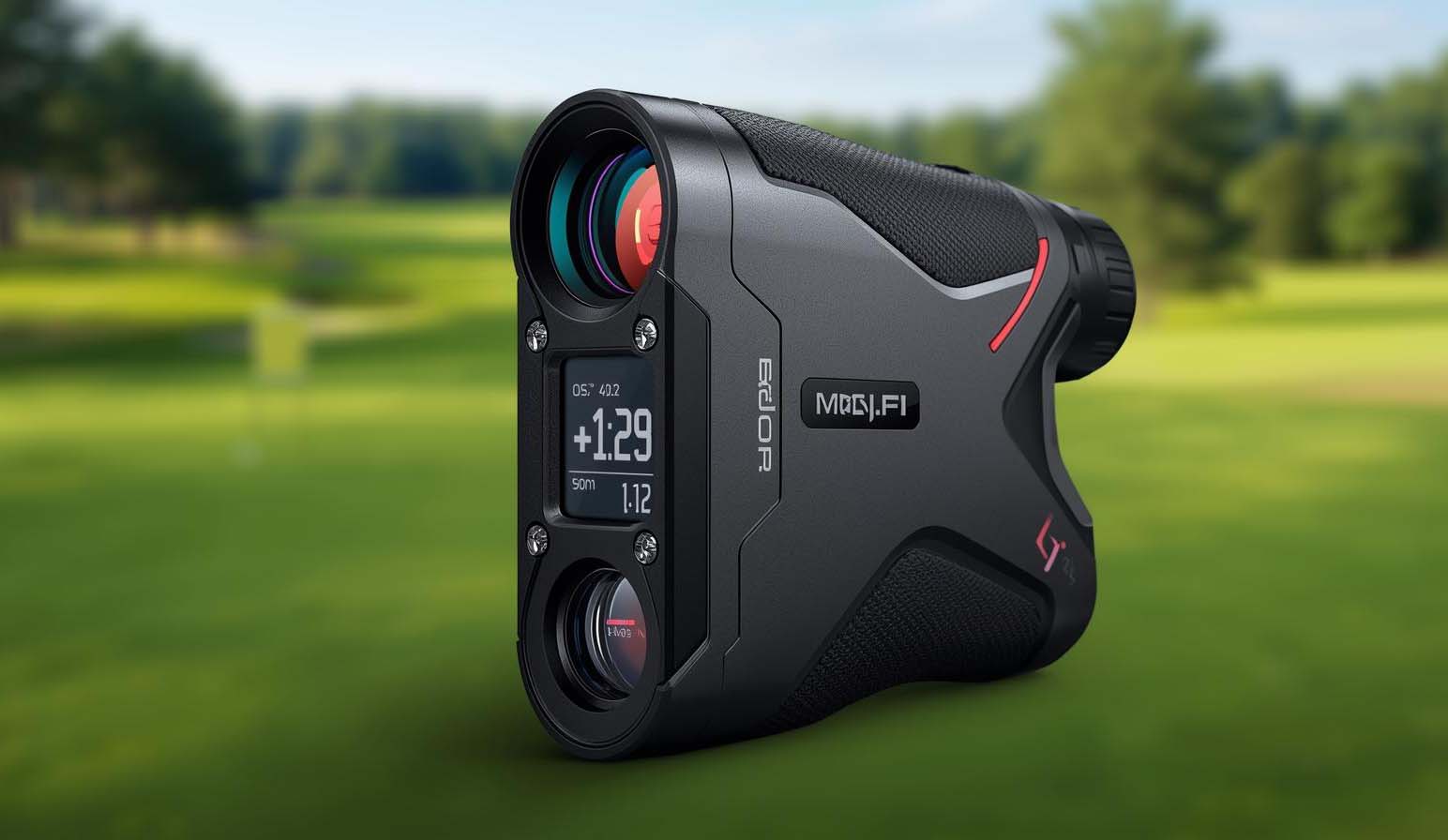
Golf rangefinders with a slope feature are legal for casual and practice rounds, but they are not legal in tournament play unless the slope function is completely turned off. According to the USGA and R&A Rules of Golf, players may use distance-measuring devices in competition only if those devices do not provide elevation-adjusted or “plays-like” distances.
Most modern rangefinders include a physical slope-off switch and a visible compliance indicator, allowing golfers to use the same device legally in both practice and tournaments once slope is disabled.
What “Slope” Means in a Golf Rangefinder?
Slope refers to a rangefinder’s ability to factor elevation change into the measured distance between the golfer and the target. Instead of showing only straight-line yardage, the device calculates whether the shot is uphill or downhill and adjusts the yardage accordingly to reflect how the ball is expected to play.
For example, a target that measures 150 yards may actually play closer to 158 yards if the shot is uphill. This adjusted number can be handy during practice because it helps golfers understand how elevation affects club selection. However, this same assistance is precisely why the slope becomes restricted in competitive play.
Why Is Slope Considered an Advantage Under the Rules?
Golf’s equipment rules are designed to protect decision-making skills. Measuring distance is allowed because it only provides raw information. Calculating how that distance should play, however, crosses into shot advice.
A slope-enabled rangefinder removes part of the judgment process by converting elevation data into a recommended playing distance.
That calculation can directly influence club choice, which is why governing bodies consider slope an unfair advantage during tournaments. The rule does not ban rangefinders; it limits the type of information they may provide during competition.
Rule 4.3a Explained in Simple Terms.
Rule 4.3a of the Rules of Golf governs the use of equipment. Under this rule, players may use distance-measuring devices during a round only if the device does not provide additional information that could influence play. Straight-line distance is allowed. Elevation-adjusted distance, wind assistance, or club recommendations are not.
If a device can show slope-adjusted yardage during a competition, even briefly, it becomes non-conforming unless that function is fully disabled. This interpretation is consistent across both the USGA and The R&A.
Casual Play vs Tournament Play: The Legal Difference
In casual rounds and practice sessions, slope rangefinders are entirely legal. Golfers are free to use elevation-adjusted distances to improve course management and understand how different shots play.
In tournament rounds, the situation changes. Slope must be completely turned off, and no adjusted distance information can be visible or accessible. If slope data is available on the screen or through a secondary mode, the device may be considered illegal, even if the golfer claims not to use it.
How Do Tournament Officials Check Slope Compliance?
Tournament officials typically look for physical confirmation that the slope is disabled. This usually comes in the form of a dedicated slope-off switch and a visible indicator that shows the device is operating in non-slope mode. Devices that rely only on app-based or menu-based slope controls are often viewed with caution.
In many competitions, officials may inspect rangefinders before the round or respond to questions raised by fellow competitors. A clearly visible compliance indicator significantly reduces the risk of disputes.
How to Make a Slope Rangefinder Tournament Legal?
Before a competition round, the golfer must manually turn off the slope function and confirm that the device displays only straight-line distance. This should be done before arriving at the course, not on the tee box. A quick visual check of the compliance indicator should always be part of a pre-round routine.
The safest approach is to treat the slope the same way golfers treat non-conforming clubs: never allow it to be active during a competitive round.
What Happens If the Slope Is Used Accidentally?
Using slope during a tournament can lead to severe penalties. Even accidental use may result in the general penalty or disqualification, depending on the event and circumstances. The rules focus on whether prohibited information was used, not on intent.
If a golfer realises that the slope was used or accessible during a round, the correct action is to stop using the device immediately and inform a rules official as soon as possible.
Local Rules Still Matter
Some tournaments and courses adopt local rules that ban all distance-measuring devices, regardless of slope settings. Club championships, junior events, and elite amateur competitions often apply stricter standards.
Because local rules override general permissions, golfers should always review the competition rules sheet or ask the tournament director before assuming a rangefinder is allowed.
Are Slope Rangefinders Worth Owning for Tournament Golfers?
For most golfers, slope rangefinders are still worth owning. They provide valuable insight during practice rounds and help players better understand the effects of elevation. The key is discipline. Golfers who compete regularly must be comfortable with the slope every time and verify compliance before play begins.
Choosing a model with a physical slope-off switch and a clear visual indicator significantly reduces risk.
Common Misunderstandings About Slope Legality
Many golfers believe that slope is always illegal, but that is not true. Others assume turning the hill off in a mobile app is sufficient, which can be risky. Another common misconception is that simply avoiding the slope number makes the device legal. In reality, accessibility to prohibited information is what matters.
Understanding these nuances helps golfers avoid unnecessary penalties.
Frequently Asked Questions
Is a golf rangefinder with slope illegal in tournaments?
A slope rangefinder is not illegal by default, but it becomes illegal in tournament play if the slope feature is turned on or accessible. To be legal, the slope must be fully disabled, and the device must display only straight-line distance.
Can I use a slope rangefinder if I promise not to look at the slope number?
No. Under the rules, it does not matter whether you use the slope-adjusted distance. If the device can display prohibited information during a competition, it may still be considered non-conforming.
How do tournament officials know if the slope is turned off?
Officials typically check for a physical slope-off switch and a visible compliance indicator on the rangefinder. Devices without explicit visual confirmation may be questioned or disallowed, even if the slope is claimed to be disabled.
Are slope rangefinders allowed in club championships?
It depends on the event’s local rules. Some club championships allow rangefinders with slope disabled, while others ban all distance-measuring devices entirely. Golfers should always check the competition rules before the round.
Final Verdict
Golf rangefinders with slope are legal tools when used correctly. They are permitted in casual and practice play and allowed in tournaments only when the slope function is completely disabled and confirmed.
Used responsibly, a slope rangefinder is a powerful training aid. In competition, however, following the rules is far more critical than any technological advantage.