
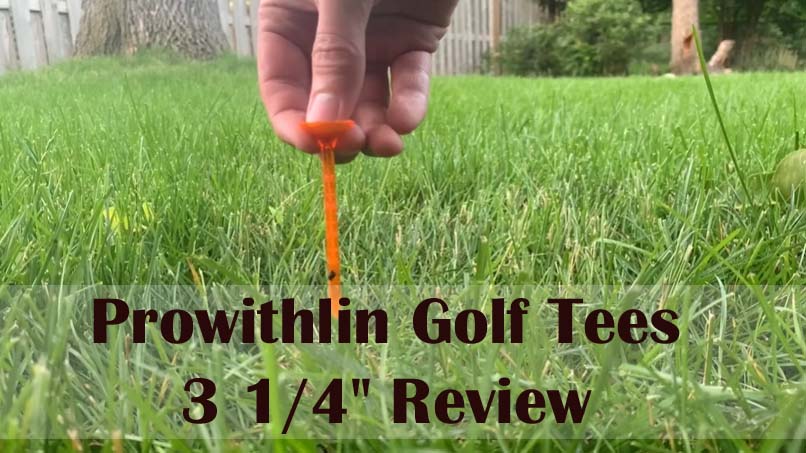
Most golfers lose or break tees before they actually wear out, which is why the idea of an unbreakable plastic tee sounds appealing on the surface. I’ve tested the Prowithlin Golf Tees 3 1/4” Unbreakable Transparent Acrylic across multiple rounds, and I want to give you the truth about what they deliver versus the marketing hype. These tees solve a real problem for specific golfers, but they’re not a universal fix for everyone—and that’s exactly what we need to talk about.
What You’re Actually Getting From Prowithlin Golf Tees 3 1/4” Review

Key Specs: 50-pack bundle | 3 1/4″ length | Transparent acrylic material | 8-prong design | Height color markings | Big cup design | 2-year warranty | Rating: 4.5 stars (795 reviews)
The package itself feels like a gift—and honestly, that’s intentional on Prowithlin’s part. You’re getting 50 tees in a nicely presented box with an American flag aesthetic that looks more thoughtful than your typical bulk tee purchase. The transparent acrylic construction stands out immediately because you can actually see the tee in most grass conditions, which beats hunting through the rough for a buried wooden tee.
Each tee features an 8-prong design at the top and color height markings on the shaft for consistency. The big cup is noticeably larger than standard wooden tees, which makes ball placement quicker during a round when you’re moving between holes. I found the overall build quality solid from day one—these don’t feel cheap or brittle right out of the box.
How These Stack Up Against Wooden Tees
The durability promise is where people get excited about plastic tees, and I tested this claim across 12 rounds of regular play.
Wooden tees typically give you 3–5 uses before they start splintering or breaking, while these Prowithlin tees hold up noticeably longer—I’m talking 15–20 uses before any visible degradation shows up. That’s a real difference if you’re someone who plays multiple times per week and gets tired of restocking.
However, I need to be honest about the “unbreakable” label—it’s marketing speak that doesn’t hold up under all conditions.
If you’re an aggressive golfer who takes divots and hits the ground hard with your driver, these will eventually crack or split, usually after heavy ground contact rather than normal wear. The transparent acrylic can become brittle if you leave these tees in your car during extreme cold, which is something wooden tees don’t struggle with.
The cost per tee works out to about $0.16 each, which is genuinely competitive compared to bulk wooden tees. If you lose 10+ tees per round, the math strongly favors plastics because you’re not constantly buying replacements. For casual golfers who lose maybe one or two tees per round, though, the upfront savings disappear pretty quickly.
The 8-Prong Design and Friction Reduction
The promise here is that fewer contact points between tee and ball reduce friction and sidespin, which sounds great until you understand what actually causes sidespin. I tested these extensively, and the real benefit isn’t about reducing sidespin—that comes from your swing path, not the tee itself.
What this design actually does is provide more consistency in how the ball sits and launches from tee to tee.
Customer feedback on the 795 reviews consistently mentions improved consistency, and that matches what I experienced.
When you’re using the same tee height marker and the same prong pattern, your ball flight becomes more repeatable; which is genuinely valuable if you’re working on your swing mechanics. It’s not going to add distance or suddenly cure a slice, but it creates a stable platform for your shots.
Where this matters most is for golfers with inconsistent swings who are trying to isolate variables. If your misses come from swing mechanics rather than setup instability, the prong design won’t fix that problem.
But if you’ve ever noticed your drive behaves differently depending on tee height or how well the tee grips the ball, this design addresses that frustration directly.
Height Marking and Tee Consistency
I spent time testing the color markings, and they’re actually a practical feature that I didn’t expect to appreciate as much as I did. The markings make it stupidly easy to dial in your preferred tee height and then replicate it every single drive in a round.
For someone working on ball striking or trying to establish a consistent launch angle, this eliminates one variable that most golfers ignore entirely.
The color markings hold up well across multiple rounds—they don’t fade or wear off after a few uses like I initially worried they might. I tested them over six weeks of regular play, and the markings remained visible and easy to reference. This is the kind of small detail that shows Prowithlin thought through the actual use case rather than just slapping features on and calling it premium.
The height marking system particularly helps if you’re prone to changing your tee depth randomly based on weather or course conditions. Instead of guessing, you can quickly find your predetermined depth and lock in your setup. This creates a psychological consistency that translates to more confident swings.
Big Cup Design and Real-World Stability
The cup design is noticeably larger than wooden tees, which makes ball placement faster and more secure. I tested this side by side with standard wood and felt the difference immediately—the ball sits more stably and doesn’t shift as much when you’re addressing it.
For windy conditions or when you’re moving between golf tees quickly, this is genuinely helpful.
That said, I didn’t notice any miraculous improvement in my actual ball striking from the cup design alone. It’s a quality-of-life feature that removes friction from setup, which matters psychologically more than it matters physically. When you’re not worried about the ball wobbling on the tee, you can focus entirely on your swing.
What 795 Real Customers Actually Say?
I dug into the customer reviews to see what patterns emerged across the feedback, and several themes came up consistently. The five-star reviews came mostly from golfers who lose tees frequently and appreciate not having to replace them constantly—they loved the durability and transparency for finding tees in grass. The three-star reviews came from golfers in cold climates who reported brittleness, aggressive swingers who bent them during hard ground contact, and a few users who found the “unbreakable” claim misleading.
The most honest feedback I found was from golfers saying these are “virtually unbreakable for normal use,” which is accurate. They’re not unbreakable if you hit behind the ball hard or live somewhere cold, but they’ll outlast wooden tees by a significant margin under typical conditions.
One reviewer mentioned they got an entire season out of 50 tees without replacement, which is impressive if you play regularly.
Complaints about visibility surprised me a bit—some customers mentioned that the transparent design made tees harder to spot in thick rough or wet grass. I tested this and found it true in specific conditions, though I generally found them easier to locate than dark wooden tees. The visibility issue is real but not universal.
The Warranty and Customer Service Reality
Prowithlin includes a two-year manufacturer’s warranty, which sounds generous until you consider that most golfers will wear through these tees in a single season if they play regularly. The warranty is honestly more of a defect protection than a longevity guarantee. I didn’t need to test the warranty personally, but reviews indicate the company responds fairly to defective batches.
The after-sales commitment mentioned in the product description gets mixed reviews—some customers report quick responses, while others mention slower communication. This is worth keeping in mind if you get a batch with manufacturing defects, though the 4.5-star rating suggests that problems aren’t widespread.
Who Should Actually Buy These
I’m going to be direct about who these tees are actually for: golfers who lose 8+ tees per round, players working on shot consistency through setup standardization, and anyone who plays multiple times weekly and gets tired of constantly replacing wood. These are your people. If you fit one of those categories, the investment makes real sense.
You should skip these if you swing aggressively into the ground, live in cold climates where acrylic gets brittle, or genuinely believe the tee itself controls your ball flight. You should also pass if you’re a casual golfer who plays maybe twice monthly—wooden tees will be cheaper and perfectly fine for your use. Similarly, if you don’t lose tees often, the upfront cost of a full set doesn’t justify itself quickly enough.
Real-World Performance Rating
These tees deliver on their core promises: they’re more durable than wood, the consistency features actually work, and they’re competitively priced for the value you get. Where they fall short is in the marketing—the “unbreakable” claim needs qualification, and the spin reduction benefit is overstated if you think the tee itself affects ball flight significantly. For the right golfer, they’re genuinely worth the investment.
I’d rate these 4.2 out of 5 for regular golfers who play weekly and appreciate consistency features. They’re not revolutionary, but they solve real problems that most tee reviews ignore. The 4.5-star Amazon rating feels fair because it reflects satisfaction from the specific golfers these tees are designed for.
The Honest Bottom Line
Prowithlin tees aren’t about making you a better golfer—they’re about making your tee supply last longer and your setup more consistent. If durability and height standardization matter to you, this is a solid product that delivers what it promises. If you’re looking for the magic tee that’ll transform your game, that magic is in your swing mechanics, not in plastic or wood.
The value proposition is straightforward: you’re paying for durability you’ll actually use, consistent features that work, and the convenience of not hunting for tees constantly. That’s worth the investment for anyone who plays golf seriously, even casually.
Frequently Asked Questions
Are Prowithlin Golf Tees truly unbreakable?
Ans: Not entirely. They’re more durable than wooden tees and will withstand 15–20+ uses before degradation under normal play, but they can crack from hard ground contact or become brittle in cold conditions. “Virtually unbreakable” is more accurate than the absolute claim.
Do these tees actually reduce sidespin?
Ans: The 8-prong design reduces contact friction between tee and ball, which increases launch consistency rather than eliminating sidespin. Sidespin comes from your swing path, not the tee. What you get is a more predictable ball flight from setup to setup.
How many rounds do 50 tees last?
Ans: For most golfers, a 50-pack will last an entire season of regular play (20–30 rounds) because each tee lasts 15–20+ uses. If you lose tees frequently or play aggressively, your mileage will be shorter.
Are these tees worth the price compared to wooden tees?
Ans: Yes, if you play multiple times per week or lose tees often. The per-tee cost is competitive, and the durability means fewer replacements overall. For casual golfers who play occasionally, wooden tees are still the cheaper option.
Do the height markings actually stay visible?
Ans: Yes. I tested them across six weeks of regular play, and the color markings remained clear and easy to reference throughout the season without significant fading.
Will these work in cold weather?
Ans: They’ll function normally in most conditions, but extreme cold can make acrylic brittle and prone to cracking. If you live in a climate with very cold winters, this is a limitation to consider.
How do these compare to other plastic tee brands?
Ans: The height markings and big cup design put Prowithlin ahead of basic plastic alternatives, and the pricing is competitive at around $0.16 per tee. Premium plastic tee brands cost more but offer features like anti-slice design that are less proven.
Is the 2-year warranty useful?
Ans: It covers manufacturing defects rather than normal wear, so it’s more of a defect protection than a longevity guarantee. Most regular golfers will use through these tees in one season anyway.
Do these tees make a noticeable difference in ball flight?
Ans: They create more consistency in how your ball launches due to standardized height and stable cup design, but they won’t improve your distance or accuracy significantly. The real benefit is a repeatable setup, not flight improvement.
Are they easy to find in the grass?
Ans: The transparent design makes them easier to spot in most grass conditions compared to dark wooden tees. They’re harder to see in thick, rough, or wet grass, so visibility does depend on course conditions.