
If you’ve been fighting a putter that wants to stay square while your hands naturally rotate through impact, you already know the feeling. The face twists open.
The ball starts off-line. You start second-guessing your stroke. The problem isn’t you, it’s the putter. Most golfers have some degree of arc in their stroke, but not every putter is built to work with that rotation.
I’ve spent time with the Cleveland Golf HB Soft 2 Putter, the TaylorMade Spider Arc Red, and the Odyssey AI-Dual to figure out which ones actually deliver for arc stroke golfers.
A quick answer if you’re in a hurry: the best putters for arc stroke are the ones with the right toe hang for your specific amount of face rotation. Below, I’ll walk you through exactly what that means and which good quality putter fits which golfer.


Do You Actually Have an Arc Stroke?
Before we get into specific putters, let’s figure out what kind of arc you’re dealing with. This matters more than brand loyalty or what looks good in the pro shop. I’ve seen too many golfers buy a putter because a friend recommended it, only to realize three rounds later that it fights their natural motion.
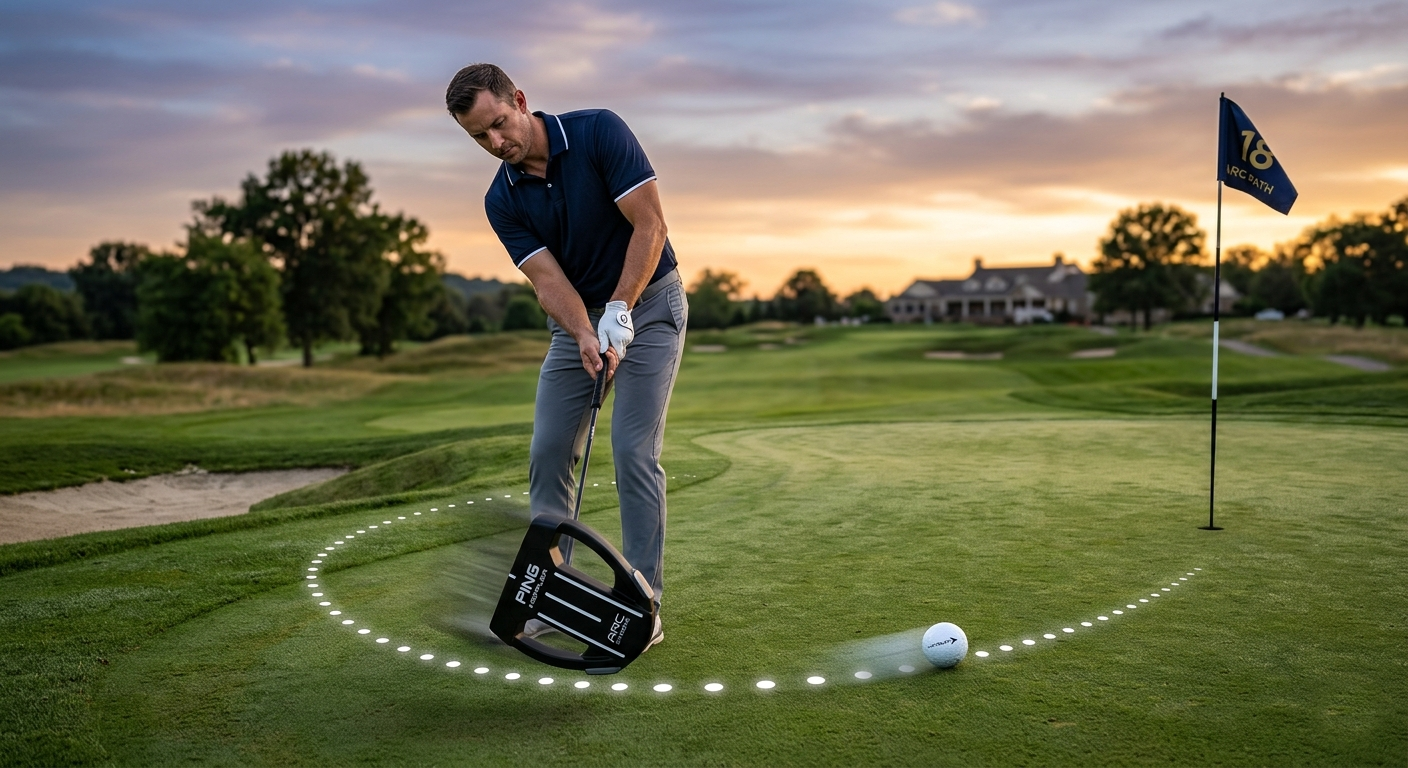
An arc stroke means your putter face opens slightly on the backswing and closes through impact. It’s the most natural stroke in golf; the body rotates, the shoulders turn, and the putter follows a curved path.
A straight stroke, by contrast, keeps the face square throughout and moves the putter on a line parallel to the target. The vast majority of golfers fall somewhere on the arc spectrum.
Here’s how to tell what you’ve got. Set up to a three-foot putt and make a slow practice stroke.
Watch the face of your putter. If you see it open a few degrees as you take it back and close coming through, that’s an arc. If the face stays square to the target line the whole time, you’ve got a straight stroke.
The distinction between a slight arc and a strong arc matters. A slight arc involves about two to four degrees of face rotation; most weekend players fall into this camp. A strong arc is more aggressive, with more than four degrees of rotation, and usually comes with a pronounced toe hang requirement.
If you’ve ever felt like you have to force the face closed at impact, you probably have a strong arc that needs more help from the putter.
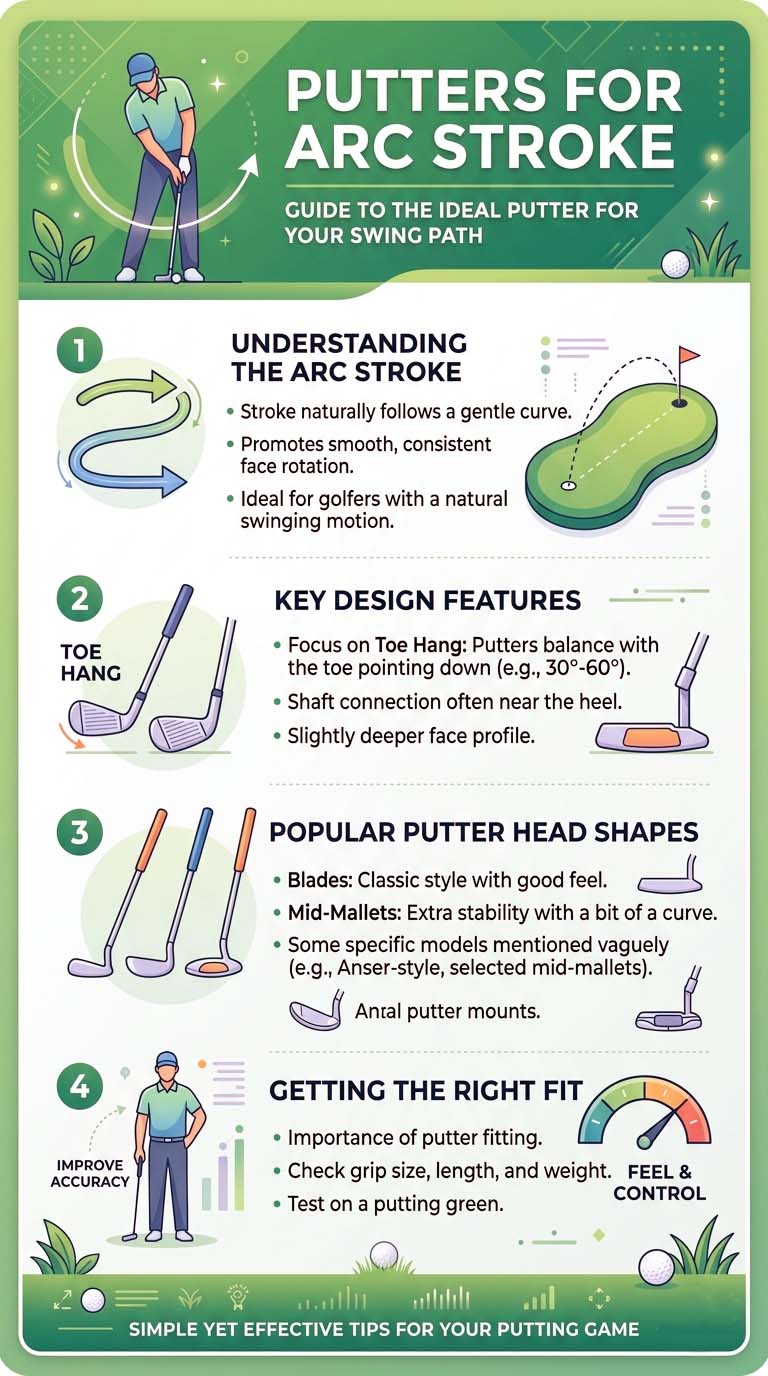
Toe hang is the simple way to match a putter to your stroke. Face-balanced putters (where the face points up when you balance the shaft on your finger) suit straight strokes.
Putters with toe hang, where the toe drops toward the ground, match arc strokes. More toe hang means more natural face rotation through the stroke.
What to Look for in an Arc-Friendly Putter?
Knowing you have an arc stroke is step one. Picking a putter that works with it is step two. Here’s the short list of what actually matters.
Toe Hang. This is the big one. Arc strokes need putters with toe hang because the face needs to rotate naturally.
The amount of hang should roughly match the amount of arc in your stroke. A slight arc means moderate toe hang. Strong arc means pronounced toe hang.
Hosel Type. The hosel determines how much toe hang you get. Plumber’s necks and slant necks produce more toe hang. Single-bend shafts tend to reduce it. If you’re shopping online, check the hosel type before you buy.
Head Shape. Blades and smaller mallets generally work better for arc strokes. Large, face-balanced mallets fight the rotation. That said, you can find mallets with significant toe hang; check before assuming the shape tells the whole story.
Balance and Weight. Swing weight affects tempo. If you have a smooth, rhythmic arc stroke, a heavier head can help you feel the face throughout the motion. If you’re more aggressive, a lighter setup might suit you better. There’s no universal right answer here, but the putter’s overall balance should feel connected to your natural rhythm.
Alignment. Arc putters often have simpler alignment systems. When you’re rotating the face through impact, you don’t want complex lines that tempt you to overcorrect. A single line or dot is usually enough.
Best Putters for Arc Stroke – In-Depth Reviews
I tested each of these putters over multiple rounds and practice sessions. Here’s what I found, ranked from the most versatile and proven option to the more specialized picks.
1. Cleveland Golf HB Soft 2 Putter | Best Overall for Slight Arc Golfers
Key Specs:
- Size: 35″ | Hand: Right | Loft: 3°
- Material: Stainless Steel | Shaft: Alloy Steel
- Grip: Synthetic Rubber, 4 1/4 inches
- Tech: Speed Optimized Face Technology
The Cleveland HB Soft 2 is the most honest putter in this group because it tells you exactly who it’s for.
Cleveland designed nine different models specifically for straight or slightly arcing strokes, and they tell you which hosel-and-toe-hang combination matches each model. That kind of transparency makes shopping easy.
What stood out to me during testing was the Speed Optimized Face Technology. It sounds like marketing speak until you miss the center of the face on a 15-footer, and the ball still rolls out the same distance it would have from a pure strike.
For arc golfers who tend to miss toward the toe + which is common with a rotating face, this forgiveness is a real advantage. I noticed it most on longer lag putts where consistency matters more than feel.
The 20-gram counterweight in the shaft butt end on models 35 inches and over is worth mentioning. It stabilizes the swing feel so that the putter doesn’t feel too head-heavy. I found it worked well with a smooth tempo, but if you have a quick, jabby stroke, the counterweight might feel like it’s fighting you. Try it before you buy if you’re unsure about your tempo.
The stainless steel head gives moderate feedback — enough to know where you struck it without punishing you on every slight mishit. It’s a confident-feeling putter that doesn’t scream for attention.
Who it’s for: Golfers with a slight arc who want distance control they can rely on without spending a fortune. Mid-to-high handicappers who need forgiveness will get the most out of this one.</div>
Who should pass: Strong arc golfers won’t get enough toe hang from the available models. If you rotate the face more than four degrees, you’ll want something with a more pronounced hang.
Also, this listing is only available in 35 inches, so if you’re shorter or prefer a shorter putter, you’ll need to look elsewhere.
2. Left Handed TaylorMade Spider Arc Red | Purpose-Built for Left-Handed Arc Golfers
Key Specs:
- Size: Available 33-36″ | Hand: Left | Loft: 3°
- Material: Titanium | Shaft: Alloy Steel
- Grip: SS Xtraxion Tour 2.0, Standard
- Design: Single-bend shaft, Arc-specific
The TaylorMade Spider Arc Red is a strange one to rank because the name tells you exactly what it’s trying to do. “Arc” is right there in the title. That’s refreshing. But there are some qualifications you need to know before you click buy.
First, this is a left-handed model only. If you’re a right-handed golfer, this listing won’t work for you. That limits the audience significantly, but for lefties searching for an affordable arc-friendly putter, the options are slim, and this one deserves attention.
The single-bend shaft produces moderate toe hang | enough for slight to moderate arc strokes. I found the titanium head to be noticeably lighter than the stainless steel Cleveland, which changes the feel considerably.
The feedback is softer, almost muted. Some golfers will love that for distance control. Others will miss the crisp sensation of a solid strike. I personally prefer a bit more feedback, but that’s a matter of taste.
The length options are a major advantage here. You can get it in 33, 34, 35, or 36 inches, which means you can actually fit it to your setup.
That’s rare in this price range and worth highlighting. The non-matching headcover is a minor annoyance; if you care about aesthetics, you’ll notice, but it doesn’t affect performance.
The big unknown is the lack of reviews. There’s no track record to look at yet. That doesn’t mean it’s a bad putter, but it means you’re buying on faith in the TaylorMade name rather than proven results. If you can test it in person, do that first.
Who it’s for: Left-handed golfers with a slight to moderate arc who want a purpose-built putter at a reasonable price. The length options make it versatile for different body types and setups.
Who should pass: Right-handed golfers can’t use this listing. Strong arc golfers likely need more toe hang than this offers. And if you want proven data from other users before buying, you’ll want to wait for more reviews to come in.
3. Odyssey Golf AI-Dual Putter | Premium Feel for the Serious Arc Golfer
Key Specs:
- Size: 34″ | Hand: Right | Weight: 0.66 kg
- Material: Carbon Steel head and shaft
- Grip: Synthetic Rubber, Pistol style, Standard
- Model: PT RH OD AI-DUAL #7 S PSTL 34
The Odyssey AI-Dual is the premium option in this group, and it shows in the materials. The carbon steel construction delivers dense, responsive feedback that arc golfers can feel throughout the stroke.
When you’re rotating the face, that feedback helps you understand exactly where the putter is at every point in the swing. I noticed the difference most on putts inside 10 feet — the sensation of a well-struck putt is unmistakable.
The pistol grip deserves a mention. It promotes a neutral hand position, which reduces the temptation to manipulate the face with your hands during the stroke.
For arc golfers, that’s valuable because the arc should come from your body’s rotation, not from active wrist work. The grip keeps your hands quiet and lets the putter do its job.
At just over a pound and a half, the head weight is moderate. It’s not an ultra-heavy putter, but it has enough heft to maintain tempo on longer strokes. I found it worked best with a rhythmic, unhurried motion. If your stroke is quick and short, the weight might feel slightly sluggish.
Here’s the honest catch: this putter has very few reviews available. It’s a new release, and the data is thin. The AI-Dual face technology sounds promising — the idea of AI-optimized face milling for consistent launch, but I haven’t seen enough real-world testing to be fully confident in how it performs over time.
The face does feel consistent across the striking area, but I’d want more rounds before calling it a proven technology.
The other limitation is that it’s only available in 34 inches in this listing. If that length works for your setup, great. If not, you’re out of luck. And it’s right-handed only, so lefties can’t use it.
Who it’s for: Right-handed golfers with a moderate arc who value feedback and are willing to invest in newer technology. Mid-to-low handicappers who can feel subtle differences will appreciate the carbon steel construction.
Who should pass: Budget-conscious golfers. Lefties. Players who need a different length. And anyone who wants to buy based on a proven track record — wait for more reviews to roll in.
Which Arc Stroke Putter Should You Buy?
Let me make this simple based on your specific situation.
If you have a slight arc and want the most reliable option under most budgets: Get the Cleveland HB Soft 2. The number of people who have tested and validated this putter gives you confidence. The Speed Optimized Face is genuinely useful for arc golfers who don’t always hit the center. Just know you’re getting 35 inches only in this listing.
If you’re left-handed with a moderate arc: The TaylorMade Spider Arc Red is your best bet. The name says “Arc” for a reason. The length options are a real advantage. Test it in person if you can — the lack of reviews means you’re buying on trust.
If you’re a serious right-handed golfer who wants premium feedback: The Odyssey AI-Dual has the best feel of the group, but it’s a leap of faith with limited data. If you can demo it and confirm the fit, the carbon steel and pistol grip combo is hard to beat.
If you have a strong arc with significant face rotation: None of these putters are ideal for you. The Cleveland is for slight arcs. The TaylorMade and Odyssey offer moderate toe hang at best. You need a putter with more pronounced toe hang, look for plumber’s neck blades or putters specifically marketed for strong arcs. I’d rather tell you the truth than recommend a putter that won’t work.
Common Mistakes Arc Stroke Golfers Make When Choosing a Putter
I’ve made some of these mistakes myself. Here’s what to avoid.
Buying face-balanced putters. If you have an arc stroke, a face-balanced putter will fight your natural motion. You’ll have to manipulate the face to get it square at impact. That’s extra work you don’t need.
Choosing based on brand alone. A Scotty Cameron that’s face-balanced won’t help your arc, no matter how good it looks in the bag. Check the toe hang first, brand second.
Ignoring length. Arc strokes are sensitive to putter length. A putter that’s too long or too short changes your posture and setup, which changes your arc. Get fitted if you can. If you can’t, at least test a few lengths at a store.
Assuming mallet equals good for arc. Many mallets are face-balanced. They look forgiving and stable, but they don’t rotate. Check the toe hang before you assume the head shape tells the whole story.
Frequently Asked Questions
What does toe hang mean for an arc stroke putter?
Toe hang refers to how much the toe of the putter drops toward the ground when you balance the shaft on your finger.
Putters with more toe hang allow the face to rotate naturally through the stroke, which matches the motion of an arc stroke. Face-balanced putters have no toe hang and are better suited for straight strokes.
Can I use a mallet putter with an arc stroke?
Yes, but you need to check the toe hang. Some mallets have significant toe hang depending on the hosel design. Don’t assume a mallet is face-balanced just because of its size. Look for models with plumber’s neck or slant neck hosels that create toe hang.
How do I know if I have a slight arc or a strong arc stroke?
Make a slow practice stroke and watch the putter face. If it opens and closes a small amount (2-4 degrees), you have a slight arc. If the rotation is more pronounced and you feel like you actively close the face through impact, you likely have a strong arc. A simple fitting at a local shop can confirm this.
Is toe hang the only thing that matters for arc stroke putters?
No, but it’s the most important factor. Head weight, grip style, and overall balance also affect how the putter feels through an arc stroke. A putter with the right toe hang but the wrong weight, can still feel uncomfortable. Try to match all the variables to your natural rhythm.
Should I get fitted for a putter if I have an arc stroke?
Absolutely. A putter fitting will measure your exact arc, face rotation, and tempo. The fitter can then recommend the right toe hang, length, lie angle, and weight for your specific stroke. It’s the best money you can spend on your putting if you’re serious about improving.