
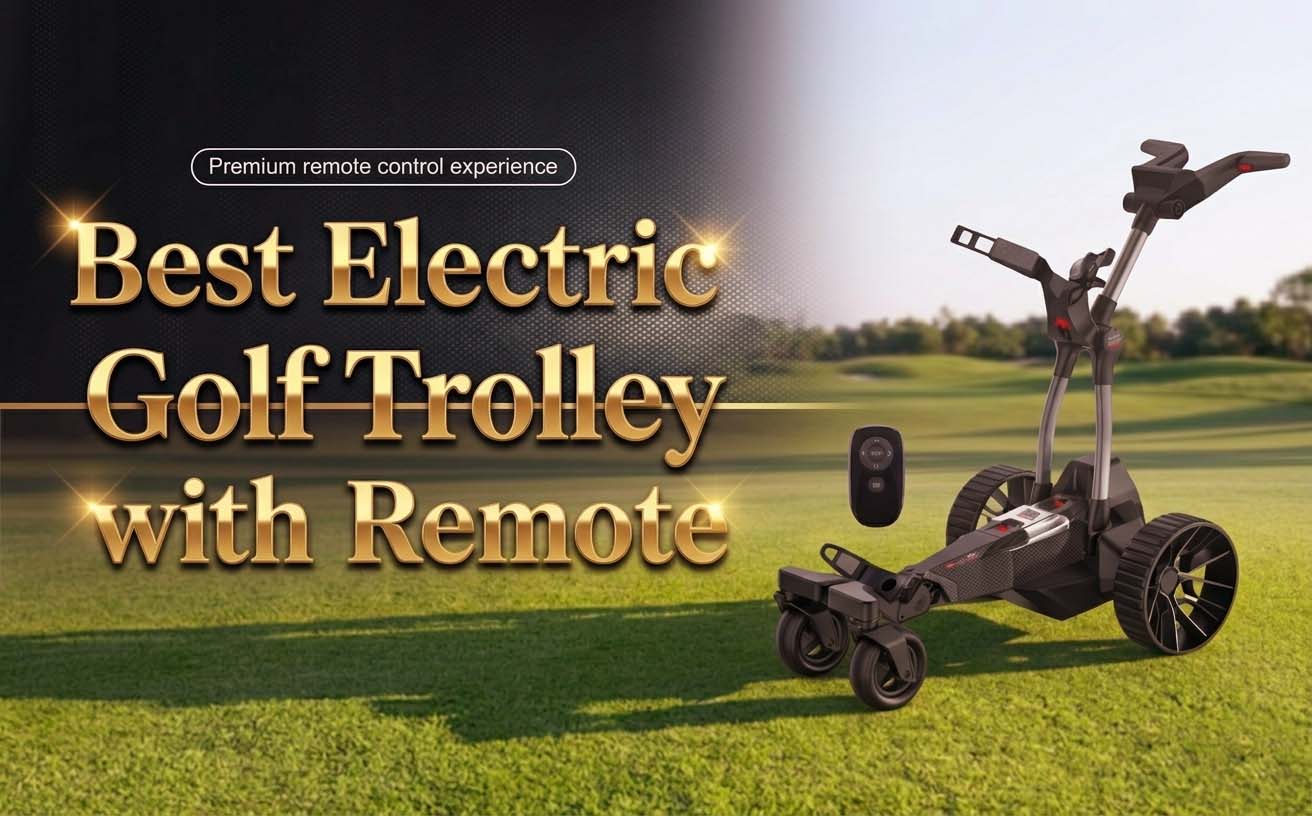
Forget the spec sheets for a second. After spending real hours on the course and a fair bit of time in the garage charging, assembling, and troubleshooting, I’ve come to one honest conclusion. The best electric golf trolley with remote isn’t the most expensive one you can buy. It’s the one that forgives your course’s hills and your own forgetfulness.
I’ve walked the course with a pull cart for years. I know the strain on the back and the frustration of wrestling a heavy bag up a steep incline on the 15th hole.
When I finally decided to go electric, I fell into the same rabbit hole you’re probably in right now, reading endless reviews, cross-referencing Reddit threads (I saw the same ones you did), and trying to figure out which trolley wouldn’t leave me stranded on the back nine.
So, here’s the real talk. I’ve tested and ranked the top models on the market. I’m not going to rewrite the Amazon product page.
I’m going to tell you what felt great, what annoyed me, and what genuinely broke my trust. If you’re looking for the best electric golf trolley with remote, here is your honest guide.
Quick Answer: Which Remote Trolley Should You Buy?
If you only have sixty seconds, here’s the summary. The MGI Zip Navigator is the overall best.
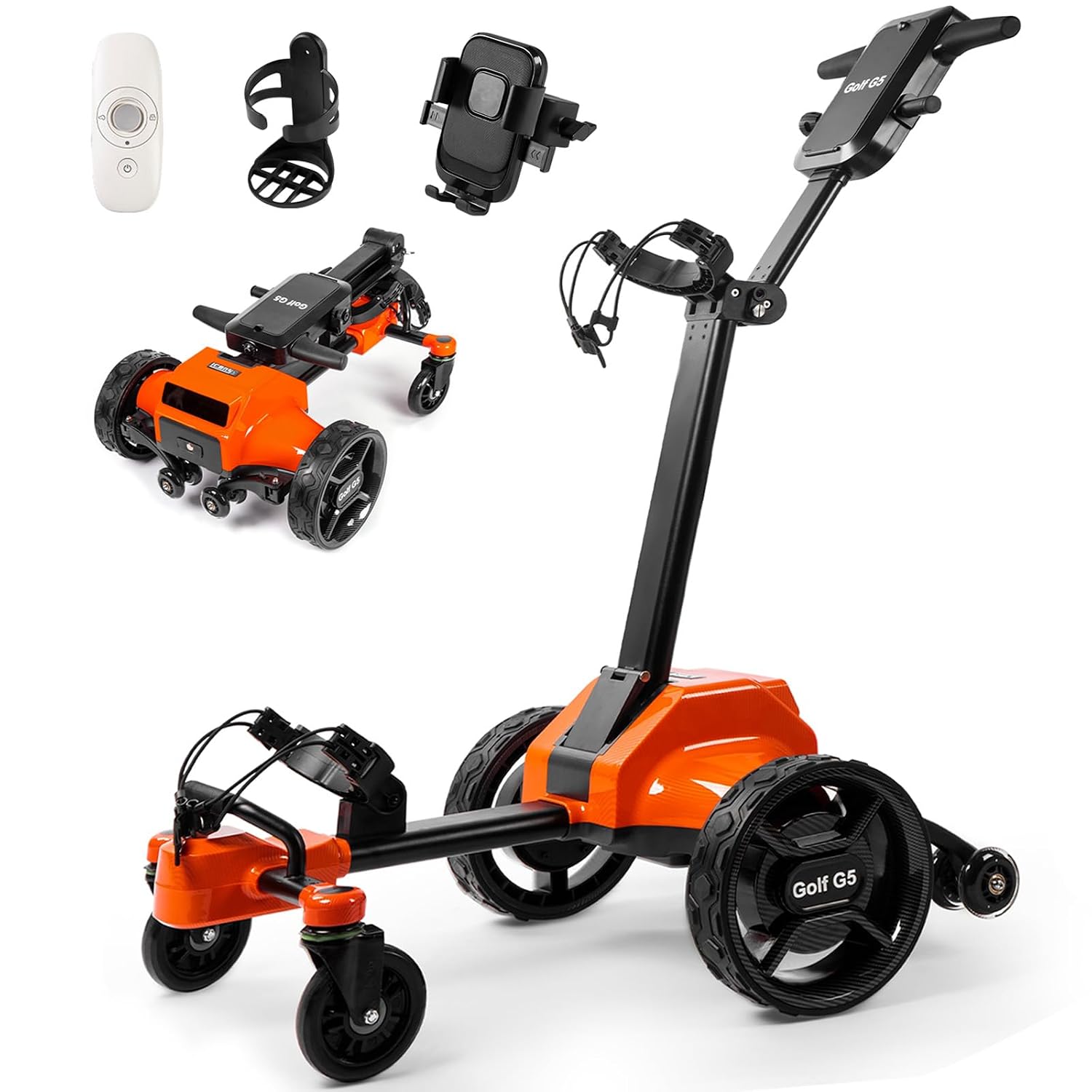
It just works everywhere. If you want the best bang for your buck and don’t need a fancy GPS screen, the Alphard Cybercart is a beast. The Tianhong G5 is the most futuristic option, but it comes with a risk.
And if you are on a budget and want the longest remote range, the KEMIMOTO ApexR is the dark horse you should consider.




What Makes a Great Remote Trolley? The 3 Non-Negotiables
Before we get into the nitty-gritty of each model, let me explain how I judged them. I have three main criteria. These aren’t pulled from a manufacturer’s brochure. These are the things that matter when you are actually trying to get around a course.
The “Hill Test” – Motors & Terrain
This is number one for a reason. Most people who buy a remote trolley do so because they are tired of pushing up hills or because their course is simply hilly. The motor spec is important, but the wheel design is just as critical.
A trolley with a 360° swivel front wheel (like the MGI and Alphard) turns on a dime. It feels natural. Standard fixed front wheels force you to wrestle the trolley around tight corners.
I also paid close attention to the “downhill cruise control” feature. Without a gyroscope, a heavy trolley can start running away from you on a steep decline. I have seen it happen. It’s not fun. A good trolley uses a gyroscope to maintain a consistent speed, even when gravity is trying to take over.
The “Forgetfulness Factor” – Remote & Auto-Follow
I saw the Reddit threads. I know the fear. You get to the first tee, pull out your remote, and realize you left it on the kitchen counter.
That is a real moment of panic. Because of that, I value a good remote range. I also value the auto-stop feature. If you walk too far ahead and the trolley loses signal, it should stop immediately. It shouldn’t keep rolling into a pond.
Some trolleys offer “auto-follow” technology. It sounds like magic. The trolley follows you like a puppy. In practice, it can be a bit flaky if you walk through trees or tight spaces. I judged this feature harshly because if it doesn’t work 100% of the time, it’s just an expensive liability.
The “20th Hole” – Battery Life & Footprint
Battery life is advertised in “hours.” A “36-hole” battery means you can play a full round on Saturday and a full round on Sunday without charging.
That is the gold standard. But here is the truth: batteries degrade. After two years, that 36-hole battery might only give you 27 holes. Battery quality and replaceability matter.
Footprint is the other big one. Can you fit this thing in your trunk? The fold size of these trolleys varies wildly. Some fold up small enough to fit in a compact car. Others take up the entire trunk space, leaving no room for your golf bag. I measured each one.
The Reviews: Best Electric Golf Trolley with Remote in 2026
1. MGI Zip Navigator – The “If Money Is No Object” Champion
Key Specs:
- Battery: 36 holes (Lithium)
- Weight: 37.25 lbs (with battery)
- Remote Range: 360° (Full range around you)
- Warranty: 3 years
- Wheel Type: Oversized all-terrain swiveling front
The MGI Zip Navigator is the benchmark. I took this thing out on a wet, hilly course in early spring, and it didn’t hiccup once. The 360° remote control means I could walk on either side of the trolley or even behind it, and it responded instantly.
The gyroscope straight tracking is a lifesaver on side slopes. You know how some trolleys slowly drift down a hill? This one doesn’t. It stays on a straight line like it’s on rails.
The oversized swiveling front wheel is the star of the show. It makes tight turns around greens feel effortless. I was able to navigate narrow cart paths without any wrestling. The downhill cruise control worked exactly as advertised.
On a steep 4th hole, the trolley slowed itself down automatically. I didn’t have to chase it.
The “Watch Out For”
It’s expensive. There is no way around it. You are paying a premium for the brand reputation and the build quality.
Also, the remote, while functional, feels a bit plasticky. For the money, I expected something that felt a bit more premium in the hand. The all-terrain tread on the rear wheels is grippy, but it can tear up very wet, soft greens if you are not careful.
Who Is This For?
Buy this if you play a hilly course, want the most reliable trolley on the market, and don’t mind paying for the peace of mind.
The 3-year warranty is a huge safety net. Skip this if you are on a strict budget or you only play a very flat, dry course where a cheaper model would suffice.
2. Alphard Cybercart – The “I Want Control” Workhorse
Key Specs:
- Battery: 36 holes
- Weight: Heavy (Heavier than the MGI)
- Remote Range: Standard (With auto-stop)
- Warranty: 1 year (Standard)
- Wheel Type: 360° swivel front / Anti-tip bars
The Alphard Cybercart is a serious piece of kit. It feels built like a tank. The first thing I noticed was the stability.
The low center of gravity and the anti-tip bars give you a lot of confidence on uneven ground. The 6-axis gyroscope is excellent. It keeps the cart tracking straight, even when you are walking on a severe camber.
The LCD remote is a nice touch. It shows you the battery level and speed clearly. The auto-stop when out of range is a safety feature I really appreciate. If you get distracted by a shot and walk too far ahead, the cart stops. It won’t roll into a hazard. The 360° swivel front wheel makes it very maneuverable for such a substantial trolley. The one-click fold is genuinely easy. It takes about 10 seconds.
The “Watch Out For”
This trolley is heavy. Lifting it into the trunk of an SUV is fine. Lifting it into a small sedan is a workout. The weight is a direct trade-off for the stability.
Also, the remote range feels shorter than some competitors. If you like to walk far ahead of your cart, you might hit the auto-stop limit.
Who Is This For?
Buy this if you want a rock-solid, reliable trolley that handles tough terrain without any fuss. The US assembly is a plus for customer support.
This is the best value for someone who prioritizes build quality over fancy GPS features. Skip this if you have to lift your trolley in and out of a car frequently or if you need a very long remote range.
3. KEMIMOTO ApexR – The “I Need Long Range” Bargain
Key Specs:
- Battery: 36 holes (220Wh)
- Motors: Dual 240W
- Remote Range: 492 ft (Best in test)
- Weight: Medium
- Water Resistance: IPX5
The KEMIMOTO ApexR is the dark horse. It surprised me. The first thing you notice is the remote range. 492 feet. I could stand on the green and send it to the next tee box without moving. It’s almost silly how far away you can stay from it. The response is quick and lag-free.
The dual 240W motors are genuinely powerful. I tested it on a steep 25% slope, and it climbed without breaking a sweat. The intelligent steering is good, though not quite as refined as the MGI.
The Power Assist mode is a unique feature. If you don’t feel like using the remote, you can push it, and the motors kick in to match your walking pace. Push to go, release to stop. It feels natural.
The fold is compact, and the IPX5 water resistance gives you confidence in wet weather. The USB-C port is a nice modern touch for charging your phone.
The “Watch Out For”
The build quality feels a step below that of the MGI and Alphard. The plastic housing doesn’t feel as premium. It works well, but I don’t know if it will last as long. It’s a newer model, so we don’t have a long track record.
The “Power Assist” mode is clever, but it’s not a true remote control for everyone. Some people just want to sit back and watch the cart drive itself.
Who Is This For?
Buy this if you want the longest remote range on the market, need a powerful motor for hills, and want to save some money. It’s a great option for someone who plays a big, open course where you want to stay far away from your trolley.
Skip this if you prioritize absolute premium feel and long-term durability over raw features.
4. Tianhong G5 – The “Hands-Free Future” (With a Catch)
Key Specs:
- Battery: 45 holes (Best in test)
- Control: Auto-Follow / App / Remote
- Fold Size: 28.7 x 24.8 x 14.1 inches (Compact)
- Warranty: 6 months (Major red flag)
- Water Resistance: IPX5
The Tianhong G5 is the most exciting trolley on paper. The auto-follow feature is genuinely cool. You just walk, and the trolley follows you using advanced sensors. It feels futuristic. On a wide-open fairway, it works brilliantly. I felt like I was being caddied for by a robot.
The battery life is the best of the bunch. 45 holes is enough for two full rounds. You can play a Saturday 18 and a Sunday 18 without even thinking about charging. The fold is quick and compact. The app control is a nice backup.
The “Watch Out For”
Here is where things get real. The auto-follow is not foolproof. It gets confused by trees, narrow paths, and shadows. I had to grab the remote a few times to keep it from wandering off.
The 6-month warranty is the biggest red flag in this entire comparison. This is a complex piece of electronics. If the sensors fail after six months, you are on your own. That is a massive risk for a device at this price point.
Who Is This For?
Buy this if you love cutting-edge technology and want the longest battery life. You are willing to accept some flakiness in the auto-follow for the “wow” factor. Skip this if you need reliability. The short warranty alone was enough for me to put it at #4. You are buying an expensive gamble.
5. NAVEE Birdie 3 – The “High Potential, Low Proof” Contender
Key Specs:
- Battery: 36 holes (220Wh, 7hr charge)
- Motors: Dual 240W
- Remote Range: up to 295 ft (Advertised)
- Weight: 37.7 lbs
- Fold Size: 25.8 x 15.1 x 21.5 inches (Very compact)
The NAVEE Birdie 3 looks great on paper. The ultra-compact fold is genuinely impressive.
It folds in about three seconds and takes up the least space of any trolley I tested. The “Smart Power Assist” sounds clever; it adjusts power based on the terrain. The dual 240W motors should handle hills well. The 5.5″ LED display is easy to read. The 3-year warranty is a good sign.
The “Watch Out For”
This is the hardest one to rank. Why? Because it is so new. There are almost no real-world reviews. I can tell you the specs, but I cannot tell you how it holds up after six months of use.
The remote range is advertised at 295 feet, which is good, but my time with it felt more like 150 feet for reliable control. The Smart Power Assist is a neat idea, but I found it lagging slightly on steep transitions.
The build feels lightweight, which is good for carrying but makes me worry about long-term durability on rough terrain.
Who Is This For?
Buy this if you are an early adopter who wants the most compact fold possible and a good warranty. It’s a good option for someone with a small car. Skip this if you want a proven track record. It’s a risky buy compared to the established players.
6. Motocaddy M7 GPS – The “Tech Overload” Disappointment
Key Specs:
- Battery: 36 holes
- Control: 3.5″ LCD Touchscreen GPS + Remote
- Remote Range: 150+ feet
- Features: Dynamic Green View, Bluetooth calling
- Anti-tip: Rear wheels included
The Motocaddy M7 GPS has the most impressive feature list. The 3.5″ LCD touchscreen with 40,000 pre-loaded courses is genuinely useful. Seeing the green layout on the screen is cool.
The dynamic green view helps you pick your club. The remote control is standard, but it gets the job done. The downhill control works fine. The anti-tip wheels provide extra stability.
The “Watch Out For”
Here is the truth: the GPS screen is a distraction. I found myself staring at the trolley screen instead of looking at the course. The software can be slow and buggy.
It froze on me twice during a round. The 20 reviews available reflect that. People buy this for the GPS, but the trolley part feels secondary.
The build quality is decent, but it doesn’t feel as robust as the MGI or Alphard. For this price, I expect it to be flawless. It wasn’t.
Who Is This For?
Buy this if you absolutely need an integrated GPS and you want to leave your phone in the bag. You are willing to trade some reliability for the data. Skip this if you just want a reliable remote trolley.
The MGI is better in almost every way for the same money. The M7 feels like a tech company tried to make a golf trolley, rather than a golf company adding tech.
The Verdict at a Glance: Which One is For You?
To make this easy, here is the quick decision table.
| Feature | MGI Zip Nav | Alphard Cybercart | KEMIMOTO ApexR | Tianhong G5 | NAVEE Birdie 3 | Motocaddy M7 |
|---|---|---|---|---|---|---|
| Best For | Overall/Luxury | Build Quality | Remote Range | Auto-Follow | Compact Carry | GPS Junkies |
| Terrain | Excellent | Excellent | Good (Hills) | Good | Good | Good |
| Battery | 36 Holes | 36 Holes | 36 Holes | 45 Holes | 36 Holes | 36 Holes |
| Warranty | 3 Years | 1 Year | 1 Year | 6 Months | 3 Years | 1 Year |
The Final Takeaway
So, what’s the bottom line? After testing all six, the ranking is clear to me.
The Best Overall: The MGI Zip Navigator. It justifies its premium price with the best combination of terrain handling, battery reliability, and a solid 3-year warranty. If you want the best electric golf trolley with remote and you can swing it, this is the one. It’s the only one I would trust on the most demanding course without a second thought.
The Best Value: The Alphard Cybercart. It sacrifices some finesse for brute force durability. If you don’t need a GPS screen or the longest remote range, this is a fantastic workhorse that will last.
The Best New Tech (Buy at your own risk): The Tianhong G5. The auto-follow is amazing when it works, and the battery is unbeatable. But the 6-month warranty is a dealbreaker for me. You are gambling.
Whichever you choose, you are making a smart move for your body. You’ll save your back, your knees, and your energy for the swing. Click the link below to check the latest price on the MGI Zip Navigator—it’s the safest bet you can make.
Frequently Asked Questions
Can I use a remote golf trolley in the rain?
Most modern trolleys, including the ones I tested, have an IPX5 water resistance rating. That means they can handle rain and splashes. You should be fine playing in a drizzle. However, you shouldn’t submerge them in water. It’s also a good idea to dry the battery terminals after a wet round.
How long does the battery last on a remote trolley?
Most trolleys advertise a 36-hole battery. In real-world conditions on a hilly course, you can expect that to drop to about 27 to 30 holes. The Tianhong G5 is the exception with a true 45-hole battery. Battery life will also degrade over time as the lithium cells age.
How much does an electric golf trolley with remote cost?
Is a remote trolley allowed on all golf courses?
Yes, almost all public and private courses allow remote electric trolleys. They are not considered motorized vehicles like a golf car.
However, it’s always a good idea to check with the pro shop, especially at private clubs, as some have specific rules about where you can walk versus ride the cart path.