
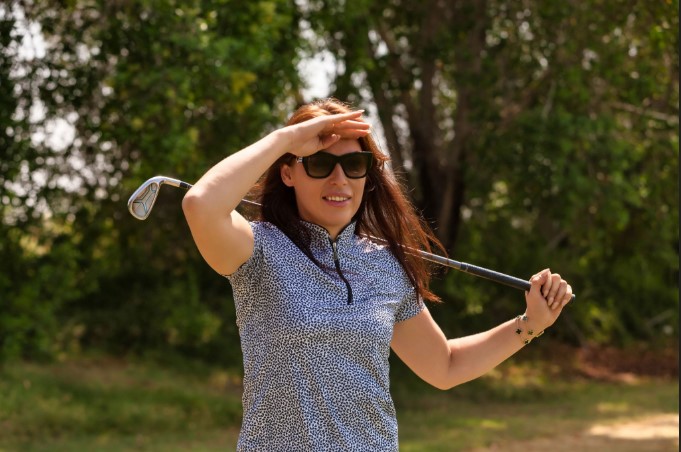
If you are a girl who plays golf, you already know the game is about precision. A bad read on the green, a lost ball in the sky, or a glare that steals your line can cost you strokes. The right lens color helps you see the ball, the fairway, and the breaks. But the answer is not one shade fits all. It depends on the light you play in and the color of the ball you hit.
Girls golf comes with its own needs. Frames that fit smaller faces matter. So does the way a tint makes your favorite pink or yellow ball pop. This guide walks you through every factor so you can pick a lens color that actually helps your game.
Best Lens Color for Girls Golf by Condition
The most useful lens color for outdoor golf is copper, amber, or rose. These tints boost contrast between the green grass and the ball. They also cut haze from the sky. But the best choice changes with the weather and time of day.
| Condition | Best Lens Color | Why |
|---|---|---|
| Bright sunny day | Green, gray, or copper | Reduces total brightness without distorting colors |
| Overcast or cloudy | Amber, rose, or yellow | Raises contrast against gray sky and green grass |
| Low light (dawn or dusk) | Yellow or light rose | Maximizes depth perception and ball tracking |
| Indoor simulator or driving range | Clear with anti-reflective coating | No UV needed, but reduces glare from artificial lights |
For most girls playing a round in mixed sun and clouds, a copper or amber lens is the safest pick. It works in both bright and shady spots.
How Lens Color Affects Your Golf Performance?
Lens color works by filtering certain wavelengths of light. Brown and copper tints block blue light, which is the main source of haze. That makes the white ball jump off the green background. Your eyes focus faster and you judge distance better.
Green and gray lenses keep colors natural. They are great for true-to-life vision on bright days but do not improve contrast as much as copper. Yellow and rose tints increase contrast in low light by boosting the difference between the ball and the grass. They also help you see the texture of the green for reading putts.
The trade-off: high-contrast tints like amber can make the sky look a bit orange. For most players, that is a small price for better ball visibility.
Choosing a Lens Color for Your Specific Ball Color
Many girls play with colored golf balls. Pink, yellow, orange, and even green balls are common. The lens color you pick changes how visible that ball is.
- White balls: Best with amber or copper. The contrast is maximum.
- Yellow balls: Amber or yellow works great. Avoid blue-blocking tints that make yellow look dull.
- Pink balls: Rose or magenta tints make pink balls brighter. Green or gray lenses wash them out.
- Orange balls: Copper or amber helps orange pop. Gray lenses flatten the color.
- Green balls: Not recommended for outdoor play because they blend with grass. If you use one, copper or rose provides the best separation.
If you switch ball colors, consider a lens that works with your most common ball. Or buy glasses with interchangeable lenses so you can swap tints as needed.
Why Fit and Frame Size Matter for Girls
A great lens color is useless if the glasses slide down your nose every time you swing. Girls often have smaller faces than men. Standard adult frames can be too wide or sit too low.
Look for frames labeled as junior or women’s fit. Key measurements to check:
- Frame width under 130 mm
- Bridge width that sits snug without pinching
- Adjustable nose pads so you can fine-tune the fit
- Temple length around 130–135 mm
Wraparound styles are good for golf because they block wind and peripheral light. But make sure the curve is not so tight that it distorts your vision. Lightweight materials like polycarbonate or TR90 keep the glasses comfortable for four hours on the course.
Myths About Lens Color and Style
There is a lot of bad advice out there. Here is what is true and what is not.
Myth: Rose lenses are only for fashion.
Reality: Rose tints actually boost contrast in low light. They improve depth perception on cloudy days.
Myth: Polarized lenses are always best for golf.
Reality: Polarization cuts glare, but it can also reduce the subtle reflections on the green that tell you the break. Many pros prefer non-polarized tints for putting.
Myth: Darker lenses mean better protection.
Reality: UV protection is separate from tint darkness. You can get clear lenses with full UV coating. Dark lenses only reduce brightness, not harmful rays.
Myth: You need one lens color for all conditions.
Reality: Photochromic or interchangeable lenses give you the best of multiple worlds. If you play in different light often, they are worth the cost.
Specialty Lens Options for Girls Golf
Beyond basic tints, some technologies make a real difference.
Photochromic lenses darken automatically in sunlight and clear up indoors. They are convenient if you go from the driving range to the simulator. But they can be slow to change in cold weather. Fine for casual play, not for tournament speed.
Interchangeable lens systems let you swap tints in seconds. You carry one frame and a few lenses. This is the best option for players who face different conditions in one day.
Contrast-enhancing technologies like Prizm Golf or Zeiss Golf use custom dyes to boost the exact colors that matter on the course. They are expensive but effective. If you play seriously, try a pair before you buy.
Lens coatings also matter. Anti-reflective coating stops glare from overhead lights. Oleophobic coating repels sweat and sunscreen. Hydrophobic coating helps in drizzle. Mirror coatings reduce light transmission and look stylish, but they can be too dark for overcast days.
How to Test and Select the Perfect Lens Color
You can read about tints all day, but your eyes are the final judge. Try these steps:
- Go to a store that lets you try glasses with interchangeable lenses. Bring your own golf ball.
- Step outside and look at the ball in direct sunlight, in shade, and against the grass.
- Check how the lens feels when you look from the ball to the hole. You want clear depth perception, not a strained feeling.
- Wear the glasses for a few minutes. Do they slip? Do they fog? Fogging is a deal breaker.
- If you buy online, use virtual try-on tools that map your face shape. But return policies are important in case the fit is off.
Your perfect lens color is the one that makes the ball easy to see in the conditions you play most. Do not overthink. Start with copper or amber, then adjust from there.
Frequently Asked Questions
Can I wear the same lens color for practising on a simulator as for outdoor play?
Yes, but clear or yellow is better indoors. Amber or copper may be too dark and reduce details under artificial lights. If you only want one pair, go for a light rose tint that works in both.
Are transition lenses fast enough for golf?
Newer photochromic lenses react in seconds, but they may not darken fully in a hot car. They are fine for casual play, but for competition speed, interchangeable lenses are more reliable.
Do pink or rose lenses help with seeing pink golf balls?
Yes. Rose tints make pink balls stand out against green grass. Green lenses will make them nearly disappear. Stick with warm tones for pink balls.
How do I prevent my glasses from fogging up in humid weather?
Look for anti-fog coatings or frames with ventilation channels. Also, avoid wearing the glasses too tight. A small gap at the temples helps airflow.
What lens color is best for indoor mini-golf?
Clear or yellow gives you the best contrast under artificial lights. No UV protection is needed, but an anti-reflective coating helps with glare from overhead fixtures.