
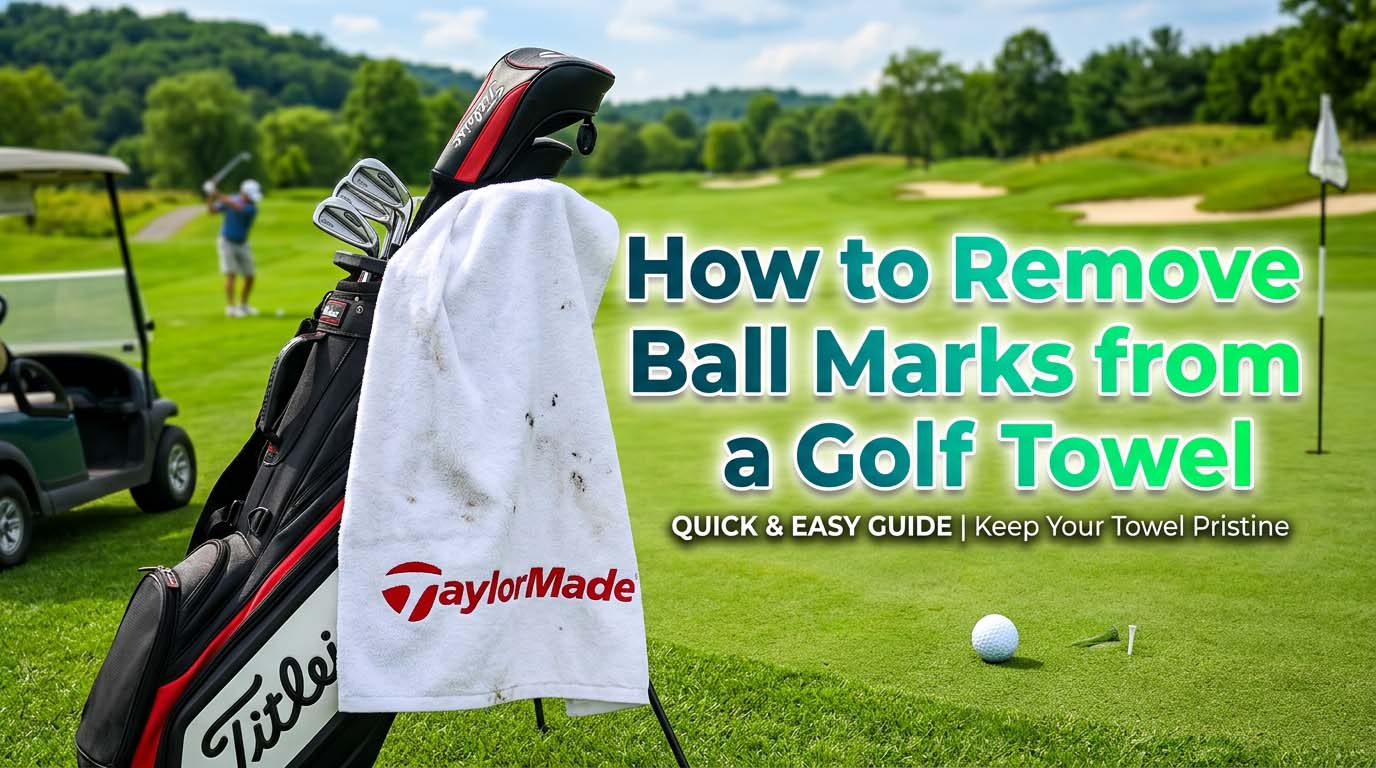
If you play golf regularly, your towel takes a beating. Ball marks, grass stains, and smudges from ball markers end up on the fabric after just one round. The good news is that most of those marks come off cleanly, but the wrong approach can ruin a good towel.
I have cleaned dozens of golf towels over the years, and I have learned that the key is knowing what caused the mark and what your towel is made of.
Identify What Kind of Mark You Are Dealing With
The first step is to look at the stain closely. Different causes need different treatments.
- Transfer from a ball marker or tool. These are usually black, blue, or silver marks that sit on the surface of the fabric. They come from the ink or metal of a repair tool or a marker that was pressed against the towel.
- Stain from a golf ball cover. Golf balls pick up grass, dirt, and even red clay from the course. When you wipe a ball on the towel, that stain can soak into the fibers. It tends to be green, black, or brown.
- Rust from a metal repair tool. If you keep a divot tool in your towel pocket, moisture can create small orange or brown rust dots. These are harder to lift because the metal particles bond to the fabric.
Know Your Towel Material
Before you start scrubbing, check the tag. The fabric determines how aggressive you can be.
- Microfiber: Common in high-end towels (Seamus Golf, Bandon Dones). Microfiber is sensitive to heat and strong chemicals. Hot water and bleach ruin its absorbency and can melt the fibers.
- Terry cloth (cotton): The classic white or colored towel. Cotton handles most stain removers well, but bleach can discolor logos and weaken the fabric over time.
- Huck (thin, absorbent): Often used in gym or utility towels. Dyes are less stable, so strong solvents may leak color.
The Gentle Solution for Fresh Marks
If the mark is still fresh (within a day or two), start with the safest method. It works for most surface transfers and light grass stains.
- Wet the stained area with cool or warm water. Do not use hot water because it can set the stain.
- Apply a small drop of gentle dish soap (like Dawn) directly onto the mark.
- Rub the fabric against itself gently. Avoid scrubbing with a brush on microfiber.
- Let it sit for 15 minutes. Then soak the towel in a basin of warm water for up to 30 minutes.
- Rinse thoroughly and check the mark. If it is gone, move to drying.
- If the mark remains, move to the solvent method below.
The Solvent Approach for Stubborn Ball Marks
For set-in stains that did not lift with soap, you need a targeted solvent. I recommend rubbing alcohol (isopropyl alcohol, 70% or 91%).
- Dampen a clean white cloth or cotton ball with rubbing alcohol.
- Dab the stain gently. Do not rub hard, rubbing can push the stain deeper.
- After a few dabs, blot the area with a dry cloth. You should see color transfer.
- If the towel has a textured surface (like terry cloth), use a soft-bristle toothbrush dipped in alcohol to work the stain loose.
- Rinse the towel with cold water to remove the alcohol.
- Wash normally with a gentle detergent. Use a laundry bag for microfiber golf towels to protect them.
For red grass stains (common on clay-based courses), use a dedicated enzyme cleaner like OxiClean. Mix according to the package instructions, soak the towel for 1 hour, then wash.
The Bleach Trap: Why You Should Avoid It
Many golfers reach for bleach when a stain won’t budge. That is a mistake. Chlorine bleach does three things to a golf towel:
- Destroys absorbency. Bleached cotton becomes stiff and less thirsty. That defeats the purpose of a towel.
- Fades logos and embroidery. Custom towels from courses such as Bandon Dunes or St. Andrews feature screen-printed or embroidered logos. Bleach turns them white or yellow.
- Weaken fibers. Over time, bleach causes holes and fraying.
Instead, use oxygen bleach (sodium percarbonate), which is safer for colors and logos. Look for products like OxiClean or Arm & Hammer. They work well on grass and ball stains without the harsh side effects.
Drying the Right Way for Long Life
Drying is the final step, and it matters more than people think.
- Microfiber towels: Air dry or use the lowest heat setting on your dryer. High heat melts microfiber, ruining its texture and absorbency.
- Cotton terry towels: Medium heat is fine, but avoid over-drying. Remove them while still slightly damp to keep them soft.
- Never use high heat on a stain that is not fully removed. Heat can set a latent stain permanently.
How to Prevent Future Ball Marks?
A little prevention saves you cleaning time.
- Store your ball marker and repair tool in a separate pocket of your bag, not loose in the towel’s grommet loop.
- Rinse your towel with cold water after each round, even if it looks clean. Dirt and oils harden over time.
- Use a separate towel for cleaning balls and a different one for drying your hands or clubs.
Frequently Asked Questions
Can I use a magic eraser on a golf towel?
I do not recommend it. Magic erasers work by micro-abrasion. They can remove the stain, but they also wear down the fabric surface, especially on microfiber. The towel will look thin and frayed after a few uses. Stick to alcohol or enzyme cleaners instead.
Will removing a ball mark ruin the towel’s logo or dye?
It depends on the method. Gentle dish soap and alcohol are safe for most logos. Bleach is the real danger. Always test a small hidden area first. If the logo starts to fade, stop and try a different product.
What should I do if the ball mark is from red turf stain?
Red clay and turf stains need an oxygen bleach soak. Mix a scoop of OxiClean with warm water, submerge the towel for one hour, then wash. Do not use chlorine bleach — it will turn a red stain into a permanent yellow mark.
Is it better to wash my golf towel with other golf clothing?
Wash microfiber towels separately or in a laundry bag. They attract lint from cotton clothes. Terry cloth towels can go with other golf gear, but avoid washing with heavy zippers or Velcro that can snag the fabric.
Removing ball marks from a golf towel does not have to be a guessing game. Identify the mark, know your towel, and choose the right treatment. Your towel will look clean and last much longer.