
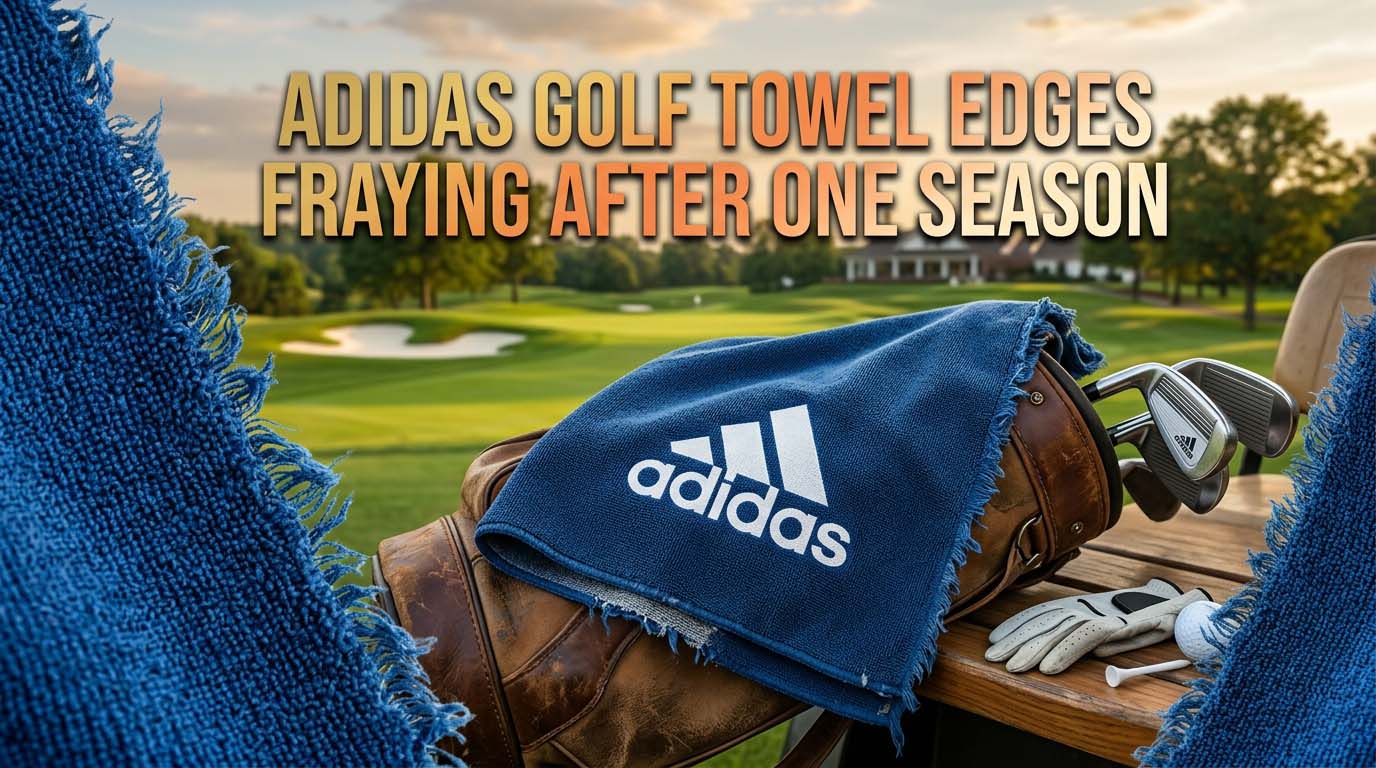
You bought an Adidas golf towel expecting it to last. After one season, the edges are coming apart. This is frustrating, especially when you paid for a brand name. You want to know why this happened and what you can do about it.
Why Your Adidas Golf Towel’s Edges Began Fraying
Three main things cause edge fraying on Adidas golf towels. Understanding each one helps you figure out which one applies to your towel.
The Stitch Bind Differential
The edge of your towel is held together by a line of stitching. This stitching grabs the raw edge of the fabric and locks it in place. On a microfiber towel, the fibers are smooth and slippery. The stitches do not grip these fibers as tightly as they grip cotton fibers. After a few washes and uses, the thread loosens. Once the thread loosens, the edge starts to unravel.
The Abrasion-Chemical Synergy
A golf course is a harsh environment for a towel. Sand and dirt get ground into the edge fibers. Sunscreen and bug spray contain chemicals that break down synthetic fibers over time. The towel edge is the thinnest part of the towel. It gets the most abuse from these two things working together.
The Carabiner Tension Point
Most Adidas golf towels have a metal clip or carabiner sewn into the top corner. Every time you pull the towel off your bag or hook it back on, you put stress on that attachment point. The force travels along the edge weave. This concentrated tension is often the first place fraying starts.
Adidas Golf Towel Edge Fraying Versus Normal Wear
Not all fraying means you got a bad towel. You need to know the difference between normal wear and a real defect.
Lifecycle Expectancy by Fabric Type
A microfiber towel used twice a week should last two to three seasons before you see minor edge fraying. A cotton velour towel might show edge wear after one to two seasons. If your towel started fraying after three or four rounds of golf, that is a problem.
Visual Fraying Assessment Guide
Look at your towel and find the pattern. This will tell you what caused the problem.
- Edge stitching unraveled but fabric is intact: This points to a stitching failure. It could be a manufacturing issue or a care problem.
- Fabric shearing at the edge without stitch failure: This is a fabric construction defect or damage from abrasion.
- Fraying concentrated at the grommet or closure point: This is mechanical stress failure from the carabiner.
- Uniform fraying across all borders: This usually comes from washing and drying cycles or chemical damage.
Immediate Steps to Stop Fraying From Worsening
You can slow down the damage while you decide what to do next.
Edge Stabilization With Fray Check
Buy a liquid seam sealant called Fray Check. Apply a thin line to the active fraying edge. Let it dry completely. This seals the raw fibers together. Do not apply too much. It can make the edge stiff.
Reinforcement Stitching Options
If you have a sewing machine or a needle and thread, you can stitch a new line of thread just inside the frayed area. Use a zigzag stitch for microfiber. Use a straight stitch for cotton. This locks the edge in place.
The Carabiner Rotation Strategy
If the fraying started at the carabiner, rotate where you attach the clip. Move it to the opposite corner or to a different spot on the towel. This distributes the stress.
When Not to Attempt Repair
If the fabric itself is tearing or shearing, stop using the towel. The structure is gone. It will not absorb water well anymore. Continued use will make it fall apart completely.
Why Microfiber and Cotton Velour Towels Fray Differently
These two fabrics fail in different ways because of how they are made.
Microfiber
Microfiber is made from synthetic filaments that are cut to length. The cut ends have no natural twist or scales to hold them together. The only thing preventing the entire edge from unzipping is the edge stitching. When the stitching loosens, the whole cut edge can come undone in a straight line.
Cotton Velour
Cotton fibers have natural twist and tiny scales that create friction. This friction holds the fibers together even if the stitching loosens. Fraying on cotton velour usually looks fuzzy. Individual yarns work loose, but the edge does not unzip in a strip.
The Waffle Weave Exception
Waffle microfiber towels have a three-dimensional surface. The peaks of the waffle pattern create stress points. Fraying on these towels often shows up as small, localized separations rather than a long strip.
Pile Direction and Logo Placement
Towels with embroidered logos near the edge have thousands of needle holes. Each hole is a tiny weak point. Fraying can start at these weak points and spread along the edge.
Washing and Drying Cycles That Cause Premature Edge Failure
Your washing routine has a big impact on edge life.
The Detergent Chemistry Problem
Fragrance-free detergents have high surfactant levels. Surfactants strip dirt and natural fiber lubricants. For microfiber, this makes the fibers brittle. For cotton, it reduces yarn flexibility. Using too much detergent is worse than the water temperature.
Fabric Softener and Dryer Sheet Toxicity
Both of these products coat the fibers with wax. This wax stops the towel from absorbing water well. It also creates friction between fibers. For microfiber, the wax prevents the edge stitches from seating properly. This creates gaps where fraying starts.
Heat Drying and Fiber Brittleness
High heat changes the polymer structure of synthetic fibers. Microfiber becomes stiff and cracks at bend points like the edge. Air drying or using low heat and finishing with air dry reduces this damage.
Bleaching and Stain Removers
Chlorine bleach attacks both cotton and synthetic fibers at the molecular level. Oxygen bleach is gentler but still accelerates edge aging. For grass stains, treat the spot directly. Do not soak the whole towel.
The Sand Trap Trap
Dirt particles get trapped in the towel weave. During washing, these particles act like sandpaper on the fibers. Shake out your towel before putting it in the washing machine. This can extend edge life by a noticeable amount.
Adidas Warranty Claims and Replacement Protocol
Adidas offers a two-year warranty against manufacturing defects for most accessories, including towels. Edge fraying within one season can qualify if it meets their defect criteria.
How to Build a Warranty Case
Take clear photos of the fraying in natural daylight. Take multiple angles. Keep your purchase receipt if you have it. Write down the date you first used the towel and how many times you washed it. Describe your washing method, including detergent type, water temperature, and drying method.
The Contact Chain
Start with the store where you bought the towel. If they do not help, contact Adidas customer service directly. If the towel was a promotional item from a tournament or event, the event organizer must start the claim.
When to Accept Defect Designation
If the fraying looks the same on both sides of the towel, happens within your first ten uses, and matches the stitch failure pattern, this is a manufacturing defect. If the fraying is only on one side, happens after heavy use, or has dirt or grass stains, it is probably wear and tear.
Adidas Product Code Identification
Find the product code on the tag or packaging. This code tells you which specific model you have. Some models may have known edge issues. You can search online for reviews of that specific code.
Golf Towel Edge Construction Types and Expected Performance
When you buy a new towel, the edge construction matters more than the brand name.
| Construction Type | Description | Expected Fraying Life |
|---|---|---|
| Overlock Stitched | Thread wraps the raw edge. Most common in mid-range towels. If the thread breaks, the edge unzips. | 1 to 2 seasons |
| Merrow Stitched | Thicker thread with higher stitch density. Creates a rolled edge. Common in cotton velour. | 3 to 4 seasons |
| Taped or Bound | Separate fabric tape folded over the raw edge and stitched. Isolates the seam from the main fabric. Most durable. | 5+ seasons |
| Hemmed | Raw edge folded under and stitched. Creates double thickness. Less common in golf towels. | 2 to 3 seasons |
| Laser-Cut | Synthetic edge sealed by heat-cutting. No stitching. Resists fraying until the fused edge degrades from washing. | Varies by care |
Alternatives to Adidas Golf Towels With Superior Edge Durability
If you decide to switch brands, look for these features.
Towels With Tape-Bound Edges
These cost more and weigh more, but they last three times longer than stitched edges. Look for the word “bound” or “taped” in the product description.
Golf Towels With Reinforced Grommet Zones
Some brands add a leather patch or thick fabric piece at the attachment point. This stops the stress from reaching the main edge.
Cotton Versus Microfiber for Golf Use
Cotton velour with merrow stitching may fray slower than microfiber with overlock stitching. The trade-off is that cotton takes longer to dry and weighs more in your bag.
The Twill Tape Alternative
Some custom towel makers offer twill tape edge binding as a premium option. This is the most durable type you can buy in a consumer product.
Frequently Asked Questions
Can edge fraying be prevented entirely on microfiber towels?
No, not permanently. But you can delay it by two to three times by air-drying, using less detergent, and never using fabric softener. Shaking the towel out before washing also helps.
Does Adidas know about edge fraying issues on their golf towels?
Adidas has not issued a formal recall for any golf towel model. Some models have received negative reviews about edge durability on retailer websites and golf forums.
Is edge fraying covered under credit card extended warranty?
Yes, if you bought the towel with a card that offers extended warranty benefits. Claims for items under fifty dollars are often covered. Check your card’s terms and conditions.
Should I throw away a fraying golf towel or keep using it?
Keep using it if the fraying is only a cosmetic problem and the towel is still in one piece. Discard it if fibers are coming off in clumps, if it leaves fibers on your clubs or hands, or if the frayed edge creates a snag hazard.
Do cotton golf towels fray less than microfiber?
They fray differently. Cotton towels get a fuzzy, soft edge over time. Microfiber towels get sharp strip separations. The visual difference is big, but the functional loss is similar.
Will using a lint roller help manage edge fraying?
No. A lint roller pulls on loose fibers that are still attached. This makes the fraying worse. Trim loose threads with scissors instead.