
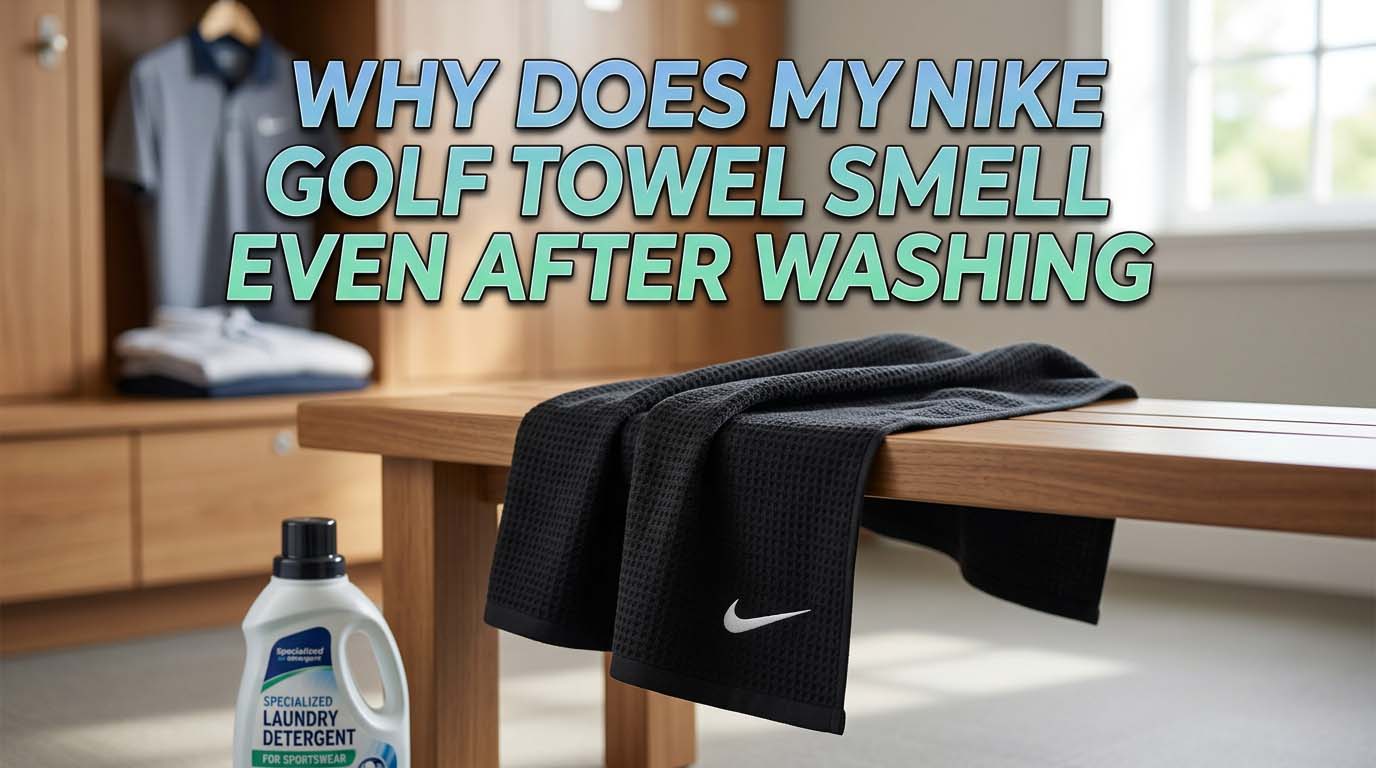
You take your Nike golf towel out of the washing machine. It looks clean. It feels clean. But when you bring it to your nose, that sour, musty smell is still there. You have tried vinegar. You have tried baking soda. You have switched detergents. Nothing works permanently.
You are not doing anything wrong. The problem is the material itself and how it interacts with what you put on it.
Your Nike golf towel is made of microfiber. Microfiber is a blend of polyester and polyamide. The fibers are split into tiny wedges that are thinner than a human hair. These wedges create a massive surface area. That large surface area is what makes microfiber great at picking up sweat and dirt. It is also what makes microfiber terrible at letting go of odor.
Here is the full explanation of why standard washing fails and exactly how to fix it.
The Real Reason Your Towel Still Stinks
Standard laundry detergent is designed to remove dirt and sweat from cotton and synthetic blends. It works okay on loose surface grime. But microfiber traps contaminants differently.
When you wipe sweat, sunscreen, and hand oils onto your golf towel, those substances do not just sit on top. They get pulled deep into the microscopic gaps between the fiber wedges. Once they are inside, regular detergent cannot reach them. The soap slides over the surface, but the odor molecules stay trapped.
This is not a failure of your washing machine or your detergent. It is a fundamental property of microfiber. The fibers are too fine for standard washing to penetrate completely.
Expert Opinion
According to Johnny, a 25-year weekend golfer and golf-care writer at Golfeaser, a Nike golf towel can retain a musty smell when moisture, bacteria, or residue remains trapped in its fibers.
He recommends washing the towel properly and ensuring it dries completely after each round. Avoid leaving a damp towel inside your golf bag, as poor ventilation can encourage odor-causing bacteria and mildew.
The Golf-Specific Contamination Problem
Golf towels face a unique chemical cocktail that gym clothes do not. Your gym shirt mostly sees sweat and maybe deodorant. Your golf towel sees all of this:
- Sunscreen with zinc oxide or titanium dioxide. These mineral particles are slightly abrasive and physically lodge into microfiber gaps.
- Hand oils and grip residue from your golf glove and club grips. These are thick, sticky oils that do not dissolve in cold water.
- Grass chemicals, fertilizer residues, and course maintenance products. These can react with sweat to form stubborn compounds.
- Sweat salts that crystallize and bond to the fibers when the towel dries between holes.
These substances do not just mix. They form a biofilm. A biofilm is a protective layer that bacteria create around themselves. It is like a microscopic shield. Standard washing cannot break through biofilm. That is why the smell comes back the moment the towel gets wet again on the course.
The Washing Machine Myth
Many golfers assume the washing machine is the solution. In reality, a standard home washer often makes the problem worse. Here is why.
First, front-loading washers use less water. Microfiber towels are thick and dense. They need more water to fully saturate and rinse. A front-loader spins the towel around but does not fully submerge it. Detergent and loosened oils get pushed around but not rinsed away.
Second, high-efficiency detergents produce fewer suds. That sounds good, but suds actually help lift oils away from fabric. Less suds means less lifting power.
Third, if you use too much detergent, it leaves a residue inside the towel fibers. That residue traps new sweat and oils faster. The towel gets dirtier after each wash, not cleaner.
How to Tell If Your Towel Is Salvageable
Before you try any fix, you need to know what you are dealing with. Not all odors are the same. Different causes require different treatments.
The Smell Test
Smell your towel three different ways to identify the problem:
Dry towel directly from the drawer: If it smells sour or like old sweat, you have bacterial buildup deep in the fibers.
Wet towel after rinsing with water: If the smell gets stronger immediately when wet, you have an active biofilm. The bacteria are releasing odor compounds the moment moisture returns.
Dry towel that smells like soap or chemicals: This is detergent residue. Too much soap is coating the fibers. The towel smells clean but stale in a different way.
Visual Inspection
Look at your towel in bright light. If you see any dullness or slight discoloration in patches, those are areas where biofilm has formed a visible layer. If the towel looks perfectly clean but still smells, the odor is trapped inside the fibers themselves.
The Advanced Remediation Protocol
If your towel is still in good condition otherwise, you can rescue it. But you cannot use the same methods that failed before. You need a different approach based on severity.
Tier One: Light Odor (Smell only when wet)
This is the easiest to fix. The biofilm is present but not thick.
You need an enzyme-based laundry detergent. Enzymes break down the proteins and oils that bacteria feed on. Regular detergent does not contain enough enzymes to handle microfiber.
Wash the towel alone, with no other clothes. Use hot water, not warm or cold. Hot water activates the enzymes better. Use the maximum water level setting if your machine has one. Run a full cycle, then add an extra rinse cycle. The extra rinse removes any loosened oils and detergent residue.
Dry on low heat or air dry. High heat can set any remaining oils into the fibers permanently.
Tier Two: Moderate Odor (Smell when dry and wet)
This requires a pretreatment step. Enzyme detergent alone will not penetrate the biofilm.
Fill a sink or bucket with hot water. Add one cup of white vinegar. Vinegar is acidic. It breaks down the alkaline salts in sweat and helps dissolve sunscreen residue. Let the towel soak for thirty minutes.
Do not add baking soda at the same time. Vinegar and baking soda react and neutralize each other. Soak in vinegar first, then drain.
After the vinegar soak, wash the towel with enzyme detergent in hot water with an extra rinse. Then soak the towel again in a solution of water and oxygen bleach (like OxiClean) for another thirty minutes.
Oxygen bleach releases hydrogen peroxide, which breaks down biofilm without damaging microfiber. Do not use chlorine bleach. Chlorine bleach destroys microfiber.
Wash one more time with regular detergent in warm water to remove any bleach residue. Air dry.
Tier Three: Severe Odor (Smell after multiple washes)
This towel has deep biofilms that have formed over many uses. The fibers themselves may be permanently damaged.
Try the two-step soak and double wash from Tier Two. If the smell is still present after that, the towel is not salvageable. Replace it. At this point, the bacteria have colonized the internal structure of the fibers. No amount of washing will fully remove them.
How to Prevent Smell From Coming Back
Once you fix the odor, you need to change how you handle the towel between rounds. Prevention is easier than cure with microfiber.
Storage Between Uses
Do not throw a wet towel into your golf bag. Do not leave it in the bottom of a gym bag. Bacteria multiply fastest in warm, dark, damp places.
After each round, hang the towel somewhere dry and airy. Drape it over a shower rod, a clothesline, or the back of a chair. Let it fully dry before storing it.
If you play multiple rounds in a week and cannot wash the towel daily, rinse it with clean water after each round. Squeeze out excess water, then hang to dry. This removes sweat and sunscreen before they have time to form biofilm.
The Immediate Rinse Habit
After your round, rinse the towel under running water for about thirty seconds. Work the water through the whole towel. This simple step removes most of the surface contaminants. It stops biofilm from forming overnight.
If you do this, you can reduce your washing frequency to once every two or three rounds without odor buildup.
Deep-Clean Schedule
Even with good habits, microfiber needs occasional deep cleaning. Wash the towel with enzyme detergent on hot water every five to seven uses, even if it does not smell. Prevention washing stops biofilm before it starts.
What Not to Use
Do not use fabric softener. It coats the fibers and traps odors.
Do not use dryer sheets. Same problem.
Do not use bleach. It breaks down the polyamide in microfiber and ruins the towel.
Do not use too much detergent. Use the minimum recommended amount for the load size.
Frequently Asked Questions
Can I use bleach on my Nike golf towel?
No. Chlorine bleach destroys the polyamide fibers in microfiber. It will break down the towel quickly, making it less absorbent and more prone to tearing. Use oxygen bleach instead.
Why does the smell get worse when the towel gets wet again?
Bacteria produce odor compounds when they are active. When the towel dries, the bacteria go dormant. The odor compounds stay trapped in the fibers. When you wet the towel again, the bacteria reactivate and produce new odor. That is why the smell seems to come back instantly.
My towel smells like mildew, not sweat. Is the cause different?
Yes. Mildew smell comes from mold, not bacteria. Mold grows when the towel stays wet for more than twenty-four hours in a warm environment. If you left a wet towel in your golf bag or trunk, that is likely the cause. Kill mold with a hot water wash and white vinegar soak. Dry the towel completely in direct sunlight.
Does Nike make a smell-proof towel?
Nike does not currently market a specific “smell-proof” golf towel. Some third-party brands use silver or copper ions impregnated into the fibers to slow bacterial growth. These towels resist odor better but do not eliminate it entirely. If you are tired of fighting microfiber smell, consider switching to a cotton or cotton-poly blend towel. Cotton holds more water but releases odors much more easily in the wash.
Can I put my golf towel in the dryer?
You can, but avoid high heat. High heat can set oils and sweat residues into the fibers. Use low heat or no heat. Air drying is safest. If you use the dryer, remove the towel while it is still slightly damp and hang it to finish drying.
Why does my brand-new towel smell even before first use?
Some factory treatments leave a chemical residue. New microfiber towels sometimes have a slight petroleum smell from the manufacturing process. Wash a new towel once with enzyme detergent on hot water before using it. That usually removes the manufacturing residue.
Should I use a laundry sanitizer like Lysol?
You can, but it is not necessary for most cases. Laundry sanitizers kill bacteria but do not remove the biofilm or oils. You must first clean the towel to expose the bacteria, then sanitize. Using sanitizer on a dirty towel kills some bacteria but leaves biofilm behind. The smell returns quickly. Focus on cleaning first.