
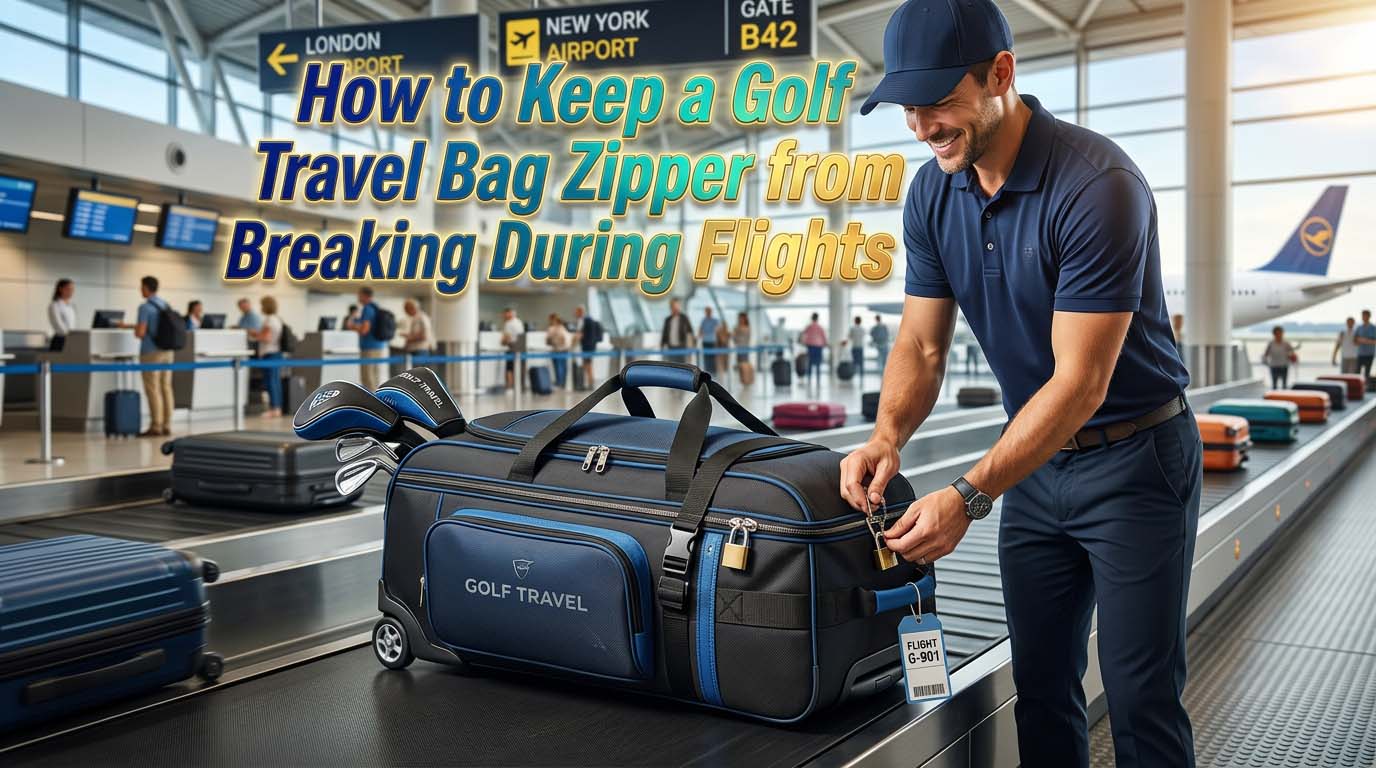
Your golf travel bag zipper is the weakest link between your clubs and the cargo hold. I have seen bags arrive with zippers popped open and clubs spilling out on the carousel. The good news is that most zipper failures are preventable. You just need to understand why they break and what you can do about it before you fly.
Why Zippers Fail During Air Travel
A zipper on a soft golf travel bag faces three main threats in the air.
First, pressure changes. When the plane climbs, air inside your bag expands. If the bag is packed tight, that expanding air pushes hard against the zipper from the inside. The zipper track stretches. The teeth separate. On descent, the air contracts again, but the damage is already done.
Second, physical abuse. Conveyor belts, luggage handlers, and other bags all put sideways stress on your bag. The zipper seam takes the brunt of that force. A hard yank on the zipper pull during handling can snap the slider or bend the teeth.
Third, overstuffing. When you cram too many clubs, towels, and shoes into a soft bag, the zipper has to hold more than it was designed for. The fabric puckers around the zipper track, creating weak points that pop open under load.
How to Inspect and Reinforce Your Zipper Before a Flight
You should check your zipper before every trip. This takes five minutes and can save you a ruined vacation.
Check the Zipper Teeth
Run your finger along both sides of the zipper track. Look for gaps, bent teeth, or missing pieces. If you see any damage, the zipper needs repair before you fly. A sewing shop that handles luggage can replace a damaged track.
Test the Slider
Open and close the zipper fully. It should move smoothly without catching. If it sticks or skips, the slider may be worn out. Apply a lubricant like a zipper wax stick or silicone spray. This reduces friction and helps the teeth mesh properly. Do not use oil—it attracts dirt and makes things worse.
Look for Loose Stitching
The fabric around the zipper track is stitched to the bag. Loose or broken stitches mean the zipper is not held securely. Reinforce those spots with a heavy-duty needle and upholstery thread. Stitch a tight zigzag pattern over the loose area.
Packing Strategy to Reduce Zipper Stress
How you pack matters as much as the zipper condition. Follow these steps to keep pressure off the zipper during the flight.
Don’t Fill the Bag Completely
Leave about 10 percent of the internal volume empty. This gives the expanding air room to move without pushing against the zipper. A bag that is stuffed to the brim is a zipper failure waiting to happen.
Place Heavy Items at the Bottom
Put your shoes, rangefinder, and other heavy items at the bottom of the bag. This keeps the bag balanced and reduces bulging outward near the zipper. Clubs should stand vertically with the grips at the top.
Use a Stiff Arm or Rod
A Stiff Arm or similar rod helps maintain the bag’s shape. It stops the bag from collapsing sideways, which reduces stress on the zipper seam. The rod also protects your driver shaft.
Add a Compression Strap or Bungee Cord
Wrap a luggage strap or bungee cord around the middle of the bag, over the zipper area. Cinch it tight enough to pull the bag inward. This takes some of the outward pressure off the zipper. Do not overtighten—you want compression, not damage.
Reinforcement Tricks for Extra Security
If your zipper is already weak, you can reinforce it before the flight.
Use Zip Ties or Carabiners
After zipping the bag shut, thread a zip tie through the two zipper pulls. Pull it tight but not so tight that it bends the pulls. Repeat at the other end of the zipper if your bag has a double zipper. Carabiners work too. This keeps the zipper from separating if the slider fails.
Apply a Secondary Lock
Use a TSA-approved lock through the zipper pulls. The lock acts as a backup if the slider breaks. It also prevents the zipper from opening accidentally during handling.
What to Do During the Flight and at the Airport
You can take a few steps during the travel process itself.
Ask for Fragile Tags
When checking your bag, ask for fragile stickers or tags. They may not guarantee gentle handling, but they signal to workers that the bag is sensitive.
Request Manual Handling
If allowed, ask the gate agent if your bag can be hand-loaded or placed in the overhead bin closet. Not all airlines do this, but it is worth asking.
Grab the Bag Quickly at Baggage Claim
When your bag arrives at the carousel, get it immediately. Other bags can crush or snag your bag’s zipper as they tumble around. Inspect the zipper before leaving the airport. If it is damaged, go straight to the airline’s luggage office to report it.
Emergency Repairs You Can Do at the Airport or Hotel
Even with all precautions, things can go wrong. Pack a small repair kit in your carry-on.
Zip ties: If the zipper separates, use zip ties to clamp the two sides together temporarily. Thread one through the zipper track near the tear, then another a few inches further. This holds the bag closed until you can get a proper repair.
Needle and upholstery thread: A field stitch can hold a small zipper separation for one or two more flights. Stitch through the fabric and zipper tape, not through the teeth.
Super glue: If a zipper tooth pops out, apply a tiny dab of super glue to hold it back in place. Let it dry completely before moving the zipper.
The Pressure-Induced Zipper Fail: Why Soft Bags Are More Vulnerable
This is the trickiest part. Most golfers do not know that soft bags are especially prone to zipper failure due to air pressure changes.
When the plane climbs, cargo hold pressure drops. The air inside your bag expands. If your bag is packed tight, that expanding air has nowhere to go except against the zipper. Soft bags flex, so the zipper takes the brunt. Hard cases do not flex, but they can crack.
Some travel bags have a small pressure relief valve. If yours has one, use it. If not, leave a small air gap by not fully closing the internal mesh pocket. This allows some air to escape during the climb. Do not unzip the main zipper—you risk losing your clubs.
Frequently Asked Questions
Can I claim airline compensation if my zipper breaks?
No. Most airlines consider zipper failure normal wear and tear, not mishandling. File a claim only if the bag is torn or clubs are damaged.
Is a hard case less likely to have zipper issues?
Hard cases typically use latches, not zippers, so the failure mode is different. But hard cases can crack. A reinforced soft bag with proper zipper maintenance can be just as reliable.
How often should I replace my golf travel bag’s zipper?
After every 20 to 30 flights, or if you see frayed threads or misalignment. A luggage repair shop can replace the zipper track.
Does TSA open my bag and possibly damage the zipper?
Yes. TSA may force open a locked bag, damaging the zipper. Use TSA-approved locks and leave a note asking them to re-zip and lock carefully.