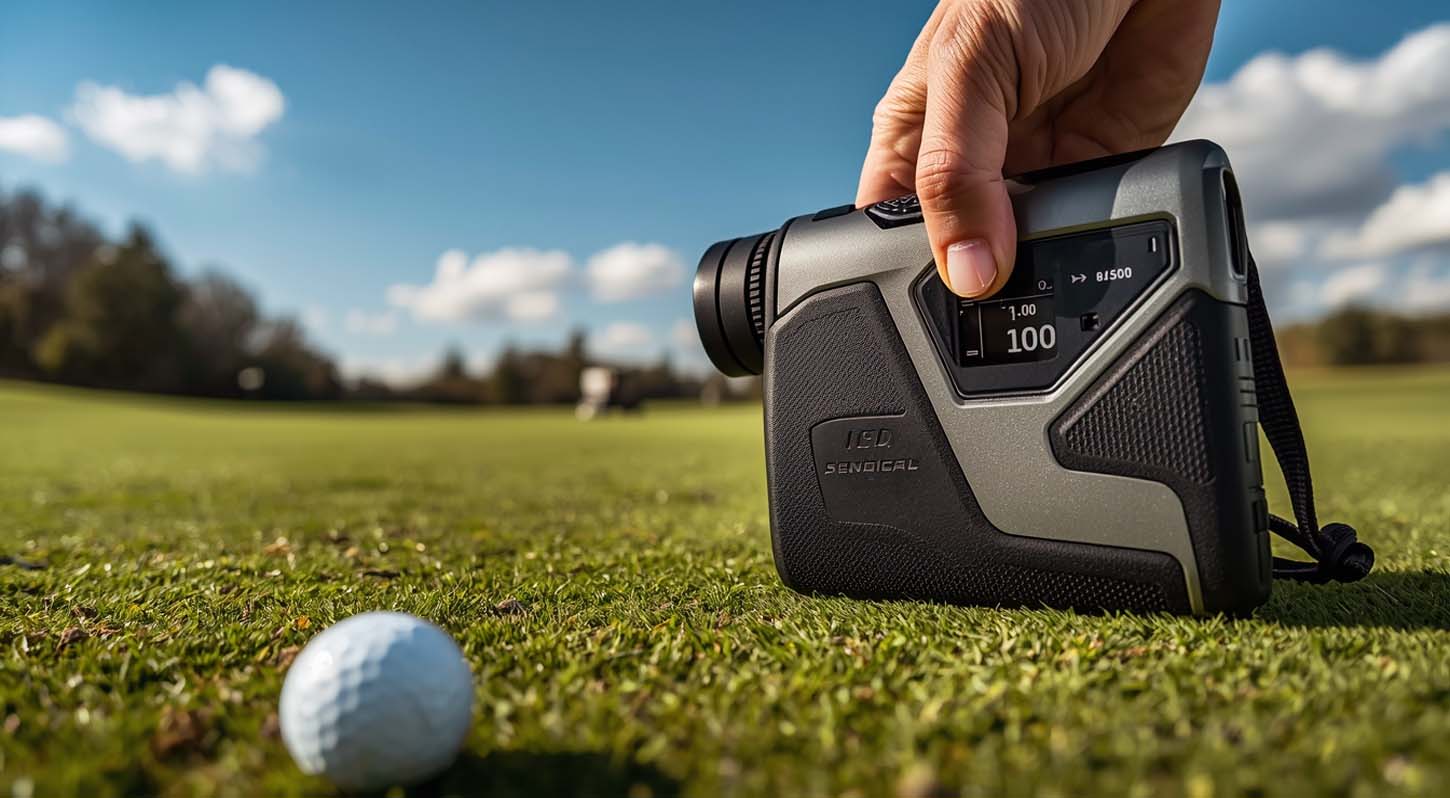
Yes, you can use a hunting rangefinder for golf because it measures distance accurately. However, it is not designed for flag targeting. Most hunting models prioritise distant targets, making it harder to lock onto the flagstick rather than trees or objects behind the green. For casual rounds, it works. For faster and more precise flag readings, a golf-specific model performs better.
This guide explains exactly why that difference matters, when it affects your score, and whether buying one of the best golf rangefinders is worth it for your game.
What Golfers Really Want to Know?
When someone searches this topic, they usually fall into one of three groups:
- They already own a hunting rangefinder and want to use it for golf.
- They are comparing costs before buying a device.
- They want to know if performance differences actually affect scoring.
This article addresses all three clearly. No exaggeration. No technical overload. Just practical information you can use in the course.
How Rangefinders Actually Work? (And Why That Matters)
Both hunting and golf rangefinders use laser pulse technology. The device sends a beam to a target and calculates the distance based on the time it takes to return.
Most quality models claim accuracy within ±1 yard. Independent testing from sources like MyGolfSpy has confirmed that premium laser units typically stay within that margin under normal conditions.
So if the technology is similar, what makes them perform differently?
The answer is target priority logic.
The Real Difference: Target Priority System
This is the most important section of the entire discussion.
Golf Rangefinders: First Target Priority
Golf devices are programmed to lock onto the closest object in view. On a golf course, that is usually the flagstick.
They are optimised for:
- Thin vertical targets
- Fast acquisition
- Vibration feedback when the flag is locked
This makes yardage confirmation quick and reliable.
Hunting Rangefinders: Distant Target Priority
Hunting models are built to ignore brush or foreground interference and focus on the farthest object. That design works well in woods and open terrain.
However, on a golf course, it can cause problems.
If the flag is placed in front of trees, the device may lock onto the trees rather than the flag. The number will still be accurate—but for the wrong object.
That distinction affects club selection.
Real Course Example: Where Errors Happen
Imagine a 150-yard par 3 with trees ten yards behind the green.
A hunting rangefinder may show 160–162 yards because it locks onto the background.
You choose one extra club. The shot carries long. Now you are chipping back toward the green.
This is not a technology failure. It is a targeting design difference.
Over time, repeated small errors influence scoring.
Magnification and Stability on the Course
Most hunting rangefinders offer magnification of 8x to 10x. Golf models usually range from 6x to 7x.
Higher magnification increases visual detail, but it also amplifies hand movement. When aiming at a thin flagstick, the image can become less stable.
In practical use, that means:
- Slower lock-on time
- More attempts to confirm yardage
- Slight disruption of the playing rhythm
Golf rewards pace and confidence. Quick confirmation supports both.
Slope Function and Elevation Adjustment
Slope is not just a luxury feature. It can change club selection significantly.
For example, a 150-yard uphill shot may play like 165 yards depending on elevation. Golf rangefinders often include “plays-like” distance with slope adjustment.
According to USGA Rule 4.3, distance-measuring devices are allowed, but slope must be turned off unless permitted by Local Rule in competition.
Many hunting models either lack a slope or lack a tournament-compliant on/off switch.
If you play hilly courses, slope adjustment adds real value.
Reference:
USGA Rules of Golf – Rule 4.3 (usga.org)
Accuracy: Clearing Up a Common Misunderstanding
Both types of devices are capable of high accuracy. Manufacturers such as Bushnell and Nikon use similar laser systems across product lines.
The difference is not in measurement precision.
The difference is in target selection reliability.
A device can measure perfectly and still give the wrong yardage if it hits the wrong object.
That is the key point that many short comparison articles fail to explain.
When Using a Hunting Rangefinder Makes Sense?
There are situations where it works just fine.
- You already own one and play recreational rounds.
- You aim for the centre of the green rather than the tucked pins.
- You play wide-open courses without heavy tree backdrops.
For a golfer focused on general yardage rather than exact flag distance, performance differences may be small.
If your priority is cost savings, using what you already own is reasonable.
When a Golf-Specific Model Is Worth It?
If you regularly:
- Attack tight pin positions
- Compete in tournaments
- Play tree-lined or target-heavy courses
- Value fast, one-click confirmation
Then a golf-specific device provides clear advantages.
This is why many players eventually move toward one of the best golf rangefinders built specifically for flag acquisition.
Cost Comparison and Long-Term Value
Entry-level golf rangefinders now start around the same price as many hunting models. As competition in the equipment market has increased, prices have become more accessible.
When comparing value, consider total golf spending. Green fees, lessons, travel, and golf balls often exceed the cost of a rangefinder within a single season.
If better yardage control saves even one stroke per round, the investment becomes easier to justify over time.
Experience-Based Perspective from Teaching Professionals
Many instructors emphasise that confidence influences swing quality.
A teaching professional at a regional club summarised it clearly:
“When a player gets a number quickly and trusts it, they commit to the swing. Doubt leads to deceleration and poor contact.”
The difference between hesitation and confidence can be subtle but meaningful.
Final Verdict: Should You Use a Hunting Rangefinder for Golf?
Yes, you can use it. It will measure distance accurately.
However, it is not optimised for flag targeting. That limitation may slow you down or produce occasional incorrect readings on courses with background interference.
If you play casually and already own one, it is acceptable.
If you want faster targeting, slope-adjusted yardage, and tournament-ready features, a dedicated golf model is the better fit.
Golf rewards precision. Using equipment built for the sport supports that goal.
Additional Resources to Strengthen Your Decision
The following trusted sources provide independent testing and official rule guidance. Reviewing them helps ensure you rely on verified information rather than marketing claims.
- USGA Official Rules of Golf (Rule 4.3 – Equipment Use) – usga.org
- R&A Equipment Regulations – randa.org
- MyGolfSpy Independent Equipment Testing – mygolfspy.com
- Golf Monthly Equipment Reviews – golfmonthly.com
- PGA of America Instruction Resources – pga.com
FAQ
1. Is a hunting rangefinder accurate enough for golf?
Yes, it can be accurate within ±1 yard, similar to golf models. However, it may lock onto trees or other objects behind the flag rather than the flagstick itself, leading to incorrect yardage for club selection.
2. Can I use a hunting rangefinder in golf tournaments?
You can use it if it only measures distance. If it has a slope, the slope feature must be turned off unless the competition allows it under local rules.
3. What is the biggest disadvantage of using a hunting rangefinder for golf?
The main issue is target priority. Most hunting rangefinders focus on distant objects, making it harder to quickly and reliably lock onto the flag.
Closing Thoughts
Choosing between a hunting rangefinder and a golf-specific model comes down to how seriously you approach precision. The core technology is similar. The on-course experience is different.
If your goal is steady improvement, reliable yardages, and confident club selection, equipment designed specifically for golf offers measurable advantages.