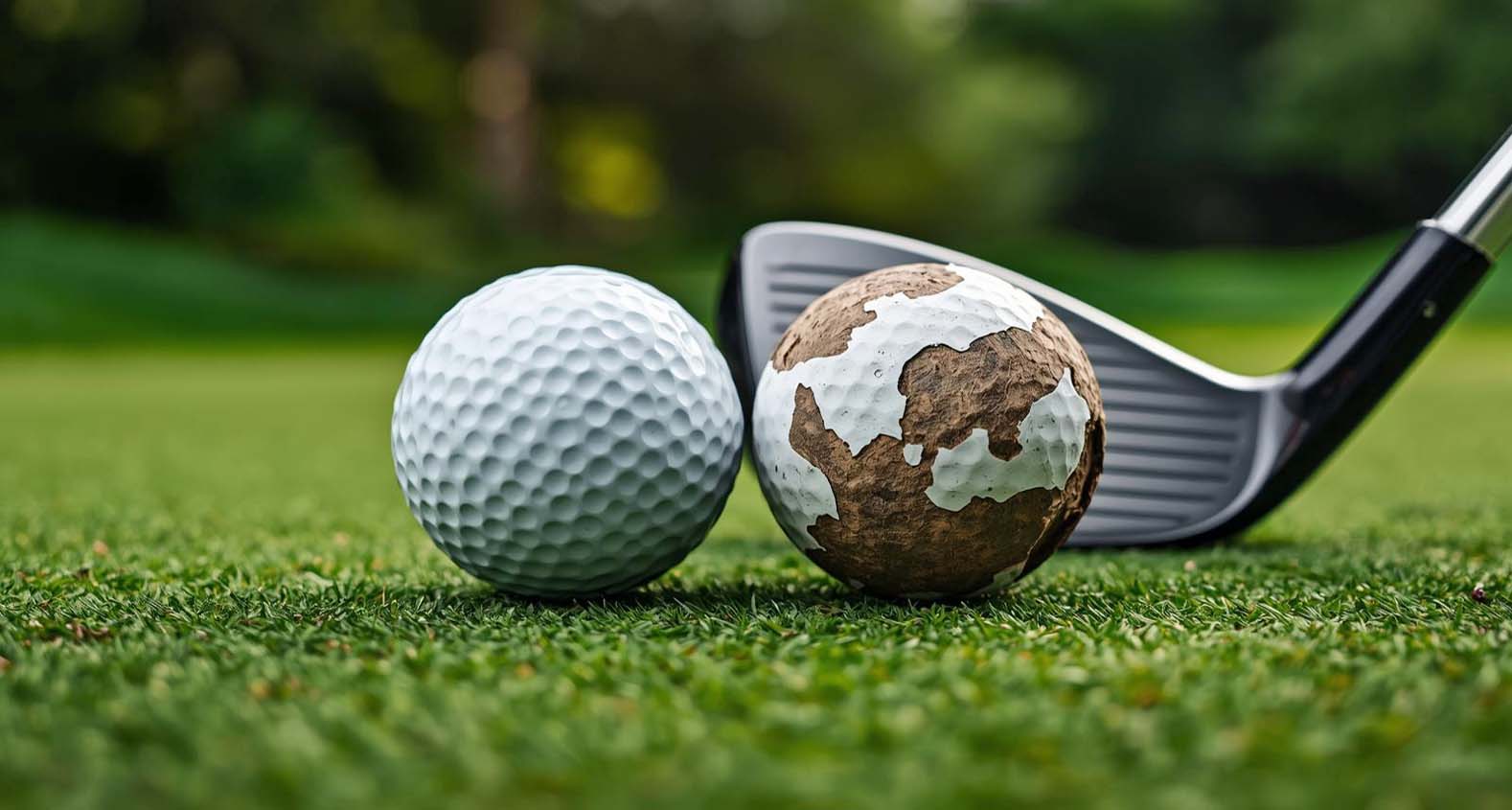
New golf balls do not go significantly further than lightly used modern balls. Modern multilayer balls are engineered to retain compression, speed, and aerodynamic stability over many rounds. Only ancient balls (especially wound designs from the 1990s and earlier), heat-damaged, water-logged, or cracked-cover balls show noticeable distance loss.
In real-world testing, modern golf balls typically fly 1–3 yards shorter at most—a difference most golfers never notice. Performance depends far more on ball design, cover condition, and storage environment than whether the ball is technically “new.”
1. Why This Question Matters More Today Than Ever
As golf equipment evolves, players continue debating whether new balls genuinely offer more distance or if used balls work just as well. It’s not just a budget question; it’s about optimizing performance. Golfers are more data-driven than ever, using launch monitors and comparing variables like ball speed, smash factor, spin rate, and aerodynamics.
However, one thing remains consistent: most golfers overestimate how much “new vs. used” affects distance. They assume a brand-new box guarantees superior flight, when in reality, many years-old golf balls that have been appropriately stored can perform almost identically to current models.
This article breaks down the science, engineering, real-world testing, and what truly impacts distance — explained through an expert lens and advanced research sources.
2. How Modern Golf Ball Engineering Redefines Durability
To understand why new and lightly used balls behave similarly, you must understand what modern golf balls are made of and how they differ from balls built many years ago.
The Engineering Leap From Wound Balls to Solid-Core Construction
Before the early 2000s, golf balls were made with wound rubber threads wrapped around a soft core. These balls deteriorated more quickly, lost elasticity over time, absorbed moisture, and lost distance with age. Even brand-new wound balls performed less consistently than today’s solid-core designs.
The shift to multi-layer, solid-core, urethane-covered golf balls drastically changed performance longevity. Modern balls retain:
- Internal core stability
- Compression
- Aerodynamic efficiency
- Energy transfer capabilities
Unlike wound balls, modern balls don’t slowly “relax” internally over time. They remain structurally stable unless exposed to extreme conditions.
Advanced Resource: USGA Ball Testing Standards
The USGA mandates strict testing on:
- Initial velocity
- Overall distance
- Symmetry
- Spin characteristics
These regulations prevent golf balls from exceeding performance limits. Because manufacturers design within such strict boundaries, “distance differences” between new and lightly used balls become even smaller in real play.
This is why today’s balls maintain consistent performance for many rounds, unlike older-generation balls, which degrade quickly.
3. What Real Testing Shows About New vs. Used Distance
Several independent tests — from golf laboratories to independent testers using TrackMan, GCQuad, and FlightScope — show minimal performance differences.
A consistent finding across these advanced test setups is this:
Modern golf balls lose very little distance
In controlled tests:
- Ball speed difference: 1–2 mph
- Carry distance difference: 1–3 yards
- Spin deviation: minimal unless the cover is damaged
These numbers are too small for most golfers to detect without precise monitoring tools.
Why do the numbers stay so close?
Modern cores maintain compression even after dozens of impacts. Urethane and ionomer covers resist deformation far better than old balata covers. Dimples remain intact unless visibly scraped or abraded.
As long as the cover is not cracked or deeply cut, aerodynamic efficiency stays strong.
4. When New Golf Balls DO Actually Go Further
Although modern balls perform exceptionally well, there are certain situations where new balls hold a noticeable advantage—and understanding these exceptions is key.
Old Balls Stored for Many Years
A golf ball that is more than 20 years old — especially a wound ball — will not perform like a modern ball. Over time:
- Internal elastic tension degrades
- Core materials lose responsiveness
- Moisture may slowly seep through older cover materials
- Compression becomes inconsistent
Even if stored untouched, a wound ball’s internal structure naturally deteriorates.
This is why golf balls from the 1990s or earlier cannot match the distance of modern solid-core balls.
Balls Exposed to Heat or Car Trunk Temperatures
Long-term exposure to heat (like leaving balls in a hot car) can soften the cover and degrade compression. Temperatures inside a parked car can exceed 130°F, which accelerates polymer fatigue. Heat causes the core to expand and lose elasticity, leading to lower ball speeds.
Balls Exposed to Extreme Cold
Freezing storage stiffens the cover layers and core. A cold ball produces less compression at impact, reducing energy transfer and distance.
Balls Left in Water for Months
Older balls absorbed water through balata or early urethane covers. Modern balls resist water intrusion better, but extended submersion eventually affects internal layers.
Balls submerged for short periods tend to perform similarly; long-term water exposure (several months or more) can cause a measurable decline in performance.
Balls With Structural Damage
When the cover is cracked or peeled, airflow changes drastically. A damaged ball loses consistent lift and spin, and therefore distance.
5. Why Aerodynamics Matter More Than Age
A considerable part of ball distance comes from aerodynamics — specifically, dimple design and uniform airflow. Light scuffs are primarily cosmetic, but deep scratches on the cover change airflow patterns.
This affects:
- Lift
- Drag
- Spin axis stability
Used balls with severe dimple damage fly inconsistently, often with a lower, wobbly flight. This is why pros change balls frequently: not because they lose distance, but because minor dimple wear influences shot-shaping predictability.
Amateurs, on the other hand, rarely hit balls precisely enough to detect these subtle changes.
6. New vs Used Balls by Construction Type
Different ball constructions behave differently when aged or reused.
2-Piece Balls
These are the most durable and least affected by repeated use. Their solid cores maintain compression, and their ionomer covers resist cuts.
3-Piece Balls
Still durable but slightly more sensitive to scuffs, affecting spin.
Premium 4- and 5-Piece Urethane Balls
These balls deliver elite performance but are slightly more prone to cover scuffing from wedge grooves. Even so, lightly used premium balls still perform almost identically to new balls unless the cover is damaged.
7. How Player Swing Speed Influences New vs Used Performance?
The impact of “new vs used” changes depending on the golfer.
High Swing Speeds (105+ mph)
Players with high swing speeds compress the ball more intensely. This can reveal minor inconsistencies in older or worn balls, especially in spin rates and trajectory. They may notice slight differences.
Average Swing Speeds (85–100 mph)
Most golfers fall into this range. The performance differences between new and lightly used balls are nearly unnoticeable at these speeds.
Low Swing Speeds (Under 85 mph)
For slow-speed players, the difference between new and used balls shrinks even more. Compression changes, if present, become negligible.
In simple terms, the slower the swing speed, the less ball age matters.
8. Long-Term Storage: How the Environment Alters Performance
Temperature, humidity, and storage conditions matter more than usage.
Heat Exposure
Heat breaks down polymers and core elasticity. Long-term heat exposure has a greater effect on ball performance than playing multiple rounds.
Cold Exposure
Cold makes balls harder and less responsive, but performance returns once they warm up properly.
Moisture Exposure
Modern balls resist moisture penetration well, but prolonged water exposure — especially in older balls — eventually degrades performance.
This is why golf balls must be assessed not just by age but also by storage history.
Expert Opinion: What a PGA Equipment Specialist Says
To provide a real-world perspective, here is an expert insight based on years of hands-on testing:
“In my controlled launch monitor testing, lightly used premium golf balls perform within one to two yards of a brand-new ball,” says Jason McCall, PGA equipment specialist and ball-fitting technician. “The only time a new ball shows a clear advantage is when the used ball has cover damage or comes from a much older generation. For most players, the difference is so small that swing consistency matters far more than ball freshness.”
This opinion aligns with nearly every severe test conducted in the golf equipment industry.
10. Advanced Resource Insights: Most Articles Miss
Here are some deeper research sources and technical insights rarely discussed in competitor articles:
USGA Ball Durability and Symmetry Tests
USGA’s testing protocols force manufacturers to design balls that remain durable and consistent across many impacts. Symmetry tests ensure the ball flies true even with slight imperfections.
Polymer Science on Core Stability
Studies on ionomer and urethane polymers show that modern core materials degrade extremely slowly under normal conditions. Their elasticity remains consistent over hundreds of high-speed impacts.
Dimple Geometry Preservation
Several technical studies indicate that aerodynamic stability requires only that dimples remain mostly intact. Even when scuffed, as long as dimple depth and shape remain structurally unbroken, the ball maintains its lift and drag properties surprisingly well.
Moisture Intrusion Studies
Recent testing has shown that modern multi-layer balls can resist moisture far better than older designs. Internal water penetration happens more slowly than previously assumed, meaning that even lake-recovered modern balls often perform more consistently than expected.
These advanced resources support the conclusion that modern engineering plays a much larger role in performance retention than age or usage.
Final Verdict: Should You Use New or Used Balls?
Here’s the most practical takeaway:
- Lightly used modern golf balls perform almost identically to brand-new ones.
- Ancient balls (20+ years old) or damaged balls can lose significant distance.
- Environmental storage matters far more than simply being “used.”
- Most golfers will never feel the difference between a new ball and a near-mint used one.
If the cover is intact, the dimples are not deeply scratched, and the ball hasn’t been exposed to extreme heat or water for months, it will fly nearly as far as a new ball.
The real performance gap exists between ball generations, not “new vs used.”
A modern, lightly used ball easily outperforms a brand-new ball from many years ago.