
A golf ball typically leaves the clubface at 100-190 miles per hour, depending on the golfer’s skill level and the club used. PGA Tour professionals average around 170 mph off the tee, while long-drive competitors can exceed 200 mph.
Amateur golfers generally produce ball speeds between 120 and 150 mph, and beginners often fall closer to 100–120 mph. After impact, the ball immediately begins to slow down due to air resistance and gravity, but the speed at launch is the single most significant factor influencing distance.
What Golf Ball Speed Really Means?
Golf ball speed refers to the velocity of the ball at the exact moment it separates from the clubface. This is the fastest the ball will ever travel. It is different from clubhead speed, which measures how fast the club is moving before impact.
The relationship between the two is often explained using smash factor, a performance ratio that shows how efficiently energy is transferred from the club to the ball.
A well-struck driver shot typically produces a smash factor of about 1.50, meaning the ball travels 1.5 times faster than the clubhead. This explains why two golfers with similar swing speeds can generate very different results.
Golf Ball Speed by Skill Level (Driver)
Ball speed increases with skill, consistency, and physical efficiency. PGA Tour professionals generally produce ball speeds between 170 and 185 mph, with top performers regularly reaching the upper end of that range. Scratch and low-handicap golfers often sit between 155 and 170 mph, relying more on clean contact than raw power.
The average male amateur golfer typically produces a ball speed of about 130 to 150 mph, which aligns with standard driving distances seen at public courses. High-handicap players and beginners tend to generate 100-130 mph, mainly due to inconsistent contact and slower swing mechanics.
Long-drive competitors are a special case. Their swings are optimised entirely for speed, and ball speeds above 200 mph are typical in competition settings.
Why Ball Speed Matters More Than Swing Speed?
Ball speed is the most reliable predictor of distance in golf. While clubhead speed sets the ceiling, ball speed determines how far the ball actually flies.
Testing data consistently shows that every 1 mph increase in ball speed adds roughly two yards of carry distance, assuming launch angle and spin remain within optimal ranges. This is why many professionals focus on improving strike quality rather than simply swinging harder. Efficient contact produces more speed with less effort and better control.
What Determines How Fast a Golf Ball Travels?
Several factors influence ball speed, but none work in isolation. Clubhead speed plays a prominent role, yet it must be paired with centred contact. Shots struck low on the face, toward the heel, or on the toe lose significant speed even when the swing feels fast.
Club design also matters. Drivers produce the highest ball speeds because of their low loft and longer shaft length. As loft increases through irons and wedges, ball speed naturally decreases. Modern golf balls further enhance speed by reducing drag and maintaining velocity longer during flight.
Environmental conditions also contribute. Warmer air, higher altitude, and lower humidity reduce air resistance, allowing the ball to retain speed longer after launch.
What Happens to Ball Speed After Impact?
A golf ball reaches its maximum speed at impact. From that instant onward, air resistance begins slowing it down. During the ascent phase, drag has the most potent effect, rapidly reducing velocity. As the ball descends, gravity accelerates it downward, but it never regains its original launch speed.
This is why launch conditions are just as important as speed. A ball launched with optimal angle and spin will travel farther than a faster ball launched inefficiently.
Typical Ball Speeds by Club
Drivers produce the highest ball speeds, followed by fairway woods and long irons. A PGA Tour-level driver shot commonly exceeds 170 mph, while a 7-iron shot typically falls around 130 to 140 mph. Wedges generate much lower speeds, often just over 100 mph your golf ball, but rely on spin and precision rather than distance.
This gradual reduction in speed across the bag explains why loft and shaft length have such a strong influence on performance.
Can Amateurs Increase Ball Speed?
Yes, and most improvements do not require swinging harder. Improving mechanics, especially sequencing and rotation, often unlocks hidden speed. Better contact alone can add several miles per hour without increasing effort.
Proper club fitting also plays a significant role. Shaft flex, length, and ball selection all affect how efficiently energy transfers at impact. Many amateurs lose speed simply because their equipment does not match their swing.
Common Myths About Golf Ball Speed
One common misconception is that all professionals swing at maximum effort. In reality, most tour players operate well within control, relying on efficiency rather than brute force.
Another myth is that faster always means longer. Without the right launch angle and spin, excess speed can actually reduce carry distance. The best results come from balanced optimisation, not raw aggression.
Scientific explanation of how fast golf balls travel in short distances
A golf ball travels fast because it briefly behaves like a compressed spring powered by physics at extreme speed.
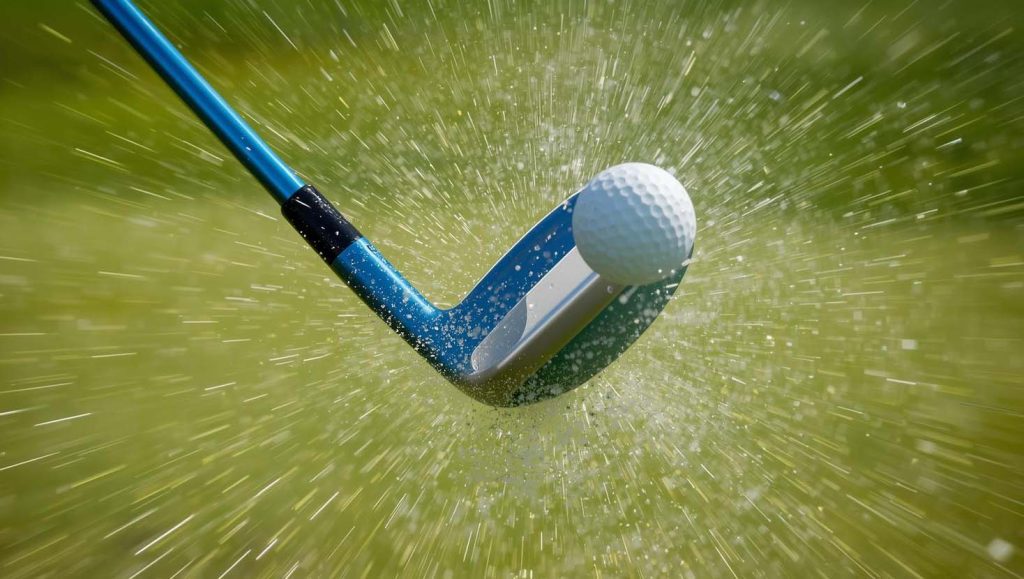
At impact, the clubhead is moving up to 120 mph, but the ball doesn’t just get “hit”—it gets violently compressed. In less than 0.0005 seconds, the ball flattens against the clubface, storing energy through elastic deformation as it snaps back to its original shape. That stored energy is released almost instantly, launching the ball at speeds over 170 mph.
At the same time, the clubface’s loft and friction create backspin. This spin interacts with air molecules, generating lift via the Magnus effect, keeping the ball in the air longer than it would otherwise drop straight down. The ball’s dimpled surface is crucial here—dimples reduce drag by controlling airflow, allowing the ball to maintain high velocity rather than slowing abruptly.
In short: energy transfer + elastic rebound + controlled airflow turn a small plastic sphere into a projectile moving faster than a Formula 1 car—powered by a swing that lasts less than a blink.
Frequently Asked Questions (FAQ)
How fast does a golf ball travel in mph?
Most golf balls leave the clubface between 100 and 190 mph, depending on the golfer’s skill level. PGA Tour players average around 170 mph, while beginners often produce closer to 110 mph.
How fast does a beginner hit a golf ball?
Beginners typically generate ball speeds of 100-120 mph with a driver. Inconsistent contact is the main reason for lower speeds at this stage.
Is ball speed more important than swing speed?
Yes. Ball speed directly determines distance, while swing speed only sets potential. Clean contact and efficient energy transfer matter more than how hard you swing.
How fast does a golf ball slow down during flight?
A golf ball loses a significant portion of its speed within the first few seconds after impact due to air resistance. Drag is most substantial early in the flight, especially during ascent.
What is the fastest golf ball speed ever recorded?
In long-drive competitions, ball speeds exceeding 210 mph have been recorded. These speeds are far beyond what is seen in standard tournament play.
Final Word
Golf balls travel far faster than most people realise, but speed alone does not guarantee distance. The moment of impact determines everything. Golfers who focus on efficient mechanics, solid contact, and proper equipment will consistently outperform those who chase speed without control.
Whether you’re a beginner or a low-handicap player, improving ball speed through efficiency is the smartest path to longer, more consistent shots.