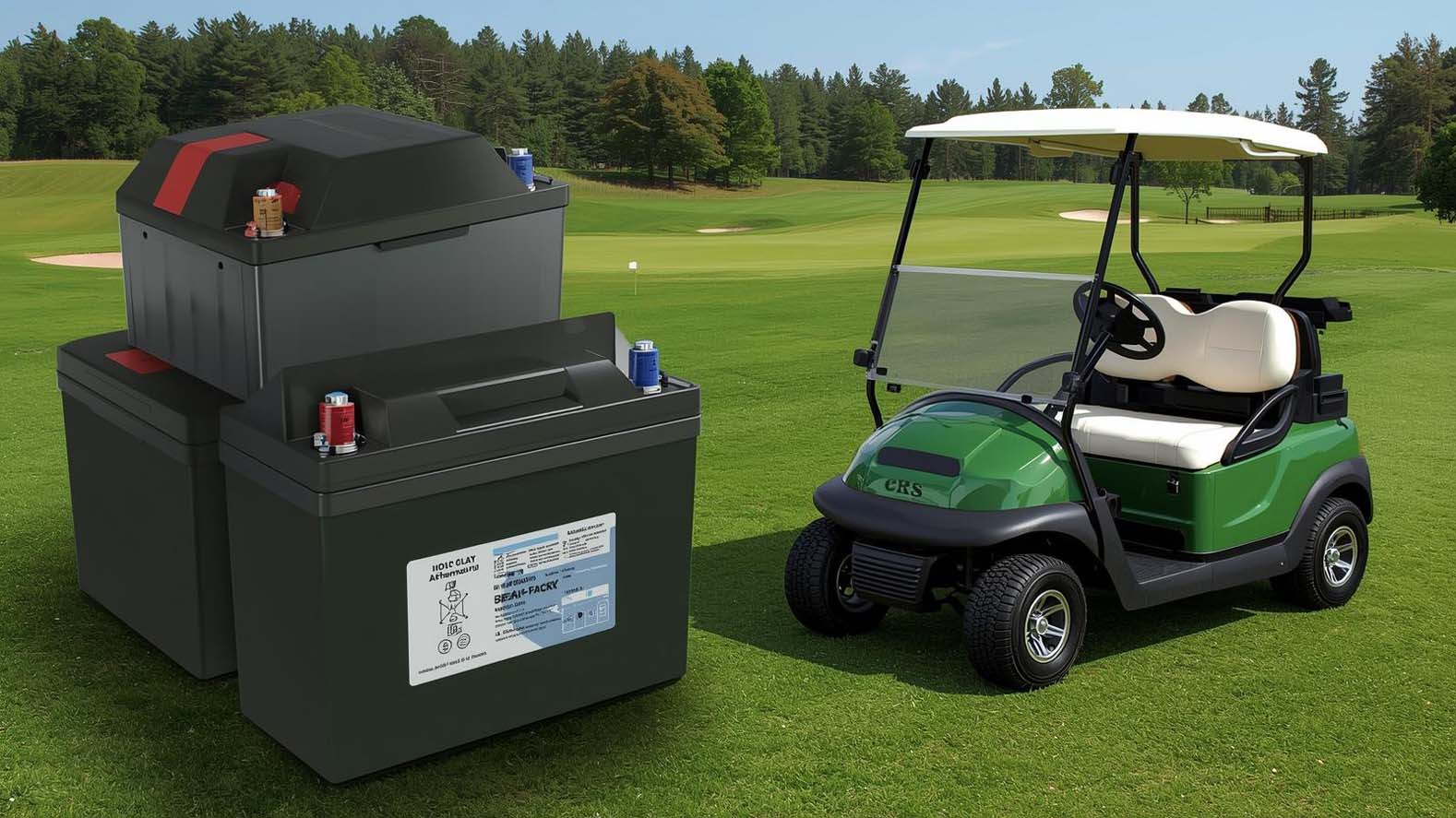
Golf cart batteries last 2–5 years if they are lead-acid and 8–12+ years if they are lithium (LiFePO4). With proper use and care, lithium batteries can last 15–20 years, while poorly maintained lead-acid batteries may fail within 2 years.
Battery life is determined less by brand and more by usage habits, charging behaviour, golf weight, and environmental factors.
Why Battery Life Numbers Online Are Often Wrong?
Most articles repeat manufacturer claims without explaining what actually shortens battery life. A battery rated for five years can fail in half that time if it’s frequently undercharged, overloaded, or exposed to heat.
Battery lifespan is measured in charge cycles, not just calendar years. A lightly used private cart can outlast a heavily used fleet cart even when both use the same batteries. This is why real-world conditions matter more than lab ratings.
Golf Cart Battery Types and How They Age
Lead-Acid Batteries (Flooded, AGM, Gel)
Lead-acid batteries typically last 2–5 years. They are affordable upfront but heavy, which increases overall golf weight and puts more strain on motors and controllers. Flooded versions require regular watering, while AGM and gel reduce maintenance but do not dramatically extend lifespan.
As lead-acid batteries age, voltage drops under load. This is why older carts feel sluggish even after a full charge. Partial charging and skipped maintenance accelerate sulfation, which permanently reduces capacity.
Lithium (LiFePO4) Golf Cart Batteries
Lithium iron phosphate batteries usually last 8–12 years and often much longer. They are significantly lighter, reducing golf weight and improving efficiency. Unlike lead-acid, lithium maintains a steady voltage until nearly empty, so performance stays consistent.
Lithium batteries include built-in Battery Management Systems that prevent overcharging, deep discharge, and overheating. This protection is the main reason lithium batteries age more slowly in real-world use.
How Usage Patterns Affect Battery Life?
Battery life shortens faster in daily-use carts, especially those carrying passengers or climbing hills. Added golf weight forces batteries to work harder, increasing the depth of discharge with every trip.
Private carts, used a few times per week, often outlast fleet carts, used every day, even when fleets follow scheduled charging. Short trips without a complete recharge are particularly damaging to lead-acid batteries.
Charging Habits That Matter More Than Brand
Charging behaviour is the single most significant factor in battery longevity. Lead-acid batteries must be fully recharged after each use. Leaving them partially charged causes internal damage over time. Lithium batteries tolerate partial charging well, which is why they suit frequent stop-and-go use.
Using the wrong charger or letting batteries sit discharged for days significantly shortens their lifespan, regardless of chemistry.
How Long Do Golf Cart Batteries Last? – Expert Insight?
According to Mark Reynolds, a golf course maintenance manager with over 20 years of hands-on experience, golf cart batteries rarely fail solely because of the brand. In real use, he sees lead-acid batteries last about 2–4 years, while lithium (LiFePO4) batteries commonly reach 10–15 years. Reynolds notes that poor charging habits, excess cart weight, and heat kill batteries faster than age. “Carts that are charged correctly and not overloaded always outlast the rest,” he says—regardless of battery type.
Maintenance: What Actually Extends Battery Life
Lead-acid batteries require consistent care. Water levels must remain above the plates; terminals must be kept clean; and equalisation charging should be performed when recommended by the manufacturer.
Lithium batteries require far less attention, but they are not immune to damage. Long-term storage at full charge or exposure to extreme heat can still shorten life.
Environment and Storage Effects
Heat accelerates chemical breakdown inside all batteries. Carts stored in garages or shaded areas consistently outlast those parked outdoors. Cold temperatures reduce range temporarily but do not permanently damage batteries if charging practices remain correct.
Humidity increases the risk of corrosion, particularly for lead-acid terminals and wiring.
Accessories, Power Draw, and Golf Weight
Modern carts often carry lights, sound systems, screens, and lift kits. These add to the electrical load and the physical weight. Increased golf weight forces deeper battery discharge, which shortens lifespan.
Lithium batteries handle accessory loads better because voltage remains stable, while lead-acid batteries experience faster voltage sag under the same conditions.
Real Cost Over Time: Lead-Acid vs Lithium
Lead-acid batteries appear cheaper initially but usually require multiple replacements over a 10–15 year period. Lithium batteries often last the entire ownership period of a high-quality, well-maintained golf cart.
When replacement costs, maintenance time, performance loss, and downtime are considered, lithium typically delivers a lower lifetime cost despite the higher upfront price.
Signs a Golf Cart Battery Is Near the End
A declining battery usually shows reduced range, slower acceleration, and longer charging times. Voltage drop on hills is another common warning sign. Replacing batteries before complete failure helps prevent damage to motors and controllers.
How to Make Any Golf Cart Battery Last Longer?
(Only key actions, kept concise)
- Charge immediately after use with the correct charger
- Avoid unnecessary golf weight from cargo and accessories
Small habit changes often add years to battery life.
Choosing the Right Golf Cart Battery
The correct golf cart battery depends on how often the cart is used, how much weight it carries, and how long you plan to keep it. Casual users may find lead-acid sufficient, while daily drivers, lifted carts, and accessory-heavy setups benefit far more from lithium.
Final Verdict
Lead-acid batteries can work when budget matters, and maintenance is consistent. Lithium batteries last significantly longer, perform better under load, and usually cost less over time.
Battery chemistry sets the potential—but charging habits, golf weight, environment, and usage decide the outcome.