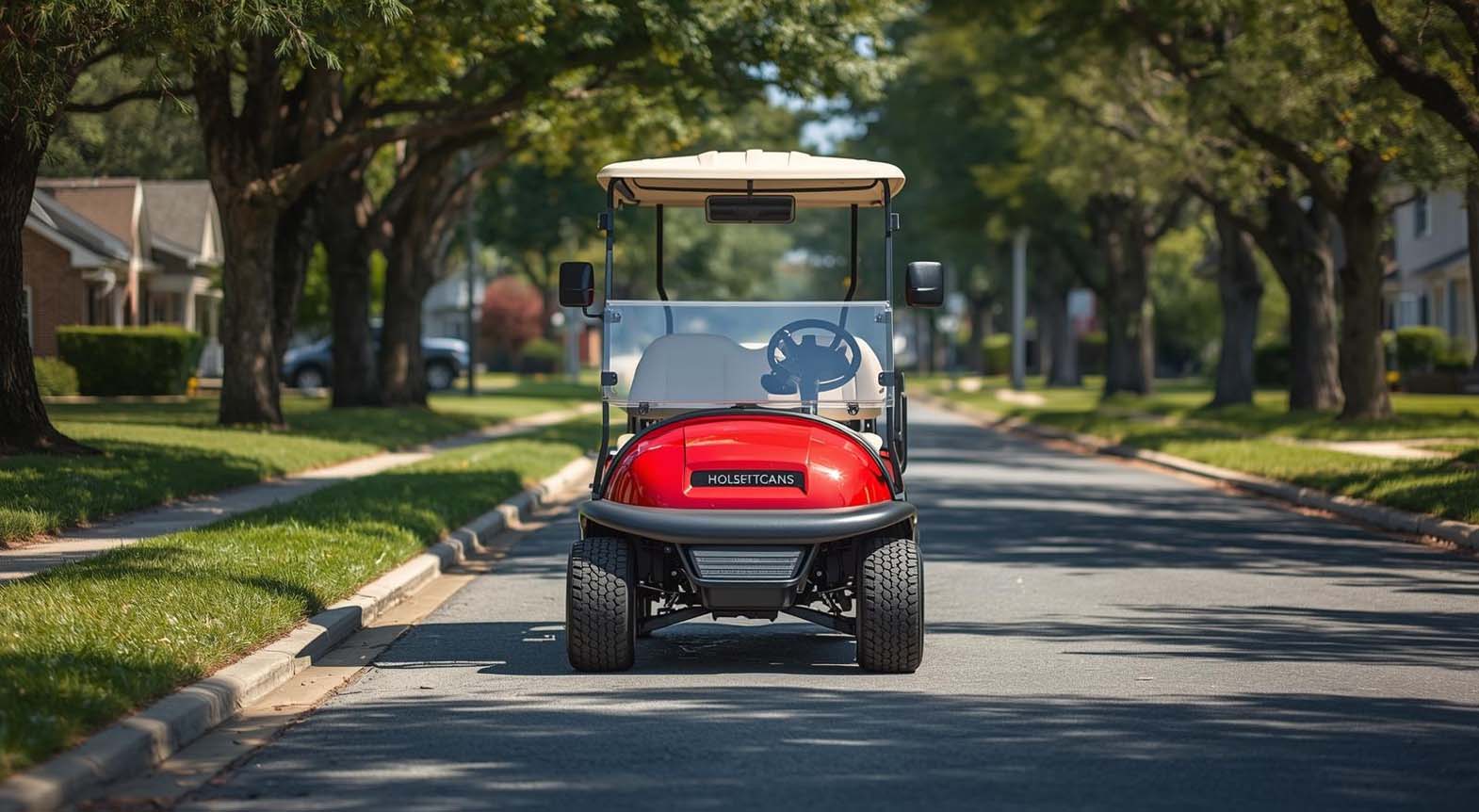
Yes, a golf cart can be made street legal, but only after it is fully converted into a Low-Speed Vehicle (LSV) with mandated safety equipment, appropriately titled, registered, insured, and driven by a licensed operator on roads that allow such vehicles. Without meeting these criteria, a standard golf cart remains limited to private property or designated golf cart paths.
Golf Expert Opinions on Making a Golf Cart Street Legal
Tom Watson (8-time Major Champion):
“Making a golf cart street legal isn’t just about bolting on headlights and mirrors—it’s about respecting local road rules. I’ve seen many golfers assume all carts are treated the same, but the law draws a clear line between standard carts and low-speed vehicles. Speed capability, braking systems, and visibility features matter more than people realise.
If you’re planning to use a cart beyond the course, check municipal ordinances first. A properly registered, insured, and equipped cart not only keeps you legal, but it also protects everyone sharing the road.”
Jack Nicklaus (18-time Major Champion):
“A street-legal golf cart should be approached like any other vehicle. Safety comes first. Seat belts, proper lighting, and a VIN aren’t optional add-ons in many states—they’re requirements.
Too many owners focus on performance upgrades and overlook compliance. From my experience, the most brilliant move is to build the cart to LSV standards from day one. That way, you avoid fines, registration issues, and unnecessary risks while enjoying the convenience of driving legally.”
Understanding the Difference: Golf Cart vs LSV
The most important distinction that many guides gloss over is the difference between a standard golf cart and a Low-Speed Vehicle (LSV).
A standard golf cart is designed for recreational use on golf courses, campuses, or private land and cannot legally operate on most public roads. An LSV, on the other hand, is recognised by federal safety standards (FMVSS No. 500) and most state laws as a legitimate road-use vehicle — albeit one limited to low-speed streets.
Why This Matters?
Golf carts typically lack crucial safety equipment and do not come with a manufacturer-assigned 17-digit VIN — both of which are essential for registration and legal road use. A quality golf cart you purchase off the lot, with no title or VIN, is not inherently street-legal.
To be an LSV eligible for public road operation:
- It must safely reach at least 20 mph but not exceed 25 mph.
- It must comply with federal safety standards and state requirements.
- It must be titled, registered, and insured just like other motor vehicles.
Any vehicle exceeding 25 mph may be reclassified and face stricter requirements, similar to those for full passenger cars.
What Safety Equipment Is Actually Required?
To legally operate your golf cart on public streets, you must equip it with all components mandated by federal law (FMVSS 500) and most state DMVs. These items are not optional — failure to install them means no titling, no registration, and no street use.
1. Lighting & Signalling
- Headlamps – Required for visibility at night and in low visibility conditions.
- Tail lamps and stop (brake) lights – Must activate reliably when slowing or stopping.
- Front and rear turn signal lamps – Essential for indicating direction changes.
- Reflectors – Red reflectors on both sides and the rear improve visibility.
2. Passenger Safety
- Seat belts for each passenger seat – Must meet federal standards for restraint systems.
- Windshield with federal safety glass – Simple plastic golf cart windshields are often not sufficient unless they meet AS-1 or similar automotive safety standards.
3. Driving & Control
- Rearview and side mirrors – At a minimum, driver-side and an additional mirror.
- Parking brake – A functioning parking brake is required by law.
- Horn – Must be audible enough for use on public roads.
4. Identification
- 17-digit Vehicle Identification Number (VIN) – This unique number is required for titling and registration. Standard golf carts don’t have this; one must be issued during conversion or by the manufacturer.
Together, these elements ensure your vehicle meets minimum safety and visibility standards for interaction with other road traffic.
Legal Steps: Titling, Registration, Insurance
After equipping the cart with the required safety gear, you must complete key administrative steps to make it street legal.
Step 1: VIN Assignment
If your golf cart wasn’t manufactured with a 17-digit VIN, you generally must have one issued when your cart is inspected for compliance. A VIN is central to titling and registration.
Step 2: Title & Registration
Most states require similar documentation:
- Manufacturer’s Certificate of Origin or bill of sale
- Proof of installed safety equipment
- VIN or inspection certificate
- Completed application forms and fees
- Once approved, your LSV receives a title and license plate just like a car.
Step 3: Insurance
LSVs must be insured. In Florida, for example, minimum requirements include Personal Injury Protection (PIP) and Property Damage Liability (PDL) coverages.
Ensuring a street-legal golf cart provides financial liability coverage in the event of an accident. For some owners, insurance adds significantly to the cost — especially with higher coverage limits.
Driver Requirements & Age Limits
Most states require a valid driver’s license to operate an LSV on public roads. In Florida, for example, anyone under 18 must hold a valid learner’s permit or driver’s license.
Local ordinances might impose stricter rules — so always check city or county requirements before hitting the road.
Where You Can & Cannot Drive?
Even after making your golf cart street legal, there are apparent limitations on where it may be operated:
Permissible Roads
- Streets with a posted speed limit of 35 mph or less are the typical maximum allowed for LSVs.
- Some jurisdictions allow crossing busier roads at intersections, but continuous travel on highways or fast collectors is generally prohibited.
Local Ordinances Can Override State Rules
Cities and counties can impose additional restrictions, including banning LSVs on certain streets or requiring local permits. Always check with your local traffic or public works department before you ride.
Even within the same state, rules can vary — for example, some Michigan towns require registration stickers and local approvals even if the vehicle meets state standards.
Typical Costs Involved (Beyond Parts)
Putting a golf cart on the street isn’t free — and many owners underestimate total costs.
Major Cost Components
- Safety Equipment: $350–$2,000+, depending on quality and whether installed professionally.
- VIN Assignment & Inspection: Fees vary by state.
- Title & Registration: Often $50–$200+.
- Insurance: $100–$1,000+ annually, depending on coverage limits and state rules.
If the cart is purchased brand-new as a street-legal model, costs are generally higher upfront but simplify paperwork and compliance.
Unique Considerations that you Missed
1. Why Not All Golf Carts Can Be Made Street Legal?
Some states (like Georgia, per recent interpretations) suggest that aftermarket modification alone may not suffice — a vehicle should ideally be manufactured to LSV standards to be legally considered an LSV.
2. Weight & Speed Limits Matter?
To stay classified as an LSV, the vehicle’s gross weight and top speed must fit within narrow bands. Exceeding 25 mph or significantly altering the weight without proper compliance can reclassify your cart out of LSV status.
3. Documentation Before Equipment Purchase
Many people buy parts prematurely. Local DMVs often require before-and-after photos, receipts, and proof of compliance before issuing a VIN or title — a detail seldom emphasised in competing guides.
4. Golf Cart Culture & Liability
In areas where golf carts are popular (beach towns, retirement communities), local authorities may enforce compliance more strictly due to accident history or population density — meaning just having lights isn’t enough.
Is It Worth Making a Golf Cart Street Legal?
When It Makes Sense
- Your neighbourhood connects public streets with low speed limits
- You want to use a quality golf cart as daily errand transport
- You prefer a cheap, electric alternative to putting a golf bag in a car or driving a full-size vehicle
When You Might Not
- You only use it on private property or golf courses
- Local ordinances are restrictive or require costly permits
- Your cart travels at speeds under 20 mph (not eligible as LSV)
Converting a regular golf cart to street legal can turn it into a practical low-speed runabout — but only if you’re prepared for the investment, paperwork, and legal compliance involved.
Summary: Roadmap to Legal Street Use
- Research Your Local Laws: Start with your state DMV and city/county codes before buying parts.
- Equip the Cart: Add all required lights, mirrors, reflectors, windshield, horn, golf seat belts, and parking brake.
- Get a VIN: Essential for titling and registration.
- Title & Register: Submit documentation, pay fees, and receive your license plate.
- Insure It: Get proper LSV coverage.
- Drive Within Limits: Stay on roads that allow LSV use and obey posted speed limits.
By following this comprehensive guide, you’ll have the best resource available on how to make a golf cart street legal, one that goes beyond generic checklists and equips you with actionable legal and compliance strategies tailored to the objective 2026 standards.