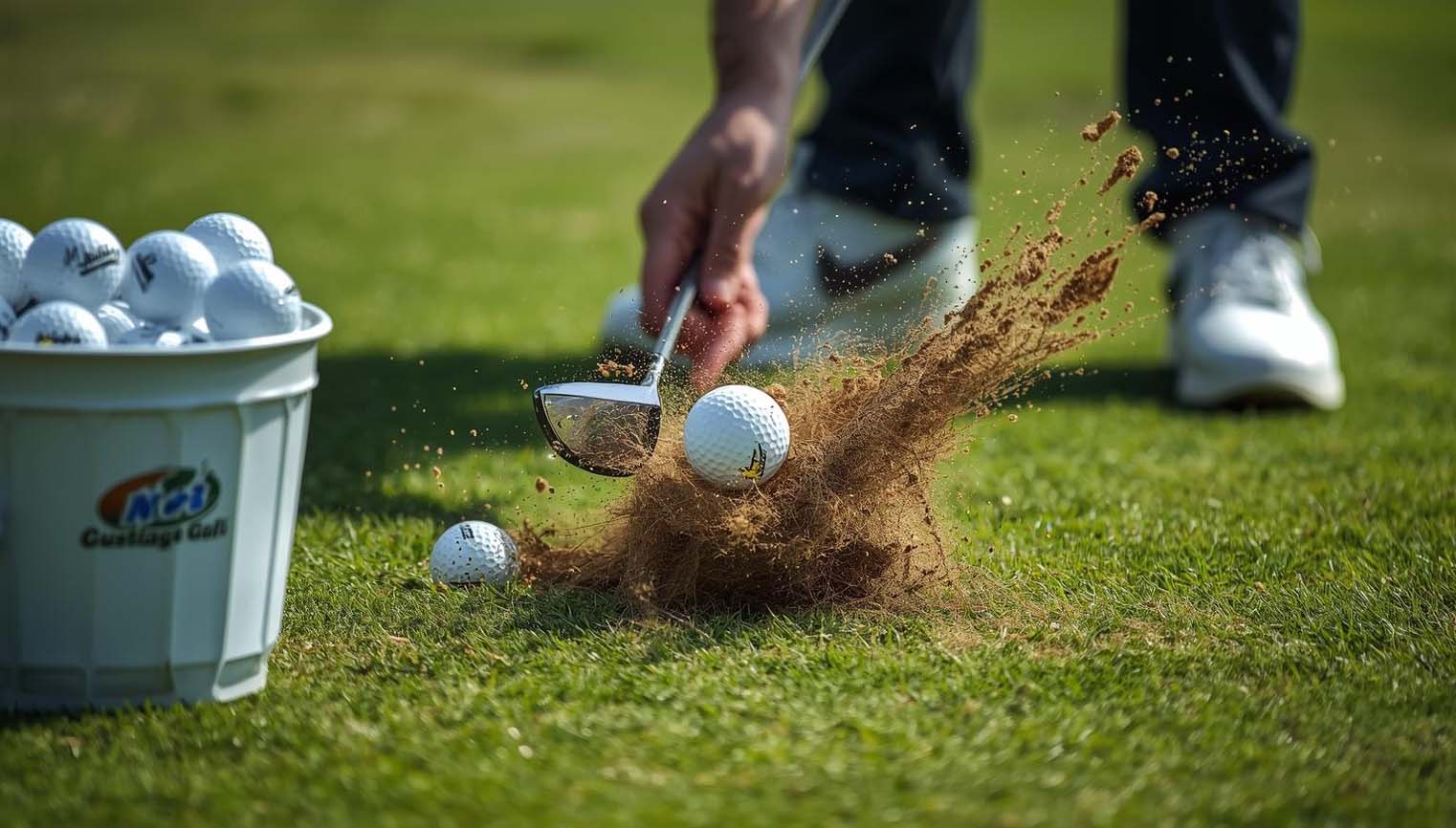
To prevent hooking a golf ball, use a neutral grip, square the clubface at impact, adjust your swing path toward neutral (not excessively inside-out), and rotate your body through the shot so the clubface doesn’t close too quickly. These changes work together to eliminate the left-curving spin that causes hooks for right-handed golfers.
Golfers dread the hook — that sudden, sharp left-curving shot (for right-handers) that eats strokes and ruins pars. It doesn’t just rob distance; it can land you in hazards, out of bounds, and shave confidence fast. This article takes you beyond basic “fix your grip” tips. You’ll learn why a hook happens, how to diagnose your personal pattern, and exact, feel-based adjustments that actually stick on the range and course.
Most golf advice repeats common points; here you’ll get them plus advanced insights not found in typical articles — focused on biomechanics, feel cues, sequencing, and self-diagnosis — so you solve the hook at its root.
1. What a Hook Really Is (Not What You Think)?
A hook is not just a left-curving ball — it is the result of a clubface that is closed relative to the path at impact. This means the face is pointing left compared to the direction the swing is travelling.
Ball Flight Mechanics in Plain Terms
- Clubface direction → determines start line
- Face relative to path → determines curvature
- A hook starts left and keeps curving left because the surface of the club is closed when it meets the ball.
When Hooks Happen Most?
- Too strong a grip
- Swing path out too far inside-out
- Too early wrist release
- Body rotation stalls, forcing the hands to flick through impact
These aren’t just theories — these factors show up in pro instruction and player feedback consistently.
2. Grip Adjustments That Really Work
Your grip is your only direct connection to the clubface. Even perfect body motion can be undone by a grip that closes the face too early.
How a Strong Grip Causes Hooks?
A “strong grip” — where your hands are rotated too far toward your trail side — makes the clubface close relative to the path. Then, even a slightly inside-out path becomes too closed at contact and hooks.
Exact Grip Fix:
✔ Lead hand: Position so you see about two knuckles
✔ “V” formed between thumb and index finger on both hands points at your trail shoulder
✔ Right (trail) hand sits more on top of the grip to reduce early face closure
Quick Check: If the bottom thumb sits too far right (for right-handers), you likely have a firm grip, causing the face to shut.
Grip Pressure
A hidden cause of hooks is a too-tight grip — it leads to hand manipulation inside the impact zone. Aim for a firm but relaxed hold (around 4–5 on a 1–10 pressure scale) so your body rotation, not your wrists, controls the face.
3. Swing Path & Alignment: Why Too Much Inside-Out Is a Problem
A slightly inside-out path isn’t bad — it’s how controlled draws are hit — but when the face is closed too early, that same path produces a hook.
Why Inside-Out Goes Wrong?
- Swing too far inside, and the release happens too early
- Hands outrun body rotation
- This exaggerates spin and left curvature
Players with hooks often compensate by trying to “swing more under,” which in turn exaggerates the inside pattern and strengthens the hook.
Set Up Adjustments That Help
- Temporary slightly open stance: encourages a more neutral path without swinging over the top
- Check alignment sticks on the range to ensure your shoulders and feet are square
- rather than closed
If your feet, hips, or shoulders point left of target at address, your body position alone can exaggerate an inside path, resulting in a hook.
4. Body Rotation: Let Your Core Lead the Release
One of the most overlooked causes of a hook is where the body stops rotating too soon, and the hands try to save the shot.
The Body vs Hands
- Good rotation: Hips and chest open through impact
- Poor rotation: Body stalls, hands flip the clubface
This is why many hooks are actually snap hooks — wild, dramatic left-curving shots resulting from hands taking over when the body quits rotating.
Drill to Feel Rotation
Practice slow swings, focusing on:
- Lead hip clearing toward the target
- Trail knee moving left
- Arms following the body
This sequence keeps the clubface square longer and avoids early closure.
5. Clubface Control & Release: The Real Fix
Far too many tips tell you to “keep the face open longer” — but that’s only half the solution.
A Better Cue: Square to Target Through Impact
Instead of thinking “open,” think:
✔ Feel like you’re letting the body square the clubface
✔ Don’t let wrists snap shut — this is what creates the hook spin
✔ Imagine pointing the clubface toward the target as you approach impact
This keeps the face from closing prematurely and directly reduces hook spin.
6. Self-Diagnosis: Identify Your Hook Pattern
Here’s a simple test to spot what kind of hook you are hitting:
Step 1: Hit five balls with your normal swing
Step 2: Note where the ball starts and how it curves
- Starts right, curves sharply left: likely a closed face relative to the path
- Starts left and curves left: likely both face and path issues
If every ball curves left dramatically, your release and grip are the biggest culprits.
7. Practice Drills That Actually Help
Here are effective drills with purpose — not just motion.
✔Open Stance, Square Face Drill
- Set stance slightly open
- Aim the clubface directly at the target
- Focus on swinging through so your right hand moves toward the target
This helps you feel a neutral swing without early closure, making it easier to retrain your release.
✔Split-Hand Anti-Hook Drill
- Grip the club with a gap between hands
- Swing, focusing on letting the body lead
This reduces premature wrist action, which closes the face too soon.
✔Alignment Stick Drill
- Place a stick along the target line on the ground
- Ensure the club shaft doesn’t shave it on the downswing
If you hit the stick, you are swinging too inside — a common hook trigger.
8. Equipment & Setup Factors Most Golfers Overlook
Sometimes your clubs are working against you.
Lie Angle Issues
Clubs that are too upright encourage toe strikes and unintended face closure — increasing hooks.
Loft & Driver Settings
A driver with too much draw bias can cover up a hook at slow speed but exaggerate it at full swing speed.
Getting fitted can help diagnose these hidden equipment causes.
9. Common Mistakes When Trying to Fix Hooks
Avoid these frequent pitfalls:
- Over-weakening the grip leads to pushes or slices
- Forcing an outside-in path creates new problems
- Trying too many changes at once — slows improvement
Instead, apply one change at a time and feel how it shifts your ball flight.
Square grip + solid body rotation + neutral path = fewer hooks and straighter hits.
FAQ
FAQ 1: What is the leading cause of hooking the golf ball?
The leading cause of hooking the golf ball is a clubface that is closed relative to the swing path at impact. This usually happens when a golfer has a firm grip, an overly inside-out swing path, or releases the wrists too early, causing the clubface to shut and create left-curving spin.
FAQ 2: How do I stop hooking the golf ball immediately?
To stop hooking the golf ball immediately:
- Neutralise your grip so only 2–2.5 knuckles are visible on the lead hand
- Open your stance slightly to reduce an excessive inside-out path
- Rotate your body through impact instead of flipping your hands
These adjustments help keep the clubface square longer and reduce hook spin.
FAQ 3: Can a firm grip cause a hook in golf?
Yes, a firm grip is one of the most common causes of a hook in golf. A firm grip naturally closes the clubface earlier in the swing, and when combined with an inside-out path, it increases the likelihood that the ball starts left and curves further left.
Conclusion:
How to prevent hooking a golf ball comes down to controlling the clubface and swing path at impact. Use a neutral grip, avoid an overly inside-out swing, and rotate your body through the shot so the hands don’t flip the clubface closed. When these elements work together, hook spin disappears, and straighter, more consistent shots follow.