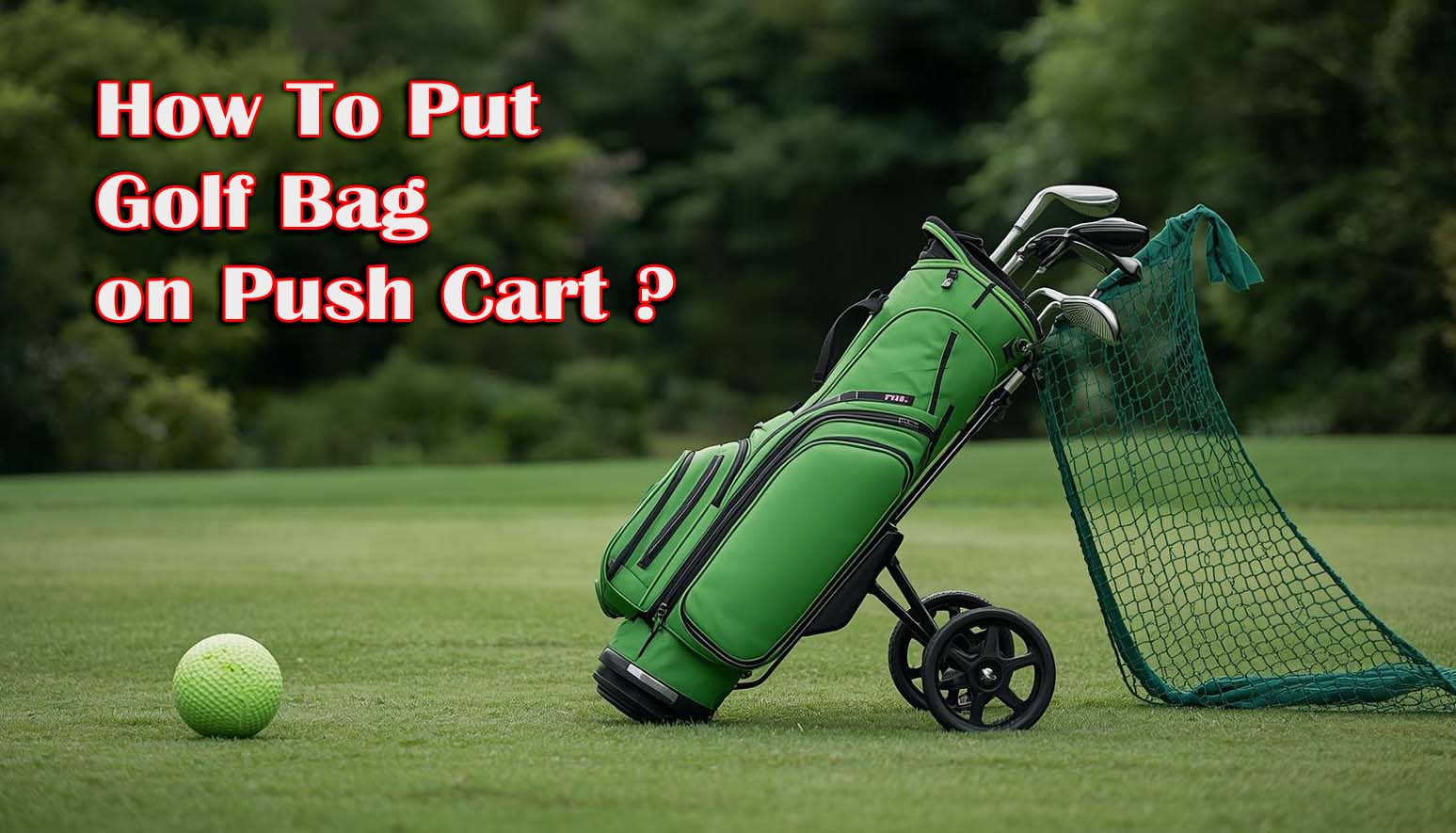
To put a golf bag on a push cart correctly, engage the cart’s brake, seat the bag’s base fully into the lower cradle, lean the bag back so it rests against the upper support, then secure it with the lower strap first and the upper strap second, tightening both until the bag is stable without twisting or blocking club access.
That’s the correct method. Everything else in this guide explains how to do it better than most golfers — and better than what top-ranking articles currently show.
Why Proper Golf Bag Placement Actually Matters?
Most articles treat this topic as a basic setup task. In reality, how you mount your bag affects balance, walking fatigue, club protection, and even the pace of play.
When a bag sits too upright or off-centre, the cart’s centre of gravity shifts forward or to the side. On slopes, this increases the risk of tipping. Over 18 holes, even minor alignment issues add rolling resistance, forcing you to push harder than you need to.
Poor placement also causes:
- Club chatter that damages shafts over time
- Twisting that loosens straps mid-round
- Blocked pockets that slow you down when grabbing tees, balls, or rangefinders
The proper setup turns a push cart into a smooth extension of your walk. The wrong one makes it feel like you’re fighting it all day.
Before You Mount the Bag: Three Checks Most Golfers Skip
Engage the Brake First (Always)
This sounds obvious, but it’s the most common mistake. Push carts roll easily, even on slight slopes. Locking the brake stabilises the frame, so the bag seats evenly rather than sliding into place at an angle.
Adjust the Straps Before the Bag Goes On
Straps are easier to size when they’re empty. Loosen both upper and lower straps fully so you’re not tugging and twisting once the bag is mounted.
Identify Your Bag Type
Different bags behave differently on carts.
- Cart bags are designed to sit flush and stable
- Stand bags have leg mechanisms that can interfere
- Lightweight carry bags often lack a flat base
Knowing what you’re working with helps prevent movement later in the round.
Step-by-Step: How to Put a Golf Bag on a Push Cart Correctly
Step 1: Seat the Bag Base Into the Cradle
Place the bottom of the bag directly into the cart’s lower cradle or well. The base should sit inside the cradle, not on top of it. If it’s perched or tilted, it will rotate once you start walking.
A quick visual check: the bag’s base should be centred between the wheels.
Step 2: Tilt and Align the Bag
Lean the bag backwards so the upper portion rests against the cart’s support arms. This tilt is intentional. It keeps the weight closer to the wheels, improving stability.
If the bag looks vertical from the side, it’s too upright.
Step 3: Secure the Lower Strap First
This is where most guides get it wrong.
The lower strap anchors the bag and prevents twisting. Wrap it around the middle or lower third of the bag and tighten until snug. This strap should do most of the stabilising work.
Step 4: Secure the Upper Strap Second
Loop the upper strap over the top portion of the bag. Tighten it enough to keep the bag from rocking, but not so tight that it crushes dividers or pockets.
The goal is stability, not compression.
How to Set the Bag for Easy Club Access?
Mounting the bag is only half the job. Orientation matters as much.
On most push carts, clubs are easiest to remove when the longest clubs are positioned toward the rear of the cart. This keeps grips from tangling and makes mid-irons and wedges quicker to grab.
For bags with full-length dividers, rotating the bag slightly before tightening the straps can improve access more than people realise. Once tightened, the bag shouldn’t twist when you pull a club.
A good test: pull your putter and a wedge without adjusting your stance or the cart. If it feels awkward, realign before walking off.
Reducing Club Noise and Preventing Damage While Walking
Push carts amplify club movement more than riding carts because the bag angle changes constantly on uneven terrain.
Headcovers aren’t just for looks. They reduce impact between clubs, especially drivers and fairway woods, which take the brunt of vibration.
Another overlooked detail is towel placement. A towel draped loosely over the top row of clubs dampens movement without interfering with access. It’s a simple fix many experienced walkers use.
Special Setup Tips by Bag Type
a) Using a Stand Bag on a Push Cart
Stand bags work fine on carts, but leg mechanisms can cause problems. Position the bag so the legs face outward, not toward the cart frame. Tighten the lower strap below the leg hinge to prevent accidental deployment.
b) Using a Cart Bag
Cart bags are the easiest option. Their flat bases and forward-facing pockets are designed for this setup. Just make sure large side pockets aren’t pinned shut by the straps.
c) Using a Lightweight Carry Bag
These bags are more likely to twist. Extra attention to centring and lower-strap tension helps keep them stable.
Common Mistakes That Cause Bags to Slip or Fall
Most bag failures come from minor oversights rather than bad equipment.
Over-tightening straps can deform soft bags, while under-tightening allows them to rotate. Mounting the bag on uneven ground locks in an imbalance that worsens as you walk.
Another frequent issue is loading heavy items after mounting the bag. Adding water bottles or accessories later shifts weight and loosens straps. Load the bag first, then mount it.
The 10-Second Stability Test
Before leaving the tee box, do this quick check.
Push the cart forward a few feet, stop, and gently tug the top of the bag. It shouldn’t rotate. Pull out your longest club and putter. Neither should snag.
If all three feel smooth, you’re set for the round.
Push Cart Accessories That Actually Improve Stability
Not all accessories help. Some add weight without benefit.
Strap extenders are useful for oversized bags, ensuring even pressure. Anti-twist bases can help lightweight bags, but are unnecessary for most cart bags.
Umbrella mounts deserve special mention. When attached, they shift weight upward and sideways. Always recheck the balance after installing one, especially in windy conditions.
Choosing the proper golf cart setup — or more accurately, the appropriate golf cart configuration for walking — matters more than most golfers think.
Does Bag Position Affect Walking Fatigue?
Yes, and the reason is simple physics.
When the bag’s weight sits directly over the wheels, rolling resistance is minimised. When it leans forward or twists, more force is required to keep the cart moving straight.
Over 18 holes, that extra effort adds up. A well-balanced cart feels lighter, even if the total weight is the same.
This is why experienced walkers obsess over setup. It’s not about looks — it’s about conserving energy.
Quick FAQs Golfers Actually Ask
Can you leave the bag on the cart between rounds?
Yes, but loosen the straps slightly to reduce long-term pressure on the bag.
Why does my bag twist during the round?
Usually, because the lower strap isn’t tight enough or the base isn’t fully seated.
Should the putter face forward or backwards?
Whichever gives the cleanest pull. Most golfers prefer it facing rearward for a straight draw.
Is a stand bag bad for push carts?
No, but it requires better positioning than a cart bag.
Golf Resources Worth Checking
For deeper dives into equipment setup, walking ergonomics, and cart compatibility, manufacturer guides and independent golf resources, such as push cart manuals, bag design breakdowns, and walking-golf studies, provide valuable insights. These resources often explain design intent that basic resources overlook.
Most golf experts did not explain the order, centre-of-gravity principles, or accessibility optimisation. They tell readers what to do, but not how to do it well.
These resources fill those gaps with practical logic, real walking experience, and setup checks that actually improve a round.
Final Takeaway
Putting a golf bag on a push cart isn’t just about strapping it down. It’s about balance, efficiency, and protecting your gear while making the walk easier.
Engage the brake, seat the base, tilt the bag correctly, secure the lower strap first, and fine-tune access before you start walking. Do it right once, and the cart disappears into the background — exactly how it should.