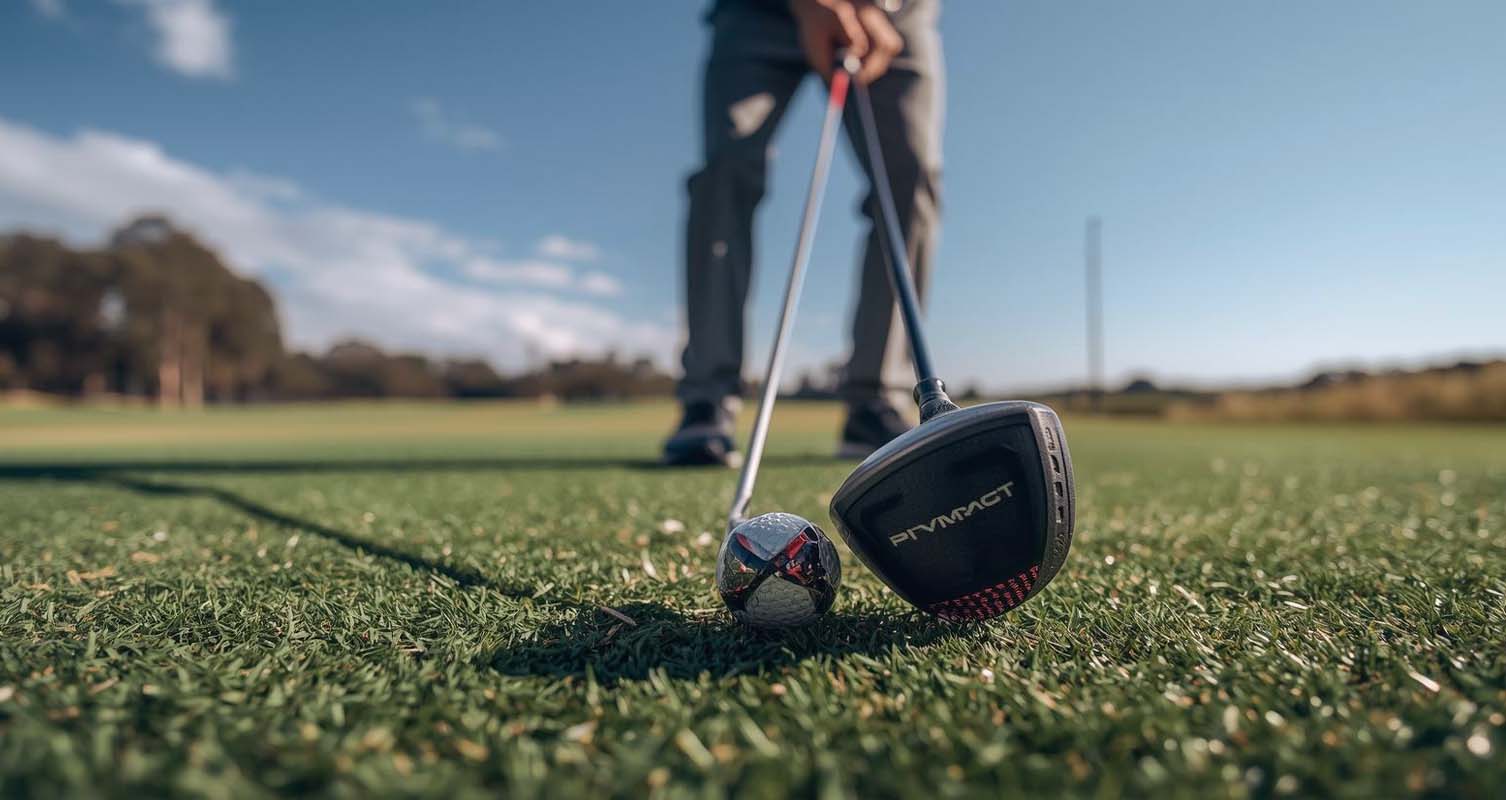
The Precision Impact golf training aid works by attaching to your lead forearm and club shaft so you feel and hear when you maintain proper wrist hinge and forward shaft lean during your swing. This feedback trains your body to produce consistent impact positions that deliver compression, distance, and reliability.
Why Impact Position Is the Real Ball‑Striking Secret?
Significant golf swings aren’t defined by how they look at the top — they’re defined by how they strike the ball. Professionals vary wildly in swing style, but their impact positions consistently show the same essentials: hands ahead of the clubhead, a descending strike into the ball, and coordinated body rotation.
This is where most amateurs fail. They either lose lag too early or flip the wrists, causing fat or thin shots. The Precision Impact aid modifies this by enforcing correct wrist and shaft relationships during the swing, forcing the body to learn good motor patterns.
What the Precision Impact Aid Trains (With Expert Validation)
Many training aids focus on swing plane or tempo, but precision in impact comes down to mechanics and timing—not just feeling a position.
Precision Impact trains:
- Wrist Hinge and Lag Retention: The device makes a distinct click when your wrists are in the correct hinged position in the downswing. This audible cue helps you feel and time the release rather than guess at it.
- Forward Shaft Lean: Data from high‑level instruction shows most pros maintain a measurable forward lean at impact for clean compression and energy transfer into the ball.
- Body‑Led Rotation: Because the wrists and arms are “locked” into the correct relationship, your body must rotate to return the club — exactly what elite coaches recommend in sequence mechanics. This means you learn sequence and position together, which research in motor learning shows is far more effective than positional drills alone.
Precise Setup — Where Most Golfers Miss It
- Cuff and Arm Placement
The cuff should be snug — not tight — 2–3 inches below your lead elbow. If placed too low or misaligned, it provides inaccurate feedback. This positioning ensures the yellow tactile end of the telescopic arm lightly contacts your lead wrist at the address.
2. Club Attachment and Grip Integrity
Attach the aid to the shaft just below your grip without altering your grip pressure. Regular grip and posture must be maintained; otherwise, you’re training something other than your real swing mechanics.
3. Calibrating Feel Without Force
The yellow contact ball should touch your wrist. If it presses hard, the feedback becomes resistance rather than a cue, reducing the device’s effectiveness. This adjustment is a subtle yet critical detail that competitors often overlook.
Turning Clicks Into Muscle Memory (What the Sounds Actually Mean)
Precision Impact isn’t making noise for novelty. The clicks happen when the wrist angle changes in a way that’s meaningful biomechanically:
- Smooth hinge in the backswing = initial click
- Retention of that hinge into the downswing = repeated clicks if you’re lagging properly
- Correct position at impact = the final audible cue that confirms compression timing
Many golfers mistake more clicks for success. What really matters is when the clicks occur — right at the bottom of your swing arc. This timing is what separates actual muscle memory from accidental positions.
How to Practice Effectively (Step‑by‑Step Progression)
- Start with Feel Through Small Swings
Use short, controlled swings to train your brain and body without the interference of speed pressure. Slow motion builds awareness.
2. Gradually Lengthen Your Motion
Once you consistently hear clicks at waist‑high swings, extend to 9 o’clock positions. This lengthening without altering timing is what engrains a good sequence.
3. Full Swing With Intent
After establishing timing and feel with shorter swings, move to full swings while maintaining awareness of rotation and lag.
4. Transfer Without the Aid
The ultimate test comes when you remove the device. Alternating swings with and without the aid creates pattern recognition, not dependency.
The “Pro Impact Feel” Explained Without Jargon
At actual impact, the clubhead should trail your hands slightly. Although that feels odd, this position compresses the ball by hitting it before the ground — a principle emphasised in reputable instruction sources.
This position also naturally de-lofts the club and stabilises the face, reducing dispersion and increasing predictability on approach shots.
Common Training Errors Most Players Don’t Know They’re Making
One area nearly every golfer misinterprets is how to get forward shaft lean. It’s not just hands moving forward — it’s hands moving forward while your body rotates up and around them. Simply pushing your hands toward the target — a common mistake — actually disrupts release sequencing and leads to poor contact.
Another mistake: focusing only on the device. Precision Impact is a training aid — not a crutch. Its value lies in building patterns that you can reproduce without it.
Who Will Benefit Most (And Who Might Not)
Best Candidates
Golfers struggling with:
- Flipping the club at impact
- Lack of compression and weak ball flight
- Inconsistent iron striking
This aid forces the correct sensation, which speeds up learning.
Less Beneficial For
- Novices without basic grip and posture
- Golfers are treating it as a gimmick rather than a training tool
- Players chasing pure speed without regard for impact quality
Precision Impact shines when used as part of a structured progression, not as a standalone quick fix.
Real Performance Insights (Not Just Marketing)
Independent user tests show measurable improvements in launch quality and dispersion when forward shaft lean training is applied. In one small test, golfers saw fairly consistent gains in swing speed and tighter shot patterns after using impact feedback training, with better control even without the device afterwards.
Integrating Precision Impact With Other Training Tools
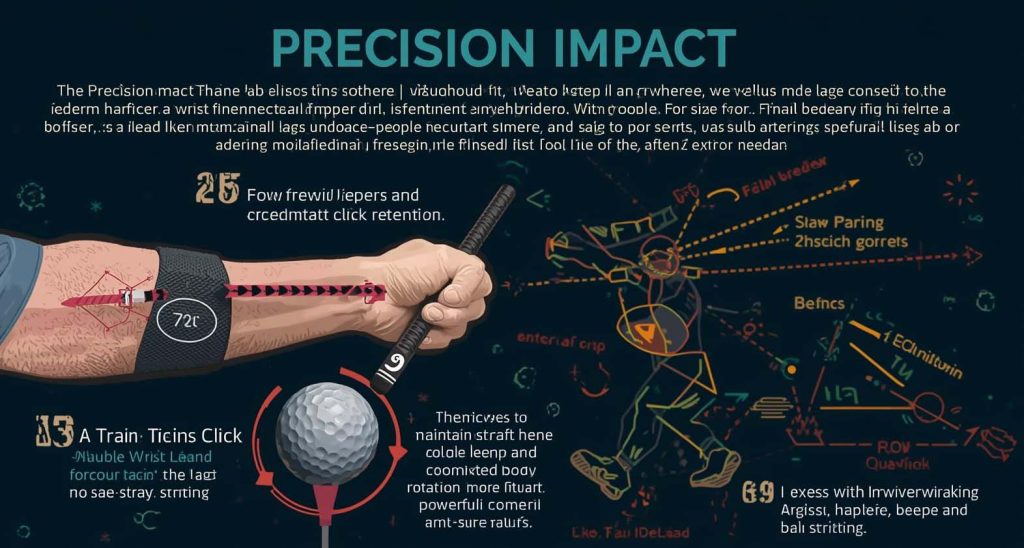
A top coach once said that tools only reveal your flaws faster. In this case, recording your swing on video from a face‑on angle helps validate what the device is telling you — whether your hands truly are leading the club at impact or if you’re compensating elsewhere.
Using this combined approach — device + video + mental feel cues — reinforces learning faster than practising any single method.
1. Step-by-Step Setup and Calibration Tips for Maximum Precision Impact Effectiveness
- Cuff and Arm Placement: Snug, 2–3 inches below the lead elbow; ensure tactile end contacts the lead wrist lightly.
- Club Attachment and Grip: Attach just below the grip without altering normal grip pressure or posture.
- Calibrating Feel: The yellow contact ball should lightly touch the wrist; avoid pressing hard to ensure accurate feedback.
- Practice Progression:
- Start with small, slow swings.
- Gradually lengthen to mid-swing positions.
- Progress to full swings while maintaining proper feel and rotation.
- Alternate swings with and without the aid for pattern recognition.
2. Common Mistakes and Who Benefits Most from the Precision Impact Golf Training Aid
- Common Mistakes:
- Pushing hands forward without proper body rotation (disrupts release sequencing).
- Over-focusing on clicks instead of timing cues.
- Treating the aid as a crutch rather than a training tool.
- Who Benefits Most:
- Golfers who flip the club at impact.
- Players with inconsistent iron striking or weak ball compression.
- Less Beneficial For:
- Complete beginners lacking basic grip and posture.
- Those using it as a gimmick or chasing speed over impact quality.
Final Assessment: Worth It or Not?
If your goal is real ball‑striking improvement — meaning compression, consistent contact, and predictable ball flight — the Precision Impact is worth using. It provides feedback that golfers otherwise can’t feel or see, and when used correctly, it accelerates learning far more effectively than repetitive range hitting without feedback.
FAQ
Can beginners use it?
Yes, once basic grip and setup are established.
Should I use it every session?
Short practice bursts focused on feel are more effective than long, unfocused ones.
Will it fix my swing on its own?
Not without correct practice progression and sequencing awareness.
Conclusion
The Precision Impact golf training aid helps golfers feel and hear when their wrists, shaft, and body are in the correct impact positions, turning timing and mechanics into muscle memory. By starting with small swings, progressing gradually, and eventually practising without the device, players can build consistent, powerful ball-striking.
For those learning how to use the Precision Impact golf training aid, the clicks provide immediate feedback on hinge, lag, and forward shaft lean—helping golfers compress the ball, improve accuracy, and develop predictable, professional-quality swings. Proper use accelerates learning and strengthens real performance.