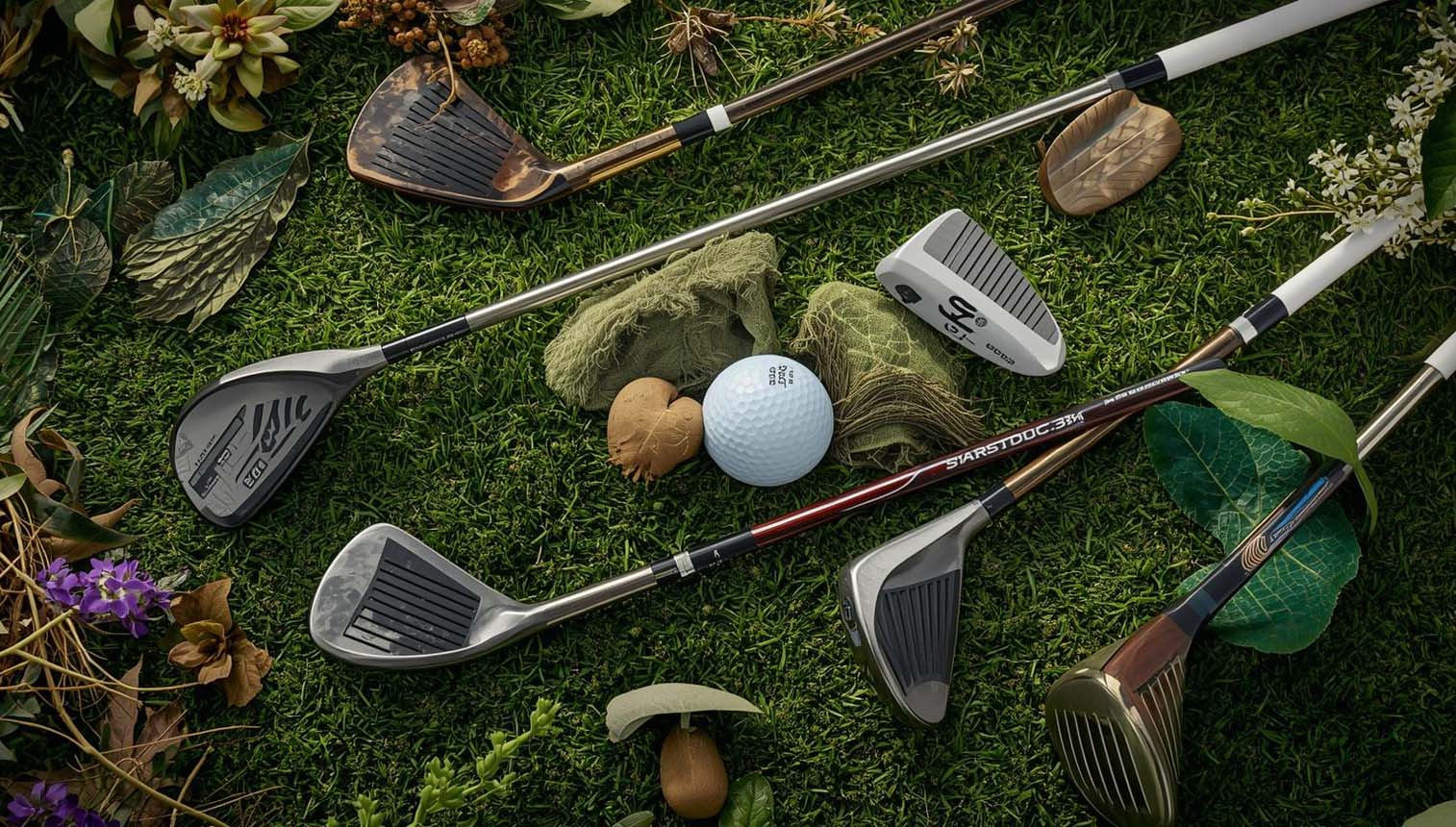
Use the Driver for maximum distance off the tee; Fairway Woods and Hybrids for long shots when distance and control both matter; Irons for approach and intermediate shots; Wedges for short, high-lofted precision shots near the green or in hazards; and the Putter for rolling the ball into the hole on the green. Always match the club’s loft and design to your distance, lie, and terrain before selecting a shot.
1. Why Proper Club Selection Matters More Than You Think?
Every golf club is engineered with specific loft, shaft length, head design, and ball flight characteristics to achieve predictable outcomes. Choosing the wrong club doesn’t just reduce distance—it wastes shots, increases your score, and undermines your confidence on the golf course.
Great players think:
- What distance do I need?
- What’s my lie (fairway, rough, bunker)?
- What’s the terrain and hazard risk?
- These questions determine club choice, not guesswork.
2. The Driver — Your Deadliest Distance Club
Purpose: Maximum distance from the tee.
Where Used: Primarily off the tee on long par-4s and par-5s.
- Lowest loft of all clubs (around 8–13°), enabling the longest launch and roll.
- Designed for distance over precision — if control is a concern, a fairway wood or hybrid might be a better choice on tight holes.
Best Practice:
When distance is critical, tee the ball to optimise launch and strike in the club’s sweet spot. A confident driver can shorten par-5s by turning them into reachable holes in two.
3. Fairway Woods — Distance with Stability
Purpose: Long shots when you need both distance and better control than a driver.
When to Use:
- On par-5s for second shots.
- Off the tee on tighter holes.
- From the fairway when the driver is too much club.
Fairway woods come in numbers (3-wood, 5-wood, etc.) with increasing loft and decreasing distance as the number goes up. They are easier to hit from the ground compared to drivers and can cover long distances with a higher, more controlled ball flight.
4. Hybrids — The Most Forgiving Long Clubs
Hybrids combine the forgiving high launch of woods with the precision control of irons.
- Replace hard-to-hit long irons (3-4-5 irons) for most players.
- Useful from the rough and fairway alike.
Why Hybrids Matter:
Many players, especially beginners and high handicappers, hit hybrids more consistently than long irons, leading to fewer lost shots and better scoring opportunities.
5. Irons: The Workhorse of the Bag
Irons 3-9 are the go-to clubs for approach shots.
Distance Pattern:
- Long Irons (2–4): Longer distances but harder to hit effectively.
- Mid Irons (5–7): Most versatile for medium approach shots.
- Short Irons (8–9): Precision approach shots near the green where control matters most.
What You Should Know:
Lower-numbered irons travel farther but produce lower trajectory flights; higher-numbered irons travel shorter distances with higher flights for soft landings near the green.
6. Wedges — Precision Weapons Around the Green
Wedges are the clubs you use when control and trajectory matter more than distance.
Main Types and Uses:
- Pitching Wedge (PW): Approach shots from 100–120 yards.
- Gap Wedge (GW): Fills the distance gap between pitching and sand wedges.
- Sand Wedge (SW): Designed for bunker play and short approaches.
- Lob Wedge (LW): Highest loft for short, high-trajectory shots and stopping quickly on greens.
Why Wedges Count:
More shots are played within 100 yards than any other distance bracket, so mastering wedges is essential to lowering scores.
7. The Putter: Your Scoring Club
The putter is unlike any other club:
- Used only on the green or just off it to roll the ball into the hole.
- Has a flat face for precision and minimal loft.
Tips for Choosing a Putter:
Balance, alignment aids, and feel matter far more than loft or length. Most golfers prefer the style that gives them confidence on the greens.
8. Smart Club Selection Strategies (Pro Level Rules)
Selecting clubs isn’t just about numbers — it’s about context.
Key Pro Tips:
- Know your actual distances: Practice and track how far you genuinely hit each club.
- Adjust for wind and weather: Strong headwinds may require one extra club; tailwinds can allow a shorter choice.
- Plan for landing areas, not flags: Target the safest part of the green or fairway.
- Use partial swings for distance control: Controlled swings often yield better precision.
9. Common Mistakes to Avoid
Even good golfers fall into these traps:
- Picking clubs based on hope, not data — estimate YOUR distances, don’t guess.
- Ignoring terrain: a club that works from a tight lie may fail from deep rough.
- Over-swinging with longer clubs: you often get better results with controlled shots using a longer club than swinging full out with a short club near your limit.
10. How Lie Conditions Change the Club You Should Use
Distance alone doesn’t choose the club — the lie does.
A ball sitting clean on short fairway grass allows you to hit almost any club as intended. But once the lie changes, the “right” club often changes with it.
Key lie situations golfers overlook:
- Deep rough: Grass between the clubface and ball reduces speed and spin. Choosing another club with extra loft (a hybrid or a higher iron) helps get the ball airborne.
- Tight or bare lies require cleaner contact. A mid-iron or bump-and-run style wedge shot is often safer than a high-lofted wedge.
- Uphill lies: Add loft naturally — take one extra club.
- Downhill lies: Reduce loft—choose a shorter loft and swing smoothly.
A good club selection adapts to the lie rather than fighting it.
11. Elevation, Temperature, and Air Density (The Hidden Yardage Killers)
Golf distances don’t exist in a vacuum.
Even amateurs benefit from understanding how conditions affect ball flight:
- Uphill shots play longer, downhill shots play shorter.
- Cold air makes the ball travel less, often by half a club.
- Hot, dry conditions increase carry distance.
- High elevation courses (thin air) allow the ball to fly noticeably farther.
Smart golfers adjust club choice before blaming their swing.
12. Shot Shape Matters More Than Most Golfers Admit
Not every club flies straight — and that’s okay.
If you naturally hit a fade or draw, that should influence club choice:
- A fade flies higher and shorter → consider more club.
- A draw flies lower and longer → you may need less club.
- Clubs with more loft magnify the curve — wedges curve less than long irons.
Pros choose clubs that match their natural ball flight, not the shot they wish they could hit.
13. Choosing Clubs Based on Miss, Not Perfect Contact
Here’s a truth low handicappers live by:
“Pick the club that still works when you don’t hit it perfectly.”
If your miss with a 6-iron comes up short, but your miss with a 5-iron still reaches the green, the 5-iron is the more imaginative play.
This mindset:
- Reduces short-side misses
- Avoids hazards
- Lowers scores without changing your swing
Golf is a game of managing misses, not chasing perfect shots.
14. When Not to Hit the Obvious Club
Sometimes the “correct” club on paper is wrong on the course.
Examples:
- Hitting a 3-wood instead of a driver on narrow tee shots
- Using a putter from off the green instead of a wedge
- Choosing a punch iron under wind instead of a full swing
Better players ask:
“What club keeps the big mistake out of play?”
That question saves strokes fast.
15. Build a Personal Distance Chart (Not a Generic One)
Most golfers rely on estimated distances. Better golfers rely on averages.
To do this properly:
- Track 10–15 on-course shots per club
- Ignore the longest shots
- Use your actual carry distance, not roll
Once you know your real numbers, club selection becomes confident and straightforward — no guessing, no second-guessing.
Final Thought: Practice with Purpose
Actual improvement happens when you practice real on-course scenarios instead of just hitting range balls. Track 10 real shots with each club, average the results, and use that data on the golf course. That’s how advanced players consistently choose the right club every time. Top of Form