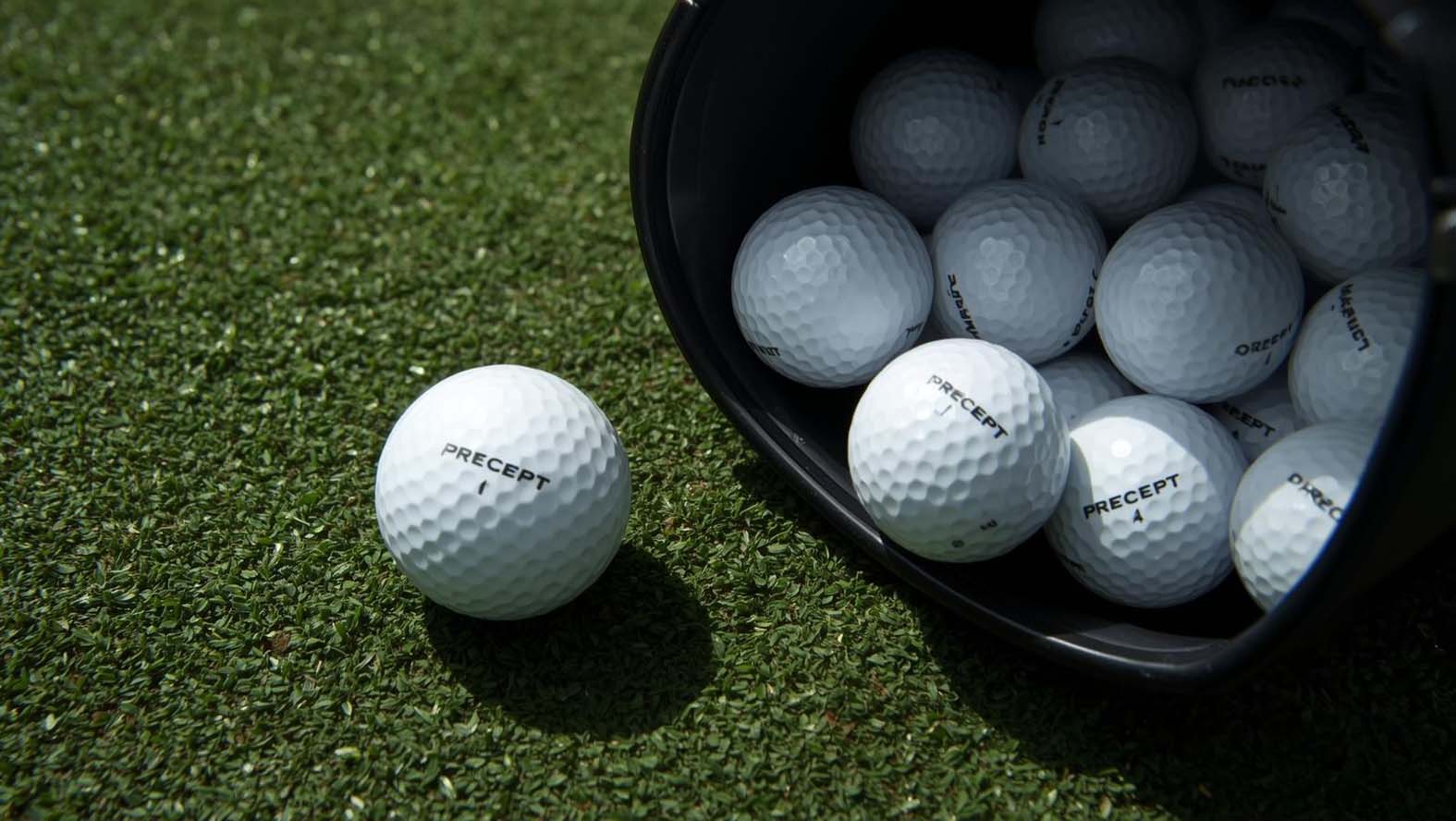
The Precept Laddie golf ball has a very low compression rating of roughly 35–38, making it one of the softest golf balls ever produced. This ultra-low compression helps golfers with swing speeds under 80 mph generate higher launch, better energy transfer, and more consistent carry distance.
Why the Precept Laddie Still Gets Attention Years Later?
Most golf ball articles focus on what tour players use. That misses the reality that most golfers swing far slower than professionals. The Precept Laddie was never built for elite speed. It was built to solve a common problem: golfers who hit the ball low, short, and inconsistently despite solid contact.
This is why the Laddie remains a reference point whenever low-compression golf balls are discussed, even as newer models flood the market.
Understanding Golf Ball Compression Without the Marketing Noise
Compression measures how much a golf ball deforms at impact. The lower the compression, the easier it is for the ball to compress fully with less force.
Independent testing cited by Golf Digest and MyGolfSpy consistently shows that golfers swinging below 85 mph often fail to compress mid- and high-compression balls. When that happens, ball speed drops and launch suffers.
The Precept Laddie’s compression sits far below modern “soft” balls, which typically range from 50 to 70. At 35–38, the Laddie compresses easily even at very slow speeds, reducing energy loss at impact.
Precept Laddie Construction: Why Simplicity Works Here
The Laddie uses a classic two-piece design. What competitors often overlook is how intentionally simple this construction is.
The oversized, low-density core is engineered to deform quickly and rebound efficiently. That rebound helps create higher launch conditions without forcing the golfer to swing harder. The ionomer cover prioritizes durability and straight flight rather than spin manipulation.
This design choice explains why the Laddie performs best as a carry-distance ball rather than a shot-shaping ball.
Who Actually Benefits From the Precept Laddie?
The Laddie performs best for golfers whose swing speed limits performance more than technique.
It suits beginners, seniors, and recreational players who struggle to get the ball airborne. It also remains a practical option among golf balls for lady golfers, where swing speed and launch angle are often more critical than greenside spin.
Players with moderate to high swing speeds, however, may lose control and distance due to over-compression, especially with irons and wedges.
Distance and Launch: What Happens on the Course
The most significant advantage of the Precept Laddie shows up in launch conditions rather than raw ball speed.
Testing referenced in USGA equipment studies shows that higher launch angles can offset lower spin rates for slow swingers, thereby improving carry distance. Many players see gains of two to five yards per club simply because the ball stays in the air longer.
The Laddie also reduces side spin on mishits, which helps keep shots straighter for inconsistent strikers.
Feel, Sound, and Confidence at Impact
The feel of the Precept Laddie is noticeably soft, especially off the putter face. That muted sound can help players maintain tempo and avoid decelerating on short strokes.
Competitors rarely discuss this psychological benefit, yet it matters. Confidence affects scoring, particularly for newer golfers who struggle with harsh feedback from firmer balls.
Precept Laddie vs Today’s Low-Compression Golf Balls
Modern alternatives like Callaway Supersoft and Wilson Duo Soft are more balanced. They offer better greenside control while remaining soft enough for most amateur swings.
What sets the Laddie apart is its extreme softness. For very slow swing speeds, it still launches higher than many newer balls. For average golfers, however, modern designs often provide a better blend of distance and control.
This distinction is critical and often missing from competitor reviews.
The Laddie Extreme: Small Changes, Same Purpose
The Laddie Extreme kept the same low-compression philosophy but adjusted core geometry to promote even higher launch. The difference is subtle, but it favors golfers who struggle most with height rather than distance alone.
Neither version was designed to compete with tour balls. Both were designed to make golf more playable.
Control Trade-Offs Most Reviews Avoid Mentioning
Extreme softness reduces friction between the ball and clubface on short shots. As a result, wedge spin is limited, especially on firm greens.
This is not a flaw—it is a design choice. For golfers who miss greens short due to low flight, higher launch matters more than stopping power. For skilled players, this trade-off becomes a limitation.
Honest ball selection means accepting these compromises.
Why Ball Maintenance Matters More With Soft Golf Balls?
Soft golf balls are more affected by dirt and cover wear. A proper golf ball cleaning process can improve consistency.
Warm water, mild soap, and gentle brushing help maintain aerodynamic performance. According to USGA testing, dirt and surface damage can reduce carry distance by up to five percent—enough to negate the benefits of a low-compression ball.
Competitors often ignore maintenance, but it directly impacts results.
Is the Precept Laddie Still Worth Playing Today?
The Laddie is no longer cutting-edge, but relevance is not about novelty. It is about suitability.
For golfers with very slow swing speeds who prioritize launch and forgiveness over spin and control, the Precept Laddie still performs its intended role effectively. Modern low-compression balls may offer a better overall balance.
What People often Ask
1) Is the Precept Laddie still suitable for distance compared to modern golf balls?
Yes—for golfers with swing speeds under about 80 mph, the Precept Laddie can still match or beat many modern balls in carry distance.
Because of its ultra-low compression (around 35–38), the Laddie launches higher with less effort. That higher launch helps slow swingers keep the ball in the air longer, which often matters more than raw ball speed. For average or faster swingers, however, modern low-compression balls usually produce better total distance and control.
2) Will a very soft ball, like the Precept Laddie, reduce control around the greens?
Yes, greenside spin and shot-shaping control are limited compared to firmer or tour-style balls.
The Laddie’s soft core and ionomer cover prioritize easy compression and straight flight, not friction on wedge shots. This trade-off benefits golfers who struggle with low flight and short carries, but skilled players may find it difficult to stop the ball quickly on firm greens.
3) Who should notplay the Precept Laddie golf ball?
Golfers with moderate to high swing speeds (roughly 90 mph and above) are usually a poor fit.
At higher speeds, the Laddie can over-compress, leading to inconsistent distances, excess spin loss, and reduced control—especially with irons and wedges. These players are better served by modern low-compression balls that balance softness with stability rather than extreme softness.
Final Assessment
The Precept Laddie remains one of the softest golf balls ever made, with a compression rating that genuinely benefits slower swing speeds. It is not a universal solution, nor was it meant to be.
When matched to the right golfer, it improves launch, carry, and confidence. When mismatched, it quickly exposes its limitations.
Used correctly, the Precept Laddie does precisely what it was designed to do—and that is why it still deserves discussion.