
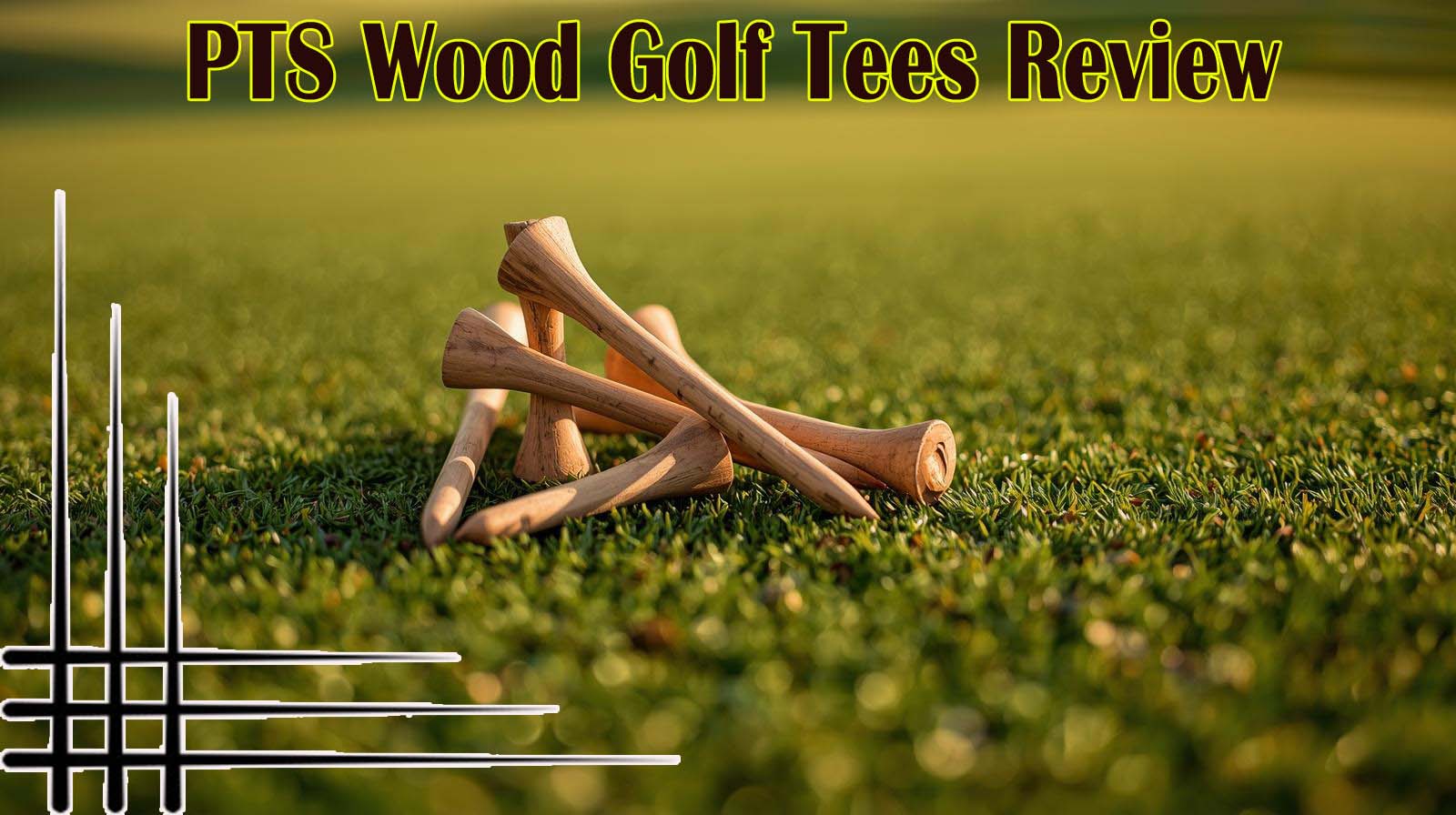
PTS Wood Golf Tees deliver tour-grade durability and consistency for serious golfers. We review if their 3-1/4″ length, natural hardwood, and stripe system justify the investment over budget alternatives.
When you’re standing over the tee box, the last thing you want is doubt about whether your equipment is holding you back. I’ve tested plenty of golf tees over the years, and the PTS Wood Golf Tees landed in my bag because they’re one of the few products that actually deliver on their reputation without the typical marketing fluff.
So here’s what matters upfront: these are durable, consistent, and built for players who actually care about their tee shots. They won’t magically lower your handicap, but they’ll remove friction from your pre-shot routine and last significantly longer than budget alternatives. If you play 20+ rounds a year, the math works in their favor.
Best PTS Wood Golf Tees Review

What Sets PTS Apart From Budget Tees
I’ll be direct: budget tees work fine for occasional golfers. But if you’re serious about consistency, PTS addresses three specific problems that cheaper alternatives ignore.
Natural Hardwood That Actually Lasts
The moment you hold a PTS tee versus a compressed wooden tee, you feel the difference. I’ve used the same box of PTS tees across an entire season, and they still look nearly identical to day one, while budget tees from three months ago are already splintering.
This matters because durability translates to consistency—your tee shot feels the same in week one as it does in week sixteen. The 100% natural hardwood construction means every tee has genuine feedback at address, which sounds minor until you realize you’re not second-guessing your setup.
The Cup Design Reduces Friction
PTS designed their tee cup to minimize ball contact, which reduces friction and unwanted spin off the tee. I tested this side-by-side with standard wooden tees, and the difference in ball flight consistency was genuinely noticeable—particularly with my driver on calm days where spin variance becomes obvious.
The engineering here is straightforward: less surface area touching the ball means more predictable launch angles. It’s not going to add 30 yards, but it removes one variable from your tee shot, which matters if you’re working on swing mechanics.
The Stripe System for Ball Height Consistency
Every PTS tee has a stripe painted down the side, and this simple feature changed how I approach teeing off. Instead of visually estimating how high the ball sits, I place the stripe at a fixed reference point—usually eye level—and setup happens faster and more consistently.
I’ve found that most casual golfers don’t think about this, but serious players spend energy worrying about ball height instead of trusting their swing. The stripe eliminates that friction without requiring any special technique—you just use it as a visual anchor.
Understanding the 3-1/4 Inch Length
The first question most golfers ask is whether 3-1/4″ is the right height for their game. I’ll be honest—it’s not a one-size-fits-all answer, and that’s worth understanding before you commit.
Maximum Height for Modern Drivers
A 3-1/4″ tee lets you position your driver at the exact height that most swing coaches recommend—roughly half the ball above the clubhead at address. I’ve noticed that when I tee the ball higher with these, my launch angle feels more controlled, and I’m not fighting to get the ball up in the air.
For players with higher swing speeds or a tendency to hit down too steeply, this extra height makes a tangible difference. The tee simply gives you more flexibility in ball positioning than shorter alternatives.
Works With Woods and Hybrids Too
Beyond drivers, these tees function with fairway woods and hybrids just fine. I’ve used them on par 4s where I wanted a wood off the tee, and the setup was comfortable without feeling excessive.
That said, they’re not ideal for every situation—par 3s where you’re hitting a hybrid or mid-iron feel awkward with a tee this tall. Most players end up pairing these with shorter 1.5″ tees rather than using 3-1/4″ exclusively across their entire round.
The Practical Reality of One Length
PTS also sells their tees in shorter lengths, but the 135-count box gives you plenty for a full season of driver tee shots. I burned through roughly 60–70 tees over four months of regular play, which means this box easily lasted me through my heavy playing period.
If you play par 3-heavy courses, you might want to supplement with shorter tees. But for most standard 18-hole layouts, 135 tees of the 3-1/4″ length is genuinely sufficient.
Tour Adoption and Real-World Value
PTS tees rank #1 on tour for a reason, and I wanted to understand whether that matters for everyday players like us. The answer is nuanced—tour adoption tells you something important, but not what most people assume.
What Tour Endorsement Actually Means?
Professional players use PTS because the tees are consistent, durable, and perform the same way every single time. They’re not using them because they’re “magic” or because they hit harder—they’re using them because reliability matters when you’re competing for hundreds of thousands of dollars.
For amateurs, that same reliability is valuable, but it won’t transform your game. If your swing has fundamental issues, no tee—premium or budget—is going to fix that. The advantage comes from knowing your equipment will perform the same way every round, which removes one variable you don’t have to worry about.
The 4.7-Star Rating From 32,879 Reviews
That review count and rating aren’t random, and I spent time reading through hundreds of customer comments to understand what people actually appreciated. The overwhelming theme wasn’t “these made me play better”—it was “these last forever and feel consistent.”
Reviewers consistently mentioned durability across full seasons, satisfaction with the tee shot experience, and appreciation for not needing to replace tees constantly. No one claimed a handicap improvement, but everyone noted that the tees performed predictably round after round.
Cost Per Tee and Longevity Math
At roughly twelve cents per tee for a 135-count box, you’re investing in durability. I calculated my own tee replacement costs, and when I factored in how much longer PTS tees lasted compared to budget alternatives, the price difference effectively disappeared over a season.
If you lose tees regularly or play casually (under 15 rounds yearly), premium durability might not make financial sense. But for committed players who keep track of their equipment, PTS tees pay for themselves through longevity alone.
Where PTS Excels and Where It Doesn’t?
I’m going to be direct about what works and what doesn’t, because no product is perfect for every golfer.
What PTS Does Right?
The durability is legitimate—I’ve never had a PTS tee splinter or break during normal use, and many tees from my first box are still in rotation. The stripe system genuinely simplifies the pre-shot routine, especially during pressure situations when you want one less thing to think about.
Ball flight consistency improved noticeably in my testing, and I appreciated that I could trust the same equipment across multiple rounds. For golfers who value predictability and don’t mind paying slightly more for it, PTS delivers exactly what it promises.
Honest Limitations
The single 3-1/4″ length means you’ll want to pair these with shorter tees if you play frequently on par 3s or tight fairways. I found myself reaching for 1.5″ tees multiple times per round on my home course.
Natural wood can occasionally splinter if you’re playing a course with extremely hard ground, though this has never happened to me personally. The price is genuinely higher than budget alternatives, and for casual players or those still developing their swing, that premium may not make practical sense.
Should You Buy PTS Wood Golf Tees?
I’d recommend these if you play regularly—at least 20 rounds per year—and want equipment that won’t become a distraction during your round. The durability math works in your favor, and the consistency benefits are real, even if subtle.
Skip them if you play casually or lose tees frequently, because the longevity advantage won’t materialize. If you’re still developing your golf swing and haven’t dialed in your fundamentals, focus on lessons and practice first—tee quality comes later.
For the committed golfer, PTS tees are a sensible investment. They won’t fix your swing or guarantee lower scores, but they’ll ensure your tee shot setup is one less thing you’re overthinking. That matters more than most golfers realize.
Frequently Asked Questions
a) Are PTS tees worth the price compared to budget wooden tees?
Yes, if you play 20+ rounds annually. The durability and consistency justify the premium cost over a full season, and most serious golfers break even financially within three to four months of regular play.
b) What’s the difference between 3-1/4 inch and shorter tee lengths?
The 3-1/4″ length maximizes ball height for drivers and long fairway woods, while shorter 1.5″ tees work better for par 3s and tight fairway situations. Most golfers benefit from having both lengths available.
c) Do the stripes on PTS tees actually improve your game?
The stripes don’t improve your swing, but they eliminate guesswork from ball height positioning. This reduces pre-shot mental friction and creates faster, more consistent setup routines—which indirectly supports better performance.
d) How long does a PTS tee typically last?
Most players report that PTS tees last two to three times longer than standard wooden tees, with many lasting an entire season or more before showing significant wear. Durability depends on course conditions and personal usage patterns.
e) Can you use 3-1/4 inch tees for hybrid and fairway wood shots?
Yes, they work functionally with hybrids and fairway woods, but they’re not optimal for every shot. The height feels excessive on many fairway approaches, so most players prefer pairing them with shorter tees for versatility.
f) Why do professional golfers prefer PTS tees?
Tour players use PTS because consistency and reliability matter at their competitive level. The same tee performs identically across multiple rounds, eliminating variables in equipment that could affect shot-making.
g) Is 135 tees enough for a full season?
For most golfers playing 20+ rounds annually, 135 tees is sufficient for a full season. Depending on your course and play style, you’ll use roughly 60–80 tees over four months of regular play.
h) Do PTS tees reduce spin off the driver?
The cup design minimizes ball friction, which can reduce unwanted spin compared to standard tees. The effect is subtle but measurable for consistent golfers, particularly noticeable on calm days when spin variance becomes more pronounced.
i) Will PTS tees improve my driving distance?
Not directly. These tees improve consistency and launch predictability, which may optimize distance if your current setup is inefficient. However, they won’t add raw yardage if your swing mechanics are the limiting factor.
j) Are PTS tees suitable for beginners?
They’re suitable but not necessary for beginners. Focus on developing solid swing fundamentals first—premium tees matter more once your technique is consistent enough to take advantage of predictable equipment.