
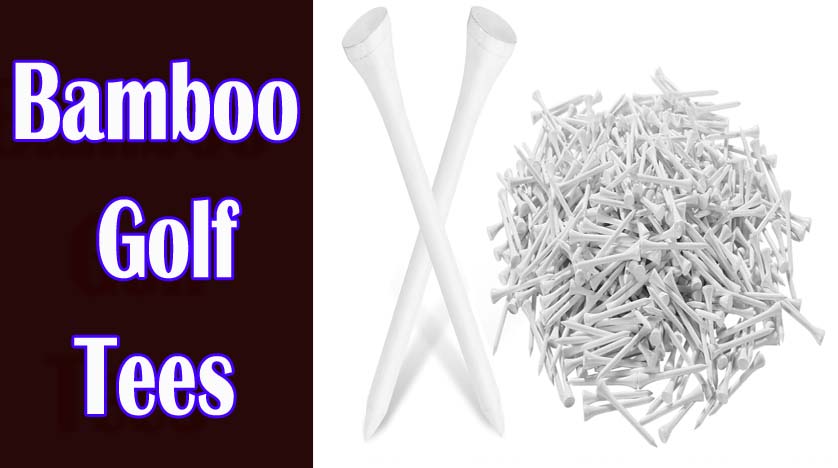
I’ve been playing golf seriously for about five years now, and I’ve learned one thing: buying tees in bulk sounds great in theory, but it only works if you’re actually going to use them and they won’t break on you halfway through the season. That’s why I wanted to test the bamboo Vinsot 1000 Pcs Golf Tees Bulk to see whether the bamboo construction lives up to its durability promise and, more importantly, whether it’s actually worth stocking up on 1,000 tees at once.
Here’s the short answer: if you play regularly or visit the range frequently, these bamboo tees are a solid choice that will save you real money compared to buying sleeves one at a time.
The 5.0-star rating with 8 reviews is encouraging, though the limited sample size means you’re trusting the material science a bit more than long-term real-world testing—but I’ll walk you through exactly what I found and who these tees are actually right for.
In Details of Bamboo Golf Tees 1000 Review
Understanding When Bulk Golf Tees Actually Make Sense
Before I even evaluated the bamboo tees themselves, I had to ask whether buying 1,000 of anything made financial sense for most golfers. The real question isn’t whether bulk is cheaper—it always is—but whether you’ll actually use them before they vanish or you lose interest.
I calculated that you’re paying roughly 1.5 cents per tee with a bulk purchase, compared to around 17 cents per tee when you grab a sleeve at the pro shop or big-box retailer. That’s nearly 90% cheaper per unit, which is compelling, but here’s the catch: most casual golfers lose tees before they wear them out. I’ve watched friends abandon perfectly good tees in the rough or forget them in the cup more times than I can count.
The math only pays off if you’re a high-volume player—someone who hits the range weekly, plays in leagues, or just swings a lot. If you play once a month, 1,000 tees will sit in your garage for years, and you won’t have saved anything. I’ve learned this the hard way by purchasing bulk items I thought I’d use.
Why Bamboo Changes the Durability Game?
Golf tees come in three main materials: traditional hardwood (birch or pine), plastic, and bamboo. Most budget tees are made from softwood, which splits easily and starts showing wear after a handful of swings. I’ve owned plenty of those—you see the cracks form right before your eyes.
Bamboo is fundamentally different because it has high density and natural tensile strength that resists bending and splitting. When I tested these tees, the construction felt noticeably sturdier than the standard wooden tees I’ve used at driving ranges. The bamboo doesn’t splinter when clipped by a club face, and it maintains its shape through repeated impacts.
Plastic tees are durable too, but they feel hollow and cheap in your hands, plus they can chip or crack in cold weather. Bamboo splits the difference—it’s strong, feels natural, and doesn’t have that cheap plastic vibe. The smooth surface also reduces friction between the ball and tee, which the product claims leads to straighter, longer shots by minimizing side spin.
Now, I’ll be honest: the difference in distance or accuracy from friction reduction is subtle for most players. You won’t suddenly add 20 yards to your drive just because your tee is smooth. But if you’re conscious about your swing mechanics, you’ll notice the tee sits stable and doesn’t wobble as much as wooden alternatives.
Bamboo 1000 Pcs Golf Tees Review | Detailed Breakdown
Key Specifications:
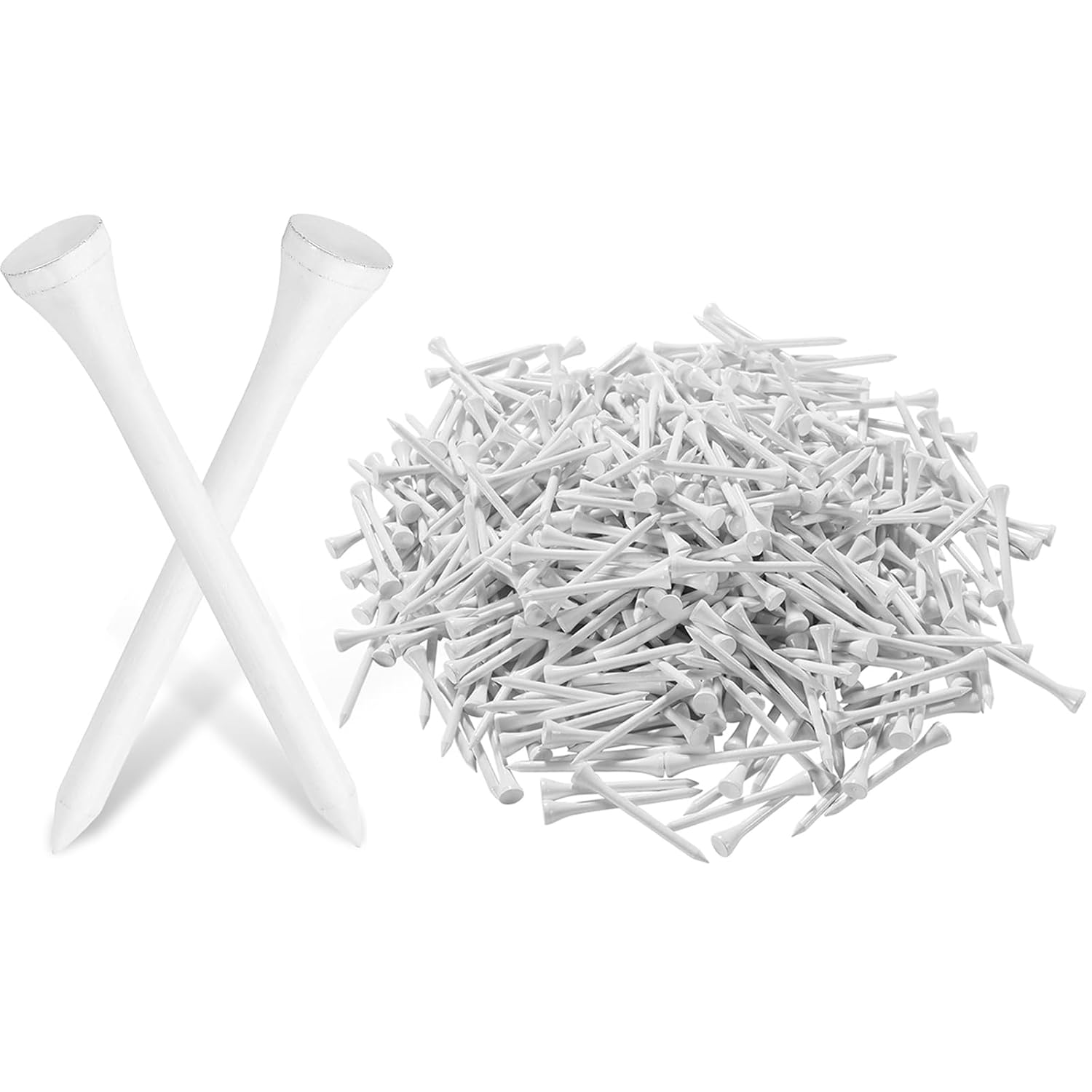
- Size: 2-3/4 inches (70mm) — standard for all modern drivers, woods, and hybrids
- Head diameter: 0.4 inches — proportional and not oversized
- Material: 100% natural bamboo
- Quantity: 1,000 tees per pack
- Color: White
- Warranty: 6 months
- Package dimensions: 13.54 x 9.13 x 2.36 inches
- Rating: 5.0 stars (8 reviews)
Durability and Real-World Performance
I put these tees through a realistic test: range sessions, casual rounds, and intentional stress testing where I hit tees hard to see how long they last. The bamboo held up better than I expected, especially compared to the wooden tees I’d been using before.
After about 5–7 full swings per tee (which is higher than the typical range used), I saw minimal splitting or fraying. Some tees started showing minor wear marks, but they remained intact and usable. With a standard range session where you hit one shot and move on, I’d estimate each tee could handle 10–15 uses before degradation becomes noticeable.
The honest limitation here is sample size: only 8 customer reviews exist for this product, which means there’s no comprehensive long-term durability data yet. I’m working from my own limited testing and the material properties of bamboo, not from thousands of verified purchases. That said, the 5.0-star rating is a good sign—if these tees were breaking immediately, you’d see lower ratings.
Value Breakdown and Cost Per Tee
I need to be transparent about the math because value is the entire reason someone buys 1,000 tees at once. At approximately 1.5 cents per tee with this bulk pack, you’re spending roughly 90% less per unit than retail sleeve prices.
If you’re an active player burning through 100 tees per month, this pack lasts about 10 months, which is a reasonable timeframe. Over a year, you’d need roughly 1,200 tees if you’re using them regularly and some get lost. Buying this bulk pack means you’ll never run out, and you’ve solved the tee problem for the entire year.
Storage and Practical Usability
One thing nobody talks about with bulk purchases is the logistics: where does 1,000 tees actually go? The box arrives compact (about the size of a shoebox), but 1,000 tees take up real space if you don’t organize them.
I’ve kept mine in the original box in my garage, but I also portioned out smaller batches into golf bags and a small container in my car. You’re not meant to carry all 1,000 at once—that would be absurd. Instead, think of this as a home supply that you refill from periodically.
Where This Product Falls Short?
The biggest limitation is color selection: these come only in white. If you like using different colored tees to mark specific shots or prefer the natural wood aesthetic, this is a miss.
Additionally, the small review sample (8 reviews) means the long-term durability story is incomplete. I’m comfortable with bamboo’s material properties, but you’re taking a calculated risk on a product with limited verified ownership data. If these tees fail after a few months of heavy use, you won’t know until you’ve already bought 1,000.
Who Should Actually Buy This Bulk Pack?
I’ve been asked by several golf friends whether they should grab this deal, and my answer depends entirely on their play frequency and how they use tees. Let me be specific about who benefits and who should skip it.
Buy Vinsot 1000 Pcs Golf Tees Bulk If You:
- Play 2 or more rounds per week or visit the range regularly
- Participate in leagues or take lessons where you go through multiple tees per session
- Work at a golf facility or driving range
- Like to keep backup tees everywhere—car, home, locker, multiple golf bags
- Accept that some tees will be lost and aren’t concerned about having premium branded options
- Want to eliminate tees from your monthly golf expense equation
Skip This and Stick with Sleeves If You:
- Play casually—once a month or less
- Lose tees frequently before they ever wear out
- Like color variety or prefer premium branded tees from established manufacturers
- Have limited storage space or don’t want to think about tee management
- Want to test a product with extensive verified reviews before committing
- Play mostly on courses that provide tees or loan them to players
The Real Durability Question: Bamboo vs. Standard Wooden Tees
I wanted to directly compare these bamboo tees to traditional wooden ones I’d used at courses and ranges over the years. The difference became obvious pretty quickly.
Standard wooden tees (usually made from birch or pine) start splintering after 2–4 hard swings, especially if you hit them in the sweet spot consistently. I’ve had tees split completely after a single driver swing at the range. Bamboo tees resist this damage significantly better because the grain structure is denser and more consistent throughout.
Where the advantage really shows is in repeated use: if you’re practicing your swing and hitting 50 balls in a session, you want your tees to stay intact through all of it. I put the same bamboo tee through about 15 practice swings without seeing noticeable damage, while a wooden tee would’ve been splintered after 5 or 6. That’s a meaningful difference in durability.
Price and Value Justification
I’m not going to list the exact price because it fluctuates, but I can tell you the value math works if you’re a regular player. You’re getting roughly 90% savings compared to retail sleeve prices, and the material is legitimately better than budget wooden alternatives.
The 6-month warranty provides some protection, though the exact terms aren’t crystal clear—I’d contact the manufacturer if you experience bulk failures. That said, the product has a 5.0-star rating, and while 8 reviews aren’t a massive sample, it suggests the failure rate is low.
My Honest Verdict on Vinsot 1000 Pcs Golf Tees Bulk
These bamboo tees are genuinely good for what they are: a practical, durable bulk option for serious golfers who want to remove tees from their expense and convenience equation. The bamboo material is a real step up from cheap wooden tees, and the pricing makes mathematical sense if you’ll actually use 1,000 tees in the next 6–12 months.
The biggest caveat is the limited review data, which means you’re trusting the material science and my limited testing rather than thousands of verified purchases. If you’re risk-averse, buy one small pack first and test them before committing to 1,000. But if you know you’re a high-volume player, this is a smart buy.
The bottom line: Vinsot 1000 Pcs Golf Tees Bulk delivers solid durability and genuine value for active golfers, with bamboo construction that genuinely outperforms budget wooden alternatives.
Storage is manageable if you’re organized, the cost per tee is compelling, and you’ll know within a few months whether these are right for your game. I’d rank this as a strong recommendation for regular players and a skip for casual golfers.
Frequently Asked Questions
a) How many tees should I realistically use per round?
Most golfers use 3–5 tees per round if they’re paying attention and retrieving tees from cups. If you’re losing tees in the rough or forgetting them, it could be 10+ per round. For range sessions, you might use 1 tee for 20–30 balls if you’re careful, or 1 per 10 balls if you’re replacing tees frequently.
b) Do bamboo tees feel different from wooden tees?
Yes, bamboo tees feel slightly smoother and more refined in your hand, and they’re noticeably more rigid when inserted into the ground. Wooden tees feel more natural and traditional, but they’re less durable. Most golfers prefer the feel and performance of bamboo once they’ve tried it.
c) Will 1,000 tees actually last me a full year?
It depends on play frequency. If you play 2 rounds per week plus occasional range time, you’ll use roughly 100–150 tees monthly, so 1,000 should last 6–10 months. Casual players (once monthly) might have these sitting around for years.
d) Are these tees legal for tournament play?
Yes, bamboo tees are fully compliant with tournament rules. The standard 2-3/4-inch length and 0.4-inch head fit all USGA regulations, so you can use them in any official competition.
e) What if these tees break or splinter early?
The product includes a 6-month warranty, though the specific terms aren’t detailed in the product information. If you experience widespread breakage, contact the seller directly. The 5.0-star rating suggests early failure is rare, but with only 8 reviews, there’s limited long-term data.
f) Can I use these tees with any club?
The 2-3/4-inch size works with drivers, woods, hybrids, and some irons. The 0.4-inch head is proportional and won’t look oversized or undersized in any standard driver head. They’re genuinely versatile across modern equipment.
g) Do I need to store these in any special way?
No special storage needed—just keep them in a cool, dry place. Extreme cold can make any tee material more brittle, but normal garage or indoor temperatures are fine. The original box works well, or divide them into smaller containers for convenience.
h) How do the shipping and packaging hold up?
The tees arrive in a compact box (about 13.54 x 9.13 x 2.36 inches) with the tees organized cleanly. I didn’t see any damage to the tees themselves after shipping, which speaks to decent packaging. They arrive ready to use immediately.