
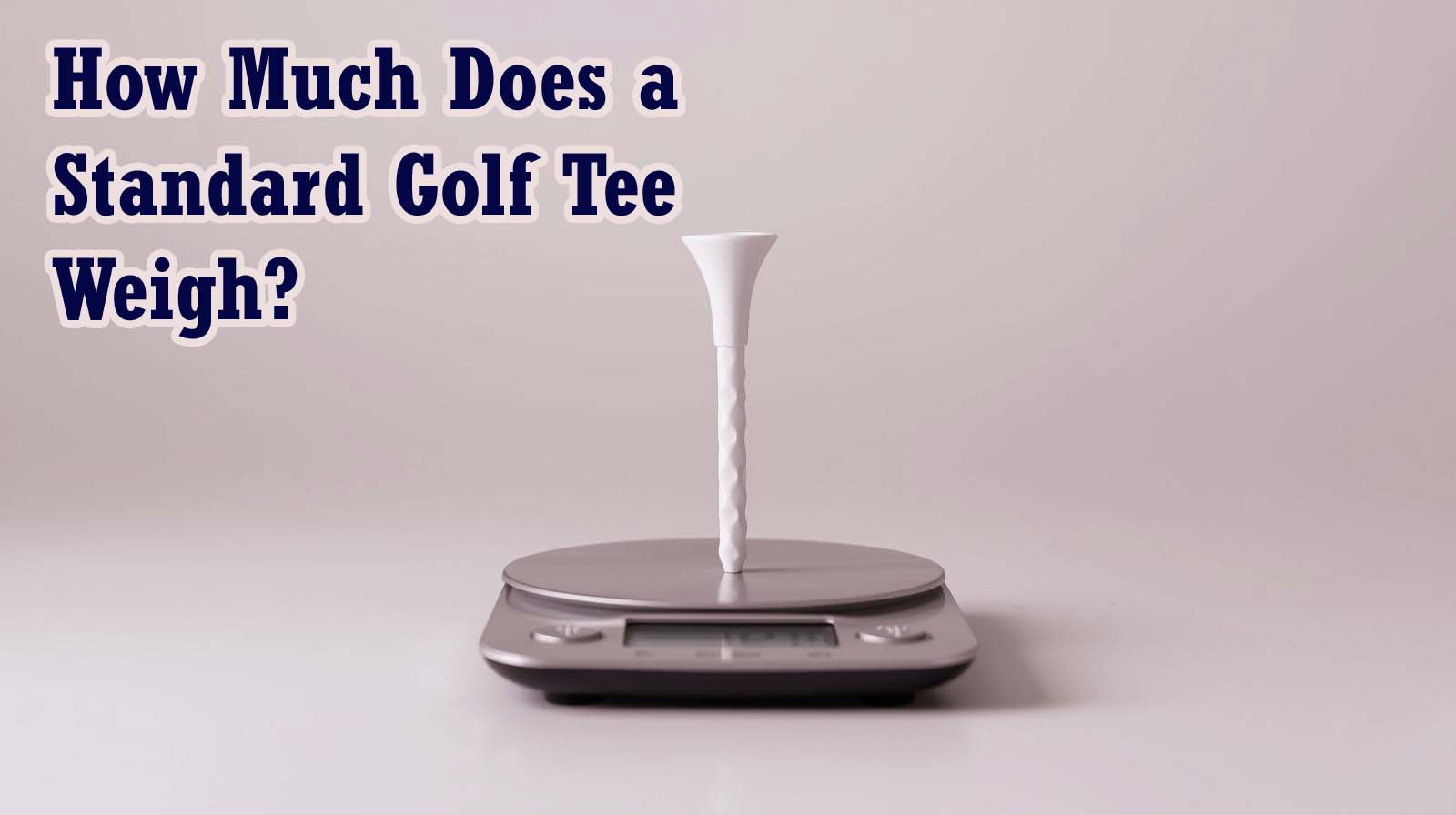
If you’ve ever picked up a handful of tees and wondered if they all feel the same, you’re not wrong. Most golfers assume a tee is just a tee, a little stick to prop up the ball. But when you start paying attention, weight varies more than you think.
After years of playing and testing tee packs from different brands, I’ve learned that “standard” isn’t one number. Let me walk you through what a typical tee really weighs, and why that number matters more than you might expect, so that you will be clear about how much does a standard golf tee weighs.
What Counts as a Standard Golf Tee?
Before I give you a number, we need to agree on what “standard” means. In my experience, the most common tee you’ll find in a pro shop or online is one of two sizes:
- 2.75 inches – usually made of plastic, used for drivers and fairway woods
- 3.25 inches – typically wooden, used for irons or when you want a slightly higher tee height
Both are standard. But weight depends heavily on material, not just length. A 2.75‑inch plastic tee and a 3.25‑inch wooden tee can end up weighing nearly the same. So when someone asks “how much does a standard golf tee weigh,” the honest answer is a range: 2 to 4 grams for a single tee.
Weight by Material and Length
I’ve weighed dozens of tees on a small kitchen scale over the years. Here’s what I consistently see:
| Tee Type | Typical Length | Average Weight |
|---|---|---|
| Plastic (standard) | 2.75″ | 2.1 g |
| Plastic (long) | 3.25″ | 2.5 g |
| Birch wood (standard) | 2.75″ | 2.8 g |
| Birch wood (iron length) | 3.25″ | 3.5 g |
| Bamboo | 3.25″ | 3.0 g |
| Biodegradable composite | 2.75″ | 2.5 g |
| Zero Friction polymer | 3.25″ | 2.8 g |
| Martini wooden | 3.25″ | 3.5 g |
Notice how length alone doesn’t tell the whole story. A plastic 3.25″ tee can be lighter than a birch 2.75″ tee. Wood is denser than plastic, and the coating or paint adds a tiny bit more.
Why Finish Matters?
Unpainted wooden tees are the lightest in their category. Once a tee is painted or waxed, its weight can increase by 0.2 to 0.5 grams. That doesn’t sound like much, but if you’re ordering 500 tees, it adds up quickly. I’ve seen “premium” painted tees come in 20% heavier than the same brand’s unpainted version.
Does Tee Weight Affect Your Game?
Short answer: no. A heavier tee does not make the ball go farther or straighter. The ball sits on top, and the tee’s job is to stay upright while you swing. The weight of the tee is negligible compared to the ball (45‑46 grams) or the club head.
What matters is insertion depth — if the tee is too light or too short, it might snap. But that’s a durability issue, not a performance issue. I’ve used 2‑gram plastic tees and 4‑gram wooden golf tees and shot the same scores.
When Does Weight Actually Matter?
There are two real-world scenarios where tee weight matters:
- Bulk purchasing: If you’re a course manager or a frequent player who buys by the box, knowing the total weight helps with shipping costs and storage. A 100‑count sleeve of plastic tees weighs about 210 grams (roughly 0.46 lb). A 500‑count box of wooden tees can easily pass 1.5 kg (3.3 lb).
- Shipping online: Most online retailers charge by weight thresholds. A single tee is nothing, but adding 12 boxes of 500 tees for a tournament could push your order into a higher shipping bracket.
Quick Bulk Reference
| Package Size | Approx. Weight (plastic) | Approx. Weight (wood) |
|---|---|---|
| 50 tees (sleeve) | 100–120 g | 140–180 g |
| 100 tees | 200–240 g | 280–360 g |
| 500 tees | 1.0–1.2 kg | 1.4–1.8 kg |
| 1,000 tees | 2.0–2.4 kg | 2.8–3.6 kg |
For reference, a pound of tees (454 grams) contains roughly 113–227 tees, depending on the material. Wood tees are heavier, so you get fewer per pound.
How to Weigh Tees at Home?
If you want to check the exact weight of your tees, you don’t need fancy equipment. A simple kitchen scale or a jewelry scale (the kind you’d use for coins or herbs) works perfectly. Place five tees on the scale, note the total, then divide by five.
This gives you a more accurate average than weighing a single tee, which can be off due to manufacturing variation. I’ve seen 2.75″ plastic tees vary by 0.3 grams between individual pieces from the same bag.
Specialty Tees: Heavier but Not Better
Brush tees, zero‑friction tees, and “stability” tees often weigh more than standard ones. A brush tee (the kind with bristles) runs about 5–7 grams. That’s because it has a plastic base and multiple stiff bristles. Some golfers believe these reduce friction, but the weight doesn’t help or hurt performance. They’re bulkier and harder to carry in your pocket.
Frequently Asked Questions
How much does a golf tee weigh in ounces?
A standard tee weighs between 0.07 and 0.14 ounces. Plastic tees are on the lighter end, wooden tees on the heavier end.
What is the weight of a zero‑friction or brush tee?
Brush tees typically weigh 5 to 7 grams each, which is two to three times heavier than a standard plastic tee.
Do professional golfers use a specific weight of tee?
Not really. Most pros use standard tees — either plastic or wood — and they don’t worry about weight. The USGA does not have a rule that limits tee weight.
How many tees fit in a pound?
Approximately 113 to 227 tees per pound, depending on material and coating. Wooden tees are heavier, so you get fewer per pound.
Can the weight of a tee affect shipping costs for online orders?
Yes. A 500‑count box of wooden tees weighs about 1.5 kg. If you buy multiple boxes, the total weight can push the shipment into a higher cost bracket. For courses that are ordered in bulk, this is worth checking.
So next time you grab a tee, you’ll know it’s not just a stick. It’s a carefully manufactured little object, and its weight tells you a lot about the material and how it’s made. For 99% of us, the weight doesn’t change your swing — but it might change your shipping cost.