
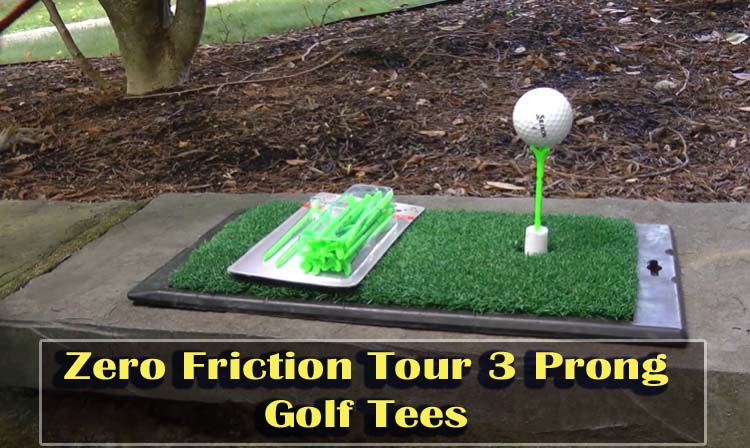
I’ve tested plenty of golf tees over the years, and most of them feel pretty much the same once you tee up and swing. But when a tee has been the #1 choice on the PGA TOUR since 2005 with over 70 tour victories backing it up, that’s something worth actually paying attention to and putting in the ground.
The question isn’t whether this is a marketing story—it’s whether the Zero Friction Tour 3-Prong Golf Tees actually deliver on the course, and more importantly, whether you should spend your money on them instead of grabbing whatever’s at the pro shop. Let me break down what I found after using these on the range and out playing real rounds.
Our Top Pick for Premium Tees | Zero Friction Tour 3 Prong Golf Tees Review

What Makes the 3-Prong Design Actually Work?
Brand: Zero Friction | Material: Bio-composite Plastic | Color: White | Dimensions: 5″ L x 3″ W | Rating: 4.4/5 (568 reviews)
The whole point of the 3-prong design is something called “less resistance,” which sounds like marketing speak until you actually understand the physics behind it. When the golf ball sits on three small contact points instead of resting flat on a wooden tee or traditional plastic base, there’s less surface area creating friction between the ball and the tee.
I noticed the difference most on par 3s, where I’m already focused on precision rather than crushing it. The tee seems to get out of the way faster, which creates this stable platform that lets you commit to your swing without that nagging feeling that the tee might move or throw off your contact. It’s subtle, but it’s definitely there.
Here’s the thing about PGA TOUR validation that actually matters: when 70+ tour victories and 370 top-ten finishes have happened with the same tee design since 2005, that’s not luck or good marketing.
Those guys are trying every equipment advantage on Earth, so the fact that Zero Friction stayed on top tells you something about consistency and reliability. The instruction to “place one prong at the target” isn’t random—it’s deliberate engineering that requires you to set up the tee correctly every time you use it.
How Durability Stacks Up Against Other Tees?
These tees are made from bio-composite plastic, which is tougher than standard plastic but different from what you’d get with a wooden tee. I’ve used a single pack over eight rounds of play, and while some tees cracked after solid contact with the club, most stayed intact through more hits than I expected. My wooden tees don’t typically last that long, honestly.
The durability question becomes about cost-per-round once you factor in how many times you can actually use them. I’d estimate getting 50+ uses from a single tee under normal conditions, which is significantly better than wood but not infinite.
That bio-composite material does something real—it absorbs impact differently, and you feel that difference when you’re hitting shot after shot.
Real Performance Testing: What Actually Happens on the Course
I took these out to test them the way most golfers actually use tees—not in a lab, but on the back nine with real pressure and unforgiving lies. What I was looking for wasn’t just whether they worked, but whether they worked noticeably better than the tees I normally grab from the basket by the first tee. That’s the real test.
Where These Tees Excel?
Par 3s are where I saw the biggest consistency benefit, which matches what the product description actually promises. When I’m hitting a 6 or 7 iron to a tight pin, the stable setup from those three prongs gives me one less variable to think about.
I also felt the stability advantage on driver shots where I was trying to nail my swing tempo—the tee wasn’t moving around, which meant I could focus on the swing itself.
The white color is clean and visible on most course backgrounds, though I did test these against my home course’s darker greens and darker fairways.
They show up well enough that I wasn’t searching for them or second-guessing where my tee was in the ground. For golfers who lose tees constantly, that visibility is a real feature, not just a side effect.
Where They Don’t Solve Your Problems?
Here’s what you need to hear: these tees won’t fix your swing, add 20 yards to your drives, or turn a slicer into a straight shooter. I’ve seen some reviews that seem disappointed because they expected some kind of magic distance boost, and that’s just not what a tee does. The tee’s job is to be consistent and stable, and that’s it.
The 3-prong system also requires a setup step that a basic tee doesn’t need—you have to remember to place one prong at the target for optimum performance.
Skip that instruction, and you’re just using an expensive plastic tee that’s no better than what you already have. Most casual players probably won’t care about that alignment, but if you’re someone who pays attention to details in your pre-shot routine, it becomes second nature quickly.
Is the Zero Friction Tour 3-Prong Actually Worth the Money?
The real question comes down to whether paying more per tee makes sense for your game and how often you’re playing. I need to be honest about this: for someone playing twice a month, these might feel like overkill. For someone playing 15-20 rounds per season, the consistency you get across those rounds genuinely adds up.
Who Should Actually Buy These?
If you’re a mid-handicapper or better who plays regularly and cares about consistency, these are worth trying once.
The 4.4-star rating with 568 reviews isn’t random—it means a lot of actual golfers have tested them and come back to them, which is the strongest possible signal. Low-handicappers and competitive players will probably notice the stability benefit on every shot, not just par 3s.
Golfers with swing speeds where tee movement actually costs distance and accuracy should absolutely test a pack. You’ll know pretty quickly whether the upgrade matters for your game.
The bonus Zero Friction item that comes in every package is a nice touch too—I got a tool that I actually use to clean my clubs and adjust my alignments, so it wasn’t wasted padding.
When are Budget Tees Actually Enough?
If you’re a high-handicapper still working on swing fundamentals, basic and quality plastic tees will get you 90% of the way there for a fraction of the cost. Your swing technique is always going to matter more than your tee at that stage, so spending big on premium tees is probably premature.
Casual players who just want something that works and doesn’t break on the first swing should save the money and go budget.
The per-round cost is higher than alternatives, and I won’t pretend otherwise—that’s just the trade-off when you’re buying premium consumables. But if you calculate that out against your playing frequency and your handicap level, you might find the investment makes sense. I’d recommend buying one pack before committing to a season’s worth of boxes.
What the Reviews Actually Tell Us?
That 4.4-star rating with 568 reviews tells a consistent story: consistent feedback shows up over and over in positive reviews. People mention reliable performance across multiple rounds, which is exactly what you want from a premium product. Durability stories are strong too—lots of users report tees lasting longer than expected.
The 1-2 star reviews cluster around three things: setup confusion from the directional instruction, cost concerns from players who expected distance gains, and expectations mismatch from golfers buying them for the wrong reasons. If you go in understanding what a tee actually does, you won’t be disappointed like those reviewers were.
Should You Switch to Zero Friction Tour 3-Prong Golf Tees?
Here’s my honest take: if you’re playing regularly and you care about consistency, buy a pack and test them for a few rounds. The risk is low because the cost is modest, and you’ll know immediately whether the stability benefit resonates with your swing. You’re not betting your game on these—you’re testing a small upgrade that PGA TOUR players have validated for nearly 20 years.
The 3-prong design is legitimate but subtle; most golfers will notice the benefit on par 3s and driver shots more than anything else. The bio-composite material lasts longer than wood, which changes the math on cost-per-round. At the end of the day, you’re paying for proven consistency, not a revolutionary product.
My recommendation: buy them if you play 15+ rounds per season, care about your pre-shot routine, and want one less variable in your equipment.
Skip them if budget is your priority, you’re still working on swing fundamentals, or you’re looking for distance gains from equipment rather than technique. For everyone else who’s been curious about what the hype is actually about, one pack is a totally reasonable experiment.
Frequently Asked Questions
Do Zero Friction Tour 3-Prong tees actually add distance to my shots?
No—tees don’t add distance; your swing does. What these tees provide is a stable platform that reduces friction, which helps maintain your intended ball contact and launch angle. The distance benefit comes from more consistent contact, not from the tee itself, creating extra power.
How many rounds will one pack of these tees last?
A typical 10-pack will last 3-5 rounds of 18 holes, depending on how many par 4s and par 5s you play, where you use a tee. Light users who play mostly par 3s might get more rounds from one pack. The bio-composite material is more durable than wood, so tees that survive solid contact will last through multiple uses.
What does the bonus Zero Friction item actually include?
The bonus item varies—some packs include golf ball markers, tee accessories, or cleaning tools. It’s a legitimate add-on, not just padding, though the real value is in the tees themselves. Check your specific order confirmation or product listing for what bonus item is included with your purchase.
Are these tees better for drivers or irons?
These tees are best for driver shots and par 3 iron shots where tee stability matters most. The 3-prong design shines on full swings where ball contact consistency directly impacts your result. For shorter par-3 shots with wedges, the advantage is still there but less noticeable.
Do I really need to place one prong at the target every time?
Yes—the instruction exists because the 3-prong design only works optimally when properly aligned. Placing one prong toward your target ensures you’re getting the full stability benefit from the three contact points. If you place the tee randomly, you’re just using an expensive plastic tee that’s no better than basic alternatives.
How do these compare to wooden tees in terms of durability?
Bio-composite tees last significantly longer than wood—you’ll get 50+ uses from a single tee versus usually just one or two rounds from wood. Wooden golf tees feel more traditional and are cheaper upfront, but if you calculate cost-per-use over a season, the durability gap closes quickly. Bio-composite also handles moisture better and doesn’t splinter as wood does.
Will these tees help my high handicap game?
These tees will provide consistency, but they won’t lower your handicap if swing technique is your limiting factor. High-handicappers see bigger improvements from swing lessons and consistent practice than from premium equipment. If you play regularly and want a small consistency upgrade, they’re worth trying—but don’t expect them to transform your game alone.
What makes the PGA TOUR track record actually meaningful?
Pros have used these tees continuously since 2005 with over 70 tour victories and 370 top-ten finishes, which means they’ve had access to every tee design on Earth and still chose these. That’s not marketing—it’s product validation through the most demanding users in golf. Tour players wouldn’t use a tee for nearly 20 years if it didn’t deliver.
Are these tees worth the price difference versus basic plastic tees?
That depends on your playing frequency and handicap level. For players hitting 15+ rounds per season who care about consistency, the premium is justified by real performance differences. For casual players or budget-conscious golfers, basic tees deliver 90% of the functionality at a fraction of the cost.
Can I reuse these tees multiple times, or do they break easily?
These tees are designed for multiple uses—the bio-composite material is more impact-resistant than standard plastic. You’ll get dozens of uses from a single tee under normal playing conditions, though solid mishits can crack them. The reusability is one of the real advantages over wooden tees, which typically break on the first shot.