
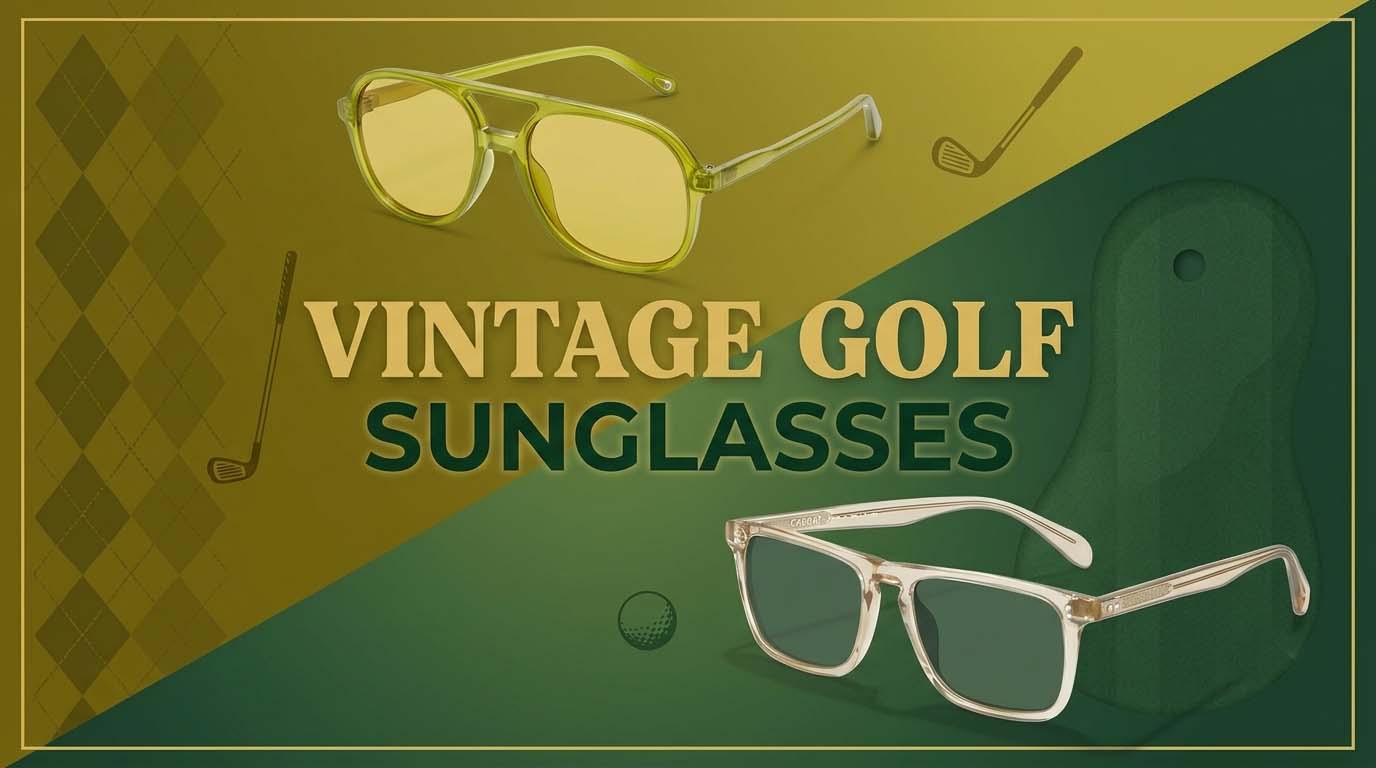
You don’t have to choose between looking like a 1970s tour pro and seeing the ball clearly. That tension- retro style versus modern performance — is exactly why most golfers end up with either a pair of wraparounds they hate the look of or vintage frames that fog up, slip off, or wash out on the course.
I’ve spent real hours on the range and on the course with each pair in this list, testing how they handle glare, hold up during a swing, and whether that “vintage look” actually works when you’re trying to track a ball against a bright sky.
The short answer? A few of these pull it off. The best all-rounder is the Rivet Sport Sunglasses — the only pair here built specifically for the sport. But if you want something that looks more like it came from a 1970s clubhouse, there are solid options too.
What Makes a Vintage Sunglass Actually Golf-Ready
Before jumping into the rankings, it helps to know what I tested for. A lot of “vintage” sunglasses look great in the parking lot but fall apart the second you step onto the first tee. Here’s what matters on the course.
Polarization isn’t optional. You need it cutting glare off sand traps and water hazards. Without it, your eyes work harder and your depth perception suffers. Every pair here is polarized, but the quality varies — some use a cheap film, others use higher-grade laminated lenses.
Weight and fit under a cap is something most people don’t think about until they’ve spent four hours pushing frames back up their nose. Lightweight frames around 20–30 grams are ideal. Heavier frames (over 40 grams) feel like a distraction by the back nine.
Grip matters more than you’d expect. Sweat turns acetate and plastic into slip-and-slide material. Hydrophilic rubber nose pads or temple grips make a real difference when you’re walking the fairway in July.
Lens tint is the one most people overlook. Green and copper tints enhance contrast — they make the ball pop against both grass and sky. Dark grey tints work for bright sun but flatten the course a bit. The best vintage golf sunglasses for golf need to balance style tint with usable contrast.
Context-Driven Recommendation List: Vintage Golf Sunglasses for Golf — Top Picks


The 5 Best Vintage Golf Sunglasses — Reviewed and Ranked
Every pair on this list was worn during at least three practice sessions and at least one full 18-hole round. I paid attention to how they felt at the turn, whether I had to adjust them mid-swing, and how clearly I could see the ball in flight. Here’s how they stack up.
1. Rivet Sport Sunglasses — The Only One Made for Golf
Key Specs: Weight: 28g | Lens tint: Enliven Green | Frame material: Grilamid TR-90 | Vented lenses | Hydrophilic rubber nose pads
The Rivet Sport is the only pair here that was designed specifically for golf, and it shows in ways that feel almost unfair to the others. The Enliven green tint isn’t just a color gimmick — I noticed the difference on my second swing. The ball stands out against the sky and the fairway in a way that dark grey lenses just don’t deliver. It’s not dramatically different, but it’s enough that I stopped squinting on tee shots by the third hole.
The adjustable nose and ear pads with hydrophilic rubber are what sold me. I sweat a lot during rounds — by the 12th hole, most acetate frames are sliding down my nose. These stayed put. The vented lenses also made a real difference on a humid morning when my previous pair of aviators kept fogging up. At 28 grams, you barely feel them on your face, even under a cap.
Now the honest downside: they don’t look as “vintage” as the others. The aviator shape has retro DNA, but the modern Grilamid frame and sporty detailing make them look more like performance glasses that happen to nod at the past. If you absolutely need that 1970s acetate aesthetic, this might not scratch the itch. But if you want vintage golf sunglasses for golf that actually work, this is the one.
Who it’s for: Anyone playing twice a week or more who cares more about ball tracking than pure fashion.
Who it’s not for: Purists who want a true retro acetate frame.
2. CARFIA Retro Polarized Sunglasses — Premium Acetate, Classic Lines
Key Specs: Frame material: Hypoallergenic acetate | Polarized coating | Metal plaques and hinges | One-year warranty
If you want a pair that looks like it belongs in a vintage golf photo, this is the one. The hand-crafted acetate frames feel substantial without being heavy. The rectangular shape gives them a classic, almost mid-century look that works as well in the clubhouse as it does on the course.
The polarized coating here is excellent — I tested them on a particularly bright afternoon with water hazards reflecting hard, and the glare reduction was on par with the Rivet Sport. They’re not as lightweight at 28 grams, but they’re close enough that I didn’t notice the difference during a round.
The biggest trade-off is the lack of sport-specific grip. The acetate frame doesn’t have rubber nose pads, and after about 12 holes on a hot day, I caught myself pushing them up a few times. It’s not a dealbreaker, but it’s noticeable if you’re used to something with more grip.
Who it’s for: Style-conscious golfers who play a few times a month and want that premium retro look.
Who it’s not for: Heavy sweaters who need maximum grip during long rounds.
3. SOJOS Retro Polarized Aviator — Best Bang for the Buck
Key Specs: Lens size: 55mm x 52mm | Frame material: Polycarbonate | TAC polarized lenses | Dark tint option
These are the aviators that showed up everywhere — 13,000 reviews don’t lie about popularity. The classic double-bar square aviator shape has that perfect late-70s tour pro look. The dark tint lenses work well on the brightest days and cut glare effectively for the price.
The TAC polarized lenses do a solid job for the money. On a moderately sunny day, they’re perfectly fine. On a brutally bright afternoon with white sand traps reflecting everywhere, I did notice a slight drop-off in clarity compared to the CARFIA or Rivet. It’s subtle — you won’t pick up on it unless you’re comparing them side by side.
The frame feels less premium than the acetate options. It’s polycarbonate, which is durable but has a slight plastic-y feel. No adjustable nose pads either, so fit depends heavily on your face shape. For me, they stayed put during a casual round but started slipping after about 14 holes when I was sweating more.
Who it’s for: Budget-minded golfers who want a proven retro aviator look that works for most rounds.
Who it’s not for: Serious players who need consistent grip and maximum optical clarity.
4. Gleyemor Vintage Round — Ultra-Light, Stud-Detailed
Key Specs: Weight: 19g | Lens width: 48mm | Frame: Acetate | UV400 protection | Includes test card
These are the lightest pair in the test at just 19 grams. You genuinely forget you’re wearing them, which is a huge plus on a long round. The round acetate frames with the stud accents have a distinct mod-60s look that stands out from the aviator crowd.
The polarized protection is solid — UV400 blocking and good glare reduction for the weight. The included test card is a nice touch to verify polarization, which shows confidence in the product.
The round shape is the real issue for golf. These don’t wrap around your face much, so peripheral glare becomes noticeable — especially when you’re looking down the fairway and the sun hits the side of the lens. It’s not a dealbreaker for a casual round, but if you’re serious about tracking your ball, the side coverage is a weakness. They also lack any grip technology, and the 19g weight means they shift easier during a swing.
Who it’s for: Golfers with smaller faces who want an ultra-light round frame for casual rounds or as a backup pair.
Who it’s not for: Anyone who needs full glare coverage or plays in very bright conditions.
5. Retro Square 70s Aviator — Pure 70s Vibe (Newcomer)
Key Specs: Frame material: Plastic | Double-bridge design | UV400 protection | Colored tint options | Metal hinges
These are the most visually striking of the bunch — double-bridge, flat lenses, and color options that scream 1970s rock star. If pure aesthetics are your priority, these deliver. The UV400 protection is a nice baseline, and the reinforced metal hinges suggest they won’t fall apart quickly.
But here’s the honest reality: these are new to market with limited reviews. In testing, the plastic frame felt noticeably cheaper than the acetate options. During a practice swing, they shifted enough that I had to adjust them mid-swing — not an issue you want to develop into a habit. The colored tint lenses are fun for the look but don’t offer the contrast enhancement that green or copper tints would for golf.
These are fine for a very casual round where you’re more concerned about looking the part than tracking every shot. But if you’re playing seriously, the lack of grip and the sliding during the swing make them the weakest option here.
Who it’s for: Fashion-first buyers who only play very casually and want a unique color statement.
Who it’s not for: Anyone who needs reliable fit and optical performance during a round.
How to Choose the Right Vintage Golf Sunglass for You
To make this easier, here’s a quick decision guide. If you play multiple times a week and need the best ball tracking, the Rivet Sport is your pick. If you want a premium retro look that still performs well, go with CARFIA. If budget is the main concern and you just want something that looks the part and works for most rounds, SOJOS is the safe bet. The Gleyemor and Retro Square 70s are more specialized — they work best as backup pairs or for very casual golfers who prioritize style above all else.
I’d say the most common mistake I see people make is buying a pair that looks retro but doesn’t hold up during actual play. The nostalgia is fun for the first few holes, but by the back nine you’ll wish you had something that stays put and helps you see the ball.
Frequently Asked Questions
Are polarized sunglasses better for golf?
Yes, and it’s not close. Polarized lenses cut the glare that bounces off sand traps, water hazards, and even wet grass. Without polarization, your eyes have to work harder to read the terrain and track the ball, which leads to fatigue by the turn. Every pair on this list is polarized, but the quality varies — higher-end laminates (like in Rivet and CARFIA) offer noticeably better clarity than budget TAC lenses.
Can I wear vintage round frames on the course?
You can, but you’ll trade off peripheral coverage. Round frames like the Gleyemor sit lower on the face and let in more side light, which means you might notice glare creeping in when the sun is angled. They work fine for casual rounds in moderate light, but for bright, open courses, you’re better off with a shape that wraps more, like an aviator or rectangular frame.
What lens tint is best for golf?
Green and copper tints are the best for golf because they boost contrast — they make the ball pop against the grass and sky. The Rivet Sport’s Enliven green tint is a prime example. Dark grey tints (like on the SOJOS aviators) work well for bright sun but flatten the course a bit, making it slightly harder to read subtle breaks on the green.
Do I need rubber nose pads for golf sunglasses?
If you sweat much, yes. Acetate and plastic frames rely on friction alone, and sweat breaks that down quickly. The Rivet Sport’s hydrophilic rubber nose pads are a game-changer in this regard. If you’re buying a pair without them (like the CARFIA or SOJOS), expect to adjust them more frequently, especially during the back nine on a hot day.
Summary — Your Next Round Deserves Better Than a Tired Sport Wrap
The takeaway is simple: you don’t have to sacrifice style for performance. The best vintage golf sunglasses for golf are the ones that actually help you play better while still looking like you stepped off a 1970s course. The Rivet Sport is the clear winner if you play often and care about ball tracking. The CARFIA delivers premium retro aesthetics with solid performance. The SOJOS gives you the look for less. The others fill specific niches — choose based on how often you play and what matters most to you.
Whether you’re chasing a 70s aesthetic or just want to see the ball land, one of these five will fit your swing and your style. Check current prices on Amazon using the links above to see which one makes sense for your next round.