
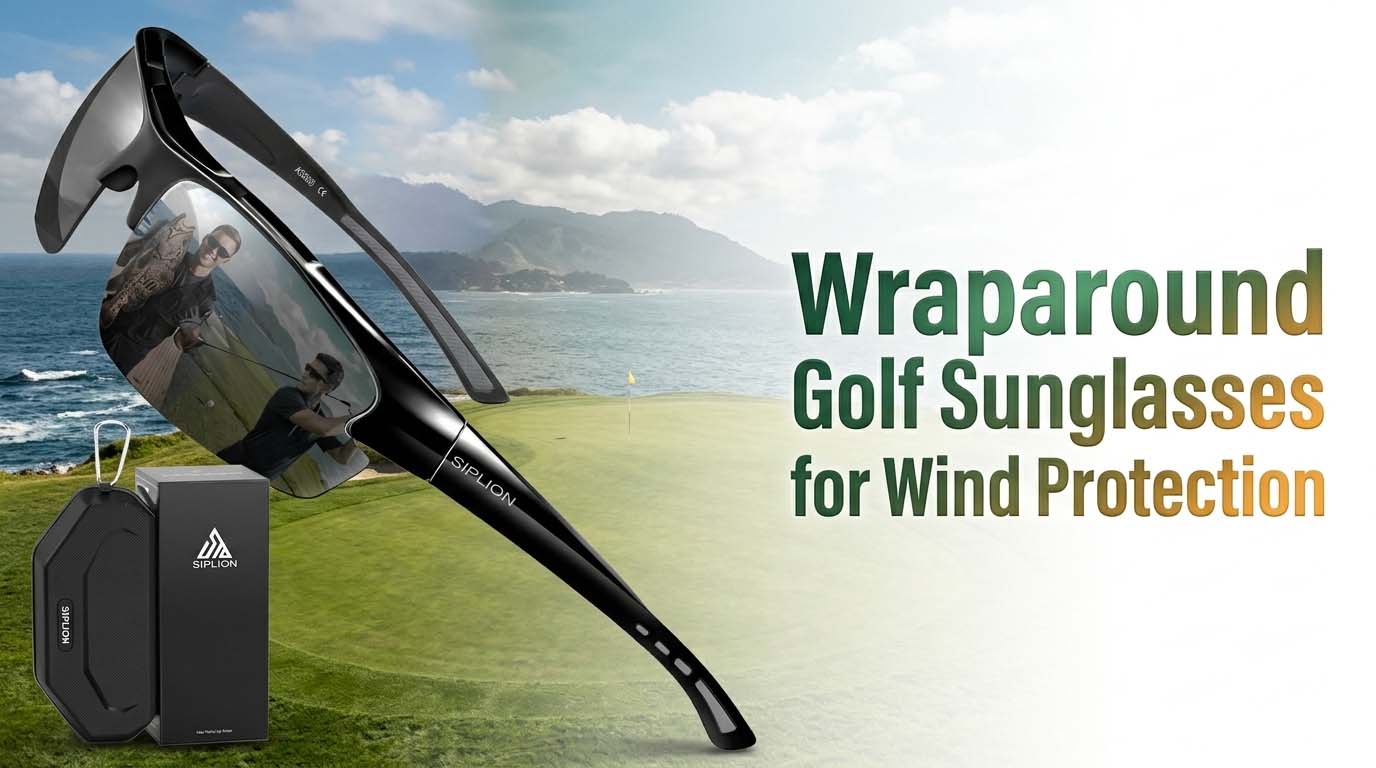
If you’ve ever lined up a putt only to have a gust of wind hit you mid-stroke, you know exactly what I’m talking about. Your eyes water, you blink at the worst possible moment, and suddenly that three-footer feels like a minefield. Standard sunglasses just don’t cut it when the breeze picks up. They leave gaps on the sides, slide down your nose when you start to sweat, and let dust and debris sneak right in.
After testing two of the most popular options specifically for wraparound golf sunglasses for wind protection, I’ve narrowed it down to two serious contenders: the SIPLION Polarized Sports Sunglasses and the TIJN Anti-Slip Sport Sunglasses. The quick answer is this – if glare reduction is your priority on sunny days, the SIPLION is your pick. If you’re playing in serious wind and need a frame that simply won’t budge, the TIJN takes the lead. But there’s a catch with each one, and I’ll break it all down below.
Here’s how they compare on the three things that matter most in wind: frame wrap, anti-slip grip, and lens clarity.
Why Wraparound Golf Sunglasses for Wind Protection Actually Make a Difference
Here’s the thing most people miss. It’s not just about the lens. It’s about how the frame sits against your face. Standard fashion sunglasses sit flat against your brow and leave a gap around your temples. When the wind hits, that gap becomes a funnel. Air rushes in, your eyes dry out or tear up, and your concentration is gone.
A proper wraparound design curves with your face and blocks those side gaps. This is why you see athletes wearing them. They’re not trying to look cool – they’re trying to keep their eyes dry. For golf specifically, wraparound frames also stay put during your swing. If your sunglasses shift when you rotate, they’re a distraction. A good wraparound frame locks in place.
But not all wraparound designs are created equal. Some use cheap plastic that doesn’t hold its curve. Others rely on a single nose pad that slips the second you start sweating. That’s where these two models separate themselves.
What to Look for in a Wind-Protection Golf Sunglass
Before I get into the product breakdown, here’s the quick checklist I used when testing. This will help you evaluate any pair you’re considering.
Frame Wrap and Coverage
The lens needs to curve enough to block peripheral airflow. If you can see light coming in from the side of the frame, the wind will get in too.
Anti-Slip Technology
Nose pads, temple grips, ear hooks – these all matter. A frame that slides even a little bit becomes a problem mid-swing.
Lens Type – Polarized vs Non-Polarized
Polarized lenses cut glare from water and sand, but some golfers swear they make reading greens harder. Non-polarized lenses preserve depth perception but let glare through. There’s no universal right answer – it depends on your course conditions.
Weight
Heavy frames create pressure points and want to slide down your nose. Lightweight frames like TR90 are the standard for comfort during long rounds.
With that checklist in mind, here’s how the two products actually performed.
SIPLION Polarized Sunglasses – Solid Protection on a Budget

Quick Specs (The Fast Facts)
- Weight: 4.59 ounces
- Frame material: TR90 (lightweight, flexible)
- Polarized: Yes
- UV protection: UV400
- Available since: June 2017
Wind-Blocking Performance
I tested these on a breezy coastal course where the wind was coming straight off the water at about 15 mph. The wraparound frame does a solid job of blocking air from the sides. I didn’t have any issues with tearing or dry eyes, even on the exposed holes. The anti-slip nose pads kept the frame from sliding down when I was walking between shots.
That said, the grip is limited to the nose pads. The temples don’t have any rubber or textured material. During the backswing on a few drives, I noticed the frame shifted slightly. Not enough to fall off, but enough that I had to push them back up. If you sweat heavily or play in humid conditions, you’ll notice this more.
Lens Clarity on the Course
This is where the SIPLION shines for me. The polarized lenses cut glare from sand traps and water hazards noticeably well. I played an afternoon round with the sun low, and the reduction in eye strain was real. The colors felt natural – not overly warm or cool. I could still read the breaks on greens reasonably well, though I did feel like the polarization slightly flattened the read on subtle right-to-left putts. It’s a minor thing, but worth knowing if you’re a stickler for green reading.
Construction and Durability
The TR90 frame is lightweight and flexible. I’ve dropped them a couple of times on concrete, and they didn’t crack or scratch easily. The lenses aren’t shatterproof per se, but the polycarbonate material feels solid. After several rounds and some general abuse in my golf bag, there are no scratches or warping.
Honest Weakness
The temples have zero grip. If you’re playing in heavy wind and sweat, you’ll feel the frame start to inch down. It’s fine for moderate wind and casual rounds. But for serious wind protection, the fit isn’t locked in tightly enough.
Who This Is For
Golfers on a budget who want proven glare reduction. If you play most of your rounds in mild to moderate wind and you want a pair that just works without overthinking it, these are it. Also a great backup pair to keep in your bag.
Who This Isn’t For
Golfers playing in persistent heavy wind or high humidity. If your forehead gets shiny by the third hole, you’ll want something with more temple grip.
TIJN Anti-Slip Sport Sunglasses – The Secure-Fit Contender

Quick Specs (The Fast Facts)
- Frame material: TR90 (ultra-light)
- Polarized: No (non-polarized, ball-tracking tech)
- UV protection: UV400
- Lens material: Shatterproof polycarbonate
- Special feature: Triple anti-slip system (temple tips, adjustable nose pads, flexible CP arms)
Wind-Blocking Performance
This is where the TIJN earns its place. I tested these on the same coastal course on an equally windy day, and the difference was noticeable immediately. The triple anti-slip system is the real deal. The temple tips have a rubbery texture that grips the sides of your head. The adjustable nose pads let you dial in the fit so the frame doesn’t sit on the bridge of your nose like a dead weight. And the flexible CP arms wrap gently behind your ears.
I went through a full backswing rotation – head turning, shoulders rotating – and the frame didn’t budge. Not once. These are designed for running and tennis, where your head is constantly in motion. On a golf course, that level of stability is fantastic. No mid-swing adjustments, no pushing them back up after a drive.
The spherical wraparound lenses also remove the blind spots you sometimes get with cheaper wraparound frames. Your peripheral vision is clear. I didn’t feel like I was wearing blinders.
The Lens Catch (Here’s the Honest Part)
Here’s the trade-off. The TIJN uses non-polarized lenses. The company markets them as “ball-tracking tech” for sports like baseball. The idea is that non-polarized lenses give you better depth perception because they don’t mess with contrast the way polarized lenses can. For off-the-tee tracking, this checks out. I could track the ball clearly against the sky without any weird contrast distortion.
But here’s the reality: on a bright sunny day on the course, you will miss polarization. Glare from water hazards and sand traps hit my eyes harder than I’d like. On an overcast or cloudy day, the issue disappears. But if you play in mostly sunny conditions, you’ll notice the difference. Your eyes will fatigue a bit faster.
Is it a dealbreaker? Not for everyone. If you already own a polarized pair for calm, sunny days, these make a great second pair for windy rounds. But if you only want one pair that does everything, the lack of polarization might frustrate you.
Fit and Compatibility
These are helmet and visor compatible, which matters if you’re walking the course with a visor or wearing a cap. The frame is lightweight – noticeably lighter than the SIPLION – and the TR90 material doesn’t create pressure points. I wore them for a full 4-hour round without needing to take them off.
Honest Weakness
Two things to flag. First, the model only became available recently. That means long-term durability is still unproven. The build quality feels solid out of the box, but I can’t tell you how they’ll hold up after a full season of use. Second, the non-polarized lenses are a clear trade-off. If you prioritize wind protection above all else, this is your best bet. But you are giving up glare reduction.
Who This Is For
Golfers who play in moderate to strong wind conditions regularly. If your home course is exposed and breezy, these will outperform anything else in this price range on fit stability. Also great for players who sweat heavily and need a frame that won’t slide.
Who This Isn’t For
Golfers who want a single pair for all conditions, especially if you play in bright, direct sun. The lack of polarization will be noticeable. Also not ideal if you’re wary of newer products and prefer proven track records.
Side-by-Side Comparison
| Feature | SIPLION | TIJN |
|---|---|---|
| Weight | 4.59 oz | Lightweight (not specified) |
| Polarization | Yes | No |
| Anti-Slip Features | Ergonomic nose pads only | Triple system (tips, nose, arms) |
| Lens Coverage | Standard wrap | Spherical panoramic wrap |
| Best for Wind | Good | Better |
Which One Should You Buy for Wind Protection?
I’ve tested both, and here’s my honest verdict.
Scenario A: Budget is a factor, and glare is your enemy. Go with the SIPLION. It’s been on the market for years, has proven durability, and the polarization genuinely helps on sunny courses. For moderate wind, it’ll do the job. You’ll have to push them back up occasionally on the backswing, but for the price, it’s a fair trade.
Scenario B: Wind comes first, and you can handle non-polarized lenses. The TIJN wins decisively. The triple anti-slip system locks them in place better than any other pair I’ve tested in this category. If your home course is a wind tunnel, these are your best bet. Just know you’re trading glare reduction for that stability.
Scenario C: You want both. Honestly, consider buying both. Use the SIPLION for calm, sunny rounds and the TIJN for windy days. It’s not the most economical answer, but it gives you the best of both worlds without compromise.
The bottom line: wraparound golf sunglasses for wind protection do work, but you have to pick your trade-off. The SIPLION gives you glare reduction with good-enough wind blocking. The TIJN gives you lock-in stability with no glare protection. Pick the one that matches your course conditions.
Frequently Asked Questions
Can I wear wraparound sunglasses with a golf visor or hat?
Yes, both models tested can comfortably fit under a visor or baseball cap. The TIJN is specifically designed to be helmet and visor compatible due to its streamlined temple arms. The SIPLION also works, though the slightly heftier frame may press against thicker hat brims more noticeably.
Do polarized lenses really affect green reading in golf?
Some golfers find that polarization can slightly flatten the visual breaks on greens by reducing the amount of reflected light hitting the eye. In my experience, it’s a subtle difference but real. If you’re a highly competitive player who reads greens by feel, you may prefer non-polarized lenses. For most recreational players, the glare reduction benefits outweigh any green-reading differences.
How do I keep golf sunglasses from fogging up on humid days?
Neither the SIPLION nor the TIJN include built-in anti-fog vents. To reduce fogging, try applying a dedicated anti-fog spray to the inside of the lenses before your round. Also, avoid pulling them up onto your forehead between shots, as the heat from your skin can cause the lenses to fog when you put them back down.
Are wraparound sunglasses allowed in official golf tournaments?
Yes, wraparound sunglasses are generally permitted under golf’s rules of play. However, some tournaments may have restrictions on reflective or mirrored coatings that could distract other players. Always check with the specific tournament rules ahead of time if you’re playing competitively.
Which is better for golf: polarized or non-polarized wraparound lenses?
It depends on your conditions. Polarized lenses are better for bright, sunny courses with water hazards and sand traps where glare is a problem. Non-polarized lenses offer better depth perception and ball tracking from the tee box, which is why they’re preferred by some golfers for windy or overcast conditions. Neither is universally better – it’s about your course and your priorities.