
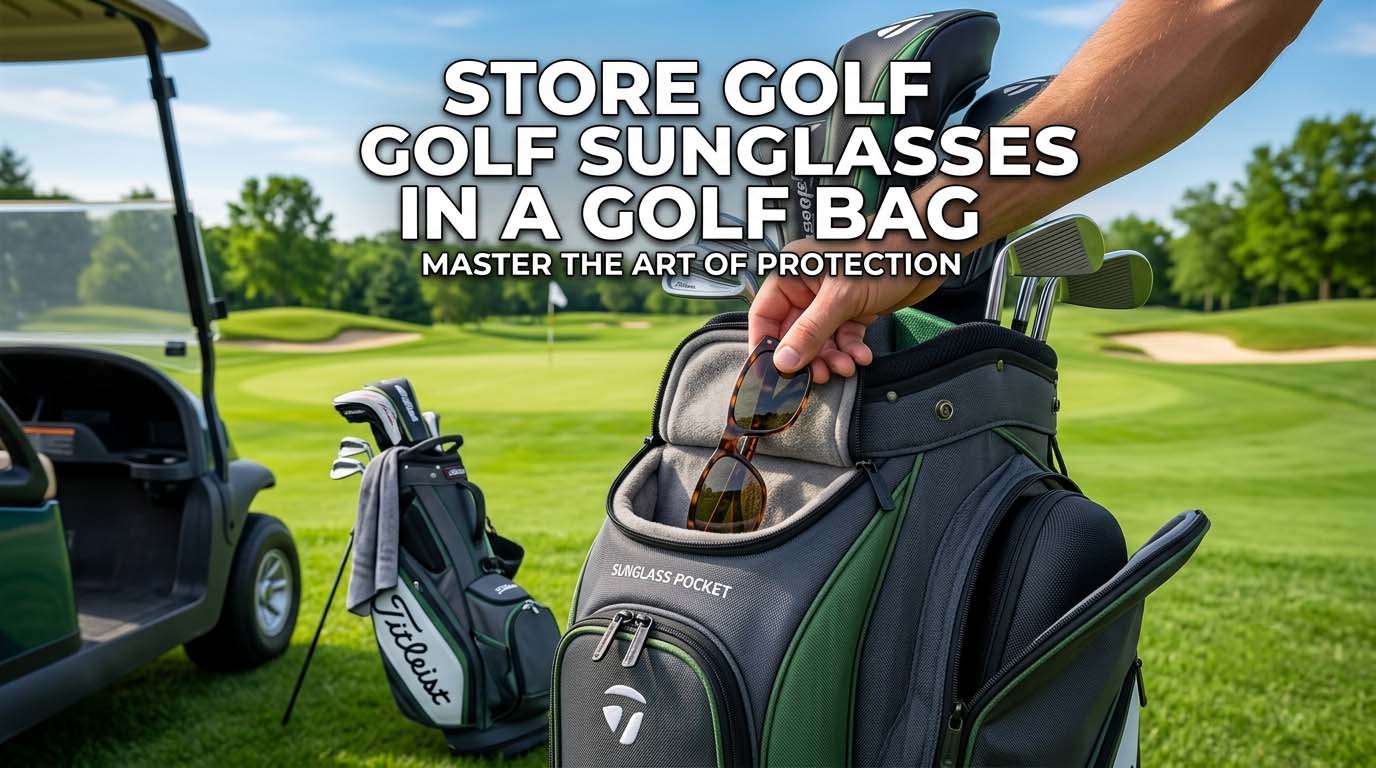
You just finished a solid round, and your golf sunglasses are covered in sweat, sunscreen, and maybe a little dust from the fairway. You toss them into your bag, zip the pocket, and hope for the best. But next time you pull them out, you see a scratch on the lens or a bent frame. That happens because a golf bag is one of the toughest places to store eyewear. Clubs shift, zippers scrape, and dirt gets everywhere. If you want to keep your sunglasses in perfect shape, you need a system that handles these specific risks.
The simple solution is this: use a rigid, padded case with a microfiber lining, place it in a dedicated lined pocket, and always store the lenses facing up. But there is more to it. Let me walk you through exactly what works and what does not, based on what I have seen and used on the course.
Why your golf bag is the riskiest place for sunglasses
Golf bags are built to carry heavy clubs, balls, and accessories, not delicate eyewear. Three things cause most damage inside a bag. First, mechanical impact. When you walk or ride a cart, club heads knock against each other and hit anything stored nearby. Second, pressure from shifting contents. Bags get tossed, tipped, and squeezed. A soft pouch in a full pocket can get crushed, pressing the lenses against a metal zipper or a sharp ball marker. Third, micro‑abrasion. Dust, sand, and dried sweat are everywhere in a golf bag. Even a soft cloth pouch can turn into sandpaper if grit gets trapped inside.
Most guides tell you to always use the original case. That is good advice, but it is not enough. You also need the right case type, the right pocket, and the right orientation. Otherwise, the case itself can become a hazard.
Pre‑storage cleaning on the course
Before you put your sunglasses into any case, you need to clean them. Sweat and sunscreen contain oils that can etch lens coatings if left to dry inside a closed case. And dirt on the lens will scratch the surface when the glasses shift during transport.
Keep a clean microfiber cloth in a separate ziplock bag inside your golf bag. When you take off your sunglasses, give them a quick wipe. Do not rub hard. Just gently remove the visible grime. Do not use your shirt, a towel from the cart, or a paper napkin. Those materials trap sand and will scratch the lens. A dedicated microfiber cloth is cheap and works for months if you wash it every few weeks.
If your lenses are very wet from rain or sweat, let them air dry for a minute before storing. Putting a damp case back into your bag can trap moisture that causes fogging and coating damage later.
Hard case vs. soft pouch vs. sleeve – the golf‑bag tradeoffs
Not all storage options are equal when you are loading them into a golf bag. Here is how they compare for on‑course use.
| Storage type | Protection level | Best use in a golf bag |
|---|---|---|
| Hard case with interior microfiber | High – rigid shell resists crushing | Main or valuables pocket, isolated from clubs |
| Soft pouch (neoprene or cloth) | Low – minimal crush protection | Only in a padded, non‑compressible pocket |
| Sleeve or wrap | Very low – no structure | Not recommended for any bag pocket |
A hard case is non‑negotiable for the main compartment. Look for a case that has a microfiber lining on the inside and a slightly padded exterior. The case should be small enough to fit into a pocket without forcing the zipper closed. If you have to cram it, you are already damaging the lenses.
A soft pouch can work only if you have a pocket that is lined with thick fabric and does not get compressed by clubs or balls. For example, some golf bags have a lined valuables pocket with a hard exterior wall. In that specific spot, a soft pouch might be okay, but I still recommend a hard case because it prevents pressure marks on the frame.
Never use a sleeve or wrap. Those offer almost no protection against the impacts and pressure inside a moving golf bag.
The only safe pocket zones
Where you place the case inside the bag matters as much as the case itself. Many golfers just throw the case into the nearest pocket, which is often a mesh side pocket or the ball compartment. Those are risky choices.
Side valuables pocket (best)
Most golf bags have a small zippered pocket on the side designed for wallets, phones, and keys. This pocket is usually lined with a soft material and sits away from the club shafts. It also stays relatively upright even when the bag leans. This is the safest spot for your sunglasses case. Make sure the case fits without bulging the zipper.
Front apparel pocket (good with caution)
If your bag has a large front pocket for jackets or gloves, you can store the sunglasses case there, but only if you fill the rest of the pocket with soft items like a towel or extra gloves. Hard objects like a range finder or a water bottle should not sit on top of the case. The apparel pocket often gets compressed when you carry the bag on your shoulder, so check that the case is not being squeezed.
Ball compartment (avoid)
Storing your sunglasses case in the ball pocket is a fast way to get damaged lenses. Golf balls shift around and create pressure points. The zipper on ball pockets is often larger and rougher. Even a hard case can get scratched or popped open if balls push against it.
Mesh side pockets and club well (never)
Never put sunglasses in mesh pockets or anywhere in the club well. Mesh pockets offer no protection from club heads, and the club well is where graphite shafts and metal heads collide. One swing of the bag and your glasses could be bent.
Quick‑access placement without compromising protection
During a round, you might need to take your sunglasses on and off multiple times. The temptation is to keep them loosely in a pocket or hang them from your shirt. That leads to drops and scratches. Instead, set up your storage for quick access while keeping the case closed.
Place the hard case in the valuables pocket with the hinge side facing up and the latch or zipper pull pointing outward. When you open the pocket, you can grab the case by the hinge or a small strap without fumbling. Practice opening the case with one hand while holding your bag with the other. It takes a few tries, but it saves time and prevents accidental drops.
Another trick: attach a small carabiner or a lanyard to the case. Clip it to a bag handle or a D‑ring inside the pocket. That way the case stays in place even when the bag tips over.
How lens material and frame type change your storage rules
Not all sunglasses are made the same. The material of the lens and the frame affects how you should store them.
Polycarbonate lenses are impact‑resistant but scratch‑prone. They are common in golf sunglasses because they are lightweight. A hard case is mandatory. A soft case will allow pocket debris to scratch the soft polycarbonate surface over time.
Glass lenses are heavier and more fragile. They can shatter if the case is dropped or crushed. Always place a glass‑lens case in the most padded part of the bag, surrounded by soft items like a towel. Avoid storing them near hard objects.
Nylon and TR‑90 frames are flexible. They can handle a bit of bending without breaking. This means you can get away with a slightly softer case if the pocket is well‑lined. But acetate and metal frames are rigid. Any pressure from the bag will bend them out of shape. Those frames need a completely rigid case that cannot be compressed.
Mirror coatings are popular for golf because they reduce glare. But the mirror surface is delicate. Never store the sunglasses with the lenses facing down on any surface, even inside a case. Dust and grit settle at the bottom of the case. If the lens touches that grit, the mirror coating will get hazy. Always store the glasses with the lenses up and the temple tips down.
Moisture management and temperature protection in the bag
Moisture is a hidden enemy of stored sunglasses. After a sweaty round or a rain shower, the inside of a closed case can become humid. That moisture can fog the lenses permanently and cause the anti‑reflective coating to peel or delaminate.
To avoid this, put a small silica gel packet inside your sunglasses case. You can save the ones that come with shoes or electronics. Replace the packet every few months. If the case gets wet, open it and let it air dry completely before putting the glasses back inside.
Temperature is another factor. Golf bags often sit in a hot car trunk or under direct sun on the course. A closed case acts like a miniature oven. High heat can warp plastic frames and damage photochromic lenses that change tint. If your bag will be in a hot car, store the sunglasses case in a separate insulated pouch or take them out of the bag and bring them inside. Do not leave them in the trunk all day.
Once a week, I recommend opening your bag and checking the inside of the pocket where you store the case. Wipe out any sand, grass, or dust with a damp cloth. Let the pocket dry before putting the case back in. This simple habit prevents the micro‑abrasion that slowly ruins lenses.
Frequently Asked Questions
Can I store my golf sunglasses without a case in a dedicated cloth bag inside the golf bag?
Only if the cloth bag is lined with a soft material like Tylenol and placed inside a non‑compressible pocket that has a hard outer wall. Even then, the cloth provides almost no crush protection. If the pocket gets squeezed by a club or a water bottle, the sunglasses can still get scratched. A hard case is much safer.
How do I prevent scratches from the case itself?
Make sure the interior of the case is lined with lint‑free microfiber. Some cases have satin or plastic linings that can scratch lenses. Wipe the inside of the case weekly with a dry microfiber cloth to remove any sand or dust that accumulates. Check the foam padding for wear – if it starts to crumble, replace the case.
Should I store my sunglasses with the lenses facing up or down inside the case?
Lenses up, temple tips down. The bottom of the case collects dust and small debris. If you store the lenses down, they rest on that grit and get scratched. By storing them up, the most sensitive part of the glasses stays clean.
How do I store clip‑on or transition lenses in a golf bag?
Clip‑ons should not be folded repeatedly. Store them in a slim, separate hard case with a slot that holds them flat. Transition lenses (photochromic) are more sensitive to heat because the molecules that change tint can break down at high temperatures. Place the case in an insulated pocket or near a water bottle for temperature stability, but never next to a hot metal club head.
Is it safe to store them in a golf bag while using a cart?
Yes, but strap the bag securely so it does not tip over when the cart moves over bumps. The sunglasses case should be in a pocket that remains upright even when the bag leans. The top‑side valuables pocket is usually the best choice because it stays level even if the bag shifts. Avoid pockets on the bottom side of the bag that face the ground when the bag is on the cart.