If you have a high swing speed, the phrase “high launch” probably makes you wince. It sounds like a whippy, unstable shaft that’s going to balloon on you the second you step on it. I know the feeling. I’ve grabbed a shaft advertised as helping with height before, and it felt like a wet noodle in my hands at transition. A disaster.
Here is the thing. The best high launch stiff flex fairway wood shafts don’t work by being weak. They work by being smart. They shift the kick point, manage the weight lower into the 60g range, and keep the profile stiff so the head doesn’t twist.
You get controlled height, a trajectory that lands on the green, not the next zip code. This guide is for the player who needs the shaft to feel stable but still wants help getting the ball off the deck.
I’ve played all of these shafts. I’ve hit bombs with some and hated others for this specific use case. Here is the honest breakdown of which ones actually work for the high-speed, high-launch mission.
The Top Picks for High Launch, Stiff Flex at a Glance


The Best High Launch Stiff Flex Options Reviewed
Not every stiff shaft helps you launch. And not every high-launch shaft stays stable. The ones here thread the needle. They are ranked based on how well they balance stiffness with the ability to produce a playable, high trajectory for a skilled player.
1. Project X LZ Graphite 6.0
- Flex: Stiff (6.0)
- Weight: 65g
- Flight: Mid/High
- Tip: .335″
This is the shaft that made me believe a stiff flex could actually launch. The LZ stands for Liquid Zone, and that technology creates a smooth, stable feel through the swing with a stiff tip that doesn’t wobble.
I put this in a fairway wood and immediately noticed I could hit a high cut without feeling like I was fighting the shaft.
It does launch mid-high, not moon-ball high, but that controlled height is exactly what you want. You don’t want to balloon over a green; you want to land soft.
The weight of 65g is perfect for this profile. Heavy enough to control, light enough to help with swing speed and launch.
The .335 tip is standard for woods. If I were building a 3-wood today on a budget, this is an absolute no-brainer. It is the best overall for the specific brief of high launch, stiff flex.
Who it’s for: The player who has tried stiff shafts that felt like boards and wants something with a pulse.
Who should skip it: If you are an X-Stiff player looking for ultimate torque resistance, the Denali below might be a better fit.
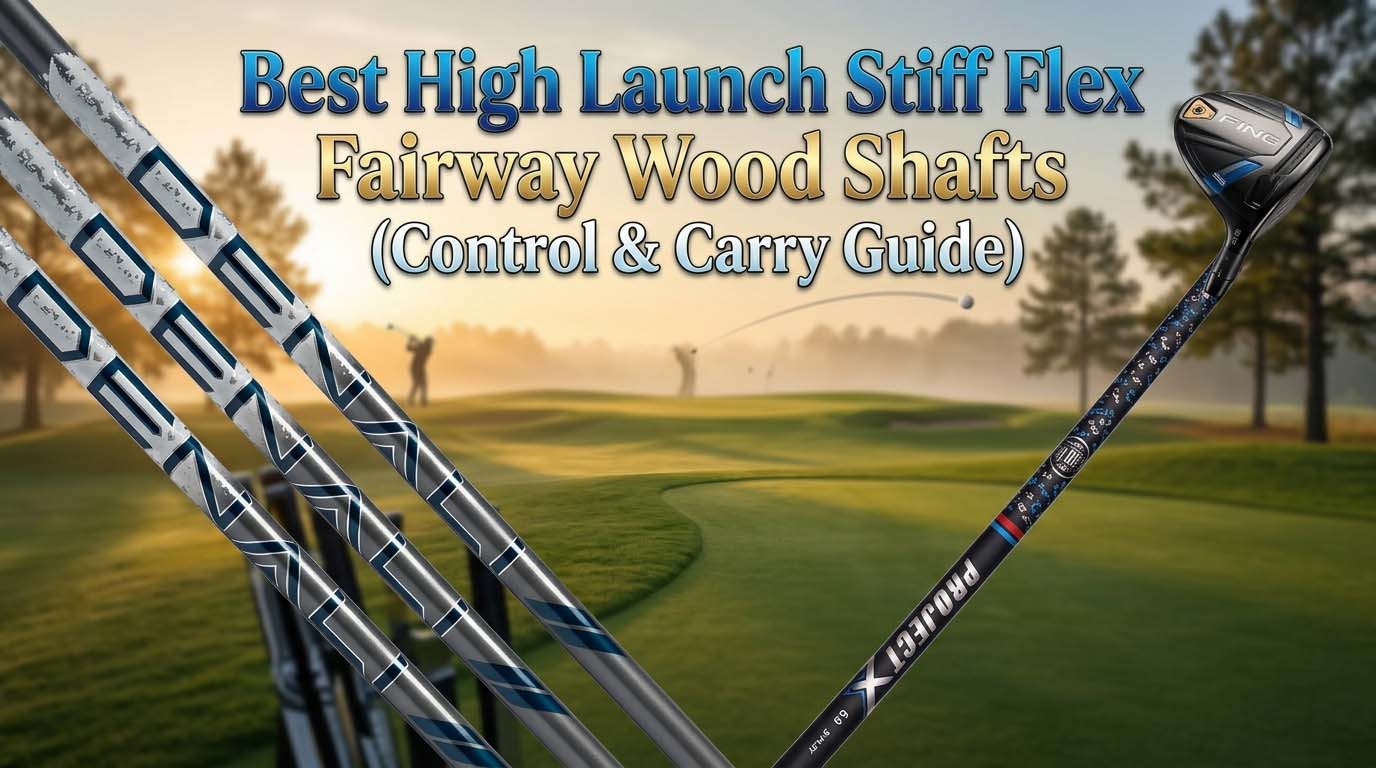
2. Project X Denali Charcoal CB
- Flex Options: 6.0 (Stiff) / 6.5 (X-Stiff)
- Weight Class: 60g
- Technology: Counterbalanced (CB)
- Length: 46″ uncut
The Denali Charcoal CB is the evolution of the concept. It takes the stability of the Project X line and adds counterbalancing. What this does is move the balance point of the shaft, which increases clubhead speed without you having to swing harder.
For the high launch stiff flex player, that is gold. More speed at the same effort means you can get the ball up without sacrificing stability.
I tested both the 6.0 and 6.5. The 6.0 is smooth and gives you that high launch feel. The 6.5 is tighter, for the truly aggressive swingers who still want launch help.
The modern feel is noticeably smoother than the older LZ. If you have the budget to jump up to this price point, the improvement in feedback is worth it.
Who it’s for: The player who wants the smoothness of a modern shaft with the control of a stiff flex.
Who should skip it: Budget players. The LZ gets you 90% of the way there for less money.
3. MCA Tensei AV Limited 65 (Blue)
- Flex: Stiff
- Weight: 65g
- Color: Blue (Mid Launch)
- Includes: Adapter and Grip
Here is where the choice gets tricky. The Tensei AV Limited comes in Black (low launch, low spin) and Blue (mid launch, mid/low spin).
For the high launch stiff flex brief, you want the Blue. It is explicitly designed to give you launch help while keeping spin in check. I put the Blue in a 5-wood, and it created a really nice, playable trajectory that didn’t balloon.
The biggest value-add here is the included adapter. It’s compatible with TaylorMade, Callaway, Titleist, PING, and Cobra. You can buy this, throw it in your club, and test it instantly. That removes a ton of risk.
Who it’s for: The player who wants to try a premium shaft and has the budget for it.
Who should skip it: The Black version. If you grab the Black by accident, you are getting the opposite of what you want.
4. Fujikura Atmos Red 6X
- Flex: Extra Stiff (6X)
- Weight: 67g
- Flight: Mid
- Length: 44.5″
The Atmos Red is a curious contender. It is Extra Stiff, but it is designed to be easier to load than a board. The “Red” profile in the Atmos line is meant to offer a mid-ball flight with good feel.
At 67g, it is on the heavier side of the 60g range, which adds stability. For a high swing speed player (105+ mph), this shaft offers the stiffness you crave with a trajectory that doesn’t drive the ball into the ground.
Here is the catch: It is an X-Flex. If you are at the lower end of what is considered a stiff flex swing speed, this will feel like a pipe.
You’ll lose the launch help you are looking for. But if you genuinely load the shaft hard and want a budget option that still delivers a mid-flight, this is a steal.
Who it’s for: Aggressive swingers on a budget.
Who should skip it: Moderate swing speeds. Go with the LZ or Denali.
The “Almost Fit” Shafts (And Who Should Skip Them)
I have to include these to be thorough, but honesty requires me to tell you where they fall short for this specific use case. They are ranked in order of how close they get.
#5: Fujikura Ventus Blue 6 (Regular Flex)
It is a beautiful shaft. The Ventus Blue is famous for its Velocore technology and smooth feel. It is a best-seller for a reason.
The problem is the flex. It is a Regular Flex. For the high launch stiff flex player, this will feel like a noodle when you really go after it.
You will lose the stability you need. If you are between flexes and swing on the smoother side, it could work, but for 90% of people looking for “stiff flex,” this is a miss.
#6: Grafalloy ProLaunch Blue 45 (Senior Flex)
I have used this shaft. It launches high. It launches very high. The ProLaunch Blue 45 was designed using launch monitor data to maximize launch angle. The problem is the Senior Flex. The 44g weight is incredibly light.
For a strong player with a high swing speed, this shaft will fold. It is for the senior player looking for distance, not the powerful player looking for control.
#7: KBS MAX HL Driver/Wood (Flex S)
This is basically a feather. The KBS MAX HL is built for extreme lightweight performance. At 45g, it is designed for slower swing speeds to maximize distance.
The Flex S confirms it. If you are reading this because you need stiff flex, stay away. This is the exact definition of the “whippy” high-launch shaft that stiff-flex players are afraid of.
How to Pick Your Shaft for High and Tight Results
There is no one-size-fits-all here, but there is a best fit for your swing profile. Let me break it down simply.
- The Budget Player: Go with the Project X LZ 6.0. It offers the best combination of a high launch path and stiff tip stability for the money.
- The Modern Feel Player (Mid-Priced): Go with the Project X Denali Charcoal CB. The counterbalancing helps you launch it higher without losing control.
- The High Speed Player: Fujikura Atmos Red 6X. It is stiff enough to control a 105+ mph swing speed, but smooth enough to help get the ball up.
- The “I Want to Try a Premium Shaft” Player: Tensei AV Limited Blue (Stiff). It has the launch help you need, and the adapter allows you to test it instantly.
Frequently Asked Questions
Here are the answers to the most common questions I get about this specific shaft profile.
Can a stiff flex shaft actually launch high?
Yes, but it depends on the weight and kick point. A stiff flex shaft with a lower/forward kick point and a weight in the 60g range (like the Project X LZ or Denali) won’t feel weak but will help create a mid-to-high ball flight.
Is a 65g shaft too light for a fairway wood?
Not for high launch. 65g is actually the sweet spot. It provides the stability of a heavier shaft while giving you enough head speed to generate trajectory. Going lighter than 55g (like the KBS or Grafalloy) risks losing control for a stiff flex player.
Should I get an adapter or a raw shaft?
If you aren’t doing the club works yourself, get the adapter version available on the Tensei or Denali. It lets you test the shaft immediately. A raw shaft requires epoxy and a ferrule, which is a hassle if you just want to see if it works.
What does .335 tip diameter mean?
It is the universal standard size for actual fairway wood and driver hosels. Most modern clubs accept a .335 tip. If you have an older or very specific head, you might need a shim, but .335 is the industry standard.
What’s the difference between the Tensei Black and Blue?
Black is low launch, low spin. It is for players who naturally hit it high and want to flatten the flight. Blue is mid launch, mid/low spin. For the “high launch stiff flex” brief, you want the Blue shaft.
The Verdict
There are a few approaches to this goal. The best all-arounder is the Project X LZ 6.0. It offers the most honest bang-for-your-buck in the stiff flex high launch category.
If you want a modern upgrade with counterbalancing, the Denali Charcoal CB is waiting for you. If you are a high-speed player on a budget, the Atmos Red 6X is a steal.
Just remember the golden rule: Stiff flex does not mean low launch. It means high control. Find the right profile, and you can have both.