
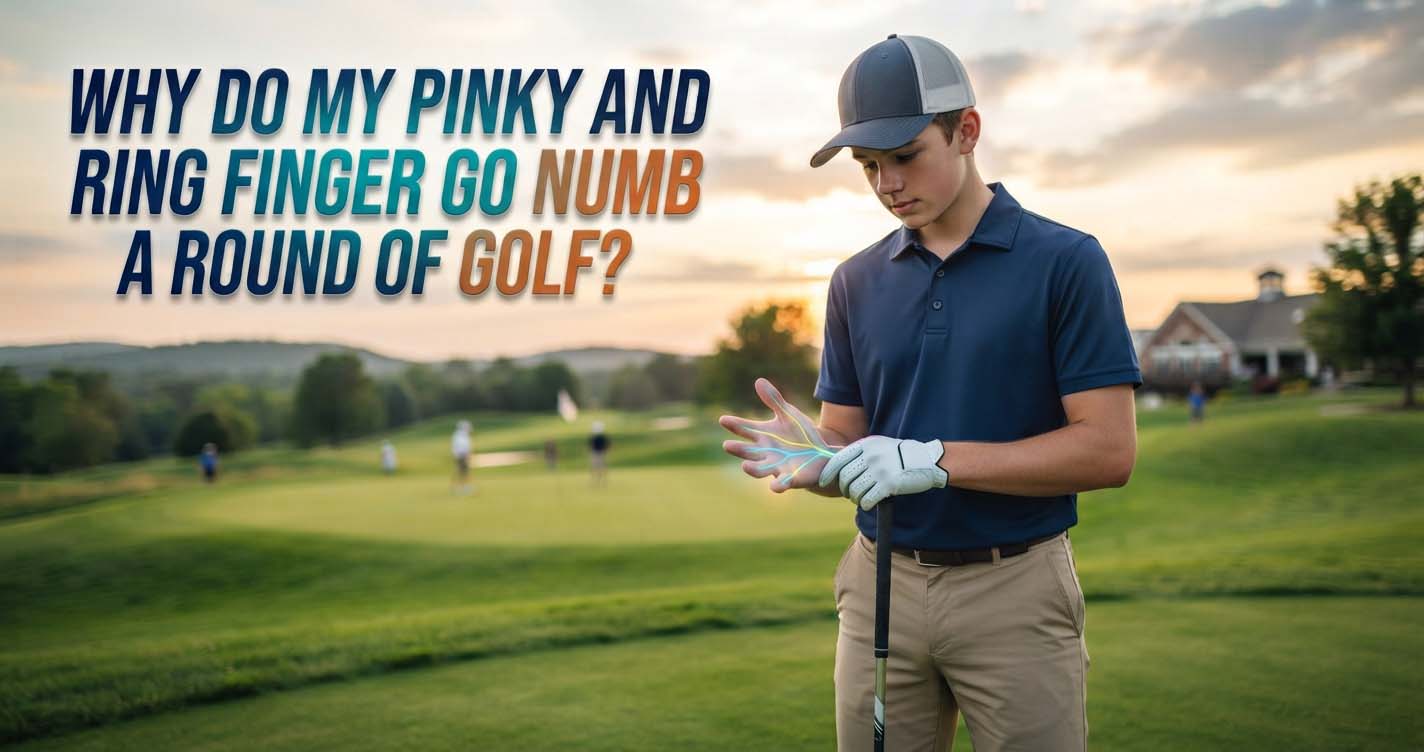
If you are reading this, you have likely felt it. The dull, creeping panic when your trail hand loses connection with the club. The pins and needles in your ring and pinky that just will not shake out. It happens on the course, not in the gym.
It happens on the 12th hole, not the 3rd. You change your grip. You loosen your hands. But it comes back on the next tee box.
Looking for Discounts on Why Do My Pinky and Ring Finger Go Numb During a Round of Golf??
Check out the latest price drops, clearance offers, and top-rated deals currently live on Amazon.
Check Live Discounted Prices on Amazon →I have been through this. At first I thought it was a heart problem, or that my grip was simply too tight. After a lot of frustrating rounds and a few visits to a hand specialist, I realized what was actually happening. This is not a grip problem.
It is a specific nerve problem in your elbow that your golf swing is triggering. The good news is you do not have to quit golf. You just have to understand what your swing is doing to your arm.
The Nerve Map
The nerve responsible for this exact sensation is the ulnar nerve. It runs from your neck, down the inside of your arm, and wraps around the bony groove on the inside of your elbow (what you call your funny bone). From there, it runs into your hand to control your pinky and ring finger.
During a normal round, this nerve gets irritated in two specific ways:
- Stretch – When your lead arm reaches the top of the backswing, the elbow bends sharply, pulling tension through the entire length of the nerve.
- Compression – During the follow-through, your trailing arm folds tightly, pinching the nerve against the bone.
The True Role of the Funny Bone
The funny bone is not a bone. It is the ulnar nerve sitting in a shallow groove. In a static environment like scrolling a phone, the nerve gets squished. In a dynamic environment like a golf swing, the nerve often moves. It can sublux, or pop out of its groove, during the wide arc of a backswing.
When you swing down, the nerve snaps back into place. This snapping motion causes the intense, specific numbness. This explains why the standard advice about not bending your elbow does not fully apply to golfers. Your elbow is bending under load and with speed.
How to Tell if It Is Your Grip or Your Elbow
Many golfers assume numbness means their glove is too tight or they are squeezing the club too hard. Those things might be small pieces of the puzzle, but the real clue is where the numbness shows up. Here is a quick way to diagnose what is happening:
| What You Feel | Where It Comes From |
|---|---|
| Numbness only in pinky and ring finger | Elbow (ulnar nerve compression) |
| Numbness in thumb, index, and middle fingers | Wrist (carpal tunnel) or neck issue |
| Pain at the inside of the elbow plus the numb fingers | Combination of Golfer’s Elbow and nerve irritation |
| Numbness that lasts for hours after the round | Likely nerve damage requiring medical evaluation |
You vs. The Club
Here is the most frustrating part of this problem. When your hand starts to go quiet, your body instinctively tells you to squeeze harder to feel the club again.
This is the worst thing you can do. Grip pressure comes from the forearm muscles. Those muscles attach directly to the elbow.
The harder you squeeze, the more tension you pull through the elbow, which compresses the nerve even further. It is a vicious cycle that gets worse the tighter you hold on.
On-Course Emergency Kit
You do not need to stop playing the moment the numbness starts. You just need to break the cycle. Here is the routine I use when the hand starts to go quiet mid-round:
- Change your pressure point. Stop squeezing with your fingers. Place the pressure into the lifeline of your palm. This changes the angle of the wrist and reduces the stretch on the nerve.
- Soften the lead elbow at setup. Do not lock your lead arm straight. Keep a slight bend at address. This takes immediate tension off the nerve before the backswing even starts.
- Do the nerve glide between holes. This is the single most effective on-course fix. Extend your arm out to the side with your palm facing up. Make a gentle fist. Bend your wrist down. Keeping your arm straight, bend your wrist up. Then bend your elbow. This sequence moves the nerve through its tunnel and can buy you another hole or two of feeling.
- Switch to a looser grip on the trailing hand. Your trail hand does the fine motor work. If you clamp down with it, you compress the nerve at the point of impact. Let your lead hand do the heavy holding.
Long Term: The Setup Fix
If you want this problem to stop permanently, you have to change how you address the targeted ball and how you recover after the round.
Lead Arm Position
Look at your setup in a mirror. If your lead arm is straight and tight at address, you are starting with tension on the nerve. A soft elbow at address is the highest leverage change you can make. It costs nothing and changes the angle of the nerve path on every swing.
The Trailing Arm in the Follow Through
The chicken wing is not just bad for accuracy. It is terrible for the nerve. A trailing elbow that separates from the body and then collapses can cause the nerve to snap in its groove.
Keeping the trailing arm connected and folded in the follow-through protects the nerve from that violent snap.
The Night Brace
I resisted this for a year. I finally bought a simple foam brace that keeps my elbow straight while I sleep. It took two weeks for the numbness to stop during my rounds. Your body heals its nerves at night, but not if they are squished under your head or pillow.
A golfer’s recovery happens in bed, not in the gym. This single change did more for my game than any swing adjustment.
Frequently Asked Questions
Is it dangerous to play through the numbness?
Playing through mild numbness during a single round is not likely to cause permanent damage, but it trains your body to swing with compensation.
If the numbness lasts for hours after the round or you feel weakness in your hand, you are pushing into nerve damage territory.
Chronic impingement can lead to permanent loss of feeling and control. Do not ignore it if it persists.
Will a larger grip size help?
Yes, for some people. A grip that is too small forces your fingers to squeeze harder to feel the club. That squeezes the forearm muscles.
Moving up to a midsized or oversized grip reduces the muscular demand on your hand and forearm. It is not a cure, but it is a cheap experiment that works for a lot of players.
Can a glove prevent this from happening?
A glove can help with friction and allow you to hold the club lighter, which helps. But a glove cannot stop the ulnar nerve from being stretched or compressed during the swing. Do not rely on a glove as your only fix.
Use it as a tool to reduce the grip pressure, but address the elbow angle and the nerve gliding first.
How do I know if it is my elbow or my neck?
If the numbness is strictly in the pinky and ring finger, it is almost certainly the elbow. If you also have numbness in your thumb or index finger, or pain in your shoulder, the problem may be higher up. Try the neck distraction test.
If tilting your head away from the painful arm makes the hand numbness worse, the problem is in your cervical spine and you need to see a doctor.
Do I really need to wear a brace at night?
If your sleep position keeps your elbow bent at a ninety-degree angle or more, yes. Think about it this way. You are spending eight hours every night compressing a nerve that you are trying to protect during a two-hour round.
A ten-dollar foam brace that keeps your arm straight at night can fix the problem faster than any swing change. I noticed a difference in less than two weeks.