
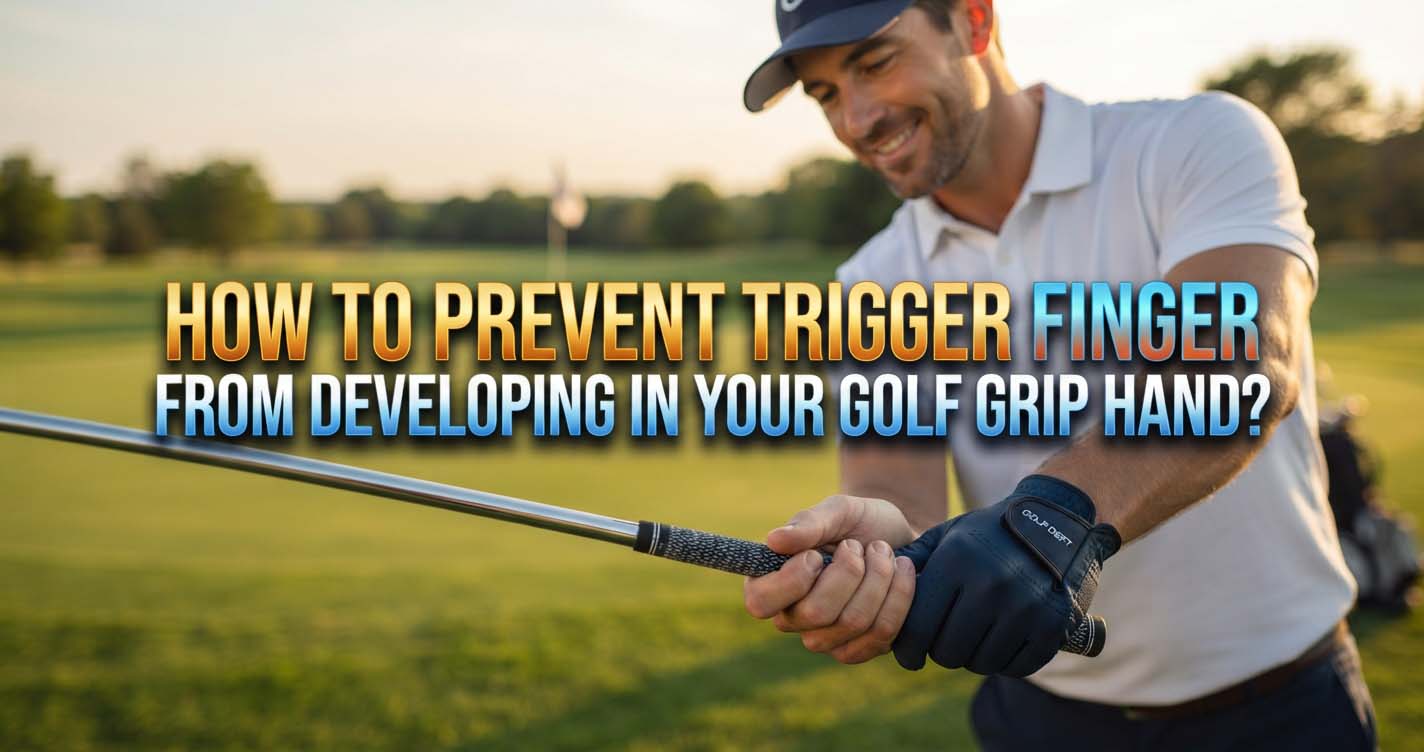
If you have felt a click, a pop, or a catching feeling in the base of your finger after a round, you already know the worry. The golf grip hand takes a beating. The constant squeeze, the impact from the ball, the repeated motion- it all adds up. The good news is you can stop trigger finger before it locks you out of the game.
Trigger finger happens when the sheath around your flexor tendon thickens and forms a nodule. That nodule gets stuck as your finger bends and straightens.
Looking for Discounts on How To Prevent Trigger Finger From Developing in Your Golf Grip Hand??
Check out the latest price drops, clearance offers, and top-rated deals currently live on Amazon.
Check Live Discounted Prices on Amazon →Golfers get it more than most because of how we hold the club. But the prevention is straightforward once you understand the golf-specific causes.
Why the golf grip creates unique risk
Most people think trigger finger comes from gripping too hard. That is part of it, but the real problem is the gripping you do in golf. Unlike carrying a grocery bag or squeezing a dumbbell, the golf grip involves sustained isometric tension through the entire swing. Your fingers stay curled around the club for hours.
The lead hand, the top hand for right-handed golfers , takes the worst of it. That hand supports most of the club’s weight and absorbs the impact at contact. The trail hand also works hard, but the lead hand’s A1 pulley at the base of the ring finger or middle finger gets the most repetitive stress.
The golf swing also involves eccentric loading. Your fingers are trying to hold the club steady while your wrists and arms are moving at speed. That mismatch creates friction inside the tendon sheath. Over months and years, that friction builds the nodule.
Grip mechanics that reduce tendon stress
The first place to look is your grip style. Most golfers use one of three grips: overlap, interlock, or baseball. Each puts different pressure on the fingers.
Overlap grip
The little finger of the trail hand rests on top of the index finger of the lead hand. This spreads the pressure across more fingers. It is generally the least stressful on any single digit.
Interlock grip
The little finger of the trail hand and the index finger of the lead hand lock together. This pulls the index finger into a tighter curl, increasing tension at the base of that finger. If you already have a tender spot, this grip can make it worse.
Baseball grip
All ten fingers wrap around the club. This puts the most direct squeeze on all fingers. It spreads the load evenly, but it also increases overall hand tension. For most people, the baseball grip carries the highest risk of overuse because you cannot relax any finger.
If you want to lower your risk, switch to the overlap grip. It gives you control without locking any finger into a fixed flex position.
The two-finger pressure test
Before your next round, try this. Grip the club with your normal pressure. Now lift your ring finger and little finger of the lead hand off the grip. If you cannot lift them without losing your hold, you are gripping too tight.
The ideal golf grip is light enough that you can release any two fingers and still keep the club stable. That pressure is about a 4 out of 10. Most amateurs grip at a 7 or 8. That extra squeeze adds unnecessary friction on the flexor tendons every single swing.
Equipment changes that lower risk
You can also reduce tendon strain by adjusting what you hold. Grip size is the most overlooked factor.
Grip size
If your grip is too small, your fingers have to curl deeper and squeeze harder to hold the club. That puts more tension on the A1 pulley. If the grip is too large, you cannot close your fingers fully, and you end up gripping with your palm instead, which transfers stress to the ring finger.
The rule of thumb: when you hold the club normally, the tips of your fingers should just barely touch the pad of your palm. If your fingers dig into your palm, the grip is too small. If they cannot touch at all, it is too large. You can add or remove tape layers to dial it in.
Grip material
Cord grips provide more traction with less squeezing. They feel rough, but they let you hold the club lighter because the friction does the work. Rubber grips absorb more vibration but require more squeeze pressure.
If you already have early symptoms, switch to a softer rubber grip with some texture. The vibration damping helps reduce the micro-shocks that irritate the tendon.
Club fitting
Stiff shafts and upright lie angles transfer more shock up through the hands. If your clubs are not fitted to your swing, you may be fighting the club head through impact, which forces your hands to clench harder.
A proper fitting that matches shaft flex and lie angle to your swing can take 10 to 15 percent of the grip force out of your swing.
Golf-specific preventative conditioning
Exercises for trigger finger are everywhere, but most of them are generic. Golfers need exercises that mimic the demands of the swing.
Pre-round tendon glides
Before you hit the range, do this two-minute routine. Hold your hand out in front of you, palm facing up. Slowly curl your fingers into a hook shape, just the middle knuckles, not a full fist. Hold for three seconds. Then straighten them fully. Repeat five times.
Next, make a full fist, squeezing gently. Hold for three seconds. Then spread your fingers wide. Repeat five times.
This glides the tendon through the sheath and warms up the synovial fluid. It prevents the sticky feeling that many golfers get on the first few swings.
In-round between-shot routine
After each shot, while you walk to your ball, open and close your lead hand slowly five times. Let your fingers fully extend.
This counteracts the hours of flexion that the round demands. Most golfers keep their hand wrapped around the club between shots, which just builds more tension.
Post-round recovery stretch
After the round, do a single stretch that most people skip. Place your lead hand palm-down on a table.
Use your other hand to gently press the knuckles of the affected fingers toward the table surface until you feel a stretch across the palm. Hold for 20 seconds. This targets the palmar fascia and the tendon sheath in a way that reduces overnight stiffness.
Myth vs reality
There is plenty of bad advice out there. Here are three myths that can actually make things worse.
Myth: A stronger grip means better control. Actually, overgripping increases tendon friction and leads to fatigue, which makes you lose control later in the round. The best players use the lightest pressure that still holds the club.
Myth: Thicker grips prevent trigger finger. Only if they are correctly sized for your hand. A thick grip on small hands forces the fingers to work harder.
Myth: Stretching before golf prevents it. Stretching without first doing tendon glides can actually aggravate a thickened tendon. Always glide first, stretch after.
Frequently Asked Questions
Can trigger finger affect your golf swing even before it locks?
Yes. Even if your finger has not locked yet, the nodule can catch during the swing, causing a sudden sharp pain or a loss of grip strength at impact. This often shows up as a weak shot or a slice that you cannot explain.
Should I switch hands if I develop trigger finger in one hand?
No. Switching hands just moves the problem to the other side. It also hurts your handicap for months while you learn opposite-side control. Instead, fix the mechanics on the affected side.
How long should I rest if I feel early symptoms?
Rest for three to five days from gripping anything heavy. Keep playing short-game practice if it does not hurt. If symptoms persist after a week, you may need a cortisone injection, but that is for a doctor to decide.
Will wearing a glove prevent trigger finger?
A glove helps with friction but does not prevent the tendon from thickening. It can actually mask early symptoms by reducing the sensation of rubbing. Do not rely on a glove alone.
Can cortisone injections affect my grip strength?
Cortisone weakens the tendon temporarily. You may feel a loss of power for two to four weeks. Many golfers avoid the shot during the season for that reason, but it can break the inflammation cycle.
Does grip pressure matter more than grip style?
Both matter, but pressure is more important. A light grip with a bad style is safer than a death grip with perfect style. Fix pressure first, then adjust style if needed.
Should I stop playing golf if I develop trigger finger?
Not necessarily. Many golfers play through it by using the overlap grip, lighter pressure, and proper equipment. Stop only if the finger locks during the swing or if rest doesn’t relieve the pain after two weeks.