
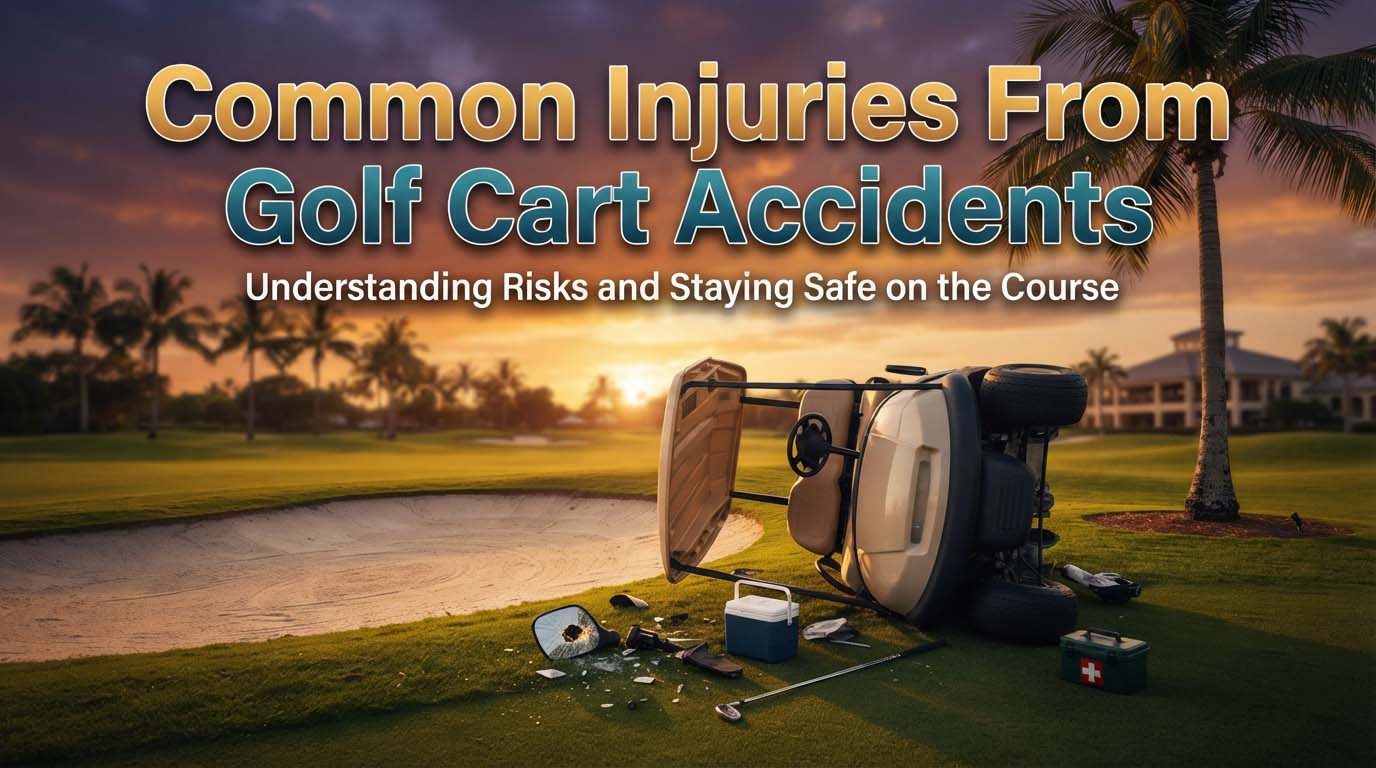
I’ve seen a lot of people assume that because a golf cart moves slowly, it can’t really hurt you. That assumption is wrong. The open design, no roll bar, and high center of gravity create a unique danger. The injuries aren’t like car crash injuries.
They come from two main mechanisms: getting thrown out of the cart (impact injuries) and getting trapped under or inside the cart (crush injuries). Let me walk you through what actually breaks and why.
Looking for Discounts on Common Injuries From Golf Cart Accidents?
Check out the latest price drops, clearance offers, and top-rated deals currently live on Amazon.
Check Live Discounted Prices on Amazon →Head and Brain Injuries
Head injuries are the most dangerous category. A golf cart has no roof structure meant to protect your head in a rollover. When the cart tips, you either hit your head on the pavement or the cart’s roof frame collapses and hits you.
Even at low speeds, the weight of the cart and the sudden stop can deliver enough force to cause serious damage.
Concussions
Concussions happen when the brain rattles inside the skull. You don’t need to hit your head directly.
A sudden whipping motion of the neck and head, like when the cart stops abruptly after hitting a curb or a tree, can do it. Symptoms include confusion, dizziness, headache, and sometimes vomiting.
Many people brush this off and don’t get checked, which risks second-impact syndrome if they fall again.
Skull Fractures
Skull fractures occur when the head strikes a hard surface like asphalt, concrete, or the cart’s metal frame. The most common scenario is ejection from the cart during a sharp turn.
The head hits the ground first because the body is off-balance. Skull fractures can lead to brain bleeding, requiring emergency surgery.
Diffuse Axonal Injury
Diffuse axonal injury is a rotational brain injury. It happens when the head twists violently, tearing nerve fibers throughout the brain. This is common in rollovers where the passenger’s head snaps sideways.
It can cause long-term cognitive issues, memory loss, and even coma, yet there may be no visible bump or bruise. This is the hidden injury most people don’t consider.
Upper Extremity Injuries
When you start to fall, your instinct is to put your arms out. That reflex causes predictable injuries to the shoulders, elbows, wrists, and hands.
Wrist and Forearm Fractures
The most common fracture in a golf cart fall is a Colles’ fracture, a break at the distal radius near the wrist. You land on an outstretched palm, and the force snaps the bone just above the wrist.
These fractures are painful and almost always require casting or surgery. I’ve seen them more often in women, likely due to lower bone density.
Rotator Cuff Tears
Rotator cuff tears happen when you brace your arm against the side of the cart as it tips. The sudden force overwhelms the shoulder muscles and tendons. It’s not always immediate pain; sometimes it shows up as weakness and clicking weeks later. Full tears need surgery and months of rehab.
Elbow Dislocations
An elbow dislocation can occur if you grab the canopy frame or seat belt and the cart pulls you in an awkward direction.
The joint pops out of place. This injury is easy to recognize because the arm looks bent at a weird angle, and you can’t move it. Doctors have to manipulate it back in, often under sedation.
Lower Extremity Injuries
Your legs and feet are the most likely body parts to get crushed if the cart rolls onto you. They also take the brunt of the force when you jump or fall out.
Ankle Fractures
Ankle fractures happen when the foot gets caught between the cart’s frame and the ground during a rollover. The twisting motion of the fall can also snap the bones around the ankle joint.
This is one of the most common injuries I’ve seen in people who try to jump from a moving cart. The foot lands wrong, and the weight of the body comes down hard.
Leg Fractures (Tibia and Fibula)
Lower leg fractures often result from the cart landing on the leg after a tip-over. The cart weighs 800 to 1,000 pounds. When it lands on a tibia, the bone snaps. In some cases, the fracture is an open fracture where the bone pokes through the skin, which greatly increases infection risk.
Foot and Toe Crush Injuries
The “pedal entrapment” injury is unique to golf carts. During a crash, the passenger’s foot can get stuck between the frame and the accelerator pedal.
The sharp edges of the pedal cut into the foot while the weight of the cart pushes down. This causes severe metatarsal fractures and degloving injuries, where the skin separates from the underlying tissue. These injuries often require plastic surgery to repair.
Spine and Back Injuries
The spine can be injured even if you stay in the cart. Sudden stops and whipping motions cause hyperflexion or hyperextension of the neck and back.
Spinal Cord Contusions
A contusion on the spinal cord happens when the vertebrae hit each other and bruise the cord inside. You don’t need a broken bone to have a spinal cord injury.
The impact from a golf cart hitting a curb or ditch at 15 mph can cause temporary or permanent paralysis, depending on the level. Seatbelts help but don’t prevent this injury because the head and neck still whip forward.
Herniated Discs
A herniated disc in the lower back is common from the bouncing motion of a rough ride. The jolt forces the cushion between the vertebrae to bulge or rupture.
This causes radiating pain down the leg (sciatica) and sometimes numbness. Recovery can take months of physical therapy.
Whiplash-Related Neck Pain
Whiplash is a soft-tissue injury to the neck muscles and ligaments. Even in a gentle collision, the head can snap back quickly. The pain often appears a day later, not immediately. Many people ignore it, but chronic neck pain can linger for years.
Abdominal and Chest Injuries
The torso takes the hit when the steering wheel, canopy, or other passengers push into you.
Rib Fractures
Rib fractures happen when you’re thrown against the side of the cart or when the canopy frame collapses onto you. They are painful and make deep breathing difficult. In older adults, a broken rib can puncture a lung and cause a pneumothorax.
Internal Organ Damage
Blunt force trauma to the abdomen can rupture the spleen, liver, or kidneys. The spleen is the most vulnerable because it’s soft and located near the ribs.
A ruptured spleen causes internal bleeding that can be fatal without emergency surgery. This injury is more common in side-impact collisions where the passenger hits the cart’s side rail.
Pelvic Fractures
A pelvic fracture happens when the cart rolls over and crushes the hip region, or when you’re ejected and land directly on your hip.
The pelvis is a ring of bone, and a break in one place often means a break in another. These fractures are serious because they can damage arteries and cause heavy blood loss.
Soft Tissue and Long-Term Complications
Not all injuries show up on X-rays. Soft tissue damage can cause chronic problems that last much longer than a broken bone.
Complex Regional Pain Syndrome (CRPS)
CRPS is a nerve disorder that can develop after a crush injury to a limb. The affected area becomes intensely painful, swollen, and sensitive to touch.
Even a light breeze can hurt. It’s rare but life-altering, and it often starts after the initial fracture or soft-tissue injury from a golf cart accident.
Deep Vein Thrombosis (DVT)
If you break a leg or ankle and have to keep it immobilized for weeks, you’re at risk for a blood clot.
A DVT can form in the deep veins of the calf or thigh. If that clot breaks loose and travels to the lungs, it becomes a pulmonary embolism, which can be fatal. I always tell people to watch for calf swelling or tenderness after a leg injury.
Post-Concussion Syndrome
After a concussion, some people experience persistent headaches, brain fog, and mood changes for months. This is post-concussion syndrome. It’s more common if you’ve had multiple concussions.
Golf cart accidents that cause mild head trauma can trigger this condition, especially if the person doesn’t rest properly afterward.
The Danger Is Not the High Speed
Most people think fast speeds cause the worst injuries. In golf carts, it’s the opposite. The danger comes from the cart’s weight and instability. At 15 mph, a rollover can still crush your legs or toss you onto concrete.
Sharp turns and bumps cause more accidents than speed. Driver error accounts for about 90% of crashes, things like turning too quickly, overloading the cart, or letting kids drive unsupervised. The low speed gives a false sense of safety, which leads to riskier behavior.
Understanding the difference between ejection and entrapment is key. If you get thrown out, you risk head, wrist, and ankle fractures from landing on pavement.
If you stay inside and the cart rolls, you risk crush injuries to the legs, pelvis, and ribs. Prevention has to focus on both scenarios.
Frequently Asked Questions
Can a golf cart accident cause a spinal cord injury even if I was wearing a seatbelt?
Yes. A seatbelt prevents ejection, but it does not prevent your head and neck from whipping forward or sideways during a sudden stop or rollover.
This whipping motion can cause a spinal cord contusion or a herniated disc. Seatbelts reduce the risk of death but do not eliminate spinal injuries.
What is the difference between a fracture from a car crash versus a fracture from a golf cart fall?
In a car crash, fractures often come from impact with the dashboard or steering wheel, usually to the femur, pelvis, or sternum.
In a golf cart fall, fractures are more likely to be of the wrist (Colles’ fracture), ankle, or lower leg, because the person is thrown and lands on their hands or feet. The mechanism is different: fall vs. collision.
How common are blood clots (DVT) after a golf cart leg injury?
DVT is fairly common after lower extremity fractures that require immobilization. Studies suggest that about 10% of patients with tibial plateau fractures develop a DVT. It’s important to discuss blood thinner medication with your doctor if you have risk factors like obesity, smoking, or prior clots.
Is there a specific injury unique to golf carts that doesn’t happen in cars?
Yes, the “pedal entrapment” injury. During a rollover, a passenger’s foot can become trapped between the cart’s frame and the accelerator pedal, causing severe metatarsal fractures and degloving injuries.
This is rare in cars because the foot well is enclosed. Golf carts have open foot areas, making this a distinct hazard.