
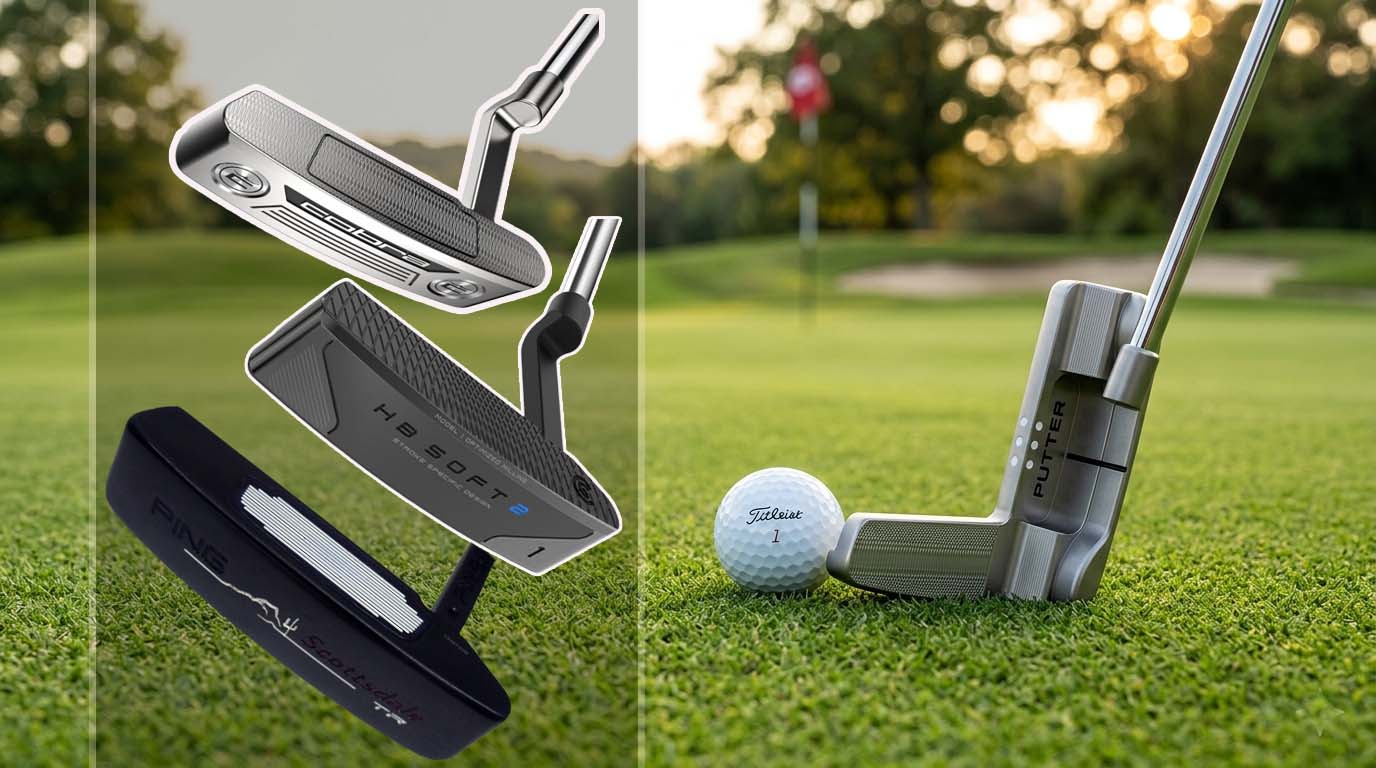
You see the pros draining putts with sleek, slim blades and wonder if that could be you. Then your buddy tells you to buy a giant mallet because “beginners need the help.” Who’s right?
Here’s the short answer: a modern blade putter with perimeter weighting or a soft face can actually teach you better distance control than a cheap mallet will. The feel feedback is more honest. You learn faster. And no, you don’t need to spend a fortune to get one that works.
I’ve spent time rolling putts with all the models below, and I’ve ranked them based on what actually matters when you’re new to the game — forgiveness for off-center strikes, feel feedback so you can learn, and value so you don’t regret the purchase.


Why Beginners CAN (and Should) Consider a Blade Putter
Let me address the elephant in the room first. Go to any golf forum, and you’ll hear the same thing: “Mallets are easier for beginners.” And that’s true — up to a point. A high-MOI mallet will twist less on mishits and keep the ball rolling closer to your intended line. But there’s a cost to that forgiveness that nobody talks about.
The Misconception: “Mallets are Easier”
Mallets mask your mistakes. When you hit one off the toe with a mallet, the ball still goes reasonably straight and at a reasonable speed. That sounds great, until you realize you never actually learn to hit the center of the face. You develop bad habits because the club doesn’t punish them. Then one day you step up to a six-footer that matters, and the mallet can’t save you from a stroke that’s gotten lazy.
I’m not saying mallets are bad. They work for plenty of good players. But the idea that beginners need a mallet is overblown, and it stops a lot of new golfers from experiencing something beautiful — the pure feel of a well-struck blade putt.
The Case for the Blade for New Players
Here’s what I’ve noticed after spending time with both styles. A blade putter gives you three things that accelerate learning.
Better distance control. Because the feedback is more direct, you feel exactly where on the face you caught the ball. Hit it toward the toe, and the putt comes up short — you know instantly. That feedback loop is how you build feel, and it happens faster with a blade than with a mallet that smooths everything out.
Simpler alignment. A single sightline on a blade is less visually busy than the two-ball or 3D shapes you see on mallets. When you’re new, less visual noise means you actually aim where you think you’re aiming. That matters a lot.
Long-term consistency. Learn to putt with a blade first, and you build a fundamentally sound stroke. The feedback is honest. The demands are clear. You’ll be a better putter for it down the road.
So if you’re looking for the best blade putter for beginners, you’re not making a mistake. You’re choosing to learn the right way — and the models below make that journey a whole lot easier.
The Best Blade Putters for Beginners | Reviewed
I tested each of these putters over multiple practice sessions, paying attention to three things: how the face felt on center hits versus mishits, how easy alignment was, and whether the technology actually helped or just sounded good on paper. Here’s what I found, ranked from best to worst for a beginner.
Cobra Classic Putter – The Best All-Rounder for Beginners
- Length: 34 inches
- Loft: 3 degrees
- Material: Stainless Steel
- Face: CNC-machined
- Alignment: Single sightline
- Shaft: Traditional steel (Stiff flex)
- Hand: Right
The Cobra Classic hits a sweet spot that’s rare in any golf club, let alone a putter for a beginner. It looks like a traditional blade — clean, simple, no gimmicks — but the CNC-machined face changes everything.
On the first few putts, I noticed something immediately: the sound changes depending on where you hit the ball. Hit it center, and you get a solid, satisfying click. Hit it toward the toe, and the pitch goes dead. That’s not a flaw — that’s coaching. You learn exactly where your strike is without having to look at impact tape.
The single sightline keeps setup simple. No confusing graphics, no multi-ball alignment aids. Line it up and go. For a beginner who’s already overwhelmed with swing thoughts, that simplicity is a gift.
The CNC-milled face produces a soft feel that absorbs some of the shock from a stabby putting stroke — common with newer players. And the traditional steel shaft keeps the head stable through impact. It’s not adjustable, but you don’t need that yet. You need consistency, and this delivers.
The truth: This is the best all-rounder for a reason. It gives you enough feedback to learn, enough forgiveness to not get discouraged, and a classic look that won’t embarrass you as you improve. If you buy one putter as a beginner, make it this one.
Cleveland HB Soft 2 Model 1 – The Most Forgiving Blade (Best Value)
- Length: 34 inches
- Loft: 3 degrees
- Material: Plated Stainless Steel
- Face: Speed Optimized with dynamic groove milling
- Shaft: UST Mamiya high-tensile carbon fiber/alloy
- Grip: Synthetic Rubber, 4 1/4 inches
- Hand: Left
The Cleveland HB Soft 2 Model 1 is the smart choice for the beginner who’s nervous about making a mistake. It’s a blade in shape only — the technology inside makes it behave more like a mallet when it comes to ball speed consistency.
The “Speed Optimized Face” isn’t marketing fluff. The dynamic groove milling keeps ball speed consistent, even when you hit off-center. I tested this by deliberately striking toward the heel and toe, and the distance drop-off was noticeably smaller than with a traditional blade. That means fewer three-putts while you’re still learning to find center.
The UST Mamiya shaft makes a real difference, too. It’s a carbon fiber/alloy hybrid that provides stiffness for consistency without the dead-heavy feel of steel. The putter feels balanced in your hands, not head-heavy or shaft-heavy.
The Model 1 shape uses a slight plumber’s neck, which is the most forgiving neck style for the arcing stroke that most beginners naturally have. If you’ve never thought about your putting arc, you probably have a slight arc — and this putter is built for that.
The truth: This is more expensive than COBRA because of the technology. The shaft and face engineering reduces the penalty for poor strikes more than any other blade on this list. If you want forgiveness without switching to a mallet, this is your putter.
PING Scottsdale TR Anser 2 – The Classic That Teaches You
- Length: 35 inches
- Loft: 3 degrees
- Material: Alloy Steel
- Face: True Roll (TR) variable-depth grooves
- Shaft: Alloy Steel (Stiff flex)
- Weight: 2 pounds
- Hand: Right
The Anser 2 is the most copied putter shape in golf history. There’s a reason for that — it works. The PING Scottsdale TR version brings that classic shape into a modern package with the True Roll face technology.
The TR face uses variable-depth grooves that help the ball get rolling faster. This matters more for beginners than you might think. New golfers tend to hit putts with a slight upward strike, causing the ball to skid before it starts rolling. The TR face mitigates that skid, giving you a truer roll and more predictable distance.
That said, this is a heavier, more traditional build. It has less forgiveness technology than the Cobra or Cleveland. It’s a purist’s putter — it expects you to hit the center of the face, and it won’t save you when you don’t. But that’s also its strength: it teaches you to be a better striker.
The truth: This putter is for the beginner who wants to learn “the hard way” the right way. If you’re okay with some frustrating three-putts while you develop your stroke, the Anser 2 will make you a better putter in the long run. But if you want help right now, the Cobra or Cleveland are gentler starting points.
Mizuno M.Craft OMOI – The Premium “Invest Now, Play Forever” Option
- Length: 34 inches
- Loft: 3 degrees
- Material: 1025 Mild Carbon Steel (Forged)
- Finish: Black Ion
- Shaft: KBS Putter M Cr 21
- Grip: Lamkin Putter Omoi Sink Fit
- Includes: Custom fit weight kit with interchangeable weights
- Hand: Right
The Mizuno M.Craft OMOI is the best-feeling blade on this list, and it’s not close. The forged 1025 carbon steel construction gives it a buttery soft impact that absorbs the shock from a nervous, stabby putting stroke. Beginners often stab at the ball — this putter makes that feel a lot less harsh.
But the real game-changer is the weight kit. The OMOI comes with interchangeable weights that let you adjust the head heft. Start with heavier weights for more stability while you’re learning. As your stroke improves and you want more feel, switch to lighter weights. That means this putter grows with you — from beginner to intermediate to advanced — without ever needing to be replaced.
The deep face milling also contributes to the soft feel and promotes a pure roll. It’s not as forgiving as the Cleveland on off-center hits, but the feedback is so clear that you learn quickly where your strike is landing.
The truth: This is an investment. If you buy this as a beginner, you will not need another putter for a decade. The feel is addicting, the adjustability is genuine, and the craftsmanship is obvious from the first putt. But if you’re still figuring out whether golf is your thing, it might be more than you want to spend up front.
Black Blade Golf Putter – The “Try Before You Commit” Option
- Length: Not specified (standard adult length)
- Loft: 3.5 degrees
- Material: Aluminum head
- Weight: 330g head
- Finish: Anti-glare black
- Shaft: Stepped steel
- Grip: Textured rubber
- Hand: Right
The Black Blade putter exists for one reason: to get you on the green without spending real money. At a budget-friendly price, it removes the financial risk of starting golf. If you’re not sure this sport is for you, this putter lets you find out without guilt.
The 330g head weight is actually standard for a blade putter — that’s a good sign. The anti-glare black finish is practical for reducing reflections on sunny days. And the high MOI perimeter weighting claims to resist twisting, which theoretically helps with mishits.
The truth: There are some red flags here. The “aluminum” material raises durability questions — steel is standard for a reason. And the rating is based on a single review, so you can’t rely on crowd wisdom. This is a budget tool, plain and simple. It will putt the ball, but it won’t teach you to feel the way the Cobra or Cleveland will.
Scotty Cameron Super Select Newport 2.5 Plus – The “Used Gear” Play
- Length: 33 inches
- Material: Steel head with 6061 aircraft aluminum sole plate
- Alignment: Milled flange sight line
- Weight: Customizable stainless steel sole weights
- Grip: Textured Pistolini Plus
- Hand: Left
- Includes: Shaft band, headcover
Here’s the deal: this is a premium putter at a deep discount because of two specific specs — it’s left-handed, and it has a “Jet Neck” (flow neck). The Super Select Newport 2.5 Plus normally commands a much higher price, so if you’re left-handed, this is a steal.
The construction is impressive. The integrated 6061 aircraft-grade aluminum sole plate lowers the center of gravity for improved stability. The milled flange sight line gives you clean alignment. And the customizable sole weights let you dial in the head feel.
The truth: The Jet Neck is designed for a sweeping stroke, not the arcing stroke most beginners have. And at 33 inches, this is on the shorter side — make sure that length works for your setup. This putter is a great deal, but only if you’re left-handed and only if the shorter length and flow neck match your natural stroke.
Comparison Table: Head-to-Head for the Beginner
| Putter | Best For | Forgiveness | Feel | Key Tech |
|---|---|---|---|---|
| Cobra Classic | All-Rounder | Medium | Soft | CNC Milled Face |
| Cleveland HB Soft 2 | If you miss the center | High | Very Soft | Speed Optimized Grooves |
| PING Anser 2 | Learning the “Classic” | Low | Firm | True Roll Grooves |
| Mizuno M.Craft OMOI | Future-proofing | Medium | Buttery Soft | Interchangeable Weights |
| Black Blade | Trying golf out | Medium | Firm | High MOI Shape |
| Scotty Cameron Newport 2.5 | Left-handed deal seekers | Medium | Soft | Aluminum sole plate |
How to Choose Your First Blade Putter?
You’ve seen the options. Now, how do you decide? Here’s a practical framework that cuts through the noise.
Budget First: The Three Tiers
Testing the waters: If you’re not sure golf is your sport, keep it simple. Get something that works without commitment. The Black Blade fits here — it’ll get you on the green and let you figure out if you love the game.
Getting serious: If you know you’re playing regularly and want to improve, go with a name brand that has real face technology. The Cobra Classic or PING Anser 2 is your sweet spot. You get genuine engineering without overspending.
Investing in your game: If you’re all in on golf and want equipment that lasts a decade, the Mizuno OMOI is the play. The adjustable weight kit means it adapts as you improve. Buy it once and never think about putters again.
Loft & Lie: Don’t Overthink It
Every putter on this list comes with 3 degrees of loft. That’s standard. It works for 95% of golfers. Don’t get paralyzed by loft and lie angles at this stage — your stroke will change as you improve anyway.
The shaft flex labels (Stiff, Regular, Uniflex) on putters are mostly meaningless for beginners. The putter shaft is the shortest club in the bag — flex differences are negligible. Focus on the head and face instead.
The Perfect Length (This Actually Matters)
Putter length is the one spec beginners get wrong most often. Most models come in 34 or 35 inches. Here’s a simple test: stand in your putting posture and let your arms hang naturally. Measure from the floor to the crease of your wrist. If that measurement is 29 inches or less, go with a 33-inch putter. Between 29 and 32 inches, a 34-inch putter fits. Over 32 inches, look at 35 inches.
For most players under 6 feet tall, a 34-inch putter is the right call. If you’re taller, the 35-inch option gives you a more comfortable setup without hunching.
The Blade is Not Your Enemy
I’m going to be direct with you. The advice you’ve heard — “beginners need mallets” — comes from a place of good intentions but misses the bigger picture. What you actually need as a new golfer is honest feedback and equipment that helps you build skill, not mask it.
Here are my final picks based on what matters most to a beginner:
If you want to feel confident, go with the Cleveland HB Soft 2. It forgives your misses better than any other blade I tested, and the UST shaft keeps things consistent round after round.
If you want to learn to feel: Go with the Cobra Classic. The CNC-milled face gives you clear audio feedback on strike quality, and the clean alignment won’t distract you. It’s the best teacher on this list.
If you want the best feel possible, go with the Mizuno OMOI. The forged carbon steel is unlike anything else here, and the weight kit means you’ll never outgrow it.
The Single Best Advice for a Beginner Blade User
Stick with it for 10 rounds. I mean it. The first few rounds with a blade can be frustrating — you’ll leave putts short, push them right, and wonder why you didn’t buy a mallet. But around round five or six, something clicks. You start finding the center more often. The distance control tightens up. And by round ten, you’ll wonder why anyone told you blades were hard to learn.
The blade will teach you how to find the center of the face. That skill is worth more than any mallet head size. Trust the process.
Frequently Asked Questions
Is a blade putter really okay for a beginner golfer?
Yes, absolutely. Modern blade putters with CNC-milled faces or perimeter weighting offer enough forgiveness to be playable for beginners while providing better feel feedback than most mallets. You’ll learn distance control faster with a blade.
What’s the difference between a blade and a mallet putter for a beginner?
Blades have a smaller head with weight concentrated in the center and heel/toe. They offer more feel feedback but are less forgiving on off-center hits. Mallets have larger heads with weight pushed to the perimeter for higher stability. A beginner can succeed with either — it comes down to whether you want honest feedback or maximum forgiveness.
Should I get a 33, 34, or 35-inch putter as a beginner?
Measure your wrist-to-floor distance in your putting stance. If it’s under 29 inches, go 33 inches. Between 29 and 32 inches, go to 34. Over 32 inches, go 35. Most beginners under 6 feet tall fit a 34-inch putter best.
How much should a beginner spend on a blade putter?
That depends on your commitment level. If you’re testing the sport, keep it minimal. If you know you’re playing regularly, invest in a quality option with face technology — it will last years and help you improve faster.
What putter length do most beginners need?
A 34-inch putter fits the majority of players under 6 feet tall. Taller players typically need 35 inches. The most common mistake beginners make is buying a putter that’s too long, which causes them to stand too upright and manipulate the stroke.
Can I use a blade putter if I have an arcing putting stroke?
Yes, and many blade putters actually complement an arcing stroke. Models with a plumber’s neck (like the Cleveland HB Soft 2 Model 1) are specifically designed for players with a slight arc. The heel weighting of a blade naturally suits a stroke that swings open and closed.