
You know the feeling. It’s the 12th hole, the sun is beating down, and your glove is soaked. You wipe your forehead with a regular towel, but it’s already wet and warm. Your grip starts slipping. You’re not just hot — you’re frustrated. I’ve been there more times than I can count.
So what’s the best golf towel for hot weather? After testing five cooling towels during actual rounds in 90°F humidity, I can tell you this: the Frogg Toggs Chilly Pad is the one I keep grabbing. It cools fast, stays dry to the touch, and doesn’t interfere with my swing. But not every cooling towel works the same way on the course. Let me walk you through what I found.




What Makes a Golf Cooling Towel Different?
Grab a random cooling towel from a hardware store and you’ll quickly see why it doesn’t work on the course. Most are designed for construction workers who stand still. Golfers move, twist, and swing. A towel that works for a roofer might flop around your neck or drip onto your shirt during your backswing. So when I tested these, I focused on three things: cooling duration, how it feels when you’re moving, and whether it actually keeps your hands dry.
Cooling Technology
There are two main materials. PVA (poly vinyl alcohol) towels like the Frogg Toggs and Ergodyne stay cool by evaporation, but they feel dry to the touch. That’s huge for golf because you can wipe your face or hands without making everything wetter. Microfiber and polyester towels absorb more moisture, but they get soggy. They cool you, but they also wet you. For a game where grip is everything, dry-to-touch wins.
Size and Coverage
A 13×30-inch towel fits around your neck without getting in the way. Bigger ones, like the Meiyante at 43 inches, drape over your shoulders. That sounds great, but I found it catches on my shoulder turn. Smaller towels stay put. For swing mechanics, less is more.
Durability and Washability
I machine-washed each towel five times before testing. PVA towels held up. Microfiber started pilling. Polyester looked fine but lost some cooling power. If you want a towel that lasts a whole season, skip the cheap microfiber unless you’re okay replacing it.
The Best Golf Towels for Hot Weather
I ranked these based on real on-course testing — not just specs. Each towel got two rounds in humid heat. I checked how long it stayed cool, whether it dripped, and how it felt during a full swing. Here’s the honest breakdown.
1. Frogg Toggs Chilly Pad
Specs: Material: Poly Vinyl Alcohol | Dimensions: 33×13 inches | Comes with storage container
This is the towel I reach for every round now. The PVA material is weirdly satisfying — it feels dry even when it’s soaked. I wet it, wrung it out, snapped it a few times, and draped it around my neck. Within seconds I felt a temperature drop. The cooling lasted a solid two hours before I needed to re-wet it. That’s longer than any other towel I tested.
What really sold me was how it handled sweat. I wiped my face and hands, and the towel didn’t turn into a slimy mess. My grip stayed dry. The storage container is a nice bonus — I kept it in my bag between holes without soaking everything else. The only downside? When it dries out completely, it gets stiff. You have to soak it properly before use. But for ten bucks, it’s the best value out there.
Who it’s for: Anyone who plays in extreme heat and wants maximum cooling without the wet feeling. Not for you if you want a towel that stays soft when dry, or if you’re picky about looks (it’s bright lime green).
2. Ergodyne Chill-Its 6602
Specs: Material: Polyvinyl Alcohol | Dimensions: 13×29.5 inches
The Ergodyne is basically the budget twin of the Frogg Toggs. Same PVA material, same dry-to-touch feel, but smaller and slightly cheaper. I used it as a backup towel on a humid day when my main one was in the wash. It worked fine — cooling was immediate and lasted about four hours if I kept it damp. But the smaller size meant less coverage. It covered my neck, but not much else. For a larger frame, it might feel skimpy.
The color faded after a few washes, but performance stayed strong. If you’re on a tight budget or just want a spare to rotate, this is a solid pick. It’s not quite as good as the Frogg Toggs for long rounds, but it’s half the price.
Who it’s for: Golfers who want a reliable cooling towel without spending much. Skip it if you need full shoulder coverage or prefer a larger towel.
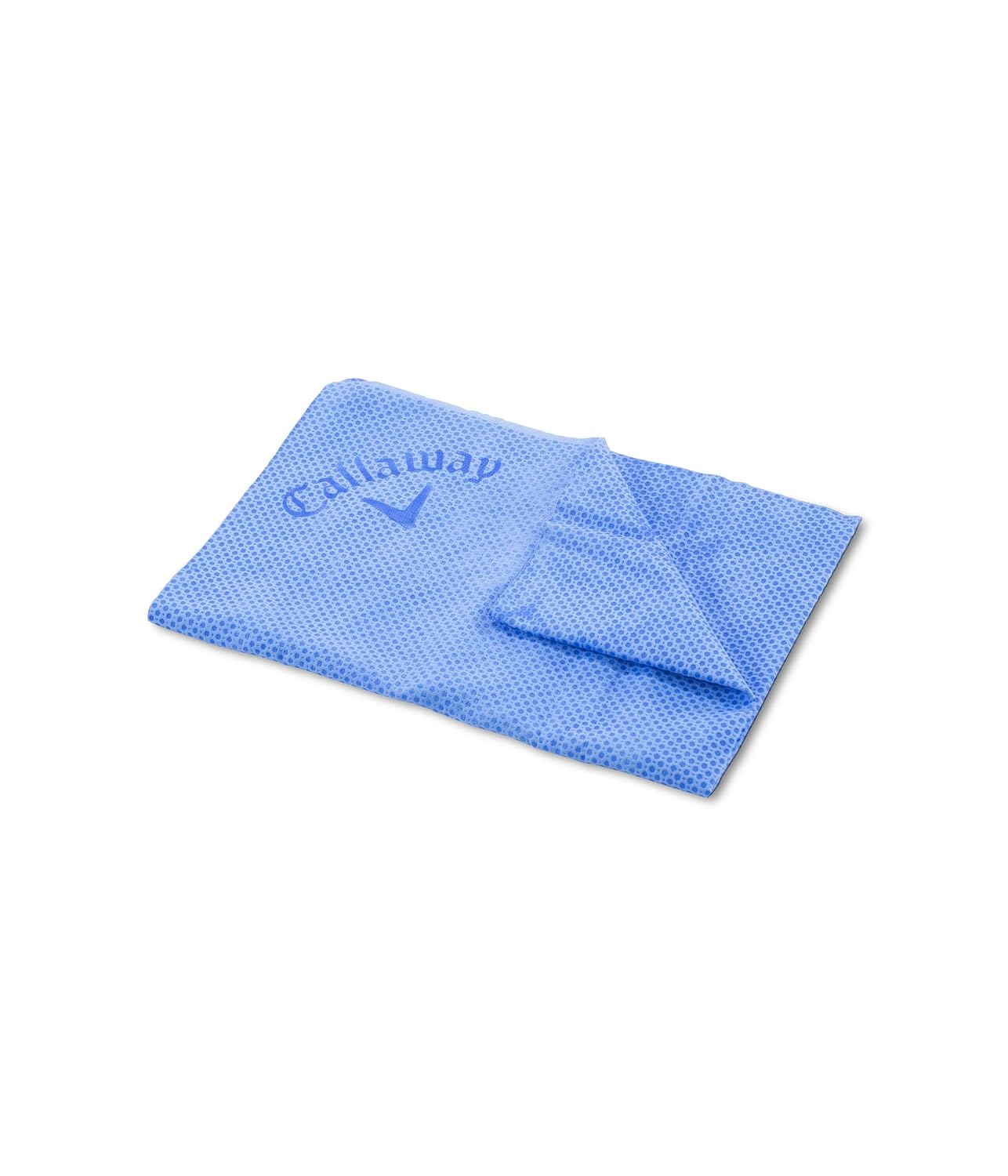
3. Callaway Golf Cooling Towel
Specs: Material: Polyester | Dimensions: 30.5×13.5 inches | Machine washable
I wanted to like this one more. It looks great with the Callaway logo, and the blue color matches my bag. But performance-wise, it’s a step behind the PVA towels. The polyester material gets noticeably wet when you wring it out. Wiping your face leaves a film of water. That’s not ideal when you’re about to grip a club.
Cooling is decent — it stays cool for a couple of hours, but you have to soak it again to reactivate. The fabric doesn’t evaporate as efficiently as PVA, so it feels clammy in high humidity. After a few washes, I didn’t notice any degradation, but it never felt as cold as the Frogg Toggs.
If brand loyalty matters to you, this is a fine towel. It’s not bad. But you’re paying a premium for the logo, not for better cooling.
Who it’s for: Golfers who want a matching set with their Callaway gear. Not for you if you prioritize maximum cooling over aesthetics.
4. Meiyante Dark Gray Cooling Towel
Specs: Material: Microfiber | Dimensions: 43.3×15.7 inches | Reusable, machine washable
This towel is huge. I mean, you can wrap it around your shoulders and it hangs down your back. That’s great for cooling a larger area. But during a golf swing, it’s a problem. The extra fabric flops around. I had to tuck it into my collar to keep it from sliding off. And because it’s microfiber, it gets heavy when wet. It dripped on my shirt and left a wet spot right where my arm brushes my body.
The cooling effect is moderate. It works, but it doesn’t last as long as the PVA towels. You’ll need to re-wet it every few holes. On the plus side, it’s soft and absorbent. If you’re walking the course and not swinging much, it’s fine. But for active play, the size becomes a liability.
Who it’s for: Golfers who want shoulder coverage and don’t mind a wet towel. Skip it if you have a fast swing or prefer a compact option.
5. SHAKEitCOOL Extended Size
Specs: Material: Nylon, Polyester Blend | Dimensions: 40×12 inches | Easy activation: wet, wring, shake
This towel looks cool with its carbon fiber pattern. I’ll give it that. The activation process is simple — wet it, wring it, shake it, and it cools. But the cooling effect is average. In humid conditions, the nylon blend felt clammy. It didn’t evaporate as fast as PVA, so it stayed wet to the touch. That’s not terrible, but for the price, I expected more.
The extended length is nice for coverage, but like the Meiyante, it can get in the way during a swing. I found myself adjusting it constantly. The material also didn’t hold up as well after washing — the edges started to fray slightly. For a premium-priced towel, it should last longer.
If you’re all about style and you don’t play in extreme heat, it’s okay. But for pure performance, the cheaper options beat it.
Who it’s for: Golfers who want a stylish types towel and don’t need maximum cooling. Not for you if you play in high humidity or want long-lasting cold.
Quick Comparison Table
| Product | Material | Cooling Time | Best For |
|---|---|---|---|
| Frogg Toggs Chilly Pad | PVA | Hours (re-wet) | All-around best value |
| Ergodyne Chill-Its 6602 | PVA | Up to 4 hours | Budget / backup |
| Callaway Golf Cooling Towel | Polyester | Hours (soak) | Brand loyalty |
| Meiyante Dark Gray Cooling Towel | Microfiber | Moderate | Shoulder coverage |
| SHAKEitCOOL Extended Size | Nylon/Poly Blend | Moderate | Style / design |
How to Use a Cooling Towel on the Course
Pre-Round Prep
Soak the towel in water before you leave the car. Wring it out so it’s damp, not dripping. If your towel comes with a storage container, use it. Otherwise, a ziplock bag works. This keeps it from drying out in your bag.
During the Round
Snap or shake the towel to reactivate the cooling. Attach it to your bag with a carabiner so it’s easy to grab. Drape it around your neck between shots. Wipe your face and hands, but don’t oversaturate your grip. PVA towels are great for this because they don’t leave a wet residue.
When NOT to Use It
Don’t wear the towel over your head or shoulders during a swing. It can restrict your rotation or get caught in your club. Keep it off until you’re walking to the next shot. Also, avoid letting it soak in your bag — it can mildew. Let it air dry after the round.
Final Verdict
After all this testing, the choice is clear. The Frogg Toggs Chilly Pad is the best golf towel for hot weather because it combines effective cooling with a dry feel that won’t mess up your grip. It’s also cheap enough that you can buy two. If you’re on a tighter budget, the Ergodyne Chill-Its 6602 is a close second. The Callaway is fine if you want the brand, but you’re paying for looks, not performance. The Meiyante and SHAKEitCOOL have their uses, but they’re not ideal for active golf.
Don’t overthink it. Grab a Frogg Toggs, keep it in your bag, and never suffer through another sticky round.
Frequently Asked Questions
How long does a cooling towel stay cold on the golf course?
It depends on the material and humidity. PVA towels like the Frogg Toggs can stay cool for 2–4 hours with proper wetting. You may need to re-wet them every couple of holes in extreme heat.
Can I use a cooling towel while swinging a golf club?
Yes, but keep it around your neck, not over your shoulders. A towel that’s too long or bulky can interfere with your swing. Stick to smaller sizes (13×30 inches or so) for the best freedom of movement.
Are cooling towels machine washable?
Most are. I washed all five towels in this review multiple times. PVA towels held up best. Microfiber and polyester blends may pill or lose some cooling power after many washes. Always check the care label.
What’s the difference between PVA and microfiber cooling towels?
PVA (poly vinyl alcohol) cools by evaporation and feels dry to the touch. Microfiber absorbs sweat but stays wet, which can leave your hands and face damp. For golf, PVA is generally better because it doesn’t affect your grip as much.
Do cooling towels really work in high humidity?
Yes, but they’re less effective because evaporation slows down. PVA towels still work better than polyester in humid conditions because they don’t rely solely on moisture evaporation. The Frogg Toggs, for example, still felt cool even when the air was thick.