
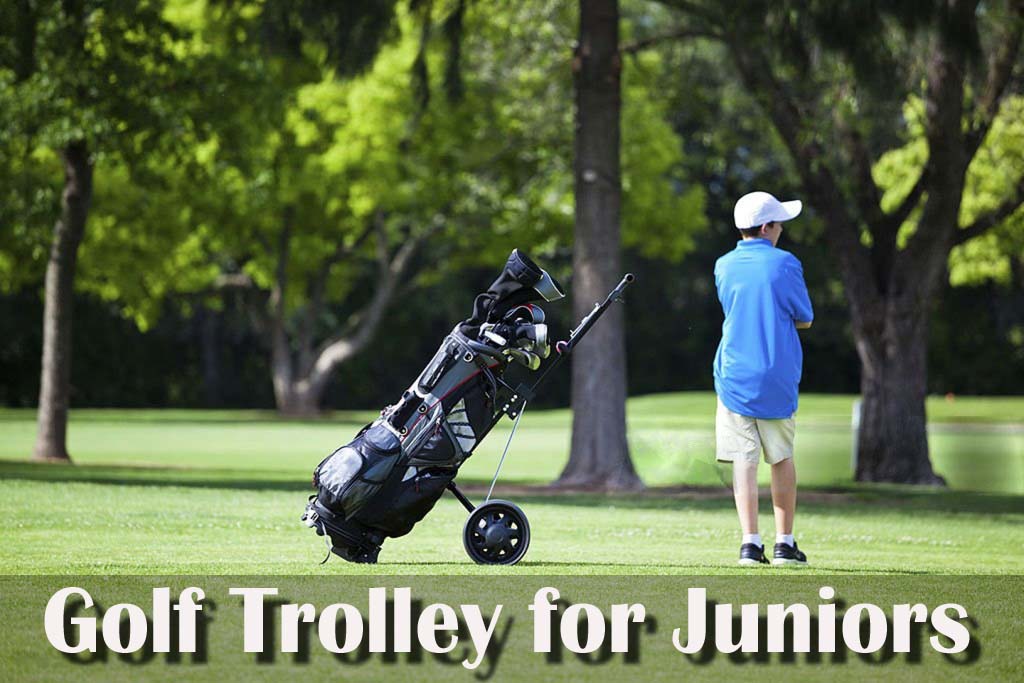
If you buy a standard adult golf cart for your 9-year-old, you’re setting yourself up for a frustrating summer. I’ve seen it happen more times than I can count.
The bag wobbles and constantly slips off the cradle. The handle hits the kid right at armpit level, making pushing awkward. And the first time the cart hits a slight incline, it tips over. That’s not a good time for anyone, especially not for a kid trying to build a love for the game.
The problem is simple: adult carts are built for adult bodies and adult bags. A junior golfer is a different shape and size. Their bag is narrower, they’re shorter, and they don’t have the strength to muscle a 15-pound piece of equipment around.
So buying a cheap, generic adult cart is almost always the wrong move. What you actually need is the best golf trolley for juniors, something designed from the ground up with a child’s proportions in mind.
After looking at the options, the cart that stands out as the best overall is the Bag Boy Quad Junior. It’s the most stable option on the market, and stability is the single most important feature for a kid’s cart. But I’m not going to tell you it’s the right choice for every family.
If your child is 5 years old and just starting, a $250 cart doesn’t make much sense. If they’re a lanky 12-year-old who’s already as tall as you, a different cart might fit them better. So I’ve broken this down by age group and budget, with advice that comes from actually watching kids use these things on the course.
What to Look for in a Junior Golf Trolley?
Before I get into the individual reviews, here’s a quick checklist of what matters. These are the non-negotiable features for any cart you’re considering for a junior golfer.
- Handle height. This is the biggest issue. Adult carts have handles that are 36 to 40 inches off the ground. A 10-year-old is usually around 54 inches tall. That means the handle hits them in the neck or upper chest, not at a comfortable pushing height. Look for a cart with an adjustable handle that can go lower.
- Bag stability. Junior golf bags are narrow—typically 5 to 6 inches wide at the base. Adult cart cradles are 8 to 9 inches wide. That’s a recipe for a loose, floppy bag that falls off at the first bump. Some carts have adjustable upper brackets that can grip a small bag tightly. That’s a big deal.
- Weight. A 15-pound adult cart is heavy for a small child. The ideal junior cart weighs under 10 pounds. The lighter, the better.
- Brake system. A foot-operated brake is the gold standard. Kids need to be able to stop the cart easily without fumbling with a hand brake. It’s a safety thing on hills.
- Folded size. It needs to fit in the trunk of a car. Most adult carts are bulky. Junior-specific carts usually fold down smaller.
That’s the framework. Now let’s look at the actual carts, ranked from best to worst based on how well they work for real kids.
The Best Junior Golf Trolleys Reviewed
I’ve organized these based on what I think matters most to a parent: stability, fit for the child’s age and size, and value for money. The ranking reflects the real-world experience of watching kids use these on the course, not just reading the spec sheet.
1. Bag Boy Quad Junior | The Most Stable and Premium Choice

The Bag Boy Quad Junior is the cart I’d recommend to any parent who asks, “What’s the best golf trolley for juniors, and I don’t want to worry about it?” It’s built for stability in a way that no other junior cart on this list is. The four-wheel design makes it almost impossible to tip over, even when a kid grabs the cart by the handle and yanks it around a corner. That’s a real thing that happens.
The handle is adjustable, which is essential. It has a foot-controlled parking brake that’s easy for a child to use. The bag cradle has a top-lok system that holds a junior bag securely in place. I’ve seen kids with the Quad cart on hilly courses, and the bag stayed put. It feels solid, not flimsy.
But there’s a catch. It’s expensive. And the four wheels make it a little slower to maneuver than a three-wheel cart when you’re weaving through tight spaces.
But if stability is your biggest concern, and it should be for most kids under 10, then the Quad is the safest bet. It’s the “buy it once, and it works” option for the committed young golfer.
Who it’s not for: A 5-year-old who’s just starting and might not stick with golf. The Quad is a serious investment, and if the kid grows out of the junior bag and into a full set, you’ll still need to adjust. But for most kids aged 7 and up who are playing regularly, it’s the best choice.
2. KVV 2-Wheel Junior Cart – The Best for Very Young Beginners

The KVV 2-Wheel is a different animal. It’s a two-wheel cart, which means it’s less stable than the Bag Boy Quad.
But it’s also the lightest cart on this list at under 5 pounds. And the key feature that makes it stand out for tiny kids is the adjustable upper bracket.
This bracket grips the bag near the top of the bag, not just the bottom. That’s critical for a junior bag, because most junior bags are soft-sided and don’t have a rigid base. Without that upper bracket, the bag just rotates and falls off. The KVV fixes that problem.
The cart is designed for children aged 3 to 10. That’s a wide range, but the adjustable bracket lets you dial it in for a very small child. The handle is also adjustable, so you can get it low enough for a 5-year-old to push comfortably.
The downside: it’s a two-wheel cart, which means it’s less stable on uneven terrain. If you’re playing on a flat, well-maintained course, it’s fine.
But if you’re on a course with lots of slopes, the kid will need to be careful. Also, the steel frame is heavier than it looks; it’s 4.9 pounds, which is light, but steel can rust if it’s left out in the rain.
Who it’s not for: A child taller than about 50 inches. If your kid is already pushing 4 feet tall, the KVV is going to feel small, and the handle might not go high enough. At that point, you’re better off with the Bag Boy or one of the other options.
3. JOVIAL Foldable 3-Wheel – The Best Lightweight Option for Active Kids

The JOVIAL 3-Wheel is the cart for the kid who’s past the “wobbly beginner” stage and wants something that feels more like a real cart.
The aluminum frame is lighter than the Bag Boy’s, and the three-wheel design offers better stability than the two-wheel KVV. The handle is adjustable, and the brake is a one-step system that’s easy to use.
What I like about the JOVIAL is the scorecard holder and the padded foam handle. For a 10- to 13-year-old who’s starting to care about the details, these little things matter. The cart also folds down relatively small.
But there’s a catch here. The JOVIAL has a smaller number of reviews than the Bag Boy or the KVV, which means it’s less proven.
The build quality is fine, but you’re taking a bit of a risk with a less-established brand. The weight is also a factor: at just over 15 pounds with the bag, it’s not the lightest cart for a small child to push.
Who it’s not for: A 5- or 6-year-old. The JOVIAL is too tall and too heavy for a very small child. It’s best for a 10-year-old who’s got some height and strength.
4. HOW TRUE 2-Wheel – The Budget-Friendly Starter Cart

The HOW TRUE 2-Wheel is the cheapest option on this list, and it shows. It’s a generic two-wheel cart that’s made from aluminum, so it’s light. It folds down to a very small size, about 10 by 10 by 25 inches, which makes it great for throwing in the trunk. The price is hard to argue with.
But there are compromises. The biggest one is that HOW TRUE doesn’t have the specific junior design features that the KVV has.
The bag cradle is a generic two-strap system that doesn’t grip a narrow junior bag well. I’ve seen kids with this cart, and the bag slips around a lot. It’s not a disaster, but it’s annoying.
The wheels are also small and not as durable as the ones on the KVV or the Bag Boy. And the brand is unproven—there’s not much history of these carts holding up over multiple seasons.
Who it’s for: A parent who’s on a very tight budget and wants to see if the kid likes golf before investing in a real cart. It’s fine for a flat-practice round, but I wouldn’t trust it for a full season of 18-hole play on a hilly course.
5. Rovic Model RV3J – The Accessory-Ready Option for the Growing Teen

The Rovic RV3J is the cart for the teen who’s already as tall as their parents. It’s a three-wheel cart with a bag-on folding system, which means you don’t have to take the bag off the cart to fold it.
That’s a nice feature. It also comes with a cup holder, a ball clip, and an umbrella mount, stuff that a 14-year-old cares a lot about.
The build quality is solid. The aluminum frame is light, and the foot brake works well. The cart is designed for junior-sized bags, and it fits them well.
But the RV3J is heavy. At 16 pounds, it’s the heaviest cart on this list. That’s not a problem for a 14-year-old who’s got some muscle, but it’s a lot for a 9-year-old to push around.
And the price puts it in the same range as the Bag Boy, which is a better cart for the same money. If you’re spending $200 on a cart, the Bag Boy is a better value for a younger child.
Who it’s not for: A child under 12 who’s not tall enough to use the cart comfortably. The RV3J is a scaled-down adult cart, not a true junior-specific design. If your child is still growing, the Bag Boy is a better long-term investment.
Bottom Line | Which Junior Golf Trolley Should You Buy?
The best golf trolley for juniors depends on one thing: how old your child is and how serious they are about golf.
If your child is 7 to 12 years old and plays regularly, the Bag Boy Quad Junior is the best choice.
It’s stable, it’s well-built, and it’s the only cart that really solves the “tipping over” problem. The four wheels make a huge difference. It’s expensive, but it’s the kind of thing you don’t have to replace.
If your child is 3 to 7 years old and just starting, the KVV 2-Wheel Junior Cart is the better fit. The adjustable upper bracket is the key feature that makes it work for tiny bags. It’s light enough for a 5-year-old to push, and it’s cheap enough that you won’t feel bad if they outgrow it in two years.
If you’re looking for something in the middle for a 10- to 13-year-old who’s active and growing, the JOVIAL 3-Wheel is a good option. It’s well-built, it’s light, and the brake system is solid. Just be aware that the brand hasn’t been around as long as the others.
And if you’re on a tight budget and just want to test the waters, the HOW TRUE 2-Wheel will get the job done for a flat, easy course. But don’t expect it to last more than a season.
The Rovic RV3J is a good cart for a tall teen who wants accessories, but for the same money, the Bag Boy Quad is a better investment for a younger child.
How to Choose the Right Size Golf Trolley for a Junior?
Before buying a golf trolley, make sure it matches both your child’s height and the size of their golf bag. A trolley that is too tall or too heavy can be difficult for a young golfer to push, reducing comfort and enjoyment during a round.
Here are a few quick tips:
- Choose a lightweight trolley that weighs under 15 lbs whenever possible.
- Check the handle height to ensure your child can push it comfortably without bending over.
- Make sure the bag straps securely fit a junior golf bag rather than only adult-sized bags.
- If your child is still growing, look for an adjustable handle, so the trolley remains comfortable for several seasons.
- Test how easily the trolley folds and unfolds, as younger golfers should be able to manage it without assistance.
Selecting the correct size helps juniors develop independence on the course while reducing fatigue, allowing them to focus more on improving their game.
Frequently Asked Questions
Can I use an adult push cart for my child?
Technically, yes. But in practice, it’s a bad idea. The handle will be too high, the bag will wobble, and the weight will be too much. A junior-specific cart is designed to solve those problems. If you try an adult cart, you’ll end up frustrated.
What size golf bag fits a junior trolley?
Most junior trolleys are designed for bags that are 5 to 6 inches wide at the base. That’s the size of a standard junior set (like the US Kids Golf or Callaway Junior sets). If you have a larger bag, you’ll need a cart with an adjustable cradle.
Is a 3-wheel or 4-wheel cart better for a junior?
For a junior, a 4-wheel is better. The stability is the main advantage. A 4-wheel cart is much harder to tip over, which is a real concern with a child who’s not paying attention to the terrain. The 3-wheel carts are lighter and more maneuverable, but the stability trade-off is real.
How do I know if the cart is the right height for my child?
Measure the child’s height. The handle should be at about the same height as their hip bone, not their armpit. If the handle is too high, they’ll have to push with their arms at an awkward angle.