
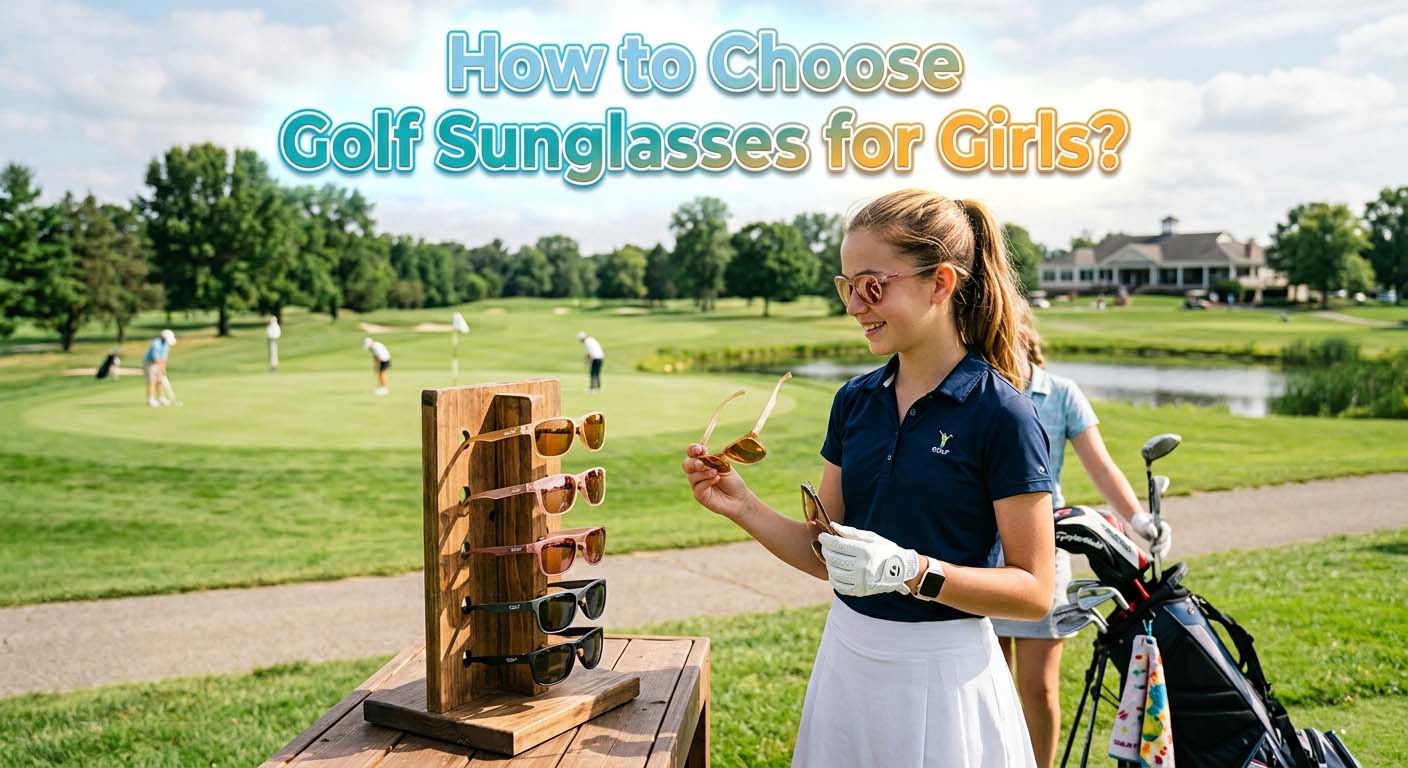
Choosing golf sunglasses for girls is different from picking a pair for a guy or grabbing a random fashion pair off a shelf. The frame has to stay put during a full swing. The lenses have to help you read greens, not just block the sun. And the style has to fit a smaller face without sliding down your nose after a few holes.
This guide walks you through exactly what matters, starting with what most people get wrong: the fit. If your sunglasses shift even a little during your swing, no high-tech lens will save your shot.
The Foundation: Getting Fit Right First
A frame that fits a man’s face will feel loose and unstable on a woman’s face in most cases. Women generally have narrower temple-to-temple widths, lower nose bridges, and smaller overall facial features. The most important number to know is your temple width. It should fall between 125mm and 135mm for most women.
Here is how to measure your temple width at home:
- Place a ruler or a piece of string across your temples, just above your ears.
- Measure the horizontal distance from the outer edge of your left temple to the outer edge of your right temple.
- Write the number down. When you browse frames, check the total frame width printed on the inside of the temple arm.
Why Bridge Width Is the Hidden Problem?
Standard bridges on most golf sunglasses measure 17mm to 18mm. That works for many men but often sits too low on a woman’s nose. When the bridge is too wide, the frame drops, creating a gap above your eyes. That gap lets in glare from above, which is especially bad when you are staring down a long putt.
Look for frames with a bridge width of 14mm to 16mm. Better yet, find a pair with adjustable wire-core nose pads. Wire pads can be bent inward or outward by an optician to match the exact curve of your nose. This is the single best way to stop sunglasses from sliding during a round.
Temple Length and Ponytails
Standard temple arms are usually 135mm to 145mm long. For a smaller face, you want temples that are 130mm to 135mm. Shorter or thicker temples grip better behind your ears. If you wear a ponytail or a hat, make sure the temple arms do not poke into the hat band or create a pressure point behind your ear.
Lens Science for the Golf Swing
Once the fit is right, you need lenses that help you see the course clearly. The golf swing involves a lot of head rotation. Your glasses need to move with you, not fight you.
Frame Wrap and Peripheral Vision
Base curve is the term for how much a lens curves around your face. A 6-base curve is moderate. An 8-base curve wraps tighter. A tighter wrap keeps wind, dust, and peripheral light out. It also helps the frame stay snug on your face during the backswing.
But if the wrap is too tight, it can pinch the sides of your head. Try frames on and mimic your swing. Look over your shoulder at the top of the backswing. If the frame shifts or the temple presses into your skin, that pair is not for you.
Weight and Fatigue
Walking 18 holes takes a toll. Heavy frame materials like metal or thick acetate add weight that can press on your temples by the back nine. Lightweight materials like titanium or Grilamid (a type of nylon) keep the glasses comfortable all day. Look for these materials in the frame description.
Edge Distortion
Thick lenses at the edges can distort your view. This is most noticeable when you are reading a putt from a low angle. A high-quality lens with minimal edge thickness helps you see the true break and slope of the green. Ask about lens index when shopping. A 1.6 index or higher gives thinner edges and less distortion.
Matching Lens Tint to Your Playing Conditions
Lens color is not just for style. Different tints affect how you see contrast, depth, and grain on the course.
| Lens Tint | Best For | Why It Works |
|---|---|---|
| Rose or Copper | Low light, overcast mornings, early evening rounds | Increases green-on-green contrast. Helps you see grain and subtle breaks on the green. |
| Brown or Amber | Medium to bright sunlight | Enhances depth perception. Good for seeing fairway contours and bunker edges. |
| Green or Gray | Very bright, direct sun | Reduces overall brightness without distorting color. Less helpful for reading greens but comfortable for long wear. |
| Photochromic | Changing light throughout the round | Automatically darkens in sun and lightens in shade. A convenient all-rounder but not as sharp as a dedicated tint. |
The Polarized Lens Debate
Polarized lenses are great for cutting glare off water, sand, and car windshields. But they have a downside for golf. They can flatten the visual texture of the green, making it harder to read subtle breaks and slopes. Some pros avoid them for putting. Others use them for driving and switch to clear lenses on the green.
Here is the compromise: choose a polarized lens only if you play mostly on very sunny days with lots of glare. If your course is tree-lined or you play early or late in the day, a non-polarized copper or brown tint is a better choice.
Frame Styles That Perform Through Your Swing
Style matters. But performance comes first. Here is how common frame shapes work for a golf swing.
Aviator Frames
The teardrop shape offers good peripheral vision. They sit low on the nose, which can help with pressure from a hat brim. But the wire bridge can bend over time. Make sure the frame has a secure fit, not just a light hook behind the ears.
Cat-Eye and Oversized Frames
These look great off the course, but they can cause problems during a swing. The large temple area can show up in your peripheral vision when you look over your shoulder. That distraction is enough to throw off your focus. If you love the cat-eye shape, try it on and do a full swing in the store. If you can see the frame in your side vision, pass.
Sport Wrap Styles
This is the most stable option for a powerful swing. Sport wraps use a one-piece front frame that hugs your face. The temples are usually thicker and rubberized for grip. Just check that the frame does not hit your hat brim on the takeaway. If it touches, the glasses will shift, and you will lose focus.
Semi-Rimless and Rimless Options
These are the lightest styles. The lack of a full frame around the lenses reduces weight and gives you a wider field of view. The downside is that they are less durable. If you drop them on a cart path, they are more likely to break than a full-frame style. They work well for casual rounds where you handle them carefully.
The Bridge Fit Problem Most Women Face
This issue deserves its own section because it affects so many women and almost no article mentions it. The bridge is the part of the frame that sits on your nose. For women, the bridge is often too wide or too high, which leads to the glasses resting on your cheek instead of your nose.
When the bridge sits too low, the frame tilts forward. Your eyes look over the top of the lenses instead of through them. That means you get glare from above during your swing. It also means your eyes work harder to stay behind the lens center, causing eye strain by the 15th hole.
Here is how to test bridge fit:
- Put the sunglasses on
- Tilt your head down like you are looking at a putt
- If the glasses slide down, the bridge is too wide
- If you feel pressure on the sides of your nose, the bridge is too narrow
The best fix is to buy frames with adjustable nose pads. Many sport and optical frames let a technician bend the pads to hug your nose shape. That customization stops the sliding problem.
Common Misconceptions About Women’s Golf Eyewear
Misconception: Any polarized lens works for golf
Reality: Polarization can hide the subtle texture of greens. You might miss a small slope that a non-polarized lens would show clearly.
Misconception: Men’s and women’s golf sunglasses are the same, the branding just changes
Reality: Frame width, lens height, and bridge proportions differ even in unisex models. Always measure your temple width first.
Misconception: Expensive lenses are always better for golf
Reality: Golf-specific lenses in the $50 to $150 range often outperform luxury fashion sunglasses that cost four times more. The lens tint and contrast enhancement matter more than the brand name.
Misconception: Transition lenses replace golf-specific sunglasses
Reality: Photochromic lenses take time to adjust between sun and shade. That delay can be noticeable during a fast-moving round. They also may not get dark enough in your car on the drive to the course.
Frequently Asked Questions
Do I need prescription golf sunglasses or can I use contacts with standard sunglasses?
If you wear contacts comfortably, standard non-prescription golf sunglasses work fine. If you prefer not to wear contacts, prescription golf sunglasses are worth the investment. Many online retailers offer prescription options with golf-specific lens tints.
How do I keep sunglasses from fogging up on humid golf mornings?
Look for frames with ventilation channels or small holes cut into the top of the lens. An anti-fog spray applied before the round also helps. Avoid wiping the inside of the lens with your shirt, as that removes the coating.
Can I wear my regular fashion sunglasses for golf if they have UV protection?
Yes, if they fit securely and do not slide during your swing. But you will miss out on contrast-enhancing tints that help you read greens and see fairway contours. The result is a less enjoyable round, not an unplayable one.
What is the best way to clean golf sunglasses between rounds?
Use a microfiber cloth and a lens cleaning solution. Never use paper towels or your shirt. They have tiny abrasive particles that scratch the lens coating. Rinse the lenses under lukewarm water first to remove grit.
Should I buy separate sunglasses for tournaments versus casual rounds?
A single good pair can handle both. If you play tournaments in very different lighting than your casual rounds, a second pair with a different tint might help. But most women find one versatile pair of photochromic or copper-tinted sunglasses works for everything.
How do I prevent sunglasses from scratching when stored in my golf bag?
Use a hard case, not a soft pouch. The hard case protects the lenses from keys, tees, and clubs rattling around. Store the case in a dedicated pocket that does not get crushed.
Are there golf sunglasses designed specifically for women with smaller faces?
Yes. Several brands offer women’s-specific fits with narrower frame widths and lower bridge heights. Look for terms like small fit, petite, or women’s specific in the product description. The frame width listed on the temple will tell you the truth.
Getting the Right Fit Before You Buy
You have the knowledge. Now you need a process. Here is a simple checklist to use when you try on golf sunglasses.
- Measure your temple width at home before you shop
- Check the frame width on the inside of the temple arm (125mm to 135mm is ideal)
- Look for adjustable wire nose pads
- Mimic a full golf swing in the store
- Tilt your head down as if reading a putt
- Check that the frame does not touch your hat brim
- Watch for any cosmetic frame showing in your peripheral vision
Where to Shop for the Best Fit
Big box sporting goods stores carry a wide selection but usually have no one trained to adjust frames. You get to try on what is on the shelf.
Specialty golf retailers often have staff who play golf themselves. They can help you with swing-related fit issues but may carry fewer women’s-specific options.
Optical shops are your best bet for a precise fit. An optician can measure your bridge width, adjust nose pads, and order frames that match your measurements. Even if you do not need prescription lenses, an optical shop can fit you properly in non-prescription sport frames.
Return Policy Considerations
If you buy online, read the return policy before you click purchase. Some online retailers charge restocking fees of 15% to 25% for returns. Others offer free returns within 30 days. Always buy from a site that lets you return for a full refund if the fit is wrong.
Final Recommendation
See an optician who works with sport frames. Even if your vision is perfect, a professional bridge measurement and frame adjustment will prevent the number one problem women face: glasses that slide during the swing. Spend your money on a well-fitted pair with a golf-specific lens tint, not a brand name. Your scorecard will thank you.