
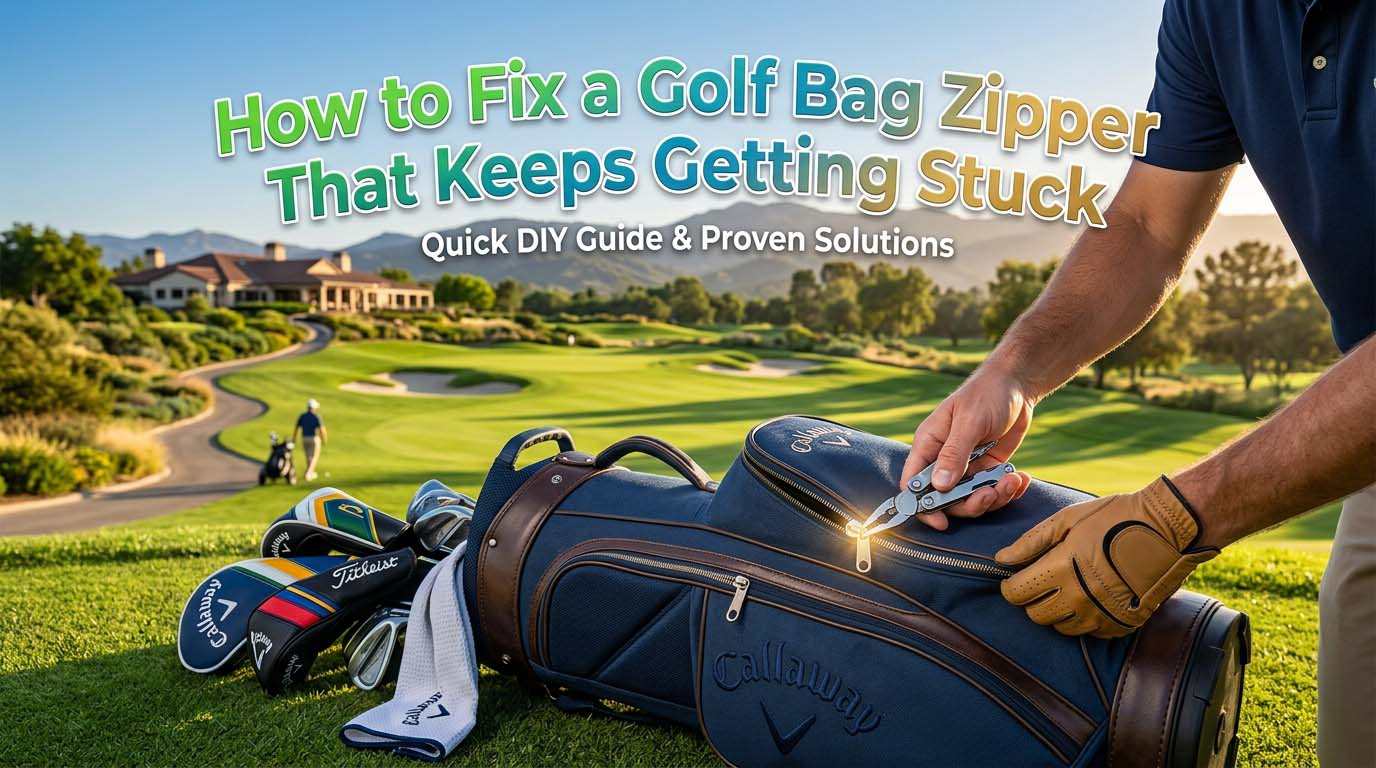
A stuck golf bag zipper always happens at the worst time. You are loading up for a round, and the zipper stops halfway. You pull harder. It does not move. You wonder if you need a new bag.
The answer is almost always no. Most zippers that keep getting stuck have one of two problems: a dirty track or a slightly bent slider. The right fix depends on how the zipper feels when you try to move it. This guide helps you find the cause in ten seconds, then gives you the exact fix for your situation.
Diagnose the Feeling: Is It the Slider or the Track?
Grab the zipper pull and try to move it. Pay attention to how it feels. This tells you everything you need to know.
- Scenario A — The Grind: The zipper moves but scrapes and catches along the way. It sounds rough. This means the slider’s internal channel is slightly bent, pressed too tight against the teeth, or has a tiny burr from daily use.
- Scenario B — The Lock: The zipper will not move at all. It feels solid, like it hit a wall. Something is physically blocking the path, fabric, thread, grass, or sand caught inside the slider or between the teeth.
- Scenario C — The Slippery Slope: The zipper slides easily but the teeth do not close behind it. A gap stays open. The slider is worn out or the teeth are bent out of shape.
Match your feeling to the scenario. Then use the fix for that specific problem.
The First Fix: Clearing the Jam (Scenario B)
If the zipper is locked solid, do not force it. Pulling hard warps the slider and turns an easy fix into a broken zipper.
Look at the slider from both sides. Use a bright light. You are looking for a thread end, a piece of grass, or sand trapped inside the metal channel. Gently work the zipper backward one or two inches by pushing the slider opposite its normal direction. This often releases the trapped object.
If it stays stuck, use a dull toothpick or a pair of tweezers to probe the gap between the slider and the teeth. Pull out anything soft or grainy you find. Once the object is out, the zipper should move freely again.
The Crucial Correction: Reshaping the Slider (Scenario A)
This is the fix most guides skip. A grinding or catching zipper is usually caused by a slider that is slightly too loose or too tight. Sliders are made from soft zinc alloy. They dent, spread, and squeeze over time.
Here is the fix: Take a pair of pliers and grip the sides of the slider, not the top and bottom, just the sides. Squeeze gently, then test the zipper. Does it move more smoothly? If yes, you are done. If it still catches, squeeze a tiny bit more. The goal is to narrow the channel so the slider grips the teeth with even pressure.
The critical warning: Squeeze too hard, and you will lock the zipper forever. One small squeeze, test, then another small squeeze. That is the rhythm.
If the slider is cracked or split at the hinge, you cannot fix it. The slider needs to be replaced. Look for a crack on the narrow bridge where the top of the slider meets the bottom. If you see one, order a replacement slider with the same number printed on the back.
The Maintenance Repair: Lubrication and Track Cleaning (All Scenarios)
Once the zipper moves freely, you need to keep it that way. Dirt and dryness cause the same problem to come back in a few weeks.
Best lubricant for plastic teeth: Graphite powder. If you do not have powder, rub a golf pencil firmly along the teeth. The graphite is dry and does not attract dirt. This works for all golf bag zippers because bags sit on damp grass and pick up sand.
Best lubricant for metal teeth: Silicone spray. It leaves a thin waterproof film that stops rust. Avoid petroleum jelly and candle wax. They melt in the heat of a car trunk and grab every grain of sand on the course.
Clean before you lubricate: Use an old toothbrush to brush out the teeth track. Blow it clean with compressed air or a can of air duster. Then apply the lubricant and work the zipper back and forth five times to spread it evenly.
The Common Mistake That Breaks a Zipper For Good
Here is the reality check. The number one cause of broken golf bag zippers is not poor quality. It is the belief that you should just yank it hard once.
Myth: “If it is stuck, give it one good hard pull.”
Reality: That one pull bends the slider’s internal channel out of shape. Now the zipper will never move smoothly until you reshape the slider with pliers, and if you bend it too far, you break it permanently.
Myth: “WD-40 fixes everything.”
Reality: WD-40 is a solvent. It frees a stuck zipper in the moment but leaves behind a sticky film that turns sand into grinding paste. If you use WD-40, wipe the track completely dry with a cloth afterward and apply graphite or silicone lubricant.
When to admit defeat: If the fabric track itself is torn, not just the zipper teeth, you cannot fix it at home. A torn seam needs professional sewing.
If the teeth are missing large chunks, the zipper must be replaced. But those cases are rare. Most zippers that keep getting stuck just need a cleaning and a tiny squeeze with pliers.
Frequently Asked Questions
Can I use a pencil to fix a stuck zipper?
Yes. Rub the graphite tip of a golf pencil firmly along the teeth on both sides of the track. Then work the slider back and forth. The graphite acts as a dry lubricant that does not attract dirt. This is the best first-step fix for any sticky zipper.
Do I need to remove the whole zipper to fix it?
Rarely. Only remove the zipper if the fabric track is torn or you need to replace the entire zipper unit. Everything else- cleaning, lubricating, and reshaping the slider- is done with the zipper still sewn onto the bag.
Will a new slider fit any zipper?
No. Sliders come in different sizes and tooth types. Check the back of your current slider for a number like #5 or #8. That number tells you the size. Also note whether your zipper uses coil teeth (plastic spirals) or molded teeth (separate plastic nubs). Buy a slider that matches both the number and tooth type.
How can I prevent this from happening again?
Before every round, give the zipper a quick graphite rub. After a wet round, leave the bag open until it dries fully before closing the zipper. Never overstuff the bag; too much weight pushes the zipper track out of alignment. These three habits keep your zipper running smoothly for years.