
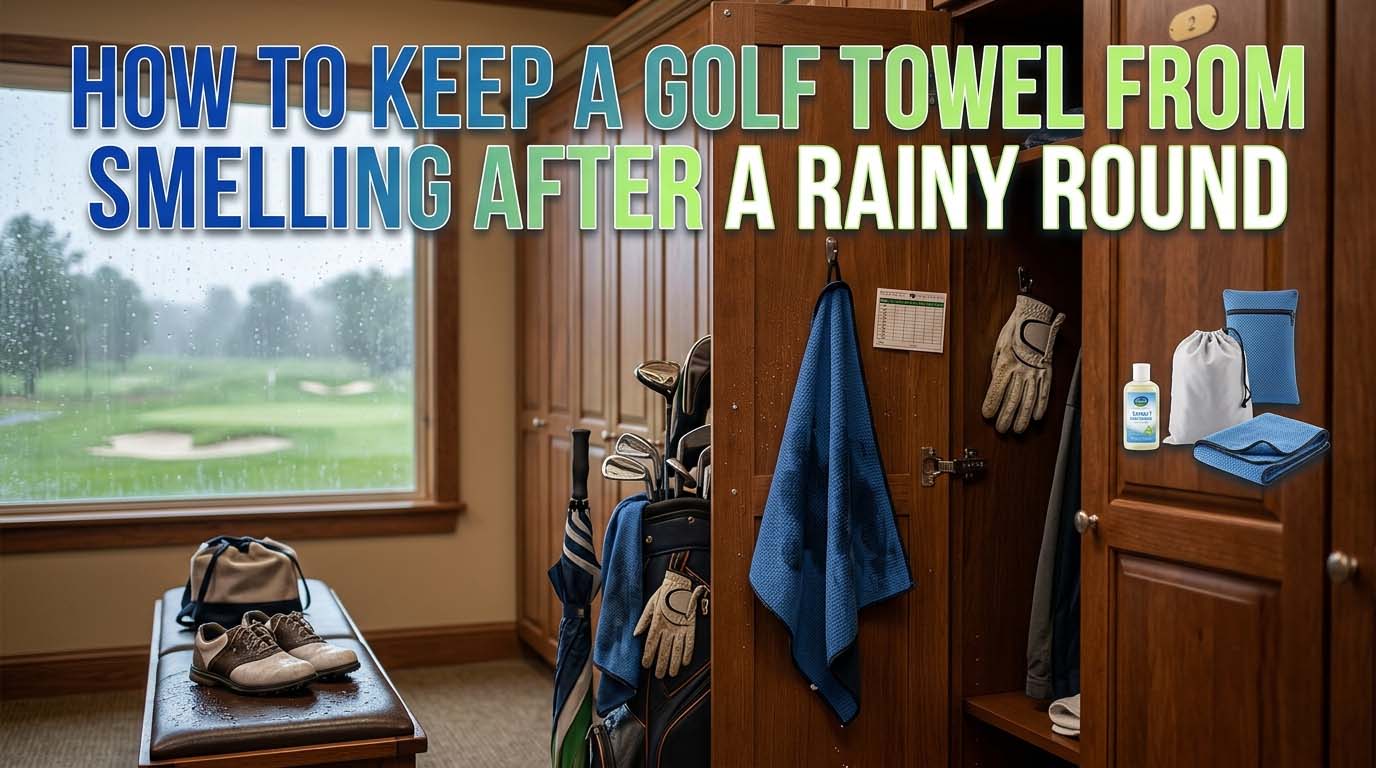
You finish a rainy round, toss your towel in the trunk, and by the next day it smells like a wet dog crawled inside your bag. This happens because bacteria love warm, dark, damp places.
When you leave a soaked towel sealed in a golf bag or car trunk overnight, bacteria from the grass, mud, and your hands multiply fast. The smell is not from the rain itself. It is from the bacteria digesting the organic material left on the towel.
The solution is not better detergent or stronger bleach. It is changing how you handle the towel during and after the round. Here is exactly what works.
Why Wet Towels Smell So Fast
When you play in rain, your towel collects more than water. It picks up grass clippings, soil, sweat, and dead skin cells from your hands and clubs. All of that is food for bacteria. Water alone does not cause odor. It just activates the bacteria that are already on the towel.
Microfiber towels make this worse if you do not dry them fast. Microfiber has thousands of tiny fibers that trap moisture deep inside.
A thick microfiber towel can stay damp in the center for hours or even overnight if folded or wadded up. Cotton towels absorb more water but also hold it longer unless you shake them out and hang them wide open.
The mistake most golfers make is stuffing the wet towel into a pocket or under a rain cover. That seals the moisture in and creates a perfect bacteria breeding ground. Within 12 hours, that towel will stink.
Stop the Smell Before It Starts
The single best thing you can do is never leave a wet towel crumpled in your bag. As soon as the round ends, take it out. Wring it out hard over the grass or a drain. Then shake it open and hang it over the outside of your bag or through a car window for the drive home.
If you are driving home, roll the window down just enough to pinch the towel between the glass and the frame. The moving air will dry it out during the ride. If you cannot do that, lay it flat on the passenger floorboard with the windows cracked. Do not throw it in the trunk.
When you get home, hang the towel on a clothesline or a shower rod. Do not toss it in a laundry basket with dry clothes. That just spreads the bacteria. Let it air dry completely before washing.
On-Course Habits That Make a Difference
During the round, you can slow down bacteria growth without stopping your game. Between shots, give your towel a quick shake to fling off excess water. If you have a magnetic towel, hook it to the outside of your bag where air can hit it, not inside a pocket.
If the towel gets completely soaked from heavy rain, switch to a dry backup towel if you have one. A wet towel that stays wet all round will smell faster than one that gets partially dried by air between holes.
Every few holes, squeeze out the wash pocket or the wettest section. You do not need it bone dry, just less dripping. This cuts the moisture level enough to slow bacteria multiplication.
How to Wash a Smelly Golf Towel?
If your towel already smells, regular detergent often does not fix it. That is because the bacteria and their waste have bonded to the fibers. You need to break that bond, not just mask the odor.
Step 1: Rinse Out the Mud First
Never put a muddy towel straight into the washing machine. The mud contains clay and grit that clogs machine filters and grinds into the fibers. Rinse the towel in cold water in a sink or with a garden hose until the water runs mostly clear. Wring it out.
Step 2: Soak in White Vinegar
Fill a bucket or sink with cold water and add one cup of plain white vinegar. Submerge the towel and let it soak for 30 minutes. The vinegar is acidic enough to kill bacteria and break down the biofilm that traps odor. It will not leave a vinegar smell after the wash.
Do not use bleach. Bleach breaks down microfiber fibers over time and can react with grass residue to create yellow stains. It also does not kill all bacteria in the pores of thick towels.
Step 3: Wash With an Enzyme Detergent
After the vinegar soak, wring out the towel and put it in the washing machine. Use an enzyme-based laundry detergent, not standard detergent.
Enzyme detergents (like those made for sports gear or baby clothes) digest the organic material that bacteria feed on. This removes the food source so the smell does not come back.
Set the machine to warm water, not hot. Hot water can set some stains and shrink cotton towels. Use the normal or heavy-duty cycle. Do not add fabric softener. Fabric softener coats the fibers with a waxy layer that traps moisture and reduces absorbency.
Step 4: Dry Thoroughly
The drying step is just as important as the washing. If you take a clean towel out of the washer but do not dry it fast, bacteria can start growing again while it is damp.
Dry the towel on high heat in a dryer. Make sure it is completely dry, especially the corners and any thick sections like wash pockets or scrub pads. If the center still feels cool or damp, run another cycle. For cotton towels, add a dry towel or a few clean tennis balls to help fluff the fibers and speed drying.
If you air dry, hang the towel flat and open, not folded over a line. Spread it out so both sides get airflow. Turn it over after a few hours.
Choosing a Towel That Resists Smell
Not all golf towels handle moisture the same way. The material matters more than brand or color.
| Towel Type | Drying Speed | Odor Resistance | Best For |
|---|---|---|---|
| Thin microfiber | Fast | Good | Rainy rounds, quick drying |
| Thick microfiber | Slow | Fair | General cleaning, absorbs more water |
| 100% cotton | Slow | Fair | Grip drying, less odor if washed often |
| Terry cloth | Very slow | Poor | Practice sessions, not for rain |
Thin microfiber towels dry fastest because less material holds less water. They are your best bet for rainy rounds. If you prefer a thicker towel for absorbing more water during dry rounds, carry a second thin one specifically for wet weather.
Avoid towels with rubberized backings or sealed edges. Those trap moisture between the fabric and the rubber, and that area rarely dries completely. You will get a sour spot that you cannot wash out.
Three Myths That Keep Towels Smelly
Myth: Bleach kills all odor. Bleach kills surface bacteria but does not penetrate deep into thick fibers. It also destroys microfiber over time, making the towel less effective at trapping dirt. Vinegar and enzyme detergent work better without damaging the fabric.
Myth: Washing in hot water is always best. Hot water can set organic stains like grass and mud, making them harder to remove. It also shrinks cotton towels and degrades elastic edges on some magnetic towels. Warm water with the right detergent cleans just as well.
Myth: Air drying in the sun removes all smell. Sunlight does help kill bacteria, but only on the surface. If the towel is folded or thick, the center stays damp and the bacteria survive. You still need to dry the towel completely, not just until it feels dry on the outside.
How to Store Your Towel to Prevent Odor Recurrence
Even a clean towel can start smelling if you store it wrong. After washing and drying, do not stuff it into a bag pocket where it sits compressed. Roll it loosely or fold it and place it in a breathable pocket, not a sealed one.
If you use a magnetic towel that clips to your bag, leave it hanging between rounds. Do not remove it and toss it in a trunk or garage bin. The airflow around the bag helps keep it fresh.
For towels stored in a locker or car, keep one in a small mesh bag instead of a sealed plastic bag. Mesh allows air circulation so moisture does not build up.
Frequently Asked Questions
Can I spray something on my towel before a rainy round to prevent smell?
Yes. A light spray of isopropyl alcohol (70%) on the towel before the round can help kill bacteria on contact. Do not soak the towel, just mist it until slightly damp. The alcohol evaporates fast and leaves no residue. You can also use a sports gear antimicrobial spray made for gym clothes. Test a small corner first to make sure it does not affect the color.
How often should I replace a golf towel that still smells after washing?
If you wash it correctly with vinegar and enzyme detergent and dry it fully, but the smell persists, the bacteria have bonded permanently into the fibers. This usually happens after 50 to 60 rounds or one heavy rainy season. Replace it. A towel that smells even after proper washing will transfer the odor to your hands and grips.
Is it safe to wash a golf towel with my regular clothes?
It is safe only if the towel is not muddy and you wash it on a cycle that uses enough water. Muddy towels should be rinsed and washed separately. Wet towels from a rainy round can be added to a regular load, but skip the fabric softener. The main risk is that small fibers from microfiber towels shed during washing and can stick to cotton clothes.
Does the magnet on a magnetic towel cause rust or smell?
High-quality magnetic towels use sealed magnets coated in rubber or epoxy. They do not rust. If your towel has a magnet pocket, that pocket can trap moisture if you do not dry it separately. After washing, pull the magnet out of the pocket (if removable) and dry both the pocket and the magnet separately. If the magnet is sewn in, squeeze the pocket dry and lay the towel flat to dry so the pocket gets airflow.