
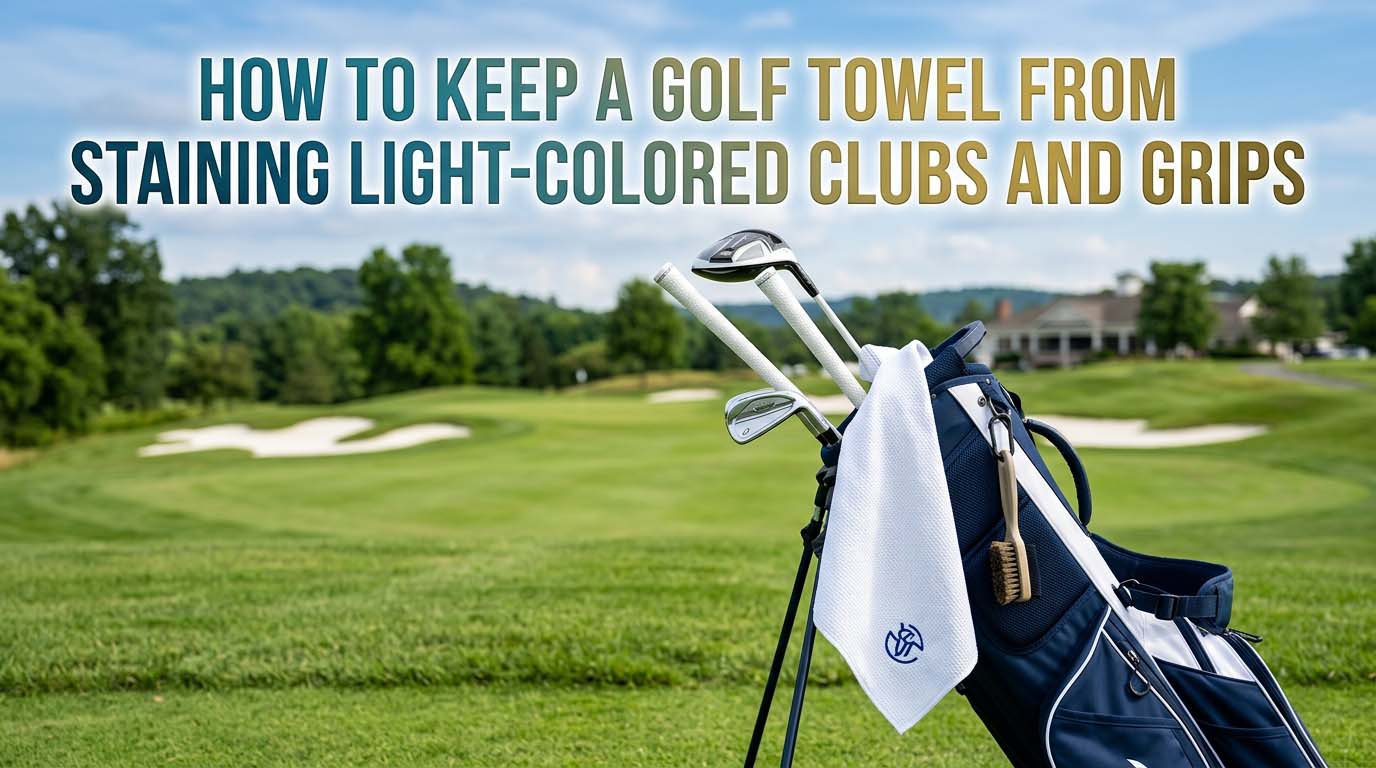
The easiest way to keep a golf towel from staining your light-colored clubs and grips is to use a white, undyed microfiber towel that has been washed at least once without fabric softener. This one change stops most staining before it starts.
Staining happens for two reasons. Either the dye in the towel transfers to the club or grip, or leftover chemicals on the towel react with the surface. Both are easy to prevent once you know what to look for. This guide covers exactly what causes the problem, how to pick the right towel, and what to do if a stain has already appeared.
Why Golf Towels Leave Stains on Light-Colored Clubs and Grips
There are two separate ways a towel can stain your equipment. Knowing the difference helps you fix the right problem.
Dye bleeding from the towel fibers. This is the most common cause. New towels, especially bright or dark colored ones, often release loose dye when they get wet. The moisture, combined with pressure from wiping, pushes that dye onto the grip rubber or club finish. Cheap towels with poor dye quality are the worst offenders.
Chemical residue transfer. Fabric softener, dryer sheets, bleach, or leftover detergent can sit in the towel fibers even after washing. When you wipe a damp towel across a light-colored grip, those chemicals leave a stain that looks just like dye. Sweat and grass residue trapped in a used towel can also cause discoloration.
Selecting the Right Towel to Prevent Staining
Not all towels are created equal. Here is what to look for when buying a towel for light-colored equipment.
Fiber type matters. Microfiber is the best choice. It is less likely to bleed dye than cotton, and it picks up dirt without needing harsh scrubbing. Cotton towels, especially thick terry cloth ones, hold onto moisture and chemicals longer, which increases the chance of staining.
Color is critical. White or undyed towels are the safest option. If you want a colored towel, test it first. Dampen a small corner of the towel and press it firmly against a white paper towel. If any color transfers, do not use that towel on light-colored clubs or grips.
Weight and weave. A medium-weight microfiber towel with a tight weave works best. Loose, fluffy towels trap more dirt and detergent. Thin, cheap towels may not absorb enough water to clean effectively, causing you to scrub harder and increase stain risk.
Comparing Common Towel Types
| Towel Type | Stain Risk | Best Use |
|---|---|---|
| White microfiber | Low | Everyday use on light grips and clubs |
| Colored microfiber (tested) | Medium | Only if dye-fast and pre-washed |
| Cotton terry (white) | Medium | Drying after cleaning, avoid wet wiping |
| Cotton terry (colored) | High | Avoid completely for light equipment |
| Chenille (any color) | High | Not recommended for grips or clubheads |
How to Prepare and Maintain Your Golf Towel for No-Stain Performance
A new towel straight from the package is the most likely to stain. Follow these steps before you ever use it on your clubs.
Pre-wash new towels. Wash new towels separately in hot water. Use a dye-catching sheet or a color-catching laundry product to trap any loose dye before it reaches your clubs.
Skip the fabric softener. Fabric softener leaves a waxy coating on towel fibers. That coating can transfer to grips and leave a sticky, discolored residue. It also reduces the towel’s ability to absorb water.
Avoid bleach. Bleach can yellow light-colored grips and degrade rubber over time. If you need to whiten a towel, use oxygen-based bleach instead.
Wash towels separately. Do not wash your golf towels with clothes that have heavy detergent, bleach, or fabric softener. Use a mild, dye-free detergent.
Dry on low heat or air dry. High heat can set stains into the towel fibers and make them more likely to transfer later. Air drying or low heat is safer.
Ongoing Towel Care
Wash after every few uses. A towel that has been used to wipe sweat or grass off grips needs to be cleaned before it is used again. Dirty towels can stain just as easily as new ones.
Rotate sections. During a round, fold your towel so you are always using a clean, dry section. A section that has already picked up dirt or moisture will transfer it to the next surface you wipe.
Cleaning Tactics That Avoid Transferring Stains to Clubs and Grips
How you use the towel matters as much as the towel itself.
Dampen, do not soak. A slightly damp towel cleans better than a soaking wet one. Excess water makes dye and chemicals more likely to migrate onto the club or grip.
Pat and wipe gently. Scrubbing hard pushes stain-causing residue into the surface. A gentle wipe or pat is usually enough for light dirt.
Change towels when they get dirty. If your towel looks visibly soiled, switch to a clean one. Using a dirty towel is the fastest way to transfer stains.
Avoid leaving wet towels in a hot car. Heat speeds up chemical reactions and dye migration. A wet towel sitting in a hot trunk or golf bag is a ticking time bomb for your grips.
What to Do If a Towel Has Already Stained Your Clubs or Grips
If the damage is already done, do not panic. Most towel-caused stains can be removed without harming the club or grip.
For grip rubber. Mix one part isopropyl alcohol with three parts water. Dampen a clean cloth with the solution and gently rub the stain. This works on both dye and residue stains. For tougher marks, use a magic eraser sponge, but test it on a small area first. Do not soak the grip, as alcohol can dry out rubber over time.
For metal clubheads. Use a non-abrasive metal polish or a paste made from baking soda and water. Apply with a soft cloth and rub gently. Rinse and dry immediately. Avoid vinegar or lemon juice on clear-coated metals, as acid can damage the finish.
For painted or clear-coated surfaces. Stick to warm water and mild dish soap on a microfiber cloth. Do not scrub hard. If the stain is from dye, it may fade after a few cleanings.
Myths About Towel Color and Club Staining
Several common beliefs about towel stains are wrong. Clearing these up helps you avoid future problems.
Myth: Only dark towels stain. White towels can also cause stains. The problem is not the color of the towel, but the chemicals and dirt trapped in it. A white towel with fabric softener residue can leave yellow marks on light grips.
Myth: It is always the towel’s fault. Sometimes the stain comes from your hands. Sweat, sunscreen, and hand lotion can build up on grips and then get smeared by a dry towel. The towel just moves the residue around.
Myth: Using a different towel fixes everything. If you switch towels but do not change your cleaning habits, the problem will come back. You have to address the root cause, whether that is dye from a colored towel, chemical residue, or dirty washing practices.
Frequently Asked Questions
Can I use baby wipes or pre-moistened golf towel wipes without worrying about staining?
Pre-moistened wipes designed for golf grips are generally safe, but baby wipes often contain lotions and oils that leave a residue. That residue can attract dirt and cause discoloration over time. Stick to wipes made specifically for golf equipment.
Should I treat my golf towel with a fabric guard or water repellent to prevent staining?
No. Spraying a towel with a water repellent adds a chemical layer that can transfer to your grips. It also reduces the towel’s ability to absorb water, making it less effective at cleaning. A clean, untreated towel is the safest choice.
How often should I replace golf towels that I use on light-colored equipment?
Replace a towel when it starts to show visible wear, fraying, or discoloration that does not wash out. For a white microfiber towel used regularly, that is usually every three to six months. If a towel has been used heavily and washed many times, its fibers can break down and start holding onto dirt.
Will using a white towel with a colored logo still risk staining my grips?
It depends on the quality of the logo print. Some logos are printed with cheap dyes that can bleed when wet. Test the logo the same way you test the towel color. Dampen the logo area and press it against a white paper towel. If any color transfers, avoid using that section on your grips.