
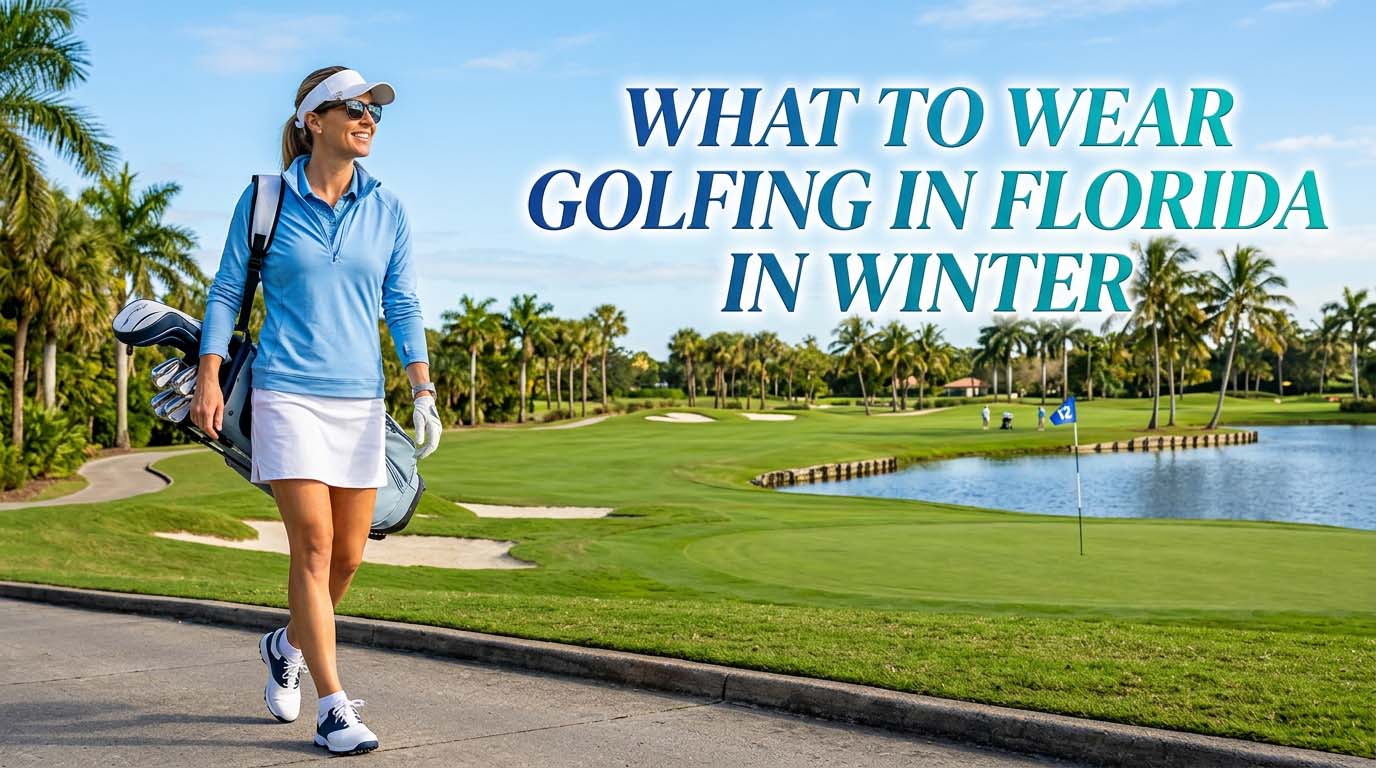
If you have a winter tee time booked in Florida, you are in for a treat. The weather is mild, the courses are green, and the crowds are thinner than in summer. But packing for that round is tricky. You will walk off the first tee feeling cold, and by the back nine, you wish you had worn shorts.
The secret to getting it right is understanding that Florida winter is a two-seasons-in-one-round experience. The core rule is simple: layering is essential, and cotton is your enemy.
For winter golf in Florida, you need a moisture-wicking base layer, a lightweight mid-layer like a quarter-zip or a vest, and a windproof outer shell that you can remove. Plan to start your round wearing the mid-layer and shell, then shed layers as the sun warms up the course.
Why Florida Winter Feels Different Than Anywhere Else
Most people picture Florida as a forever-summer destination. That is true for the heat and humidity, but not for the temperature. From December through February, Florida sits in a weather pattern where cold fronts push through every five to seven days. This creates a cycle of cool mornings, mild afternoons, and evenings that cool off fast.
In Orlando or Winter Park, a typical January morning will start around 45 to 50 degrees Fahrenheit. By noon, that number climbs to 68 or 72 degrees. The humidity during winter is low, which makes the air feel drier and a little sharper than you might expect. The wind is often the bigger problem.
A steady 10 to 15 mile per hour breeze can make a 55-degree morning feel like 45 degrees, especially if you are standing on an open fairway waiting for the group ahead.
Rain is less common than in summer, but it happens. Winter fronts bring short, drizzly showers that last for 15 minutes and then clear up.
The sun also stays strong. The UV index in Florida is moderate to high even in January. You can get sunburned on a 65-degree day if you are out for four hours.
How to Layer for a Florida Winter Round
The layering system for Florida is different from what you use in northern states. You do not need heavy insulation or thick down jackets. You need breathable, lightweight pieces that trap warmth without trapping sweat.
Base Layer: The Skin You Wear
Start with a moisture-wicking base layer. If your tee time is before 9 a.m., choose a long-sleeve option made of merino wool or polyester. Avoid cotton at all costs. Cotton absorbs sweat and stays wet, which will make you cold as soon as the breeze hits you.
Merino wool is ideal because it manages moisture, resists odor, and feels soft against your skin. Polyester or nylon blends also work and cost less.
For a late morning or early afternoon round, a short-sleeve performance polo can serve as your base layer, as long as you have a mid-layer ready.
Mid-Layer: The Insulation You Can Shed
This is the piece you wear from the first tee until the sun gets high enough to warm things up. A lightweight quarter-zip pullover or a sleeveless vest works best. Do not wear a bulky fleece or a thick sweater.
You want something that traps heat but does not restrict your swing. A quarter-zip made of a polyester-spandex blend or a light merino sweater is a smart choice.
If you run cold, go with a vest. It keeps your core warm while leaving your arms free to swing. You can remove it and stuff it into your golf bag without taking up much space.
Outer Shell: The Wind and Mist Barrier
A windproof jacket is the most important piece of clothing you can bring. Wind cuts through most golf shirts and sweaters, making you feel colder than the temperature suggests.
A thin, packable windshirt or a softshell jacket that blocks the wind is perfect. Look for something with a DWR (durable water repellent) finish to handle drizzle.
You do not need a heavy rain suit for typical Florida winter conditions. A fully waterproof jacket is overkill unless the forecast calls for steady rain. A windshell is lighter, breathes better, and can be taken on and off between holes.
What to Wear on Top and Bottom
Shirts and Tops
Stick with performance polos. They are breathable, dry quickly, and look proper on any course. In the morning, wear a long sleeve base layer underneath your polo. As it warms up, you can simply remove the outer layers and keep the polo.
Golf-specific hoodies are becoming more common on public courses. Look for one with a mock neck and a quarter-zip. Avoid heavy cotton hoodies because they trap moisture and violate dress codes at private clubs.
Pants and Shorts
This is where most golfers make a mistake. They either wear heavy denim jeans, which are banned at most courses, or they wear cargo shorts that look sloppy.
For winter golf, chino-style golf pants made of a stretch polyester blend are the best choice. They look sharp, move with your swing, and handle temperature swings well. If you prefer shorts, wear them when the temperature is above 60 degrees and your tee time is after 10 a.m. Pair them with compression tights or knee-high socks if you want extra warmth on a cooler morning.
Golf joggers are also a good option. They are tapered, comfortable, and work well with spikeless shoes.
Shoes and Socks
Morning dew is a constant in Florida winter. The grass stays wet until the sun dries it out. Spikeless golf shoes with a waterproof membrane, like Gore-Tex, are ideal. They keep your feet dry without compromising grip. Avoid traditional metal spikes unless the course requires them. They dig into wet grass and make a mess.
Wear a medium weight merino or synthetic sock. A thick winter sock will make your feet sweat as the day warms up. A thin sock will leave you cold on the first tee.
Dress Code Reality Check for Florida Courses
Florida golf courses are generally relaxed, but there are rules you must know before you pack. The standard dress code for most courses, including public ones like Winter Park Golf Course, requires a collared shirt, no denim, and no metal spikes.
Public Municipal Courses
Courses like Winter Park Golf Course (WP9) and Winter Park Pines are casual. You can wear shorts and a polo. The pro shop usually sells hats and gloves, but they enforce the no-denim rule. Some munis allow golf hoodies, but it is safer to bring a quarter-zip.
Resort and Private Clubs
Resort courses such as those in the Orlando area are stricter. They often require trousers for men and prohibit shorts after 5 p.m. Private clubs may also enforce a jacket rule in the dining room. If you plan to play multiple types of courses, pack one pair of lightweight golf pants and one pair of shorts. You will be safe in any situation.
Sun Protection Does Not Take a Winter Break
One of the most overlooked aspects of Florida winter golf is sun exposure. The UV index in December and January still hits moderate levels. When you are on the course for four hours, the sun adds up, especially on the back nine when the clouds clear.
Wear a broad-spectrum sunscreen with SPF 30 or higher on all exposed skin. Put it on before you leave the parking lot. Polarized sunglasses are a must for reading putts and blocking glare off wet fairways. A wide-brim hat offers better protection than a baseball cap, but a cap works if you prefer it.
Many golfers skip sunscreen on cloudy winter days. That is a mistake. Clouds block visible light, not UV rays. You will still burn.
Handling the Temperature Rollercoaster
Here is a real-world example of how a typical Florida winter round plays out in Orlando.
If your tee time is at 7 a.m. in December, expect the temperature to be around 48 degrees. By hole 4, around 7:30 a.m., it has warmed to 52 degrees. By hole 9, about 8:30 a.m., it is 58 degrees. By the back nine, around 9:30 a.m., it hits 65 degrees. You will start in a long sleeve base layer, a vest, and a windshirt. By hole 5, you remove the windshirt. By hole 10, the vest comes off. By the last few holes, you might unzip the base layer.
If you dress in a single heavy layer, you will be miserable after the first hour. The ability to shed layers is everything.
Common Mistakes and Myths
Myth: Florida winter is always shorts weather.
This is false. Early mornings are cold, and wind makes it worse. Pack pants.
Myth: A heavy jacket keeps you warm.
A heavy jacket traps heat and sweat. Once you start walking and swinging, you will overheat. A lightweight windproof shell is better.
Mistake: Wearing cotton underwear or cotton socks.
Cotton holds moisture. You will feel damp and cold. Use synthetic or merino wool.
Mistake: Forgetting gloves.
Your hands get cold on the first few holes. A leather glove for the top hand helps. If the grass is wet, switch to a synthetic rain glove for extra grip and warmth.
Packing Checklist for Florida Winter Golf
Here is a concise list of what to bring in your golf bag for a winter round in Florida.
- Base layers: One long sleeve and one short sleeve performance polo.
- Mid-layer: A lightweight quarter-zip or a sleeveless vest.
- Outer shell: A packable windproof jacket or softshell.
- Bottoms: One pair of golf pants and one pair of shorts.
- Shoes: Spikeless, waterproof golf shoes.
- Socks: Two pairs of medium-weight merino or synthetic socks.
- Gloves: One leather glove and one synthetic rain glove.
- Headwear: A wide-brim hat or baseball cap, plus a thin merino beanie for early mornings.
- Sun protection: Broad-spectrum SPF 30+ sunscreen and polarized sunglasses.
- Extras: A small umbrella for drizzle and a towel for morning dew.
Frequently Asked Questions
Can I wear shorts for winter golf in Florida?
Yes, if the temperature is above 60 degrees and the course allows it. For early rounds, pack convertible pants or wear shorts with compression tights underneath.
What type of golf glove works best in Florida winter?
A leather glove for dry, cool mornings, but switch to a synthetic rain glove if dew or drizzle is present. Consider wearing two gloves for extra warmth.
Do I need a waterproof jacket for Florida winter?
Not always. A lightweight, breathable rain jacket is recommended because winter fronts can bring short showers. A packable windshell usually suffices for light mist.
What shoes are best for winter golf in Florida?
Spikeless golf shoes with a waterproof membrane, such as Gore-Tex, are ideal due to morning dew and occasional wet grass. Avoid traditional spikes unless the course requires them.
Is it appropriate to wear a hoodie on the course?
At most Florida public courses, a golf-specific hoodie with a mock neck and quarter-zip is acceptable. However, some private clubs restrict hoodies. A quarter-zip sweater is a safer choice.
How do I handle the wind in Florida winter?
Wind is more problematic than cold. A windproof vest or a mid-layer with wind-blocking material keeps your core warm without restricting your swing.
Can I wear a winter beanie?
Yes, for early morning rounds. Choose a thin merino wool beanie that fits under your hat. Remove it once the sun warms up.