
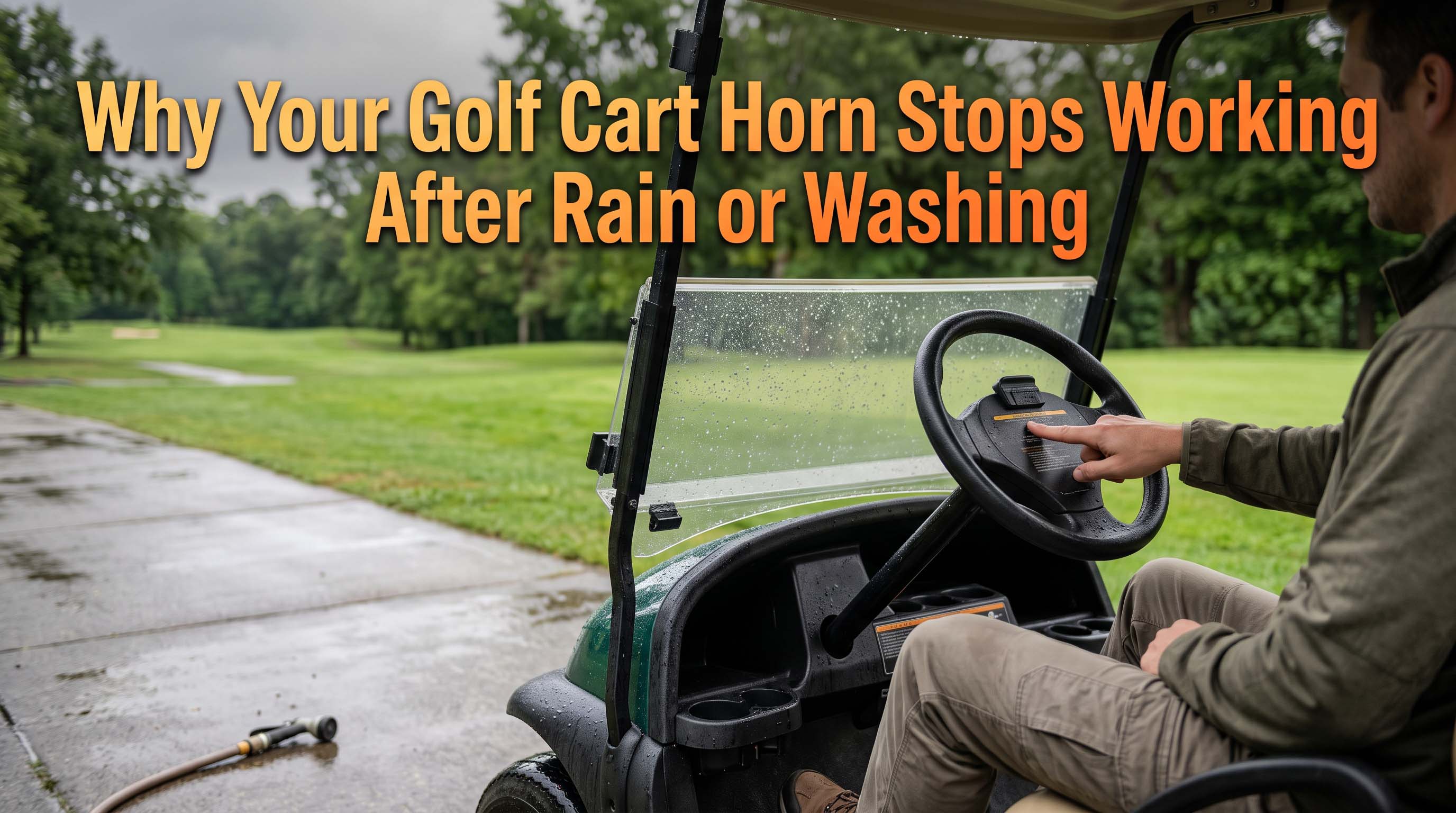
Your golf cart horn not working after rain or washing almost always comes down to one thing: water found a way into the electrical circuit that feeds the horn. The horn unit sits low on the cart, the wire connectors are rarely sealed, and the ground point is bare metal.
When water touches any of those parts, the horn can go completely silent, sound weak and muffled, or work on and off.
The good news is that most of these failures are temporary and cost nothing to fix once the system dries out. The exact repair depends on one thing: which symptom you are seeing.
| Horn Symptom | Most Likely Cause | What Happens Next |
|---|---|---|
| No sound at all | Blown fuse, failed relay, or dead ground | May clear when dry; may need a new fuse |
| Weak or muffled sound | Water inside the horn unit | Usually clears when dry; horn may need sealing |
| Intermittent sound | Corroded or loose connector | Will get worse over time; needs cleaning and sealing |
| Failed after rain | Passive water entry through cracks and seams | Usually temporary |
| Failed after pressure washing | Water forced past seals | May need disassembly and drying |
Why Water Breaks a Golf Cart Horn Circuit
Water does two things to an electrical circuit. It creates a path for electricity to leak where it should not go, and it starts corrosion on bare metal. The horn circuit is small and simple, so even a small amount of moisture can change how it behaves.
A few drops between the switch contacts in the horn button can short the button, which makes the horn either stay silent or stay stuck on. A thin film of water on a corroded ground bolt adds resistance, which drops the voltage below what the horn needs to make sound. Water inside the horn itself stops the disc that vibrates, which is why the tone comes out weak. None of this needs a flood. A damp connector is enough.
Rain and Pressure Washing Are Two Different Attacks
Rain falls gently and at low pressure. It runs down the body panels, finds small gaps, and drifts through seams. A cart parked outside for years will take in some water this way, but the amount is small and usually evaporates before it does harm.
A pressure washer is a completely different attack. It pushes water at high speed and forces it past seals that were designed only to shed rain. The charge port, the horn unit, the switch seams, and the wiring connectors can all be flooded by a single careless pass with a pressure wand.
This difference changes how you read the problem. If the horn died after a normal storm, water likely seeped into a connector or the horn opening. If the horn is not working after a wash, assume water was pushed into a sealed component. That kind of failure takes longer to dry and is more likely to leave damage behind.
| Exposure | How Water Behaves | Typical Result |
|---|---|---|
| Rain | Falls gently, finds gaps, evaporates | Small moisture, usually temporary |
| Pressure washing | Forced past seals and gaskets | Flooded connectors and horn, often permanent |
Every Place Water Can Get Into the Horn Circuit
The entire golf cart horn electrical system has six parts. Water can enter each one in a different way, and each entry point leaves a different clue. Knowing where these parts sit on your cart turns a scary electrical problem into a simple visual check.
The Horn Unit
The horn is a small round or cylindrical part mounted low, usually behind the front bumper or under the dash. On Yamaha carts it sits near the front passenger side. On Club Car and EZGO models it is usually beneath the dash on the driver’s side. Because it sits low, it catches splash and spray from the wheels. Water gets in through the gap around the vibrating disc. When it does, the horn sounds weak, muffled, or clicks instead of honking.
The Horn Button
The button sits in a hole in the dash or on the steering column. The seam between the button and the dash is a natural entry point for water that runs down the windshield or the roof. Moisture in the button can make the horn silent, or it can short the switch and make the horn stick on until the water dries.
The Relay and Fuse
These live in the electrical compartment under the seat or behind the dash. They are protected from direct rain, but water can drip down the wiring harness and pool inside the connector housings. If the fuse is blown or the relay is wet, the horn gets no power at all and stays completely silent.
The Wiring Connectors
The two-prong flat connectors used on Yamaha, Club Car, and EZGO carts are unsealed by design. Water gets inside the plastic housing and sits against the metal blade. Corrosion starts where the blade meets the wire. This is the number one cause of an intermittent horn — one that works sometimes and refuses to work other times.
The Ground Point
The horn’s ground wire is bolted to a bare metal spot on the frame. This bolt is exposed to everything the wheels throw up. Corrosion grows on the frame contact surface where you cannot see it. A bad ground mimics a dead fuse: the horn is silent, the fuse is fine, and the problem stays hidden until you unbolt the wire and see the green or white crust underneath.
The Battery Terminals
The battery is the sixth place to check. Corroded terminals drop the voltage to the whole cart, not just the horn. If the horn sounds weak and the lights are dim at the same time, clean the battery posts first before touching anything else in the circuit.
How to Diagnose a Golf Cart Horn Not Working After Rain or Washing
Before you buy anything, look at the symptom and match it to one of the four patterns below. The pattern tells you exactly where to look.
The Horn Is Completely Silent
Silence usually means the power path is broken. Work through these steps in order.
- Let the cart dry for 24 hours. Many silent horns recover on their own once the moisture evaporates. Park the cart under cover, open the seat, and leave the electrical compartment open to air.
- Find and check the fuse. Look in the electrical compartment under the seat or behind the dash. Pull the horn fuse and hold it up to the light. A broken metal strip inside means it is blown. Replace it with a fuse of the same amp rating.
- Test the horn button. Unplug the two wires from the back of the button and touch the exposed terminals together with a short piece of wire. If the horn sounds, the button is the problem. If not, move on.
- Test the horn directly. Disconnect the horn from the wiring harness. Connect the horn’s two terminals straight to a 12-volt battery with short jumper wires. If it honks, the horn is fine and the fault is in the wiring. If it stays silent, the horn itself is dead.
- Check the ground bolt. In my experience, this is the most common cause of a silent horn after water exposure, and the last thing anyone checks. Unbolt the ground wire from the frame, sand the contact area until the metal is shiny, then bolt it back down tight.
The Horn Is Weak or Muffled
A weak horn means water is inside the horn unit itself. Skip the fuse and the button entirely.
- Remove the horn from its bracket.
- Shake it gently to drain water out of the opening.
- Let it dry face-down for 24 hours.
- Reconnect it and test it.
If the tone is still weak after drying, the water left mineral deposits on the vibrating disc. Cleaning inside a sealed horn rarely works, so plan to replace it.
The Horn Is Intermittent
An intermittent horn — works now, fails later, comes back — is almost always a corroded connector, not a dead horn. Water got into a two-prong plug and the connection is failing under load.
- Wait for the cart to dry completely.
- Unplug each connector in the horn circuit one by one.
- Spray both sides with electrical contact cleaner.
- Let them dry, then plug them back in firmly.
- Test the horn. If it sounds consistent, squeeze dielectric grease into the connector to keep moisture out.
The Horn Fails Only in Humid Weather
If the horn works all summer and dies every time the air gets heavy with moisture, water is trapped somewhere in the circuit and never fully evaporates. Connector housings can hold water like a cup. The fix is the same as for an intermittent horn, but you must seal the connectors after cleaning, or the moisture comes back. In some cases, replacing the horn unit is the only permanent cure.
How to Fix a Water-Damaged Golf Cart Horn
Once you find the failure point, the repair is usually quick. I have watched people replace a brand-new horn only to discover the real fault was a corroded ground bolt ten inches away. Most fixes take under an hour and cost very little.
Clean the Corroded Connectors
Disconnect the battery before touching any wiring. Unplug the corroded connectors and spray both sides with electrical contact cleaner. This solvent removes the corrosion and leaves the metal clean. Do not use WD-40 for this job. It is a lubricant, not a cleaner, and it can hide corrosion that keeps growing underneath.
After the cleaner dries, squeeze dielectric grease into the connector and plug it back together. The grease seals out moisture without blocking the flow of electricity.
Dry Out or Replace the Horn Unit
If water got inside the horn, remove it, drain it, and let it dry face-down for a full day. Many horns come back to life this way. If the tone stays weak or the horn clicks instead of honking, replace it. A standard 12-volt automotive horn is a direct fit and costs between $15 and $40 at any auto parts store. A dealer will charge $50 to $100 with labor, so doing it yourself is worth the 20 minutes.
When to Call a Dealer
Call a dealer if multiple electrical systems failed in the same rain — horn and lights, or horn and wipers. When several circuits die together, the problem is upstream: the main fuse, the controller, or the battery connections. Replacing the horn will not help if the shared power source is still wet or damaged. Also call a dealer if you have tested everything in this article and the horn still does not work. At that point, the fault is likely a broken wire inside the harness, which needs a wiring diagram and a multimeter to trace.
A Horn That Works Again the Next Morning Is Still at Risk
This is the most common trap in this entire repair. The horn dies after rain, you wait overnight, and it sounds fine the next morning. The relief is real — the horn was only wet, not destroyed. But the water already started corrosion on the bare metal inside the connector.
The horn may work for weeks, then fail again without warning on a dry day. That is why you should still unplug the connectors, clean them, and seal them with dielectric grease even after the horn recovers. A temporary recovery is not a repair. It is a warning.
How to Keep the Horn Working After Every Rain and Wash
Prevention takes less time than the repair itself. These five habits stop water from ever reaching the horn circuit.
Five Habits That Keep Water Out of the Horn Circuit
- Wash the cart the right way. Use a garden hose at low pressure, not a pressure washer. Rinse from the top down so water runs off the body instead of being forced into seams. Never aim a stream at the dash, the horn area behind the bumper, or the electrical compartment under the seat. Clean those areas with a damp cloth instead.
- Seal every connector you touched. Any connector that has ever been wet needs protection. Apply dielectric grease to the blades before plugging in, then wrap the outside with silicone tape or a zip-tie connector seal. This takes five minutes and turns a water-sensitive connection into a sealed one.
- Keep the ground bolt clean. Once a year, unbolt the horn’s ground wire, sand the frame contact area, and reattach it with a thin coat of dielectric grease. A clean ground point is the cheapest insurance against the silent-horn failure that confuses most owners.
- Consider a marine horn. If your cart lives outdoors or you wash it regularly, upgrade to a 12-volt marine horn. It is a direct electrical replacement, it is built to shed water, and it is the single most effective permanent fix for this problem. The FAQ below has the details.
- Store under cover when you can. A roof or a fitted breathable cover keeps the worst of the rain off the dash and the connectors. If the cart gets wet anyway, leave the seat open for an hour so the electrical compartment can dry instead of trapping humidity.
Frequently Asked Questions
Where is the horn physically located on a golf cart?
Behind the front bumper or under the dashboard, usually low on the vehicle. On Yamaha carts it sits near the front passenger side. On Club Car and EZGO it is typically beneath the dash on the driver’s side. It is a small cylindrical or disc-shaped unit with two wires.
Can I use WD-40 to fix the electrical connections?
No. WD-40 is a water-displacing lubricant, not a contact cleaner. Use electrical contact cleaner to remove corrosion, then apply dielectric grease to protect the clean connection from future moisture. WD-40 can make a corroded connector work again for a short time while leaving the corrosive residue underneath.
How much does a golf cart horn replacement cost?
The horn itself is a standard 12-volt automotive part, typically $15 to $40 at an auto parts store or golf cart dealer. If a dealer does the work, labor brings the total to about $50 to $100. A DIY replacement takes about 20 minutes with a screwdriver and a socket set.
Why does the horn sound weak or distorted only after washing?
Water enters the horn through the gap around the vibrating disc. The trapped water muffles the vibration, which produces a weak, distorted, or clicking tone. The horn usually recovers as the water evaporates, but repeated wetting leaves mineral deposits that slowly degrade the sound.
Can I upgrade to a waterproof marine horn on my golf cart?
Yes. A 12-volt marine horn is a direct electrical replacement for a golf cart horn, and it is designed to shed water far more aggressively than an automotive horn. This is the best permanent fix for carts stored outdoors or washed regularly. Mount it in the same bracket, connect the same two wires, and it will outlast the rest of the cart’s electrical system.
If the horn died from the same rain that killed my lights, is it still just the horn?
No. If multiple electrical systems failed in the same event, the problem is upstream — the main fuse, the controller, or the battery connections. Diagnose the shared power source before replacing the horn, or the new horn will fail the same way.
A golf cart horn not working after rain or washing is one of the easiest electrical problems to solve once you know where to look. Let the cart dry, check the fuse, test the horn, clean the connectors, and seal everything before the next storm. In most cases, the repair costs nothing and takes less than an hour. The only real mistake is ignoring a horn that came back to life on its own — clean and seal it anyway, and it will keep working through every wash and downpour to come.