
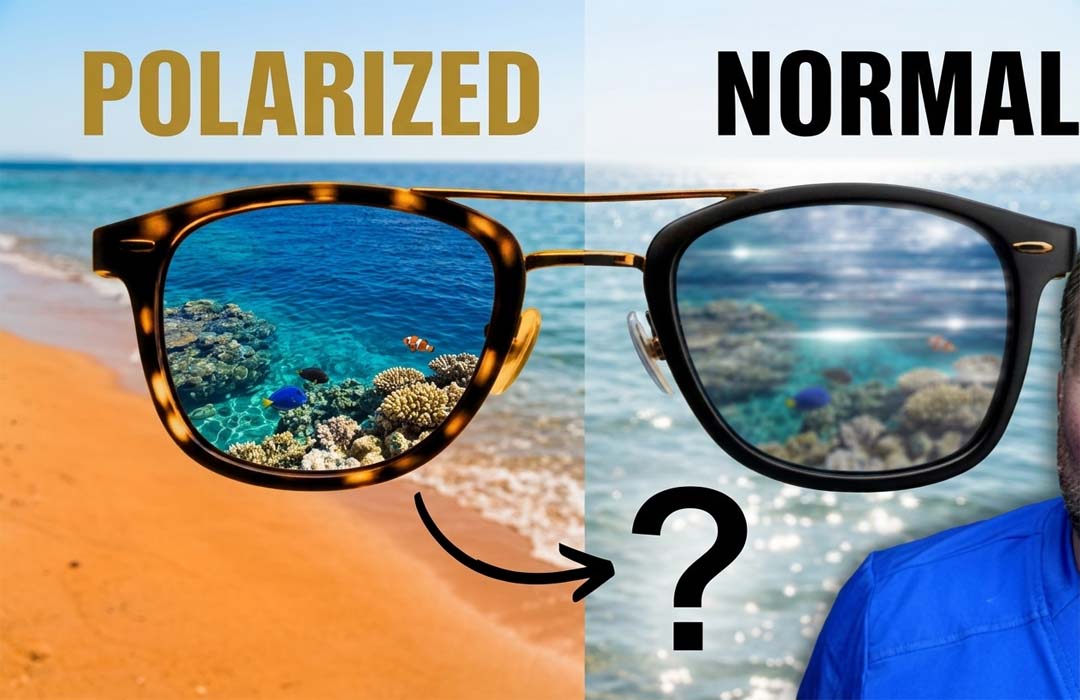
I learned the hard way that not all sunglasses are made for golf. I bought a nice pair of polarized golf sunglasses, thinking they would help me see the ball better. The glare was gone, but I couldn’t read a putt to save my life.
The breaks looked flat, and my GPS watch screen turned black when I tilted my wrist. That round cost me ten strokes and a lot of frustration.
So here is the honest answer: if you play in bright sun near water or sand, polarized lenses cut glare and save your eyes. If you care about reading greens and seeing subtle breaks, non‑polarized gives you the true picture. The best choice depends on your conditions and what you value most.
What Polarization Actually Does to Your Vision on the Course
Polarized lenses have a filter that blocks horizontal light waves. That is the light that bounces off flat surfaces like water, wet grass, and the hood of a cart. The result is less glare, but it also changes how you see depth and texture.
How Polarized Lenses Change the Way You See the Ball Flight and the Green
When you look at a ball in the air with polarized lenses, the white ball against a blue sky can look less crisp. The contrast drops because the filter reduces the scattered light that helps your eyes track the ball.
On the ground, the green looks darker and richer, but the grain of the grass flattens out. That is a problem when you are trying to read a putt. The subtle ridges and wet spots that tell you which way the ball will break become harder to spot.
Non‑Polarized Lenses: The Case for Unfiltered Vision
Many touring pros wear non‑polarized lenses. That is not a coincidence. They need every visual cue the green gives them. Non‑polarized sunglasses let in all the light, so you see the true color and texture of the grass.
You can spot the grain direction, the damp patches, and the slight slopes that a polarized lens would smooth out.
When Non‑Polarized Lenses Outperform Polarized
On overcast days or early morning rounds, the sun is not harsh enough to need glare reduction. Polarized lenses can actually make the course look darker and reduce contrast in low light.
Non‑polarized lenses keep the scene bright and natural. Also, if you play on links courses or any course with fast, undulating greens, preserving every visual detail matters more than blocking glare.
The Polarized Advantage | Where They Shine on the Course
Polarized lenses are not useless for golf. On a bright, sunny day at a course with lots of water hazards or white sand bunkers, the glare can be brutal. Polarized lenses cut that reflection so you can see the water’s edge clearly and spot the lie of your ball in the sand.
They also reduce eye fatigue. After 18 holes in direct sun, your eyes feel less tired with polarized lenses.
Lens Color Combinations That Enhance Polarized Performance for Golf
Not all polarized lenses are the same. The color of the lens changes how the polarization works. Brown or amber polarized lenses boost contrast on green grass and help you see the ball against the sky. Gray polarized lenses keep colors neutral but do not enhance contrast as much.
Rose‑tinted polarized lenses work well on overcast days because they brighten the view. For golf, I recommend a brown or amber polarized lens if you want the glare reduction without losing too much green detail.
The Overlooked Factor | LCD Screens, GPS Watches, and Range Finders
This is the part most articles skip. Polarized lenses can make your GPS watch or range finder screen unreadable. The filter blocks the polarized light from the LCD, so the screen goes dark or shows a rainbow effect.
If you rely on a golf watch or a laser range finder, you will have to tilt your wrist or the device to see the numbers. That is annoying and wastes time.
How to Test Your Sunglasses with Your Golf Tech Before You Buy
Before you buy any pair, take your range finder or watch with you to the store. Put the sunglasses on and look at the screen. Rotate the device slowly. If the screen goes black at any angle, that pair will cause problems on the course.
You can also try holding the lenses in front of a phone screen. If the screen looks dark or distorted, the same thing will happen with your golf tech.
Situational Guide | Choosing Lenses Based on Weather, Time of Day, and Course Type
I keep two pairs in my bag. Here is how I decide which to wear:
- Bright sun, coastal course, lots of water or sand – Polarized with brown or amber lenses. The glare reduction is worth the trade‑off on green reading.
- Overcast, early morning, or late afternoon – Non‑polarized. The light is soft, and you need every detail on the greens.
- Fast, undulating greens with steep breaks – Non‑polarized. You need to see the grain and the true slope.
- Sunny day but you rely on a GPS watch – Non‑polarized or a polarized lens with a special coating that reduces the screen blackout. Some brands like Oakley have “Prizm” lenses that work better with digital screens.
- You play in all conditions and can afford two pairs – Polarized for sunny days, non‑polarized for everything else. Swap lenses if your frame allows it.
Myths and Misconceptions About Polarized Golf Sunglasses
Myth 1: Polarized lenses always improve depth perception
Wrong. Polarized lenses can actually flatten depth perception because they remove the scattered light that helps your brain judge distance. On the tee box, you might feel like the fairway looks closer or farther than it is.
Myth 2: Non‑polarized lenses are outdated
Not true. Non‑polarized lenses are still the choice of many pros. They are not a sign of old technology. They are a tool for seeing the course as it is.
Myth 3: All polarized lenses are the same
The filter is the same, but the lens color, base material, and anti‑reflective coating change the performance. A gray polarized lens from one brand can look completely different from a brown polarized lens from another. Always try them on a golf course before buying.
How to Combine Polarized and Non‑Polarized Lenses in Your Golf Bag
If you can afford it, get a frame that accepts interchangeable lenses. Many brands like Rudy Project, Oakley, and Smith Optics offer this. Buy one polarized set and one non‑polarized set.
Before the round, look at the weather and the course, then decide. If you are not sure, take both in a lens case. You can swap them on the turn if the light changes.
You can also test both types on the practice green before the first tee. Put a ball on a slope, put on one pair, and see how the break looks. Then switch to the other pair. Your eyes will tell you which one gives you more confidence.
Frequently Asked Questions
Can I wear polarized sunglasses with a golf GPS watch?
It depends on the watch screen. OLED screens are usually fine. Traditional LCD screens often go dark. Test the specific watch with the glasses before you buy. If you already own the watch, tilt it to find a readable angle.
Do polarized lenses affect the look of the ball in the air?
Yes. They can make a white ball look less bright against the sky, especially on a cloudless day. Some golfers find it harder to track the ball. A brown or amber polarized lens helps keep the ball visible.
Are there specific brands that make non‑polarized lenses optimized for golf?
Yes. Oakley’s Prizm Golf lens is non‑polarized and designed to enhance contrast on grass. Maui Jim’s HCL Bronze is non‑polarized and works well on greens. Rudy Project has several non‑polarized options with high contrast.
What about prescription golf sunglasses – polarized or non‑polarized?
If you need prescription lenses, you can get both polarized and non‑polarized. The same rules apply.
However, some prescription materials can add extra glare. In that case, polarized might be better if you do not rely on reading greens much. Talk to your optician about golf‑specific coatings.
How do polarized lenses affect the appearance of the green’s grain?
They flatten it. The grain of the grass is a subtle visual cue. Polarized lenses reduce the difference between the light and dark sides of the grain, making it harder to tell which direction the grass grows. For putting, that is a big disadvantage.
The decision between polarized and non‑polarized for golf comes down to one question: do you prefer glare protection or green reading clarity? I keep both options in my bag and switch based on the day. That is the only way to win the trade‑off.
1 thought on “Golf Sunglasses | Polarized vs Non-Polarized | What Actually Works on the Course”