
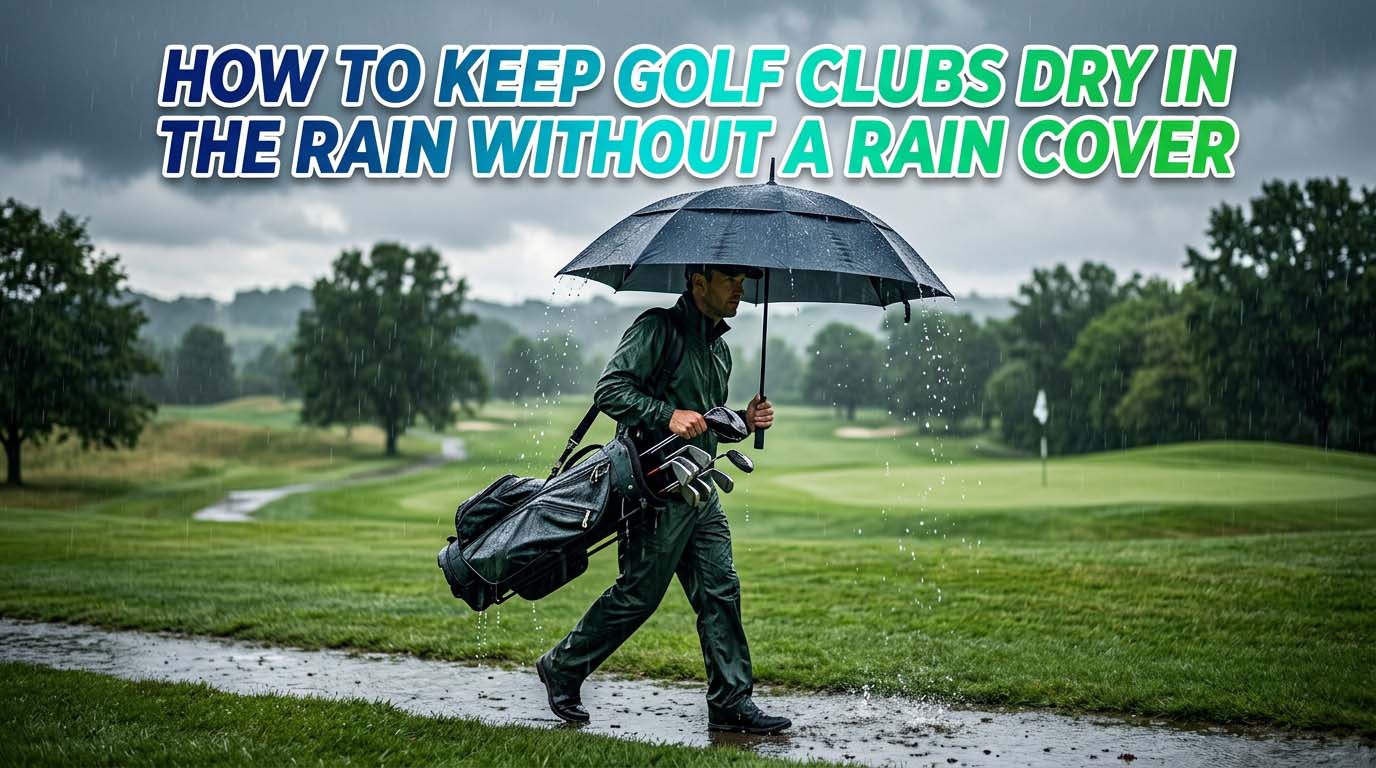
It is possible to keep your clubs dry without a rain cover – but only if you change how you think about water. Most golfers grab a towel and hope for the best. That works for about ten minutes.
Then the towel gets saturated, water runs down the bag shaft, and your grips start feeling like a wet sponge.
The real trick is to stop water from getting inside the bag opening in the first place. Once you understand that, you can protect your clubs using things you already own.
Why the standard advice fails you when you don’t have a cover
Every golfer has heard the same tip: “Just throw a towel over the top.” That advice comes from people who have never actually tried it in a steady rain. Here is what really happens when water hits an unprotected bag.
Water follows gravity. It runs down the club handles, drips past the towel (which is now a soaked rag), and collects in the bottom of your bag. That pool of water sits against your grip ends and starts wicking up into the rubber. Within thirty minutes, your grips feel greasy and slick. Meanwhile, the towel itself is acting like a pump – it pulls moisture from the air and the bag opening and holds it right against your clubs.
The second problem is the bag itself. Without a cover, the open top acts like a funnel. Rain hits the fabric outer shell of the bag and runs downward. It pools at the seams around the pockets and the bottom of the bag. If you have electronics or valuables in those pockets, they are getting wet too.
The pre-round setup that prevents 80% of the problem
If you know it might rain, you can take steps before you leave the house that eliminate most of the water risk. These take five minutes and require nothing special.
Pack your bag upside down
Put your clubs into the bag head-first instead of grip-first. This sounds odd, but it works. The clubheads are larger than the shafts, so they block the opening better.
Water that hits the heads drips off onto the ground outside the bag, not inside. The grips stay dry because they are buried deeper in the bag and not exposed to direct rain.
Pre-treat your grips
Spray your grips with a water-repellent silicone spray before the round. This is the same stuff you use on shoes or tents. It does not make the grips waterproof, but it does make water bead up and roll off instead of soaking in. A light coat lasts for several holes. Reapply at the turn if the rain keeps coming.
Put the bag on the cart correctly
How you place your bag on the golf cart matters more than most people think. Most cart baskets have a plastic or metal lip around the bottom. Tilt the bag so the opening faces away from the direction of the rain and wind.
If the wind is coming from the left, angle the bag opening to the right. If the rain is coming straight down, point the opening toward the cart body. This simple tilt keeps rain from falling directly into the open top.
The on-course emergency system using things you already own
When rain starts mid-round, and you do not have a cover, you need to act fast. Here is a three-step system that works with items you probably have in your bag or car.
Step 1: Anchor your umbrella to the cart handle
A standard golf umbrella keeps rain off you, but it can also protect your bag if you position it right. Clip the umbrella handle onto the cart handle so the canopy hangs directly over the bag opening.
Use a bungee cord or a rubber band to lock the umbrella in place. The goal is to create a roof above the bag that covers the entire opening, not just half of it.
Step 2: Make a temporary hood with a plastic bag
Take a large trash bag or a plastic grocery bag. Open it up and place it over the top of your bag like a hood.
Secure it around the bag rim with a rubber band or a zip tie. The bag should be tight enough that it does not blow off, but loose enough that you can still reach in to grab a club. This creates a waterproof seal that keeps rain out completely.
Step 3: Use the towel sandwich technique
If you do not have a plastic bag, use two towels. Lay one dry towel inside the bag opening. Place a second wet towel on top of it. The wet towel absorbs the rain hitting it, and the dry towel underneath stays dry because the wet towel is saturated. The dry towel acts as a barrier that prevents water from reaching your clubs. This only works if you have two towels. A single wet towel is useless.
The post-round crisis that ruins clubs and how to fix it
Most golfers stop worrying once the rain ends. That is a mistake. The real damage happens in the first six hours after the round. Moisture trapped inside the bag causes rust on clubheads, corrosion on shafts, and mold on grips.
Dry the inside of your bag immediately
Unzip every pocket on your bag. Turn the bag upside down over a drain or a towel and let it sit for ten minutes. This lets the water that pooled in the bottom drain out. Then stuff the bag with newspaper or a dry towel. Leave it stuffed for at least two hours. The paper absorbs the moisture that is trapped in the bag liner and the seams.
Dry each club individually
Take every club out of the bag. Wipe down the shaft and the clubhead with a dry cloth. Pay special attention to the area where the shaft meets the hosel – water collects there and causes rust spots.
For the grips, hold each one with a dry towel and rotate it in your hand. This wicks moisture out of the rubber. Leave the clubs outside the bag, leaning against something, so air can circulate them overnight.
Make a homemade desiccant pack
If you have silica gel packets (like the ones that come in shoe boxes), toss a few inside the bag after drying. If you do not have those, put a handful of uncooked rice inside a thin sock and tie it closed. Place the rice sock inside one of the pockets. The rice absorbs any residual moisture that you missed.
Three myths about rain protection that will ruin your gear
There is a lot of bad advice floating around. Here are three myths that cause more damage than they prevent.
Myth 1: A towel is enough. It is not. A towel becomes a saturated sponge within minutes. It holds water against your clubs and actually keeps them wet longer than if you had left them uncovered. Use a towel only as a barrier, not as a solution.
Myth 2: Headcovers protect the clubhead. Headcovers are made of fabric that holds moisture. When a headcover gets wet, it traps water against the metal clubhead. This creates the perfect environment for rust to form. Take headcovers off in the rain and store them in a dry pocket.
Myth 3: You can just wipe the grips off. Wiping a wet grip with a dry towel removes surface moisture, but it does not remove the water that has already soaked into the rubber. Water seeps between the grip and the shaft through the tiny gap at the end. That moisture takes hours to evaporate and causes the grip to lose its tack over time.
Frequently Asked Questions
Can I use a plastic bag as a rain cover in a pinch?
Yes, but you must secure it with a rubber band or a zip tie around the top of the bag. A loose bag will blow off in the wind and cause your clubs to fall out. A tight bag works as well as a commercial cover.
Should I remove my headcovers in the rain?
Yes. Wet headcovers trap water against the metal clubhead and promote rust. Keep them dry in a pocket and only put them back on when the clubs are dry.
How do I keep my grips from getting slippery without a cover?
Use a dry, non-terry towel specifically for grips. Terry cloth holds moisture. A microfiber towel works better. Avoid touching the grip with wet hands. If you have one, a grip spray or a rosin bag helps too.
Is it better to walk or ride in the rain?
Ride if you can. A push cart leaves the bag opening fully exposed to the rain. A golf cart has a roof over the back that provides some shelter. If you must walk, tilt the bag so the opening points away from the rain direction.
How do I dry my bag after a wet round without a cover?
Unzip all pockets. Turn the bag upside down to drain standing water. Stuff the bag with newspaper or a towel to absorb interior moisture. Leave it open in a dry, ventilated area for at least 24 hours. Do not use a hairdryer – the heat can damage the bag fabric.