
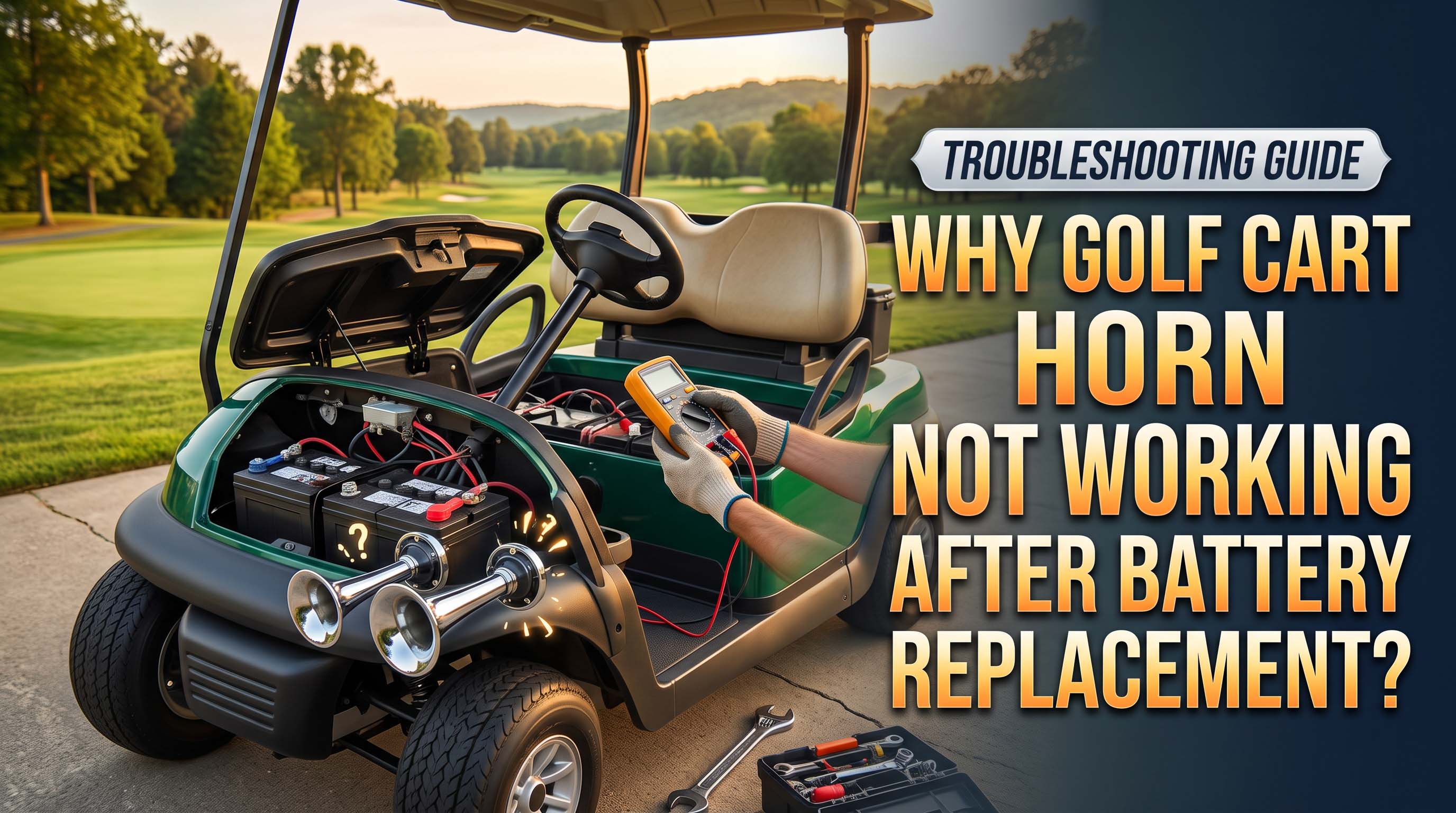
You just put fresh batteries in your golf cart. You turn the key; the cart moves fine, but when you hit the horn button – nothing. No beep. No click. Just silence. I have been there myself after a battery swap on my own cart, and it is frustrating because everything else seems to work.
The good news is this is almost always a simple fix. The bad news is you have to check a few things in the right order to find the problem.
This guide walks you through exactly what likely went wrong and how to fix it yourself, without needing to be a mechanic.
The Real Reasons Your Horn Died After a Battery Change
When you swap batteries, two things change: the physical wiring gets moved around, and the electrical system gets a sudden jolt of power. Most horn failures after a battery replacement come from one of these three causes:
- Blown fuse – This is the number one reason. A spark when connecting cables, or accidentally hooking a battery up backward, sends a spike that pops the horn fuse instantly.
- Pinched or pulled wire – While removing old batteries or installing new ones, a wire connected to the horn circuit can get pinched under a battery or pulled loose from its connector.
- Relay damage from voltage surge – The horn relay is a small electronic switch. A voltage spike during connection can fry it even if the fuse still looks good.
Each of these has a different fix, and I will show you how to tell which one you are dealing with.
How to Diagnose the Problem Step by Step
To test the horn, grab a test light or a multimeter. A simple test light is cheap and works perfectly here. If you don’t have either, you can still do most of these checks with just your eyes and hands.
Step 1: Check the Fuse
The horn fuse is usually located in the fuse block under the dashboard or near the battery compartment. In many carts, it is a small blade-style fuse.
Pull the fuse out and look at the metal strip inside. If it is broken or looks melted, the fuse is blown. Replace it with the same amperage rating – this is printed on the fuse itself, usually 10 or 15 amps.
I have seen cases where the fuse looked fine but was actually cracked. If visual inspection seems okay, swap it with another fuse of the same rating from a circuit you know works (like the headlights). If the horn starts working, you found the issue.
Step 2: Look for Evidence of Reverse Polarity
Reverse polarity means you connected a battery backward – positive to negative or negative to positive. This creates a short circuit. The first thing that blows is a fuse. In some golf carts, it can also damage the horn relay or even the controller.
How to check for reverse polarity damage: Look at the battery terminals. If you see burn marks or melted plastic around the cables, you likely had a polarity issue.
More commonly, you won’t see anything obvious, but a freshly blown fuse with no other damage means reverse polarity is the likely culprit.
Step 3: Inspect the Wiring
Batteries are heavy. When you lift them in or out, it is easy to pinch a wire between the battery and the frame.
Look along the path from the battery to the horn. Check under each battery where it sits. Also look for wires that got pulled loose from their connectors or cut by sharp battery edges.
Common places for wire damage during battery swaps:
- Under the battery – wires caught between battery case and frame
- Around battery hold-down brackets – wires pinched by metal clamps
- At the battery terminal connections – wires pulled out when removing terminal nuts
Step 4: Test the Horn Relay
Not all golf carts have a separate horn relay, but many do. It is a small plastic box with four prongs, usually in the same fuse block area.
To test the relay: swap it with another relay of the same type from a different circuit (like the turn signal relay if they match). If the horn starts working, the relay was bad.
If you cannot swap it, you can listen for a click when pressing the horn button. Have someone press the horn while you hold the relay.
If you hear a faint click, the relay is getting power and trying to work. No click means either the relay is dead or the horn switch is not sending power.
Step 5: Test the Horn Itself
If everything else checks out, the horn may have finally given out – possibly because it got a voltage spike during the battery swap.
To test: Disconnect the two wires going to the horn. Touch a 12V test light across the terminals, or connect a 12V battery directly to the horn terminals (positive to positive, negative to negative).
If the horn honks with direct power, it works fine. The problem is elsewhere. If it stays silent, the horn is dead.
Distinguishing Battery Damage from Coincidence
Sometimes a horn dies at the same time you replace batteries, but the two things are not connected. Here is how to tell:
If you notice the horn was weak or intermittent before the battery swap, the new batteries just exposed an already failing horn. Fresh batteries deliver higher voltage than old, dying ones. That extra power can make a worn-out horn work one last time before dying completely.
If all your other electrical accessories work fine – lights, turn signals, backup alarm – but only the horn is dead, it points to a horn-specific issue like a bad horn or switch, not a battery problem.
If the lights are dim or other accessories also stopped working, you likely have a bigger battery connection issue or a blown main fuse.
How to Fix Each Problem
Blown fuse: Replace with the same amperage. If the new fuse blows right away when you press the horn, you have a short in the wiring.
Pinched or cut wire: Repair the wire with a splice connector or electrical tape. If it is badly damaged, replace that section of wire.
Bad relay: Buy a replacement from a golf cart parts store or auto parts store with the same part number.
Dead horn: Replace with a universal 12V horn from any auto parts store. They are cheap and easy to install. Just match the mounting holes.
Reverse polarity damage: First, fix the battery wiring so every connection is correct – positive to positive, negative to negative. Then check the fuse and relay. If the horn still does not work after replacing those, the controller may be damaged. This is rare and requires a professional.
Preventing This Problem Next Time
You can avoid almost all horn issues after a battery swap by following one simple rule: always disconnect the negative cable first and reconnect it last.
This prevents sparks at the battery terminals because you are not completing a circuit that could surge through sensitive electronics. It also eliminates the risk of accidentally shorting a wrench across the battery terminals.
Safe battery swap steps:
- Turn the key off and remove it.
- Disconnect the negative cable from each battery first.
- Disconnect the positive cables.
- Remove the old batteries.
- Place new batteries in the same orientation – look at the positive and negative markings.
- Connect the positive cables first.
- Connect the negative cables last.
- Double-check that every connection is tight and no wires are pinched under the batteries.
If you use a torque wrench, tighten terminal bolts to about 100-120 inch-pounds. Too loose and they vibrate loose. Too tight and you crack the battery case.
Frequently Asked Questions
Can a fully dead battery bank cause the horn to stop working even if the fuse is fine?
Yes. If the total battery voltage drops below the relay’s pull-in threshold (usually around 10V for a 12V relay), the relay may click, but the horn will not sound. Charge the batteries or test with a known good charged battery to confirm.
Does each accessory on my golf cart have its own fuse, or is there a single main fuse?
Older golf carts often use one fuse block shared by multiple accessories. Newer carts give each circuit its own fuse. Locate the horn fuse specifically – it is usually labeled on the fuse panel or in the owner’s manual.
Will a battery replacement void my horn warranty if something breaks afterward?
Factory warranties cover defective parts, not damage from installation errors. However, some battery dealers and repair shops offer an installation warranty that covers accessory damage if their technician made the mistake. Always ask before paying for installation.
Can I test the horn with direct battery power to rule out the horn itself?
Yes. Disconnect the horn from the cart wiring. Touch a 12V battery positive terminal to the positive horn terminal and negative to negative. If it honks, the horn is good. If not, replace it.
Why does my horn sound weak instead of going silent after battery replacement?
A weak horn sound points to a partial circuit issue. Check for:
- Corroded wire connections at the horn or relay
- A dirty horn switch contact
- Voltage drop from loose or corroded battery terminal connections
- One or more batteries in the pack that are not fully charged
A weak-sounding horn is a warning sign. It will likely stop working entirely soon. Fix the root cause now to avoid being stuck without a horn.
Final Thoughts
A golf cart horn not working after battery replacement is almost always fixable in under an hour with basic tools. Start with the fuse – that is the culprit in about 7 out of 10 cases. If the fuse is good, move to the wiring, then the relay, then the horn itself.
What not to do: Do not start replacing parts randomly. That wastes money and time. Follow the diagnostic steps in order, and you will find the problem.
If you checked everything and the horn still does not work, you may have damaged the controller or a circuit board component. That is uncommon, but it happens. At that point, call a golf cart repair shop.
For most people, though, the fix is a new fuse, a wire splice, or a new horn – all cheap and easy. Now you know exactly what to do.