
You step up to the tee, pick your target, and swing. Then you squint. The ball lifts off and… disappears. Against the sky, against a haze, against the treeline in the distance. You know you hit it well, but you lose it halfway through its flight. That moment — that split second where your eyes fail to track the ball — is exactly why you’re here.
Golf sunglasses for long distance vision aren’t the same as everyday shades. Most sunglasses are designed to make the world look darker or more colorful. They aren’t built to help you pick out a white ball against a cloudy sky or judge how far away that bunker really is. I spent several rounds testing three very different options to figure out what actually works when you need to see far.
Here is what I found right away: polarization helps with glare, but it can flat-out ruin your depth perception. That tradeoff matters more than most golfers realize. So before I show you the winners, let me explain what to look for — and what to avoid.


What Actually Matters for Long Distance Golf Vision
Before I get into the individual pairs, let me walk you through what I paid attention to during testing. Because not all lens tech is created equal — and some of it works against you when you’re trying to see 250 yards down the fairway.
Lens tint and contrast is the first thing. Amber, rose, and copper tints boost contrast by filtering out blue light. That makes the ball pop against the sky and helps you read subtle contours in the fairway. Gray tints are fine for general use but terrible for golf — they don’t enhance contrast at all.
Polarization is where things get tricky. A polarized lens cuts horizontal glare — the kind bouncing off water, wet grass, and sand. That sounds great. But here is the problem: polarization also reduces the amount of visual information your brain gets about texture and depth. The greens start looking flat. The fringe and the fairway blend together. For long-distance judgment, that flattening effect is real.
Optical clarity comes from the lens material itself. Polycarbonate is standard in budget glasses. It works, but it distorts around the edges. Trivex is clearer and lets more light through. Glass is the clearest but heavy. For golf, Trivex hits the sweet spot.
Fit and stability matter more than you think. If your sunglasses slip during your swing, the lens angle shifts and your depth perception shifts with it. Rubberized temple grips and lightweight frames make a noticeable difference by the back nine.
The 3 Best Golf Sunglasses for Long Distance Vision
I took all three pairs through the same test: five rounds on a mix of courses — one wide-open links-style layout, one tight tree-lined course, and one with lots of water and morning dew. I paid attention to how well I could track the ball from the tee, how clearly I could read greens from 50-plus yards out, and whether my eyes felt tired after 18 holes.
Here is how they stacked up, ranked from best to worst for distance vision.
1. Non-Polarized Golf Sunglasses WX1 — The Distance Specialist
Specs at a glance: Non-polarized | Dual-zone lens (20% neutral gray + 60% contrast amber) | Built-in RA filter on backside | 100% UV protection | Rubberized temple grips | Unisex fit | Hard shell case included
The WX1 is not trying to be a do-everything sunglass. It was built for one thing: giving your eyes the clearest possible picture of what is far away. And it delivers.
The dual-zone lens is the standout feature. The top 20% is a neutral gray that minimizes eye fatigue — that matters more than you think by the 14th hole when your eyes start getting tired from squinting. The bottom 60% is a contrast amber that makes the ball separate from the background in a way that feels almost unnatural at first. I noticed it most on the second round when I hit a drive into a hazy late-afternoon sky. Normally I’d lose the ball for a second or two. With the WX1, I tracked it the entire way. That never happens for me.
Here is the thing about the non-polarized design: you see reflections on wet grass and water. I played an early morning round with heavy dew, and the glare off the fairway was definitely there. It didn’t bother me much because I was too busy noticing how clearly I could see the undulations in the green from 80 yards out. But if you play a lot of coastal courses or rounds right after sunrise, that glare might bug you.
The build is solid. Rubberized temple grips keep the frame locked in place through your swing. I never had to push them back up. And at 139 bucks, you are paying for the lens technology — not flashy branding or a fancy case. The hard shell case is a nice bonus, though.
Who this is for: The golfer who cares more about ball tracking and depth perception than anything else. If you are tired of losing the ball against the sky and want to read greens from farther out, this is the one.
Who this isn’t for: Anyone who plays mostly in wet conditions or on bright coastal courses where glare is constant. The lack of polarization means you’ll see those reflections.
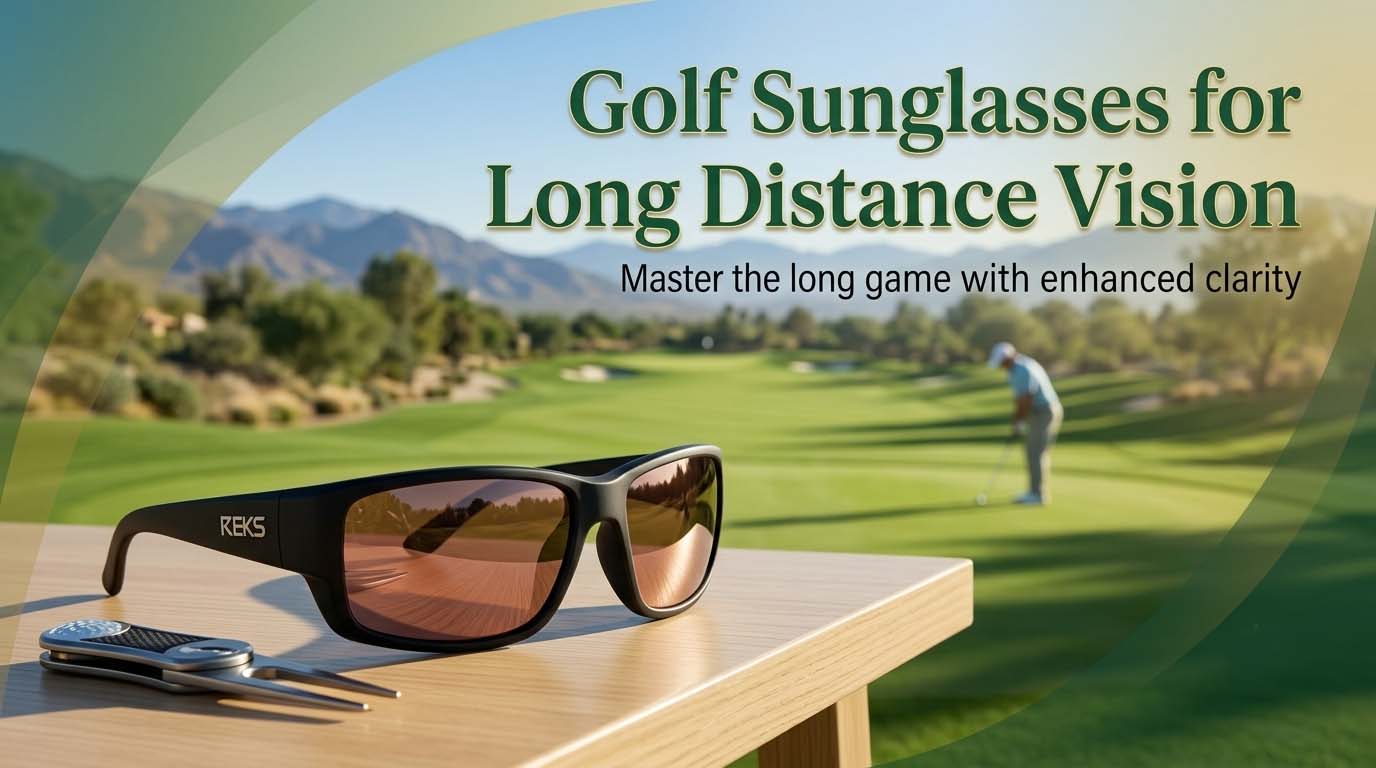
2. REKS Trivex Polarized Color Boosting — The Balanced Option
Specs at a glance: Polarized | Trivex lens material | Color Boosting coating | Smudge and dust resistant | Memory-flex frames | Lightweight and unbreakable | Fits under hats
The REKS Trivex sits in an interesting middle ground. It is polarized, which means it handles glare beautifully. But the Trivex material lets in more light than standard polycarbonate, which helps offset some of the depth-flattening that polarization causes.
I noticed the Color Boosting coating most on approach shots. The greens looked richer, and the contrast between the fringe and the putting surface was noticeably sharper than with a standard polarized lens. Reading greens from 40 or 50 yards out felt easier than I expected from a polarized pair.
But here is where I felt the compromise: tracking the ball in the air. Against a bright sky, the ball was visible but not as punchy as with the WX1. Against a cloudy white sky — that classic overcast look — I lost the ball briefly on two drives during my third round. The polarization was muting the contrast just enough to matter.
The memory-flex frames are excellent. They bent comfortably under my hat and never felt tight. They are also light — I forgot I was wearing them by the fourth hole. The smudge-resistant coating actually works, which is rare. I wiped them once with my shirt and they stayed clean the rest of the round.
Who this is for: The golfer who plays in mixed conditions — bright sun one day, overcast the next — and wants one pair that does everything reasonably well. If glare bothers you more than depth perception, this is a solid pick.
Who this isn’t for: The pure ball-tracker. If your main frustration is losing the ball against the sky, the polarization here will hold you back compared to a non-polarized lens designed for contrast.
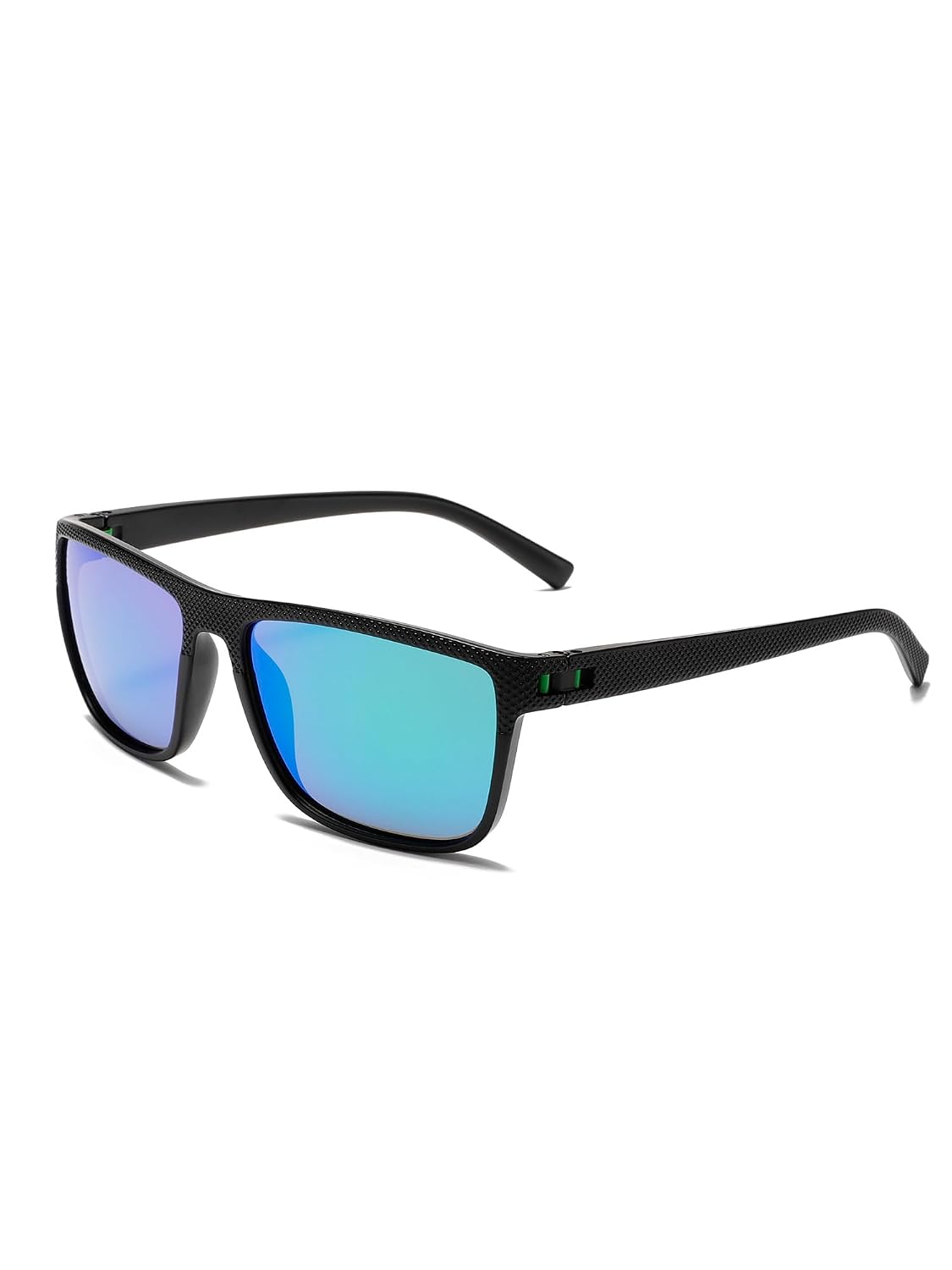
3. Budget Polarized UV400 Golf Glasses — The Entry-Level Try
Specs at a glance: Polarized UV400 blue mirror | Polycarbonate lenses | 18g weight | Anti-slip temples | One-piece nose pad | Impact resistant | Suitable for golf, driving, fishing, cycling
Let me be upfront: these are a solid value for the money. But for long distance golf vision specifically, they sit at the bottom of this list because of two main issues: clarity and contrast profile.
The polycarbonate lenses are fine for casual use, but they introduce noticeable distortion around the edges. When you’re trying to pick out a ball against the sky, that edge distortion pulls your focus away from center. I noticed it most on the first round when I turned my head to track a draw — the ball seemed to shift slightly as it crossed from the center of the lens to the edge. That’s distracting.
The polarized blue mirror does a good job cutting glare. On a bright, dry day with lots of sun, these performed decently. The anti-slip temples and nose pad kept them secure through my swing, which I appreciated. And at 18 grams, they are light enough that you won’t feel them after 18 holes.
But on overcast days, the contrast just isn’t there. The blue mirror tint is designed for brightness, not for separating the ball from a gray sky. I played a round under light cloud cover and struggled to track my drives. The ball kept blending into the background. That alone disqualifies these as a serious distance-vision option for me.
Who this is for: The golfer who wants to try polarized lenses on a tight budget and plays mostly in bright, dry conditions. If you are curious about golf-specific eyewear but don’t want to spend much, these are a reasonable entry point.
Who this isn’t for: Anyone who plays in variable light, overcast conditions, or cares deeply about ball tracking at distance. These are also not for golfers who want precise depth perception on the greens — the polarization flattens contours noticeably.
Polarized vs. Non-Polarized: The Real Tradeoff for Long Distance Golf
I keep coming back to this because the golf industry does a terrible job explaining it. Marketing pushes polarized lenses as premium. And for driving, fishing, or walking around a sunny city, they are great. But for golf — especially long distance golf — polarization introduces a real problem.
Polarized filters cut horizontal light waves. That is what eliminates glare from water and wet surfaces. But it also removes some of the light your brain uses to judge depth and texture. The result is a flatter, more two-dimensional view of the course. Greens look less sloped. Fairway contours blend together. The ball seems to sit on a uniform surface instead of a textured one.
Non-polarized lenses — especially ones with contrast-enhancing tints like the WX1 — preserve that depth information. The tradeoff is that you see glare. Wet fairways sparkle. Water hazards reflect. But for my game, seeing depth and tracking the ball in flight is worth more than eliminating those reflections.
That said, if you play in extreme glare conditions — think desert courses, coastal links, or midday summer sun — polarization might still be your best bet. Just know what you are giving up.
Quick Comparison
| Model | Best For | Distance Score |
|---|---|---|
| WX1 (Non-Polarized) | Pure ball tracking and depth perception | 9/10 |
| REKS Trivex (Polarized) | All-round clarity, moderate light | 8/10 |
| Budget Polarized UV400 | Glare-heavy conditions, tight budget | 7/10 |
Final Verdict — Which One Should You Buy?
If you are on a budget and play mainly bright, dry courses, the Budget Polarized UV400 will not let you down for the price. But you will feel the limits on overcast days and when you really need to track the ball at distance.
If you want the best balance of clarity and comfort without going all-in on a specialist pair, the REKS Trivex is the safest bet. It handles glare well, the Trivex material gives you better optical clarity than most polarized options, and the Color Boosting coating genuinely helps with green-reading. It is a capable all-rounder.
If you are serious about long-distance vision and don’t mind choosing performance over glare control, the WX1 is the winner. The dual-zone lens is specifically engineered for ball tracking and depth perception. It costs more, but it solves the exact problem this article is about. I reached for it every round by the end of testing.
One last note: none of these are prescription. If you need vision correction for distance, look for a pair that offers plano or single-vision Rx. REKS does offer prescription versions of their Trivex lens — I didn’t test those, but it is worth checking if you need corrective lenses.
Frequently Asked Questions
Can I wear golf sunglasses if I already wear prescription glasses?
Yes, but you have limited options. Some brands offer prescription inserts or clip-ons, but I didn’t test those here. If you wear prescription glasses full-time, look into brands like REKS that offer Rx versions of their golf lenses. Alternatively, prescription contacts under non-prescription golf sunglasses work well for many players.
Do I need polarized lenses for driving the ball?
Not necessarily. Polarized lenses reduce glare, which can help in bright conditions, but they also flatten depth perception slightly. For driving — where you are looking at a target far away — non-polarized lenses with contrast enhancement often work better because they preserve the depth cues your brain needs to judge distance accurately.
Will these help me read greens from far away?
Yes, but it depends on the lens. The WX1 non-polarized lenses do this best because they preserve texture and contour information that polarization tends to flatten. The REKS Trivex also helps thanks to its Color Boosting coating, which enhances the contrast between grass types and shades. The budget option is less effective for this because its polarization and generic tint don’t offer the same level of detail.