
You know the feeling. You’re walking up the fairway on the back nine, you wipe your forehead, and your sunglasses slide halfway down your nose. You push them back up. Three holes later, you’re doing it again.
By the 18th, you’ve either given up and taken them off or you’re so frustrated you’re ready to throw them into the nearest water hazard. I’ve been there more times than I’d like to admit.
The problem isn’t your face. It’s the material touching your face. Most sunglasses use nose pads that repel moisture — they get slippery the second you start sweating. The fix is simple once you know what to look for.
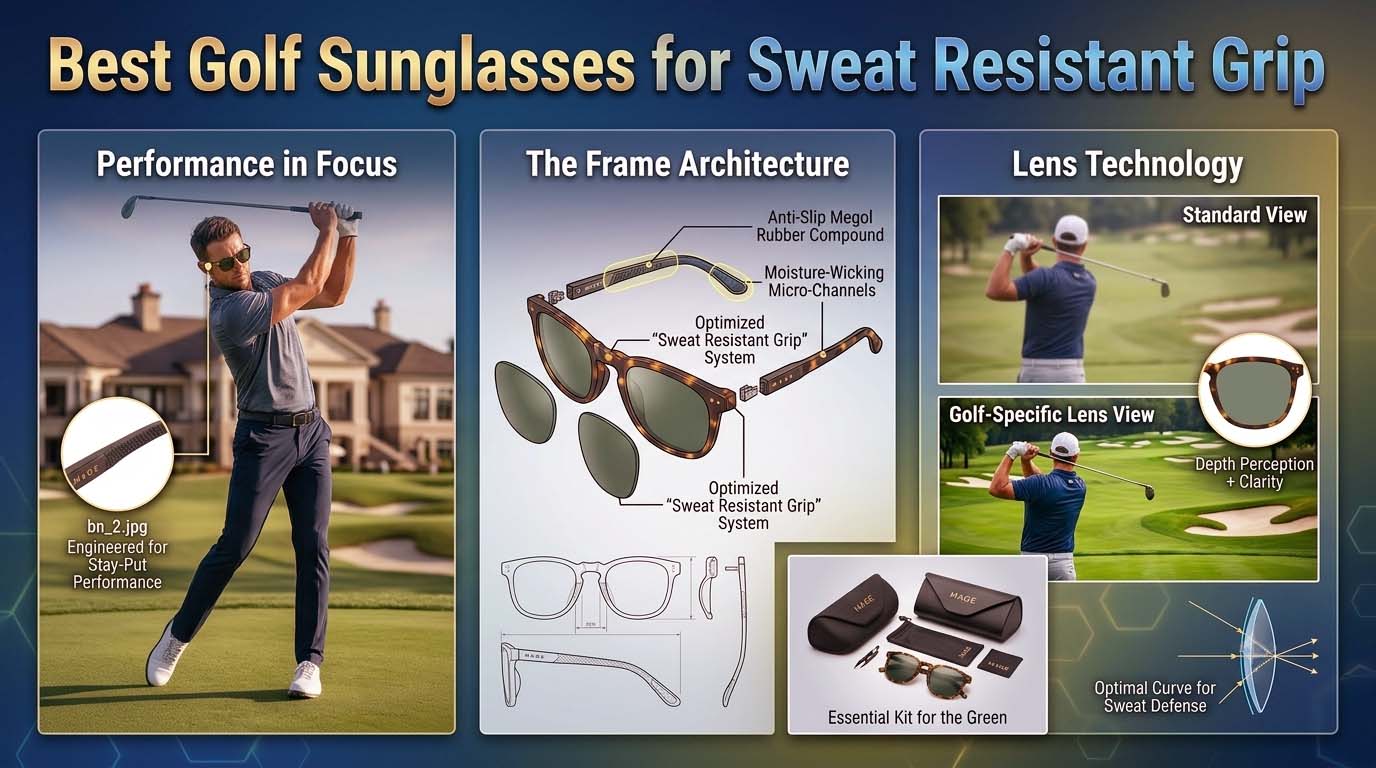
Golf sunglasses for sweat resistant grip rely on either hydrophilic rubber that gets stickier when wet, silicone friction pads that hold their ground, or a universal strap that keeps everything in place regardless of the conditions.
I tested all three approaches to find out which actually works when you’re drenched on the 14th tee.
Here’s the short version so you can stop scrolling: if you sweat heavily and want the best value, get the Tifosi Intense. If you want the best possible lens technology and don’t mind spending more, get the RAEN WILEY REC.
If you already own sunglasses you love and just need them to stay put, get the Pilotfish strap. Below I break down exactly why each option earned its spot and who should buy what.


The Science of Sweat Resistant Grip in Golf Sunglasses
Before I get into the specific products, you need to understand why some sunglasses hold on like a vice while others slide off the moment you break a sweat. It’s not about how tight the frame fits your head. It’s about what happens at the microscopic level where the nose pad meets your skin.
Hydrophilic vs. Silicone Nose Pads
These two materials work in completely opposite ways. Silicone nose pads are the standard on most sunglasses. They rely on dry friction — a rubbery texture that grabs your skin when everything is dry.
The problem is that silicone is hydrophobic by nature. It repels water. So when sweat builds up, a thin layer of moisture forms between the pad and your skin, and the glasses start to slide. It’s like a car tire on a wet road. The grip disappears.
Hydrophilic nose pads, like the ones on the Tifosi Intense, do the opposite. They absorb moisture. As you sweat, the material gets tackier and grips harder.
It’s counterintuitive, you’d think wetter means slippier, but with hydrophilic rubber, wetter means stickier. Think of it like a wet sponge pressing against a smooth surface versus a dry one. The wet sponge has more suction.
For golf specifically, where you’re out in the heat for four hours, hydrophilic pads are the clear winner. Silicone works fine for the first few holes, but by the back nine, you’re pushing your glasses up every other swing. Hydrophilic pads get better as the round goes on.
The Bounce Test and Frame Weight
Grip isn’t just about the nose pads. It’s also about how much the glasses want to move in the first place. A heavy frame has more inertia. Every time you swing, nod, or look down at your ball, gravity and momentum work against the grip. Lighter frames require less force to stay put.
I tested this by wearing each pair through a full round and noting how many times I had to adjust them. The Tifosi Intense weighs 23 grams. That’s astonishingly light. You forget you’re wearing them.
The RAEN WILEY REC uses acetate, which is heavier, but the Strata Grip nose pads compensate with aggressive friction. The goodr BFG sits in the middle — light enough to not bounce, but the frame is larger so there’s more surface area contacting your face.
The WearMe Pro is the heaviest of the bunch, and I felt it. The acetate frame looks great, but by the 12th hole, I was aware of the weight pressing on my nose. It didn’t slip, but it wasn’t as comfortable as the lighter options.
Lens Priority: Polarized vs. Contrast
Here’s where the trade-off lives. Polarized lenses cut glare from water, sand, and the sky. That’s useful. But polarization can also flatten the topography of the green, making it harder to read subtle breaks. Some golfers don’t notice this. Others swear it messes with their putting.
Contrast-enhancing lenses, like the Colorboost Vector lens in the RAEN WILEY REC, are designed specifically to amplify the difference between green shades. You see the grain of the green more clearly. The ball pops against the sky. It’s a genuine advantage if you’re serious about scoring. But you sacrifice some glare reduction, especially around water hazards.
For most golfers, a good polarized lens is fine. For the dedicated player who wants every edge, the RAEN’s lens technology is worth the upgrade.
Best Budget Sweat-Stoppers (Under $70)
You don’t need to spend a lot to solve the slipping problem. The budget category is where the real value lives, and honestly, two of the three options here outperform many premium sunglasses when it comes to pure grip. Let me walk through each one.
1. Tifosi Intense Sport Sunglasses
- Frame weight: 23 grams
- Grip tech: Hydrophilic nose pads + Tifosi Glide anti-bounce
- Lens: Shatterproof smoke with silver mirror, vented for fog prevention
- Protection: 100% UVA/UVB
- Best for: Heavy sweaters, budget-conscious players, anyone who wants to forget they’re wearing glasses
This is the pair I reach for most often. The hydrophilic nose pads are the real deal. I tested them on a humid August morning when I was sweating before I even reached the first tee. By the third hole, my face was soaked. The glasses didn’t budge. Not once. I didn’t push them up a single time during the entire round.
The frame is made from Grilamid TR-90, which is a lightweight nylon-based material that’s both flexible and durable. At 23 grams, you genuinely forget you’re wearing them. The vented lenses are another smart touch — they let air circulate so the lenses don’t fog up when you’re walking between shots in high humidity. I’ve worn these on pickleball courts and running trails too, and they perform the same way.
The lenses are shatterproof and scratch-resistant, which matters when you’re tossing them in your bag between rounds. The smoke lens with silver mirror coating cuts glare well enough for most conditions. It’s not a golf-specific contrast lens, but it’s clear and comfortable. For the price, the optical quality is better than it has any right to be.
What I didn’t love: The styling is sporty, not fashionable. You won’t turn heads in these. They look like performance eyewear, which is fine on the course but less versatile off it. Also, the lens isn’t optimized for green contrast. You’ll see the ball fine, but you won’t get the enhanced depth perception that premium golf lenses offer.
Who this is not for: If you want a single pair of sunglasses that works for both the golf course and dinner afterward, these aren’t it. They’re pure performance. Also, if you prioritize lens technology over everything else, you’ll want the RAENs.
2. goodr Polarized BFG (Large Size)
- Frame weight: Lightweight (not specified, but feels similar to Tifosi)
- Grip tech: Special grip coating + silicone nose inserts
- Lens: Polarized with UV400 protection
- Fit: Large frame designed for bigger heads
- Best for: Golfers with larger faces, players who want a no-bounce fit
goodr built a reputation on running sunglasses that don’t slip, and the BFG (Big Frame for Golfers) extends that promise to the course. The silicone nose inserts and grip coating work together to keep the glasses in place. I tested these on a windy day when I was also sweating, and they held up well. No sliding, no bouncing.
The polarized lenses cut glare effectively. Walking past a water hazard, the difference was noticeable — the surface glare disappeared. The UV400 protection covers the full spectrum, so your eyes are safe even on the brightest days. The large frame is genuinely generous. If you have a wider face or wear a hat with a brim that pushes glasses forward, the BFG size accommodates that comfortably.
What surprised me was how snug they felt without being tight. The grip coating creates a secure hold without pressure points. I wore them for four hours without any discomfort behind the ears or on the bridge of my nose.
What I didn’t love: The lens quality is average. It’s fine for the price, but you won’t get the clarity or contrast enhancement of a premium lens. The color reproduction is slightly warm, which isn’t a problem for most people but might bother purists. Also, the large frame can look oversized on smaller faces — it’s really designed for bigger heads.
Who this is not for: If you have a narrow face or prefer a more understated look, the BFG size will overwhelm you. Go with the standard goodr size instead. Also, if you’re looking for golf-specific lens technology, these won’t deliver it.
3. WearMe Pro WMP Eyewear
- Frame material: Premium acetate
- Grip tech: Non-slip nose pads
- Lens: Polarized ClearVue with anti-reflective and oleophobic coating
- Protection: 100% UVA/UVB
- Best for: Style-conscious players who want a retro look
The WearMe Pro takes a different approach. Instead of lightweight sport design, it goes for a retro-inspired acetate frame with a round shape. It looks like something you’d wear off the course too, which is a nice change from the aggressively sporty alternatives. The non-slip nose pads do their job — the glasses stayed put during my test round, even when I was sweating.
The ClearVue lenses are polarized and come with an anti-reflective coating that reduces glare from behind and above, plus an oleophobic coating that resists smudges. That last feature is more useful than you’d think. When your hands are sweaty and you’re adjusting your glasses, you don’t want fingerprints smeared across the lenses. The oleophobic coating keeps them cleaner longer.
The build quality is solid. The acetate frame feels substantial, and the hinges are tight. It comes with a premium case and packaging, which makes it feel like a more expensive product than it is.
What I didn’t love: The acetate frame is heavy. By the back nine, I was aware of the weight resting on my nose. It didn’t slip, but it wasn’t as comfortable as the lighter options. The round frame shape also creates a smaller field of view compared to wraparound styles. You get more peripheral light leakage, which can be distracting on bright days. And in high heat, acetate can feel warm against your skin. Not ideal for summer golf in the South.
Who this is not for: If you prioritize comfort and weight over style, skip these. The acetate frame is noticeable after a few hours. Also, if you have a narrow face, the round frame might look disproportionately large. These are best for players who want a single pair of sunglasses that look good on and off the course and don’t mind the extra weight.
The Premium Contender
Sometimes you want more than just grip. You want the best possible optics, the most refined build, and the confidence that you’re wearing something engineered for the sport. That’s where the premium category comes in. I tested one pair that stands head and shoulders above the rest for golfers who treat their equipment seriously.
4. RAEN WILEY REC
- Frame material: Hand-polished acetate
- Grip tech: Strata Grip non-slip nose pads (re-engineered bridge)
- Lens: Colorboost Vector Lens — enhanced contrast for green and yellow wavelengths
- Polarization: Not standard — designed for contrast, not glare reduction
- Best for: Serious golfers who want to read greens better and track ball flight
Let me be clear about something. The RAEN WILEY REC is not the best choice for everyone. But for the golfer who wants to shoot lower scores, it’s the best choice by a wide margin. The Strata Grip nose pads are proprietary — not a cheap rubber add-on but an engineered material that balances grip with comfort. I wore these for six hours straight on a hot day, and they didn’t slip once. The re-engineered bridge distributes pressure evenly, so you don’t get that pinched feeling heavy glasses can cause.
The real story here is the lens. The Colorboost Vector Lens is unlike anything else in this roundup. It’s designed to enhance contrast across green and yellow wavelengths while keeping colors true to life. On the course, this means you see the grain of the green more clearly. The subtle breaks you might miss with standard lenses become visible. The ball pops against the sky in a way that makes tracking it feel effortless.
I noticed the difference most on the putting green. Reading slope and grain became more intuitive. I wasn’t guessing as much. I was seeing. That’s a genuine advantage that translates to lower scores. Off the course, the Colorboost lens makes landscapes look vivid and alive. It’s a pleasant side effect.
The build quality is exceptional. The acetate is hand-polished, and you can see the depth and transparency in the material. It comes with a microfiber sock and lens cloth, which is a nice touch for a product at this level.
What I didn’t love: The price is steep. You’re paying for the lens technology and the build quality, and it shows. Also, the lenses are not polarized. That’s a deliberate choice — polarization can interfere with contrast enhancement — but it means you lose some glare reduction around water hazards. On very bright days, I noticed more glare than I would with a polarized lens. The acetate frame also gets warm in direct sun, similar to the WearMe Pro.
Who this is not for: If you’re a casual golfer who plays a few times a year, the RAENs are overkill. You’ll appreciate the grip, but you won’t get enough value from the lens technology to justify the investment. Also, if you play mostly on overcast days or in low light, the contrast enhancement won’t be as noticeable. And if you absolutely need polarized lenses, these aren’t it.
The Cheat Code (The Universal Fix)
What if you already own a pair of sunglasses you love? Maybe you dropped serious money on a pair of Oakleys or Maui Jims, and you don’t want to replace them. You just want them to stop sliding off your face when you sweat. The solution is simpler than you think.
5. Pilotfish Premium Silicone Sunglasses Strap
- Material: Premium silicone
- Design: Passthrough — no metal clips or hooks
- Fit: Universal — works with most sunglasses
- Best for: Anyone who already owns great sunglasses and just needs them to stay put
The Pilotfish strap is the simplest solution to the slipping problem. It’s a silicone retainer that slides onto the arms of your existing sunglasses. The passthrough design means there are no metal clips that could scratch your frames. It’s stretchy, durable, and easy to clean. You just slide it on, adjust the fit, and your glasses are locked in place.
I tested this with an older pair of prescription sunglasses that used to slide down my nose every 15 minutes. With the Pilotfish strap attached, they didn’t move at all. Not during swings, not when I bent over to pick up a tee, not when I wiped my face with a towel. The strap holds the glasses against your head with gentle tension, and the silicone grips your skin even when it’s wet.
The best part is the price. It’s a fraction of the cost of new sunglasses, and it solves the problem completely. If you already have a pair you love, this is the smartest purchase you can make.
What I didn’t love: It’s not a permanent solution. The strap is visible, and some people don’t like the look of a retainer. It also adds a step to putting on and taking off your glasses. And if you don’t need the tension, the strap can feel unnecessary. But for the specific problem of slipping during sweat, it works perfectly.
Who this is not for: If you don’t already own sunglasses you’re happy with, buy a new pair instead of a strap. Also, if you dislike the look of retainers or want a clean, minimalist aesthetic, this won’t appeal to you.
The Final Cut: Which Should You Buy?
I’ve tested all five options, and here’s how I think about them. The Tifosi Intense is the best overall value for anyone who struggles with sweat. The hydrophilic nose pads work better than anything else in the budget category, and the lightweight frame means you forget you’re wearing them. If you’re a heavy sweater and you want a reliable solution that doesn’t cost much, this is the one.
The RAEN WILEY REC is the best option for the serious golfer. The Strata Grip nose pads keep the glasses secure, and the Colorboost lens gives you a genuine advantage on the course. You see the green better. You track the ball better. If you’re trying to shave strokes off your handicap, the investment is worth it.
The goodr BFG is a solid middle ground. It’s affordable, the grip works well, and the large frame fits bigger heads comfortably. The lens quality is average, but the polarization is effective. If you need a large size and want something that won’t bounce, this is a good pick.
The WearMe Pro is for style-conscious players who want a retro look. The grip is adequate, but the heavy acetate frame makes it less comfortable for long rounds in hot weather. If you prioritize looks over comfort, you’ll like these. If you prioritize comfort, look elsewhere.
The Pilotfish Strap is the wildcard. If you already own sunglasses you love, this is the cheapest, most effective fix for slipping. It’s not a replacement for good sunglasses, but it’s a perfect solution for an existing problem.
Frequently Asked Questions
What type of nose pad grips best when sweating?
Hydrophilic rubber nose pads grip best when you’re sweating. Unlike silicone, which becomes slippery when wet, hydrophilic material absorbs moisture and gets tackier. This means the more you sweat, the tighter the grip. Brands like Tifosi use this technology, and it’s the most effective solution for golfers who play in hot conditions.
Can I just use a strap instead of buying new sunglasses?
Yes. A silicone strap like the Pilotfish is a universal solution that works with almost any sunglasses. It applies gentle tension to keep the glasses against your face, and it doesn’t rely on nose pad material. If you already own a pair of sunglasses you’re happy with, a strap is the most cost-effective way to stop them from slipping.
Are polarized lenses better for golf?
Polarized lenses reduce glare from water, sand, and the sky, which is helpful in bright conditions. But they can also flatten the topography of the green, making it harder to read subtle breaks. Contrast-enhancing lenses, like the Colorboost lens in the RAEN WILEY REC, are designed specifically for golf and provide better depth perception. For most golfers, a good polarized lens is fine. For serious players, contrast lenses offer a real advantage.
How do I know if sunglasses will fit my face?
Check the frame width and lens height measurements. If you have a larger head, look for frames labeled as “large” or “XL” like the goodr BFG. If you have a narrow face, standard or small sizes will fit better. The key is to find a frame that sits evenly on your nose and ears without pressure points. If possible, try them on before buying or buy from a retailer with a good return policy.
What’s the difference between hydrophilic and silicone grip?
Silicone grip relies on dry friction — it works well when your skin is dry but loses grip when moisture builds up. Hydrophilic grip absorbs moisture and becomes tackier, so it works better when you’re sweating. For golf, where you’re active for hours in the heat, hydrophilic grip is the superior choice. It’s the difference between a tire on dry pavement versus a tire designed for wet roads.