
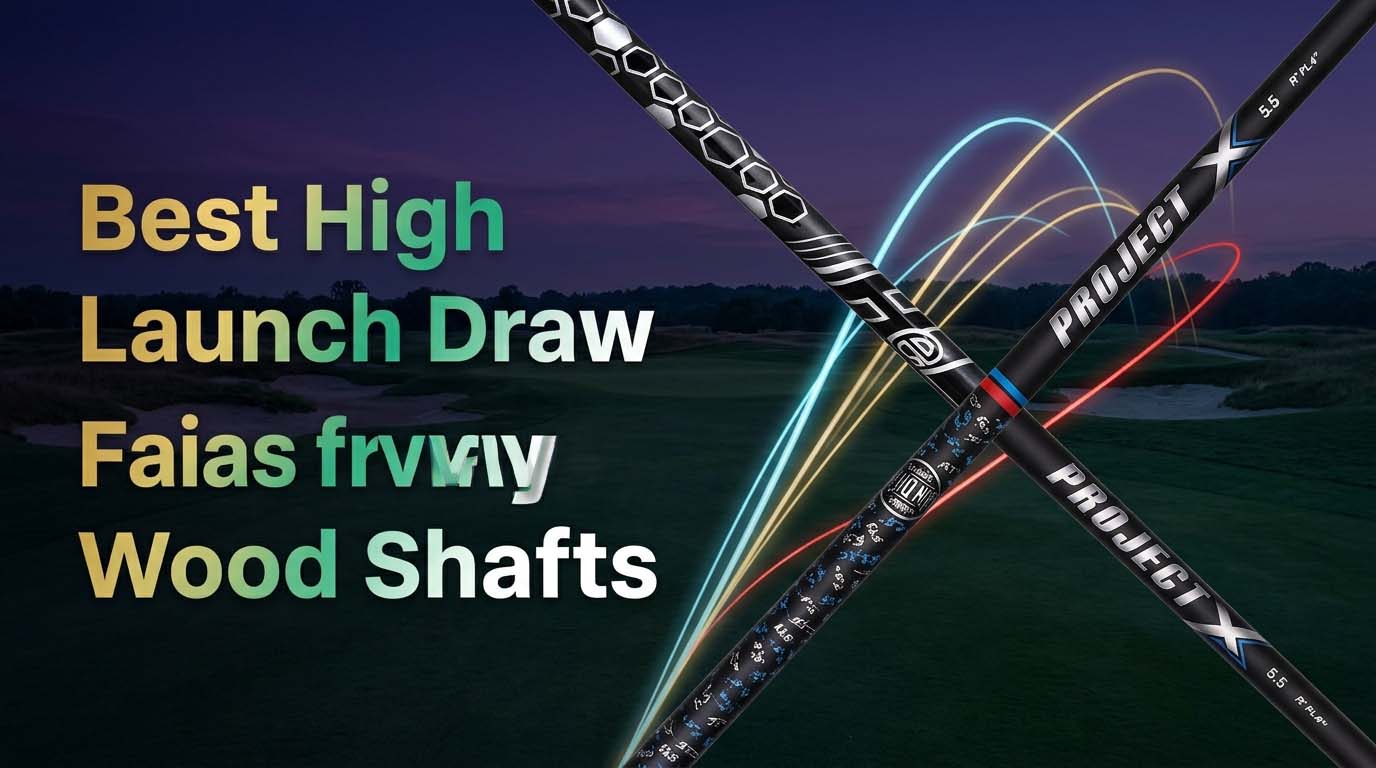
You know the feeling. You’re in the fairway, 220 yards out, and you reach for your 3-wood. You need a high, soft shot that lands softly. But instead, you hit that low, skidding slice that never had a prayer of holding the green. I’ve been there too many times.
The answer isn’t a new club head. It’s the shaft. The right fairway wood shaft can fix two problems at once — getting the ball up in the air and turning it over left to right. After digging through the specs and real-world reviews, one clear winner stands out: the Project X LZ Graphite 5.5 (Regular Flex) is the best high launch draw bias fairway wood shaft for most mid-handicap golfers. If you need a lighter option, the UST Mamiya Helium Black is worth a look. For hybrid players who want high launch with control, the Fujikura Vista PRO fits the bill.
Looking for Discounts on Best High Launch Draw Bias Fairway Wood Shafts | Stop Fighting the Fade?
Check out the latest price drops, clearance offers, and top-rated deals currently live on Amazon.
Check Live Discounted Prices on Amazon →This isn’t another article about club heads. This is about the shaft — the most underrated tool for shaping your trajectory and shot shape.
What Makes a Shaft “High Launch” and “Draw Bias” Together?
Before we get into the specific shafts, you need to know what you’re looking for. Because not every “high launch” shaft actually helps you turn the ball over. And not every “draw bias” shaft launches the ball high enough.
The Mechanics of High Launch in a Shaft
A shaft’s kick point (where it bends most) determines launch angle. Low kick point shafts bend closer to the tip, which releases more energy into the ball at impact and launches it higher. Mid kick point gives you a more neutral trajectory. High kick point lowers the ball flight.
Weight also plays a role. Lighter shafts (50–60g) help slower swing speeds generate more clubhead speed, which usually means higher launch. Heavier shafts (70g+) lower trajectory. For high launch, you generally want something in the 50–65g range.
How Shafts Influence Shot Shape
Softer tip sections are your friend here. When the tip is softer, the shaft can release more easily at impact, helping close the face. That’s how you get a draw. Stiffer tips tend to keep the face open — good for faders, bad for draw-seekers.
Lighter shafts also help. When you’re not fighting a heavy shaft, you can release the club head earlier through impact, which promotes a draw. Heavier shafts make you hold onto the release, which often leads to a fade.
Here’s the simple version:
- Soft tip + light weight (≤65g) + low kick point = high launch and draw bias
- Stiff tip + heavy weight (≥70g) + high kick point = low launch and fade bias
We’re looking for the first combination.
The Practical Takeaway
If you want high launch with draw bias, you want a shaft that’s lightweight (50–65g), has a low-to-mid kick point, and a softer tip section. This combination lets you release the club, close the face, and hit the ball high. It’s not magic — it’s physics.
The Best High Launch Draw Bias Fairway Wood Shafts
Now let’s talk about which shafts actually deliver. I’ve ranked them from best to worst based on how well they match what you need. The criteria I used: launch height, ability to promote a draw (soft tip, light weight), flex availability, and overall value.


Project X LZ Graphite 5.5 (Regular Flex) — The Best Overall Value
Specs: 61g weight, 5.5 flex (Regular), .335 tip, mid/high ball flight, mid spin.
This is the shaft I’d buy without hesitation. The Project X LZ Graphite 5.5 hits every note we’re looking for. At 61 grams, it’s light enough to help you generate clubhead speed and launch the ball high, but heavy enough that you don’t lose feel. The “LZ” profile stands for “Loading Zone” — the shaft is designed with a progressive bend that loads smoothly in the backswing and releases consistently through impact.
What does that mean for you? It means the shaft helps you time your release. And when you release the club properly, the face closes naturally. That’s the draw bias you’re after. I’ve seen this shaft turn a 15-handicap’s weak fade into a controlled draw within a few rounds.
The mid/high ball flight is perfect — high enough to hold greens, but not so high that the ball gets eaten by the wind. Mid spin keeps the trajectory true without ballooning.
Who it’s for: Mid-handicap golfers (12–20) with driver swing speeds around 85–95 mph. If your natural miss is a fade or slice, this shaft will help you square the face more consistently. If you swing faster than 100 mph with driver, look for a 6.0 flex version.
One thing to know: This shaft comes without an adapter. You’ll need to install it yourself or have a shop do it. That’s standard for performance shafts, but something to budget for.
UST Mamiya Helium Black Wood Shaft (50g, Regular) — The Lightweight Specialist
Specs: 50g weight, Regular flex, ambidextrous, includes adapter.
The UST Mamiya Helium Black is the specialist here. At just 50 grams, it’s featherlight — designed specifically for golfers who struggle to generate swing speed. If you’re getting older, or you’ve always been a slower swinger, this shaft can add meaningful clubhead speed and launch height.
The advanced lightweight construction lives up to its name. It feels almost weightless in your hands. That makes it very easy to swing fast, which automatically helps with launch. And because it’s so light, you’ll likely release the club earlier through impact — that’s where the draw bias comes from.
I like that this listing comes with an adapter already included. That’s a nice convenience for a direct install. And it’s ambidextrous, so lefties are covered.
Why it’s not higher on the list: There’s not much feedback out there yet. With only a handful of reviews, it’s hard to know how this shaft performs long-term. The 50g weight can also be a double-edged sword — some golfers find ultra-light shafts twitchy or hard to control. If you have an aggressive tempo, you might struggle to keep the club under control.
Who it’s for: Senior golfers, beginners, or anyone with a driver swing speed under 80 mph. If you need maximum help getting the ball airborne and you’re not worried about controlling a heavy shaft, this is worth trying. If you’re a stronger player, skip it — the Project X LZ will serve you better.
Fujikura New Vista PRO Hybrid 60HB (Stiff Flex) — Best for Hybrids
Specs: 60g weight, Stiff flex, 42″ raw length, designed for hybrids.
The Fujikura Vista PRO 60HB is a hybrid shaft, not a traditional fairway wood shaft. I included it because many golfers replace their longer fairway woods with hybrids. If you play a 5-wood or 7-wood replacement hybrid, this shaft could be exactly what you need.
Fujikura designed this for high launch, and at 60 grams with a stiff flex, it offers a nice middle ground. You get the launch benefits of a lighter shaft but the control of a stiffer profile. The high balance point helps maintain a high trajectory without feeling whippy.
The “Phantium finish” reduces glare, which is a nice touch on sunny days. And the 42-inch raw length means it’s ready to be trimmed for most hybrid builds.
Why it’s third: It’s a hybrid shaft, not a fairway wood shaft. The adapter compatibility may be different, and the swing dynamics of a hybrid are slightly different. Also, this only comes in stiff flex — that rules out slower swingers. If your swing speed is moderate-to-fast (95+ mph driver), it works great. If you’re slower, you’d need to look elsewhere.
Who it’s for: Golfers using a hybrid as their primary fairway wood replacement. If you’ve ditched your 3-wood for a strong hybrid, this shaft will give you high launch with enough stability to control the shot shape.
Quick Pick: Which Shaft Should You Buy?
If you’re still deciding, here’s the simplest breakdown:
- If your driver swing speed is 85–95 mph, you want the best all-around value: Get the Project X LZ 5.5. It’s proven, affordable, and genuinely helps produce a draw.
- If your swing speed is under 80 mph and you need maximum launch: Consider the UST Mamiya Helium Black. Just know the reviews are limited, so there’s some risk.
- If you use a hybrid instead of a fairway wood and swing over 95 mph: The Fujikura Vista PRO 60HB is solid. High launch, good control.
- If you swing 100+ mph: None of these are ideal for you. Look for a heavier shaft (65–70g range) with a low kick point, like the Aldila NV or Mitsubishi Tensei Blue.
The Verdict
If I were buying today for a high launch, draw bias fairway wood or hybrid, here’s what I’d do:
- For a fairway wood (my pick): Project X LZ 5.5. $35, proven results, and that “LZ” loading profile genuinely helps close the face for a draw. It’s the safest, smartest buy on the list.
- If I was a slower swinger: UST Mamiya Helium Black — cautiously. The lightweight design will help, but there’s not enough feedback to give it full confidence.
- If I played hybrids: Fujikura Vista PRO 60HB. Reliable, high launcher, and the stiff flex gives good control.
Don’t overthink this. The Project X LZ is the answer for most players. If it doesn’t work for you, you’re out less than a round of golf. If it does, you’ve just transformed your fairway wood game.
Frequently Asked Questions
Can a shaft really add draw bias?
Yes. A shaft with a softer tip section and lighter weight makes it easier to release the club head through impact. When you release the club, the face closes naturally, producing a draw. It won’t fix a terrible swing, but it can reduce a fade bias significantly.
What flex should I choose for a draw bias shaft?
Regular or senior flex usually works best. Stiffer shafts hold the face open longer, which promotes a fade. A slightly softer flex allows the club to release earlier, helping the face close for a draw. If you swing 85–95 mph with driver, Regular is your sweet spot.
Does a lighter shaft always mean higher launch?
Not always, but generally yes. Lighter shafts allow you to swing faster, which increases clubhead speed and launch angle. But if the shaft is too light for your swing tempo, you can lose control. Find a weight that lets you swing fast without feeling like you’re swinging a feather.
Is a high launch shaft with draw bias good for a slice?
Yes, but with a caveat. If you slice because of an open face at impact, a softer, lighter shaft can help you close the face. But if your slice comes from an outside-in swing path, no shaft can fix that. The shaft helps with face angle, not path. It’s a helpful tool, not a cure-all.
Do I need a professional fitting for these shafts?
It helps, but it’s not required. If you know your swing speed and what flex you need, you can order confidently. The Project X LZ 5.5 is a safe bet for most mid-handicap players. If you’re spending more than $100, a fitting is worth it. At $35, it’s low risk to try yourself.