
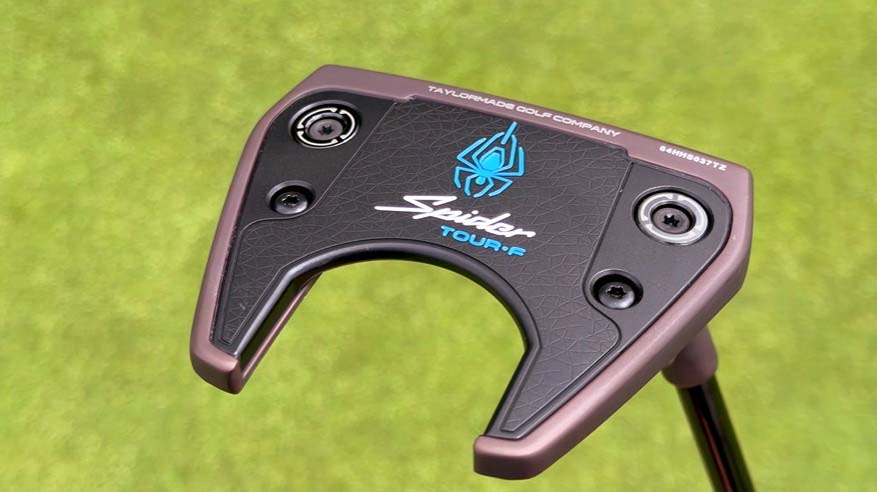
Weights in Spider putters primarily affect swing weight, feel, and stability. Heavier weights increase head mass, improving stability on off-center hits and providing a heavier feel that can help with tempo. Lighter weights reduce head feel, often preferred on fast greens or by players with a smooth stroke.
The exact impact depends on your Spider model, the weight size, and whether the putter has been shortened or lengthened. This guide covers every Spider weight system, explains how to choose the right weight for your game, and shows you how to change them safely.
What Do Putter Weights Actually Do?
When you add weight to a putter head, you change two things: the total head mass and the swing weight. Swing weight measures how heavy the head feels during the stroke. A heavier head makes the putter feel more stable through impact, especially on mishits.
That stability comes from a higher moment of inertia (MOI), which resists twisting when you hit the ball off-center. I’ve seen players switch from standard 6g weights to 14g or 20g and immediately notice less face rotation on toe hits.
The trade-off is feel. A very heavy head can feel sluggish or dead, especially on fast greens where you want a lighter touch. Lighter weights give you more feedback from the face and allow a smoother tempo. The right weight balances stability with the feel you respond to.
Spider Weight Systems by Model
Not all Spider putters use the same weight system. The thread size, stock weight, and available options vary by generation. Here is a breakdown of the most common models.
| Model | Stock Weight | Optional Weights | Screw Type |
|---|---|---|---|
| Spider X (2019–2021) | 6g | 2g, 14g, 20g | Hex (Allen) |
| Spider Tour (2020–2022) | 10g | 5g, 15g, 25g | Torx T20 |
| Spider GT (2023+) | 15g | 5g, 10g, 20g | Hex (Allen) |
The weights are not interchangeable between models. The thread pitch and depth differ. For example, a Spider Tour weight will not fit a Spider X port. Always check the sole marking on your putter to confirm the exact model before ordering replacements.
How to Choose the Right Weight for Your Game?
Three factors drive your decision: putter length, green speed, and stroke type.
Putter Length
If you have cut down your Spider putter, you need heavier weights to restore the swing weight. Cutting one inch off the shaft drops the swing weight by about six points. To bring it back to where it was, you need to add roughly 12 to 14 grams of head weight.
I shortened my Spider X by an inch and went from 6g to 14g weights. The feel came back immediately. If you added length, you would go lighter to counterbalance.
Green Speed
On slow greens, a heavier head gives the ball more pop and helps you get the ball to the hole. On fast greens, lighter weights let you control distance better. I keep a set of 14g weights for slow municipal greens and swap to 6g when I play fast Bentgrass courses.
Stroke Type
Players with a straight-back, straight-through stroke often benefit from a heavier head because it reduces the need to manipulate the face. Players with a strong arc may prefer lighter weights to maintain feel and face rotation. The heavier head can mask slight face rotation, but it also reduces feedback. If you rely on feel, stay closer to stock.
How to Change Spider Putter Weights Safely?
Changing weights is simple if you have the right tool and follow a few steps.
- Get the correct wrench. Spider X and GT use a hex (Allen) bit, typically 3/32 inch or 2.5mm. Spider Tour uses a Torx T20 bit. Do not guess. Using the wrong tool can strip the screw head.
- Remove the existing weight. Turn counterclockwise. The screws are usually not tight from the factory, but they may have a small amount of thread locker. Apply steady pressure. If the screw resists, do not force it. A drop of acetone can help break the bond.
- Inspect the threads. Check both the screw threads on the weight and the port in the sole. Any debris or damage can cause cross-threading. Clean with a dry cloth.
- Install the new weight. Hand-start the screw to avoid cross-threading. Then tighten with the wrench to the recommended torque. For Spider X and GT, that is about 15 inch-pounds. If you do not have a torque wrench, snug it firmly but do not crank. Overtightening can strip the aluminum sole plate or crack the weight port.
- Test before you play. Take a few practice strokes. The putter should feel balanced. If the head feels too heavy or too light, swap again.
Critical Considerations: Swing Weight and Cut-Down Putters
Adding weight to the head changes swing weight, not total weight. A 10g increase in head weight shifts swing weight by roughly one point (from D2 to D3, for example). That one point makes a noticeable difference in how the head feels during the stroke. For cut-down putters, the math is straightforward.
If you remove one inch of shaft, you lose about six swing weight points. To restore the original swing weight, you need to add 12 to 14 grams to the head. I have seen players cut two inches off their Spider putter and then complain that the head feels light. They add 20g weights and wonder why the putter still feels off.
The reality is that after a two-inch cut, you need to add 24 to 28 grams, which is beyond the available weight options. In that case, you might need a heavier head altogether or lead tape.
Myths vs. Reality
Myth: Heavier weights always make the putter more stable
Stability comes from the distribution of mass, not just total mass. Adding weight to the heel or toe can actually reduce MOI if it shifts the center of gravity away from the sweet spot.
The stock weight positions are already optimized for the head design. Larger aftermarket weights placed in the same ports generally maintain the same CG location, so they do increase stability, but only up to a point. The real gain is in feel and swing weight, not forgiveness.
Myth: All Spider weights are interchangeable
As shown in the table above, the thread type and depth differ. A Spider Tour weight will not thread into a Spider X port. Trying to force it can damage the threads. Always buy the correct model-specific weights.
Myth: Heavier weights fix a push or pull
A push or pull is caused by face angle and path, not head weight. Heavier weights can mask a tempo issue by making the stroke feel more deliberate, but they will not correct a misaligned face. If you struggle with direction, work on your setup and stroke before changing weights.
Frequently Asked Questions
Can I use weights from a Spider Tour on a Spider X?
No. The thread pitch and depth are different. Using the wrong weight can damage the head or lead to loosening during play.
What weight does a standard Spider putter come with?
Stock weight depends on the model and year. For example, Spider X (2019) ships with 6g, Spider GT (2023) with 15g. Always check the sole marking.
How do I know if I need heavier or lighter weights?
If the putter feels too light and the head seems to float in the stroke, go heavier. If it feels too heavy and strains your wrists or slows your tempo, go lighter. Green speed also matters: heavy for slow greens, light for fast.
Does changing weights affect the putter’s lie angle?
Minimal effect. Weight changes are too small to alter the static lie angle, but a heavier head may cause the putter to sit slightly more upright if the sole is not perfectly flat at address.
Can I add weight to a Spider putter without buying official weights?
Not recommended. Aftermarket weights often have incorrect thread specs. Lead tape is a safer temporary solution but can alter the look and make the head feel slightly different. If you want to try before buying, lead tape is fine. For a long-term setup, use official weights.