
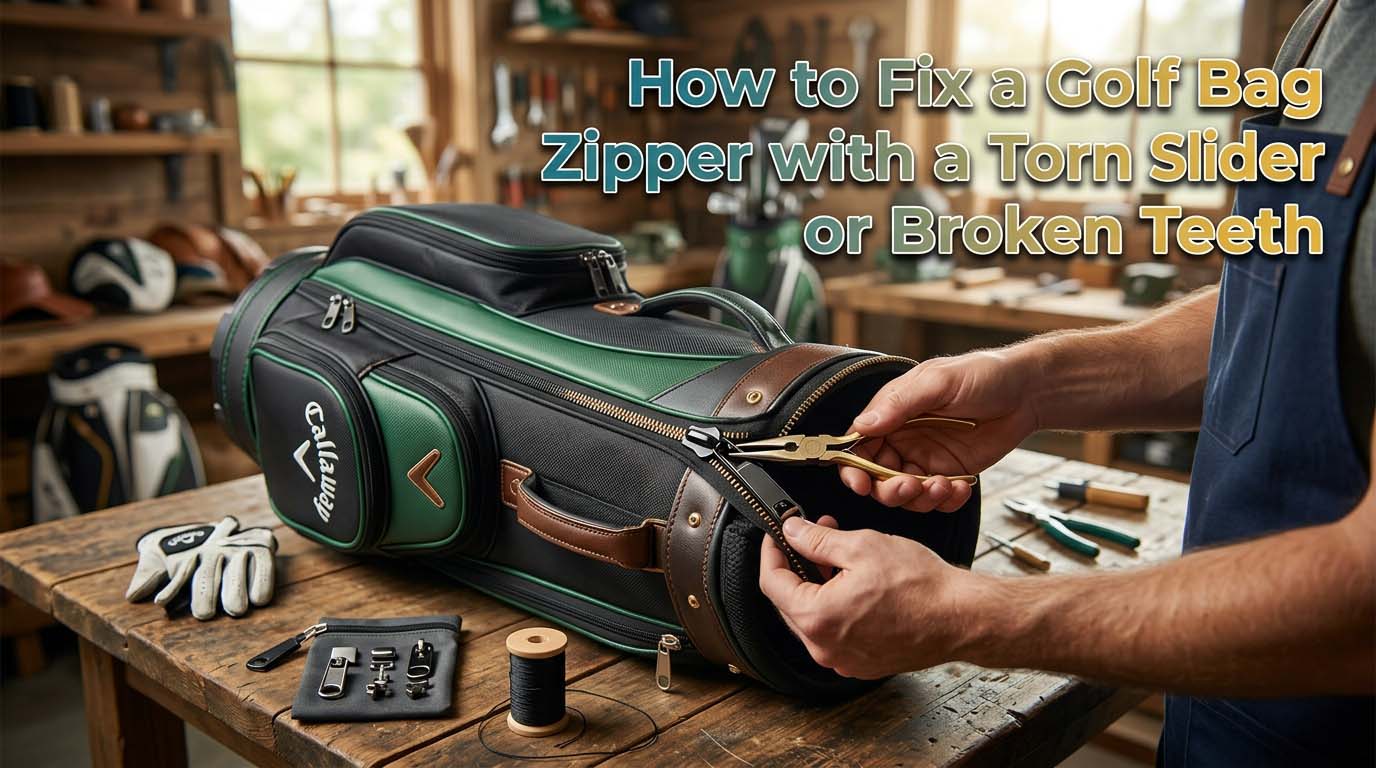
I’ve been down this road more times than I care to count. You load up your bag, pull the zipper, and nothing happens. The pull moves free, but the teeth won’t catch. Or you get halfway, and the zipper jams solid. Before you grab any tool or lubricant, you have to know which part is actually broken.
A torn slider and broken teeth look similar at first glance but require completely different fixes. Here’s how to tell them apart in 30 seconds, and then fix whichever one you’ve got.
Diagnosing Your Zipper Failure in 30 Seconds
Look at the zipper as a whole. Run the slider from one end to the other once, gently. Don’t force it. Pay attention to these three failure states:
- Torn slider – The slider itself (the part that rides over the teeth) is cracked, bent, or split. The pull moves easily, but the two sides of the zipper never join. You might see daylight through the slider body, or it wobbles side to side.
- Broken or misaligned teeth – The slider moves but stops at a specific spot. Teeth on one side are bent, missing, or sitting at a different height than the other side. You can see gaps where teeth should lock together.
- Stuck slider (not actually broken) – Slider won’t move, but both slider and teeth look fine. This is usually dirt or dry lubricant. Try graphite powder before attempting any repair.
Use this quick reference:
| If this happens… | You have a… |
|---|---|
| Slider moves freely, teeth never catch | Torn slider |
| Slider binds at one spot, teeth look mangled | Broken or bent teeth |
| Slider won’t move, everything looks normal | Stuck slider (lube it first) |
Once you’ve identified the failure, move to the right fix below.
Fixing a Torn Slider Without Replacing the Entire Zipper
A torn slider is the most common failure on golf bags, and it’s also the easiest to fix if you get the right replacement. Here’s the exact process I use.
Measuring Your Slider Before You Buy a Replacement
Golf bag sliders are not standard sizes. A clothing zipper slider sits on a 3–5mm track. Your golf bag uses something wider, usually 6mm to 10mm. If you buy a generic slider without measuring, it will be loose and slip.
Measure three things:
- Width across the track (the flat part the slider rides on)
- Depth of the channel (how thick the slider body is)
- Whether it’s an auto-lock slider (zipper stays put when you let go) or non-lock
You can find sliders at fabric stores, online repair shops, or from golf-specific retailers. I’ve had best luck with YKK universal sliders meant for heavy-duty bags.
Removing the Damaged Slider
If the slider is still on the track, use a pair of pliers to gently spread the seam of the slider body, just enough to slip it off the teeth. If that doesn’t work, cut the metal zipper stop at the top of the zipper (the small metal tab that keeps the slider from coming off). Use wire cutters, not scissors. Be careful not to cut into the fabric tape of the zipper itself.
Installing the New Slider
- Thread the two sides of the zipper teeth into the new slider. The wider opening of the slider goes toward the end where the teeth separate.
- Make sure both sides of the zipper tape are aligned — the teeth should mesh naturally before you pull the slider.
- Slide the new slider down a few inches, then zip it back up to test.
- Secure the top by installing a new zipper stop (sold in repair kits). If you don’t have one, a knot of heavy thread sewn tightly across the tape works as a temporary stop.
Emergency Field Fix When You Have No Replacement
On the course, you can’t run to a store. Here are two tricks that have saved me:
- Paperclip or key ring: Thread it through the hole where the pull used to be, then use it as a makeshift pull. This bypasses a broken slider body only if the slider channel is still intact.
- Zip-tie compression: If the slider is loose (channel too wide), loop a small zip tie through the gap in the slider body and tighten it just enough to compress the channel. Cut the tail off flush. This can give you another round or two of use.
Repairing Broken or Bent Zipper Teeth
Tooth damage is less common than a torn slider, but when it happens, the fix is different. You can’t just swap out a part; you have to work on the teeth themselves.
When Teeth Can Be Saved vs. When They Can’t
- Bent teeth: Yes, you can straighten them carefully with needle-nose pliers. More on how below.
- Missing teeth: Not repairable without replacing a section of zipper. The gap will cause the slider to jump off every time.
- Worn teeth (shiny, flattened): Permanent fix requires a new zipper. No home repair will hold.
Straightening Bent Teeth in Plastic vs. Metal Zippers
Plastic coil zippers are common on budget golf bags. Heat them with a hairdryer for about 10 seconds before bending; cold plastic snaps. Use a small flathead screwdriver or your fingernail to nudge the tooth back into line.
Metal teeth are tougher. Hold the tooth at its base with pliers, not the tip. Bend it gently in the opposite direction of the bend. Take your time — a little adjustment goes a long way.
For plastic coils, there’s a trick called the “massage and roll.” Run your thumb along the coil in the direction of the bend, applying gentle pressure. This can realign several teeth at once without tools.
Replacing a Section of Zipper Teeth Without Removing the Whole Zipper
If you have a run of missing teeth (say 2–3 inches), you can splice in a repair section:
- Cut out the damaged section of teeth, but leave the fabric zipper tape intact on both sides.
- Buy a zipper repair connector or “zipper saver” — a short piece of zipper with teeth that matches your model.
- Insert the connector into the gap, aligning the teeth.
- Hand-stitch the connector to the existing zipper tape. Use strong thread and close stitches.
- Now the slider can roll over the connector. You may need to manually guide it at first.
This fix takes about 30 minutes and works surprisingly well. Full zipper replacement takes hours and requires a sewing machine — only do that if the zipper tape itself is tearing or multiple teeth are gone.
When You Must Replace the Entire Zipper
Replace the whole zipper if: the fabric tape is peeling away from the bag, more than two adjacent teeth are missing, or the track is warped from repeated stress. That job means cutting the old zipper out with a seam ripper, buying new zipper by the yard, and sewing it in. If your bag is worth over $100, a tailor can do it for $20–50 — cheaper than a new bag.
Why Golf Bag Zippers Fail Differently Than Clothing Zippers
Golf bags live in a different world than jackets or jeans. They get bent in car trunks, soaked in rain, and pressed by heavy clubs. The slider takes the sideways force every time you stuff the bag full — that’s why torn sliders are number one. Plastic zippers on cheaper bags snap teeth when you force them. Metal zippers wear gradually; the slider fatigues before the teeth do. Even premium YKK or Talon zippers fail eventually under those conditions. That’s normal, not a quality defect.
Preventing Future Zipper Failure Based on Your Specific Breakage Pattern
Here’s the part most guides skip: different failure types point to different habits. Fix the habit, and you fix the problem long term.
- If you tore a slider: You’re overstuffing the bag or closing the zipper under pressure. Always compress compartments before zipping. Never zip when the bag is fully packed and bulging.
- If you broke teeth: You’re storing the bag with the zipper closed while club heads press against the line. Store with zippers partially open to relieve tension.
- If you had corrosion: You’re storing a wet bag. After rainy rounds, dry the zipper track with a towel. Spray a dry lubricant (graphite or silicone) once a season.
- If the zipper tape pulled away from the bag: The zipper was sewn under too much tension at the factory. Reinforce stress points with fabric glue before they tear.
Frequently Asked Questions
Can I use a generic zipper slider from a sewing store on my golf bag?
Yes, but only if you measure the track width first. Most generic sliders fit garment zippers (3–5mm). Golf bag zippers typically use 6–10mm tracks. A loose slider will slip and fail again. Use calipers to measure width and verify compatibility before buying.
How do I fix a zipper where the two sides don’t meet at the bottom?
That means the bottom zipper stop has shifted or broken, or the teeth are stretched unevenly. Remove the bottom stop, align both sides of the zipper tape so the teeth interlock naturally, then install a new stop at the exact meeting point.
Is it worth taking a golf bag to a tailor for zipper repair?
For bags over $100, yes. A professional zipper replacement costs $20–50 and adds years of life. For bags under $75, the repair cost often exceeds the bag’s value; DIY or replace the bag.
Will WD-40 fix a broken zipper?
WD-40 is a lubricant, not a repair. It can free a stuck slider caused by dirt or corrosion, but it will not fix a torn slider or broken teeth. For stuck sliders, use dry lubricant like graphite powder; WD-40 attracts more dirt later.
Can I replace just one side of a golf bag zipper?
No. Zippers are mirrored systems; left and right tracks are matched pairs. Replacing one side requires finding an identical zipper from the same manufacturer, which is nearly impossible. Always replace the full zipper unit.
How long does a DIY zipper repair take for a beginner?
Slider replacement: 15–30 minutes. Tooth straightening: 10–20 minutes. Section repair with connector: 30–45 minutes. Full zipper replacement: 1–2 hours. Your first attempt will take longer; plan for double the estimate.
That covers everything I’ve learned from fixing golf bag zippers over the years. If you diagnose first, use the right method for your failure, and address the root cause afterward, you can keep that bag zipping for years to come.