
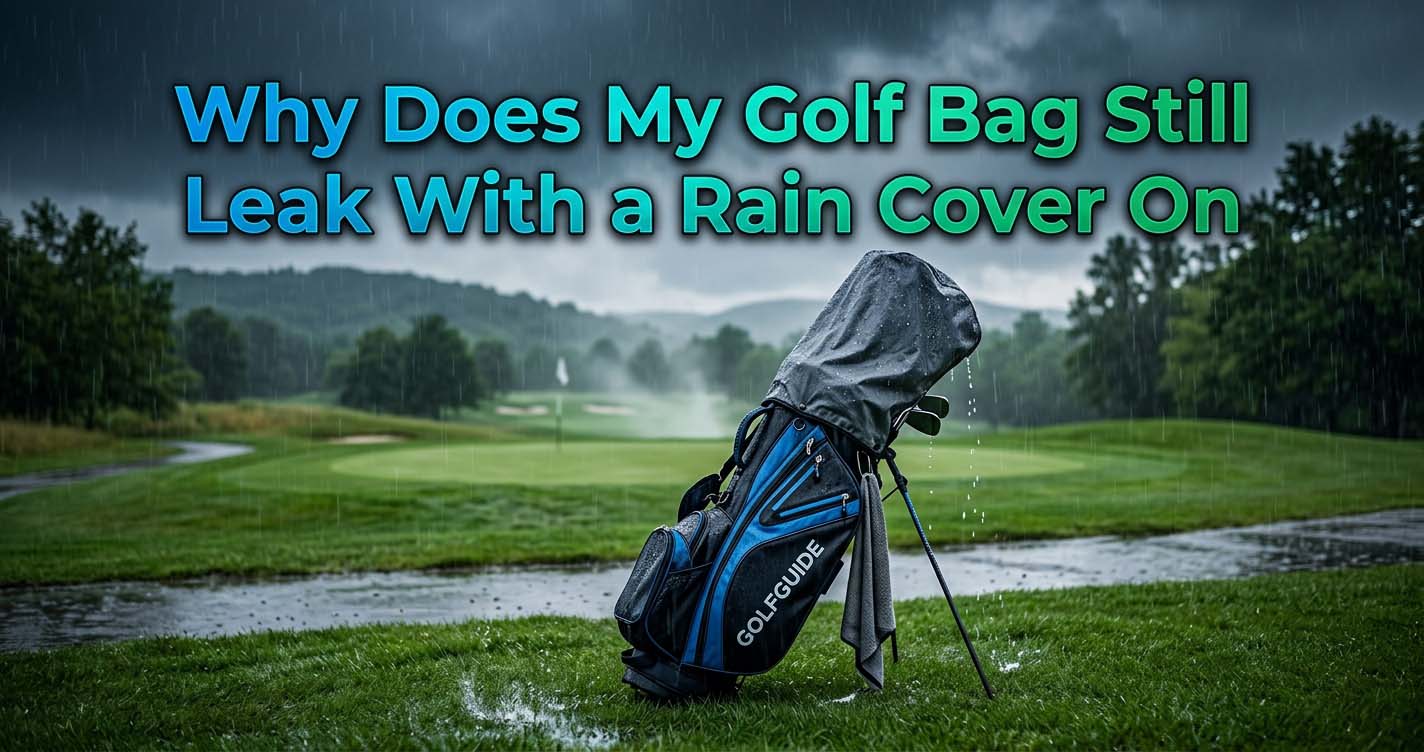
You put the rain cover on. You made sure it was snug. And still, after a wet round, you pull out damp towels and soaked gloves. I have been there more times than I can count. The frustration is real, and it is rarely because the cover is completely useless.
It is because rain covers have limitations, your bag has hidden entry points, and sometimes what feels like a leak is actually something else entirely.
The short answer: Your golf bag still leaks because most rain covers leave the bottom exposed, bag seams and zippers are not sealed, and condensation can fool you into thinking water is coming in from outside. Let me walk through exactly how to find and fix each of these problems.
The Cover Itself May Be the Weak Link
Most rain covers sold with bags or as accessories are water-resistant, not waterproof. After a few seasons in the sun, the fabric coating degrades. The elastic hem stretches out. What once shed water now lets it seep through.
The biggest design gap I see on nearly every standard cover is at the bottom. If your cover only goes over the top half or two-thirds of the bag, water runs down the cover and then drips or wicks into the bag from below.
Many covers also have a cutout for stand bag legs. That cutout is a direct channel for rain. Even the top cuff, which should cinch tight, often leaves a gap at the handle area where water can funnel straight in.
The Umbrella Effect You Need to Know
When water hits your cover, it flows downward. If the cover does not extend past the bottom edge of your bag, that water hits the bag body and soaks in.
I have tested this by spraying a covered bag with a hose while holding it upright. Five minutes later, the bottom interior was damp, even though the top was dry. The cover was too short.
Where Your Bag Lets Water In Despite the Cover
Even a perfect cover cannot stop water that enters through the bag itself. Most golf bags are not waterproof. They are made of nylon or polyester with unsealed seams.
The Bottom of the Bag
This is the most overlooked source of leaks. When you set your bag down in wet grass or on a wet cart mat, water wicks up through the bottom panel.
No cover protects the base unless it fully encases the bag like a travel cover. I have seen bags sit in a puddle for ten minutes and the entire bottom compartment be soaked.
Zippers and Seams
Water finds the path of least resistance. Zipper tracks are perfect channels, especially if the zipper is not fully closed or the fabric around it is worn.
Seams where the bag panels are stitched together wick water like a straw. If your cover presses wet fabric against those seams, water moves straight through.
Drainage Grommets
Some bags have small holes or grommets designed to let water drain out. That is great for dumping rain, but it also means water can enter from the outside if the bag sits in water.
I have seen bags with drain holes right at the bottom edge, which defeats the purpose if your cover leaves the base exposed.
Strap Connection Points
Where the shoulder strap or carry handle attaches to the bag, there are usually fabric loops or metal rings. These act as capillaries. Water runs down the strap and soaks into the stitching around those attachment points. The cover cannot seal these areas.
The Condensation Trap | Not All Moisture Is a Leak
This one fooled me for months. I would play in cold weather, put the cover on, and come back to wet clubs inside a dry bag. I thought the cover was failing. What was actually happening was condensation.
When cold clubs and a cold bag come into a warm garage or car trunk, warm humid air hits the cold surfaces and condenses into water. If your cover is sealed tight, that moisture has nowhere to go. It pools inside.
How to Tell the Difference
After your next wet round, wipe the inside of your bag and all your clubs completely dry. Then put the cover back on and leave the bag in your usual storage spot for 12 hours.
If you find moisture again but there was no rain, you are dealing with condensation, not a leak. If the moisture appears only after rain, the cover or bag is failing.
How to Diagnose Your Specific Leak Source
You do not need to guess. Here is a simple test I run on every bag I work on.
1. Take everything out of the bag. Turn it upside down and shake out any loose debris.
2. Place the bag upright in a shower or on a driveway. Put the rain cover on exactly as you would on the course.
3. Run a garden hose over the bag for five minutes. Mimic rain, not a pressure washer.
4. After five minutes, stop the water and remove the cover.
5. Feel the inside of the bag, especially the bottom, the seam lines, and around the zippers. Mark any wet spots with a piece of tape.
6. Look at the outside of the bag where those wet spots line up. That is your leak source.
If the wet spot is at the bottom center of the bag, the leak is coming from the base. If it is along a seam or zipper, the water is wicking through the fabric. If it is at the top near the handle, the cover is not sealing around the handle area.
Fixes and Upgrades That Actually Stop the Leak
Once you know where the water is coming from, the fix is straightforward.
For Bottom Ingress
You need a cover that fully encases the bag, reaching below the base. If your current cover is too short, look for a model with an elastic hem that cinches around the bag bottom.
Alternatively, place your bag on a waterproof mat or a plastic tray when the ground is wet. Many cart bags have a built-in base that is slightly raised, but stand bags usually sit flat and wick water.
For Zipper Leaks
Apply zipper wax or a seam sealer like Nikwax to the zipper tracks. Rub it along the teeth and into the fabric around the zipper. This seals the tiny gaps where water enters. It works remarkably well. Reapply every few months.
For Cover Gaps
Use a bungee cord or an extra strap to cinch the cover tighter around the bag contours, especially around the handle area and the leg cutouts. If the cover has a drawstring at the bottom, pull it as tight as possible. For stand bags, consider a cover designed specifically for stand bags, which has a sealed flap over the leg mechanism.
For Condensation
Do not store your bag with the cover on. After a round, remove the cover and let both the bag and clubs air out completely for at least a few hours. If you must cover it, use a breathable cover or leave the top slightly open. Toss a silica gel pack or two into the main compartment to absorb moisture.
Myths About Waterproof Golf Covers
Let me clear up a few things I hear all the time.
“A cover makes my bag completely waterproof.” That is false unless you have a fully sealed dry-bag style cover with a roll-top closure. Standard covers are designed for light rain and carry use, not submersion or heavy downpours.
“I only need a cover when it is actively raining.” False again. Wet grass, wet cart paths, and water splashing up from the ground cause just as many leaks as falling rain. The cover only protects the top half. The bottom gets wet from the ground.
“All covers fit all bags.” Definitely false. A cart bag cover is larger and lacks leg cutouts. A stand bag cover is smaller and has leg openings. Using the wrong type creates large gaps.
Sealing Your Bag for Total Weather Protection
If you play in rain often and are tired of wet gear, you can take more permanent steps.
Apply a seam sealer to all the stitched seams inside the bag. Use a silicone-based waterproofing spray on the entire exterior of the bag and cover. Reapply every season.
For the main compartment, insert a large dry bag. Yes, a dry bag. Put your valuables, scorecard, and electronics inside the dry bag, then place that inside your golf bag. It is cheap insurance and completely stops moisture.
For the clubs themselves, consider individual club head covers if you are really worried about rust. Or wrap the club heads in a microfiber towel inside the bag.
Be aware that modifying your bag may void the manufacturer warranty. If your bag is still under warranty, check with the manufacturer before applying sealants.
Frequently Asked Questions
Can a rain cover cause my clubs to rust faster if it traps moisture?
Yes, it can. If you put a rain cover on wet clubs and store the bag in a warm place, moisture cannot evaporate. That trapped humidity accelerates rust on club heads and shafts. Always dry your clubs thoroughly before covering them, or cover them only during play and remove the cover immediately after.
Should I remove the rain cover to let the bag dry between rounds?
Absolutely. Remove the cover after every round, even if it did not rain. Moisture from sweat, morning dew, or condensation builds up under the cover. Leave both bag and cover open to air dry for a few hours before your next use.
Why does water pool under my bag when I use a cover?
This happens when the cover hem sits above the bottom of the bag, creating a basin. Water runs down the cover, collects at the hem, and then drips onto the ground directly under the bag. If the bag is on a hard surface, that water pools and soaks into the bottom. The fix is a cover that extends below the bag base.
Are there specific rain covers designed for cart bags vs. stand bags?
Yes. Cart bag covers are larger, often have a bottom flap, and do not have leg cutouts. Stand bag covers are shorter, have openings for the legs, and usually have a drawstring at the bottom. Using the wrong type creates serious leaks. Always match the cover to your bag style.
Can I use a backpack rain cover on a golf bag?
Not recommended. Backpack covers are shaped for a backpacks height and width. They do not fit the longer, wider shape of a golf bag. The top will be loose and the bottom will be too tight or too short. You end up with gaps at both ends.
Quick Summary Checklist
Before your next wet round, run through this list.
- Check that your cover extends below the bottom of the bag.
- Inspect the cover for tears, stretched elastic, or worn coating.
- Seal zippers with wax or seam sealer.
- Cinch the cover tight around the handle area.
- If you have a stand bag, check that the leg cutout is sealed.
- After the round, dry your clubs and remove the cover.
- Store the bag and cover separately to prevent condensation.
If you still have wet gear after all this, your bag itself may have structural damage like a cracked base or torn seam. At that point, it is time to replace either the cover with a fully enclosed model or the bag with one that has a waterproof bottom panel.
You do not have to accept wet clubs and soaked towels. Nearly every leak is fixable once you know where to look. And now you do.