
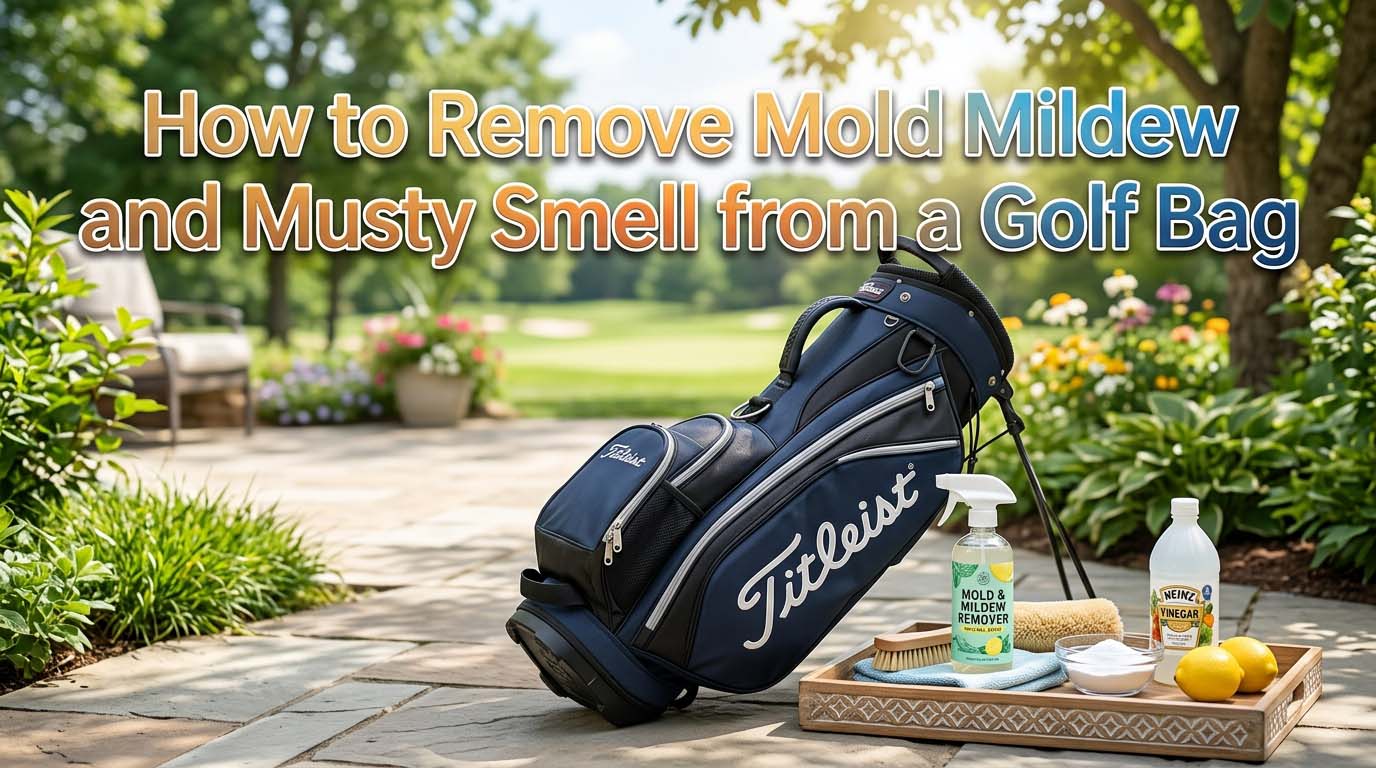
I have cleaned dozens of golf bags over the years, and I can tell you one thing for sure: mold and musty smells do not mean your bag is ruined. But they do require a different approach than routine dirt removal.
The fix comes down to three steps: dry the bag out, kill the mold spores with the right cleaner, and then deodorize the padding. Use the wrong cleaner on the wrong material, and you can make things worse. Let me walk you through exactly what works for each type of bag.
Why Mold and Mildew Happen in Golf Bags
Mold needs three things to grow: moisture, warmth, and still air. Your golf bag gives it all three when you store it wet. Maybe you packed up after a rainy round, left sweaty towels inside, or kept the bag in a humid garage or trunk. Moisture soaks into the fabric, padding, and dividers.
If the bag doesn’t dry fully within 48 hours, mold starts to colonize the damp areas. The musty smell is actually the waste gases from the mold feeding on organic material like dirt, sweat, and dead skin cells trapped in the fabric.
Know What You Are Dealing With
Before you start scrubbing, figure out if you have surface mold or deep internal mold. Surface mold shows up as black or green spots on the outside of the bag. You can usually wipe it off.
Deep mold is hidden inside the padding or dividers. You cannot see it, but you smell it strongly whenever you open a pocket or put your hand inside. If the smell is strongest near the bottom of the bag or around the club dividers, you are dealing with internal growth.
Get Ready to Clean
Take everything out of the bag: clubs, balls, tees, gloves, and all pocket contents. Remove any removable dividers or internal padding if your bag allows it. Put on a pair of rubber gloves and a dust mask.
Mold spores can irritate your lungs and skin. Work in a well-ventilated area, preferably outside. Vacuum every pocket and seam using a hose attachment. Get out all loose dirt and debris because mold clings to them.
Material-Specific Mold Treatments
Not all golf bags are built the same. Using bleach on leather or vinegar on a waterproof coating can ruin the bag permanently. Here is what works for each common material.
Nylon and Polyester Bags
These are the most common and easiest to treat. Mix one part white vinegar with three parts water in a spray bottle. Vinegar is acidic enough to kill most mold spores without damaging the fabric or stitching. Spray the solution onto the moldy areas, let it sit for 15 minutes, then scrub gently with a soft brush.
Rinse with a damp cloth and blot dry with a towel. Do not soak the padding. For heavy mold, you can add a few drops of mild dish soap to the vinegar mix. Avoid bleach – it fades colors and weakens nylon fibers over time.
Leather Bags
Vinegar is too harsh for leather. It strips the natural oils and can cause cracking. Instead, use a cleaner made specifically for leather, like saddle soap or a dedicated leather mold cleaner. Apply a small amount to a soft cloth and rub the stained areas gently. Wipe with a damp cloth to remove any residue.
After cleaning, apply a leather conditioner to restore moisture and prevent cracking. Leather is porous, so mold can sink deep. If the smell persists inside, you may need to replace the lining.
Waterproof Bags
Waterproof bags have special coatings that keep water out. Harsh cleaners or abrasive scrubbing can break down that coating. Stick to a simple wipe-down with a cloth dampened in mild soapy water.
Use a few drops of dish soap in a cup of warm water. Wipe the mold spots gently, then rinse with a clean damp cloth. Do not spray or soak the bag. For stubborn spots, a soft toothbrush works, but go easy.
After cleaning, let the bag dry completely. If the waterproof coating gets damaged, your bag will leak in the rain.
Internal Padding and Dividers
This is the part most people miss. Mold hides in the foam padding inside the dividers and along the bottom. If you can remove the dividers, soak them in a bucket of warm water with a cup of white vinegar for an hour.
Then rinse and squeeze out excess water. If dividers are sewn in, use a spray bottle with the vinegar solution and spray generously into the slots and seams. Let it sit for 20 minutes, then blot with towels. Do not oversaturate, foam takes days to dry and can still mold if left damp.
Deodorizing the Musty Smell
Killing the mold does not instantly remove the smell. The odor is caused by volatile compounds that linger even after the mold is dead. Here is how to get rid of it for good.
- Fresh air: Hang the bag in a well-ventilated area, out of direct sunlight, for 24–48 hours. Open all pockets and zippers. Let the air flow through.
- Baking soda: Pour a cup of baking soda into a sock or a breathable cloth bag and place it inside the main compartment and pockets. Leave it for a day. Baking soda absorbs odor without adding moisture.
- Charcoal bags: Activated charcoal bags or bamboo charcoal deodorizers work even better than baking soda. They trap odors and moisture. Place one in each pocket.
- Antifungal spray: You can buy a spray made for sports gear that kills remaining odor-causing bacteria. Test on a small hidden area first.
If the smell returns within 48 hours of drying, the mold is still alive inside the padding. You need to repeat the treatment or accept that the bag may be too far gone.
When Mold Is Too Deep to Remove?
Sometimes cleaning is not enough. If the bag still smells musty after two full rounds of treatment and drying, the mold has colonized the padding beyond reach.
Look for these signs: the bottom of the bag feels soggy or permanently damp, you see mold growing inside the pocket liners even after cleaning, or the foam dividers have a sour smell that does not fade.
In that case, no amount of surface cleaning will fix it. The only safe option is to replace the bag. Continuing to use a moldy bag can transfer spores to your clubs and clothing, and breathing mold spores is bad for your health.
Myth Buster: Bleach and Vinegar
You often hear that bleach kills everything, and vinegar is mild enough for any surface. Neither is true for golf bags. Bleach is too strong for colored nylon and polyester, it fades colors and weakens stitching. It can also damage the coating on waterproof bags.
Vinegar is safe for most synthetic fabrics but not for leather, because it dries out the hide. For leather, always use a dedicated leather cleaner. For nylon and polyester, vinegar is your safest bet. For waterproof bags, mild soap only.
How to Prevent Mold from Coming Back?
Once you get rid of the mold and smell, keep it away with these habits.
- Never store your golf bag wet. Dry it with a towel after a rainy round.
- Store the bag in a cool, dry place, not in a damp garage or trunk.
- Leave all zippers open when storing to allow air circulation.
- Put silica gel packets or a charcoal bag in the bottom of the bag to absorb moisture.
- Do not store wet clubs in the bag. Wipe them down first.
- Air out the bag once a week if you are not playing, especially in humid weather.
- Clean the bag with a vinegar spray every few months as a preventive measure (only for nylon/polyester).
Frequently Asked Questions
Can I use a steam cleaner to remove mold from my golf bag?
Steam cleaners can kill mold, but the high heat and moisture may damage the bag’s glue, padding, and zippers. I do not recommend it for most bags. Stick to vinegar sprays and gentle scrubbing.
How do I treat mold on the bag’s zipper tracks and plastic parts?
Wipe zipper tracks with a cloth dipped in rubbing alcohol. Alcohol evaporates quickly and kills mold. For plastic buckles and clips, use the same vinegar solution but rinse with water to avoid corrosion.
Should I wash my golf bag in a washing machine to kill mildew?
No. Machine washing can warp the frame, damage padding, and break zippers. The bag is too large and heavy for a home washer. Always hand-clean it.
How long should I let the bag dry before reassembling?
Wait at least 48 hours after cleaning before putting clubs back in. The inside padding can take that long to dry fully. If you put clubs back too soon, moisture gets trapped and mold returns.
Is it safe to use a hairdryer to speed up drying after mold treatment?
Yes, but use the cool or low heat setting. High heat can melt synthetic fabrics and damage leather. Hold the dryer at least six inches away from the bag. Move it around so you do not overheat one spot.
What household items neutralize the musty smell without chemicals?
Baking soda, activated charcoal, and white vinegar are the most effective natural options. You can also leave the bag in sunlight for a few hours – UV light kills some bacteria and helps dry out the fabric. But direct sun may fade colors, so limit exposure.
Will the mold damage my golf clubs if I leave them in the bag?
Yes, mold can eventually damage club grips and shafts. The moisture that feeds mold also causes rust on steel shafts. The spores can make grips slippery and smelly. Always remove clubs from a moldy bag until the bag is clean and dry.