
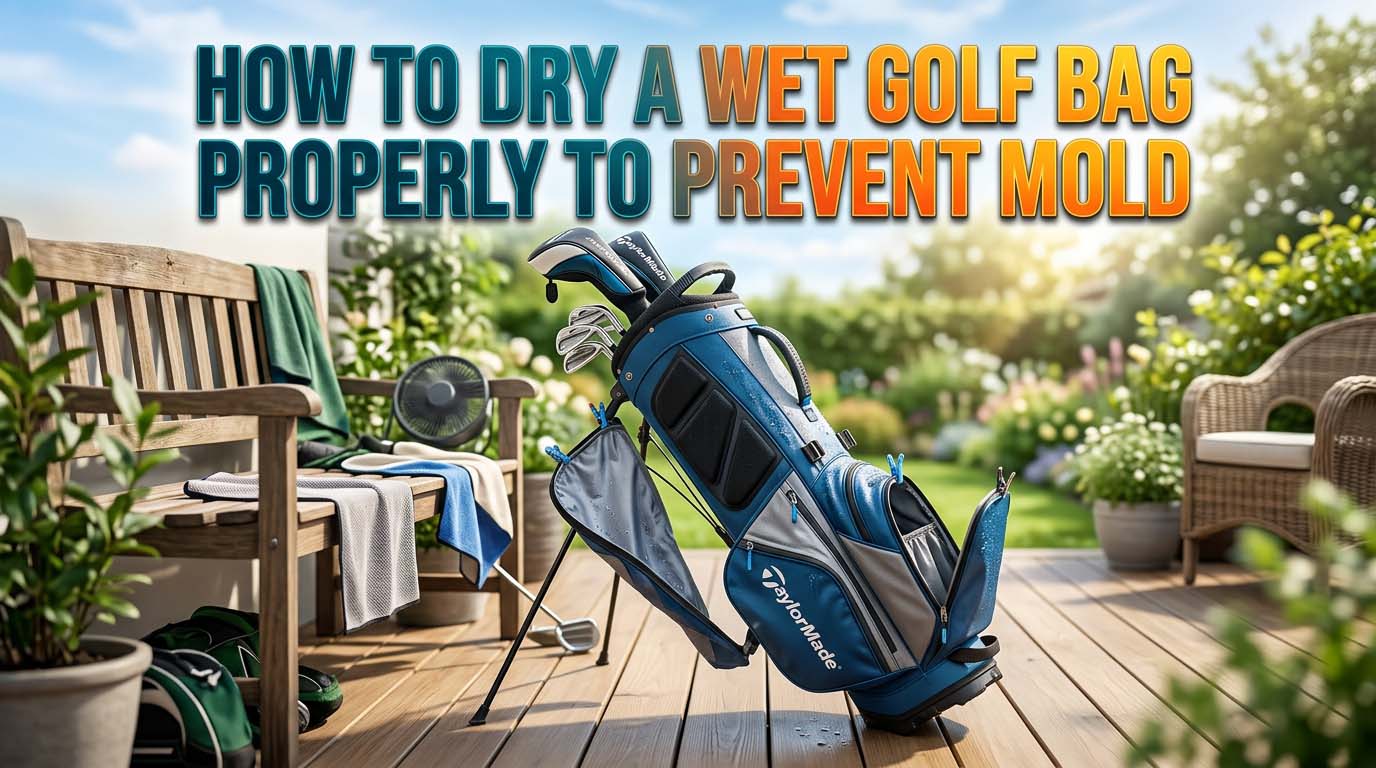
A wet golf bag left to dry wrong is a science experiment for mold. Every time moisture sits inside the foam padding or under the lining, spores start growing. Smell is the first sign. The second sign is permanent damage to the bag’s structure.
This guide walks you through the exact steps to dry your bag completely, without wrecking the waterproof coating or the shape of the bag.
The First 30 Minutes After Your Bag Gets Soaked
The moment you realize the bag is wet, you are in a race against mold. Do not put it in a warm car or a dark garage. Heat and darkness create the perfect breeding ground for mildew.
Drain the big water first
Turn the bag upside down over a sink or outside. Water pools inside the club dividers and the bottom of pockets. Let gravity do the work for at least five minutes. Shake the bag gently to help stubborn water come out.
Open every zipper and pocket
Closed pockets trap moisture. Unzip everything including the small valuables pouch, the cooler pocket, and the ball pocket. If the bag has a rain hood, take it out. A wet rain hood stuffed inside holds water against the fabric.
Remove heavy items
Take out any towels, extra gloves, loose balls, or heavy accessories. These items hold moisture and slow down drying. A wet towel wadded inside a pocket will keep that pocket damp for days.
Use a wet-dry vacuum if you have one
This is the fastest way to remove standing water from deep pockets. Run the hose along the bottom of each pocket and inside the main club compartment. Pull out as much water as you can before you start the drying process. It cuts drying time in half.
Airflow vs. Heat | What Actually Dries a Golf Bag
Many people think heat speeds up drying. With a golf bag, heat is the enemy. Direct sun degrades the polyurethane coating on waterproof bags. A hairdryer melts the glue that holds the dividers and straps. A hot car turns the bag into an incubator for mold.
- Moving air is what you want. Set a box fan on low and point it into the bag opening.
- Shade is better than sunlight. If you put the bag outside, keep it under a porch or tree.
- Indoor dehumidifier in the room helps pull moisture from the air and from inside the fabric.
The right way to position the bag for drying
Hanging the bag is best. If you have a bag stand, set it up upright. If the bag is a cart bag without legs, hang it from a hook or a hanger. Laying the bag flat on the ground traps moisture inside the padding against the floor. Gravity works against you when the bag is flat.
How to Dry the Hidden Padding and Seams
Feeling the outside of the bag is not enough. The foam padding inside the walls and the bottom of the bag holds water like a sponge. You cannot see it. You can only feel it with the press test.
The press test
Press your thumb firmly into the bottom of the bag from the outside. If the foam feels soft and cool instead of firm and dry, it still holds moisture. Do the same along the sides near the pockets. If any spot feels damp, that area needs more drying time.
The towel stuffing method
Take a dry microfiber towel and roll it into a tight log. Push it deep into the bottom of the bag through the main opening or the large ball pocket. Leave it there for four hours. The towel wicks moisture out of the foam the same way a camping towel pulls water from a wet tent.
After four hours, pull the towel out. If it feels damp, repeat with a fresh dry towel. Keep going until the towel comes out bone dry. This is the only reliable way to test internal moisture without tearing the bag apart.
The plastic bag trick for stubborn dampness
Stuff a dry towel into the bottom of the bag, then seal the entire bag inside a large plastic trash bag for two hours. Condensation will appear on the inside of the plastic bag if the foam is still releasing moisture. If the plastic stays clear, the bag is dry.
The Final Odor Check and Spore Prevention
Once the bag passes the press test and the towel test, you still need to kill any spores that may have started growing. Spores are invisible. You cannot see them, but you can smell them.
Alcohol misting
Mix one part 70% isopropyl alcohol with two parts water in a spray bottle. Mist the inside of every pocket and the lining of the main compartment. Do not soak it. The alcohol evaporates almost instantly and kills mold spores without adding extra moisture.
Baking soda for lingering smells
Sprinkle a thin layer of baking soda inside the pockets and the main compartment. Leave it overnight. The next day, vacuum it out thoroughly. Baking soda neutralizes any remaining wet smell.
One final test
Zip the bag shut completely. Leave it in a hot car for an hour during the day. After an hour, open the bag and smell inside. If you catch even a hint of mildew, the moisture is still trapped somewhere in the foam. Start the towel stuffing process again.
Can You Save a Bag That Already Has Mold?
If you found this article after the bag already smells musty, do not panic. Some bags can be saved. Some cannot.
Surface mold is fixable
If you see visible black or green spots on the fabric or lining, you can clean them. Use a spray bottle with white vinegar diluted one part vinegar to three parts water.
Spray the affected spots. Let it sit for ten minutes, then blot with a dry cloth. White vinegar is safer than bleach for fabric because bleach weakens stitching.
After cleaning, dry the bag immediately with a fan. Mold returns fast if the bag stays wet.
Deep mold inside the padding is not fixable
If the bag smells musty even after you cleaned the surface and dried it thoroughly, the foam padding is contaminated. Mold spores live inside the foam cells. No amount of cleaning or drying will remove them. The smell will come back every time the bag gets damp.
When that happens, it is time to replace the bag. A moldy foam core will spread spores to your clubs and other gear over time.
Frequently Asked Questions
Can I use silica gel packets to absorb moisture inside a wet golf bag?
Silica gel packets work well for small, enclosed spaces, but they are not strong enough to dry a soaking wet golf bag. You would need hundreds of packets to pull moisture from foam padding.
Use the towel stuffing method instead. Silica gel can help after the bag is already dry to keep humidity low during storage.
My bag has mold on the inside lining, but the fabric looks fine. Can I save it?
If the lining is removable, wash it separately with vinegar and water. If the lining is sewn into the bag, you can only clean the surface. The mold may still be in the foam backing behind the lining. If the bag smells after cleaning, the mold is inside the padding, and the bag cannot be saved.
Does a golf bag need to be waterproof before I start drying it, or after?
Waterproofing treatments should be applied after the bag is completely dry and clean. Applying a waterproofing spray to a damp bag seals moisture inside and makes mold worse.
Let the bag dry fully, then use a fabric waterproofing spray designed for golf bags or outdoor gear.
How long does it take to fully dry a cart bag versus a stand bag?
Cart bags have more padding and larger pockets. They typically take twelve to twenty-four hours of fan drying. Golf stand bags have less foam and dry faster, usually six to ten hours. The towel test is the only way to know for sure, regardless of bag type.